
The penis isn’t exactly a new biological invention; thanks to a groundbreaking discovery made in 2003, we know male animals have been packing impressive equipment for nearly half a billion years. But how did the penis evolve? And does size really matter?
- "It can grow another penis within 24 hours..."The world's 9 weirdest penises – including a detachable one that swims off after a mate
- The world's smallest penis will surprise you: "Evolution didn't forget to finish the job. Bigger is only better when bigger helps..."
It’s a question that both esteemed academics and amused teenagers often ponder: who did the first-ever penis belong to?
The study of prehistoric penises - and other fossilised reproductive organs - is actually a well-established and much-respected field within palaeontology, with entire sessions at international conferences dedicated to the discipline.
- "At 8 times their body length, this flexible appendage is at risk of being snapped off." Which animal has the biggest penis? (It's probably not what you think)
- They have a tiny penis that gets ripped off after mating
No two penises are the same across the animal kingdom - nor among humans, even. They vary widely in shape, structure, and function. They’re also not exclusive to just one group; mammals, reptiles, sharks, insects, and a handful of birds and amphibians have penises, or at least a reproductive organ that resembles a penis.
What is a penis?
By definition, a penis is an external male sex organ used to inseminate females during copulation.
The term applies to many different kinds of reproductive organs and is used - rather haphazardly - for any phallic-shaped appendage involved in sex between animals, from recognisable mammalian penises to the strange, retractable ‘penises’ on the heads of chimaeras.
- The animal that can regrow a penis - three times!
- Which animal has the biggest testicles? Clue... "They're an impressive 14% of its body mass. Imagine if a human's were 14% of its body mass…"
This rather flaccid definition has led to some confusion about which animals possess a penis, and whether their ‘penises’ are actually penises at all. For those scientists interested in answering questions about prehistoric sex, there are two clear criteria for identifying a penis: it must project externally, and it must be used for mating.
What was the first animal with a penis?
In 2003, a team of scientists led by the University of Leicester’s David Siveter discovered a fossil ostracod in 425-million-year-old rocks belonging to the Coalbrookdale Formation of Herefordshire, England.
Sometimes known as seed shrimp, ostracods are tiny crustaceans that originated way back in the Ordovician, roughly 487 million years ago. Today, they inhabit virtually all aquatic environments on Earth, from tropical warm waters to polar seas and deep-sea abyssal plains, as well as freshwater lakes, rivers, and even puddles.
What was remarkable about Siveter’s discovery was that the soft parts of this nearly half-a-billion-year-old ostracod had been preserved. In order to reconstruct these important soft parts, Siveter and his colleagues systematically ground down the rock containing the ostracod, stopping every 0.02mm to capture images.
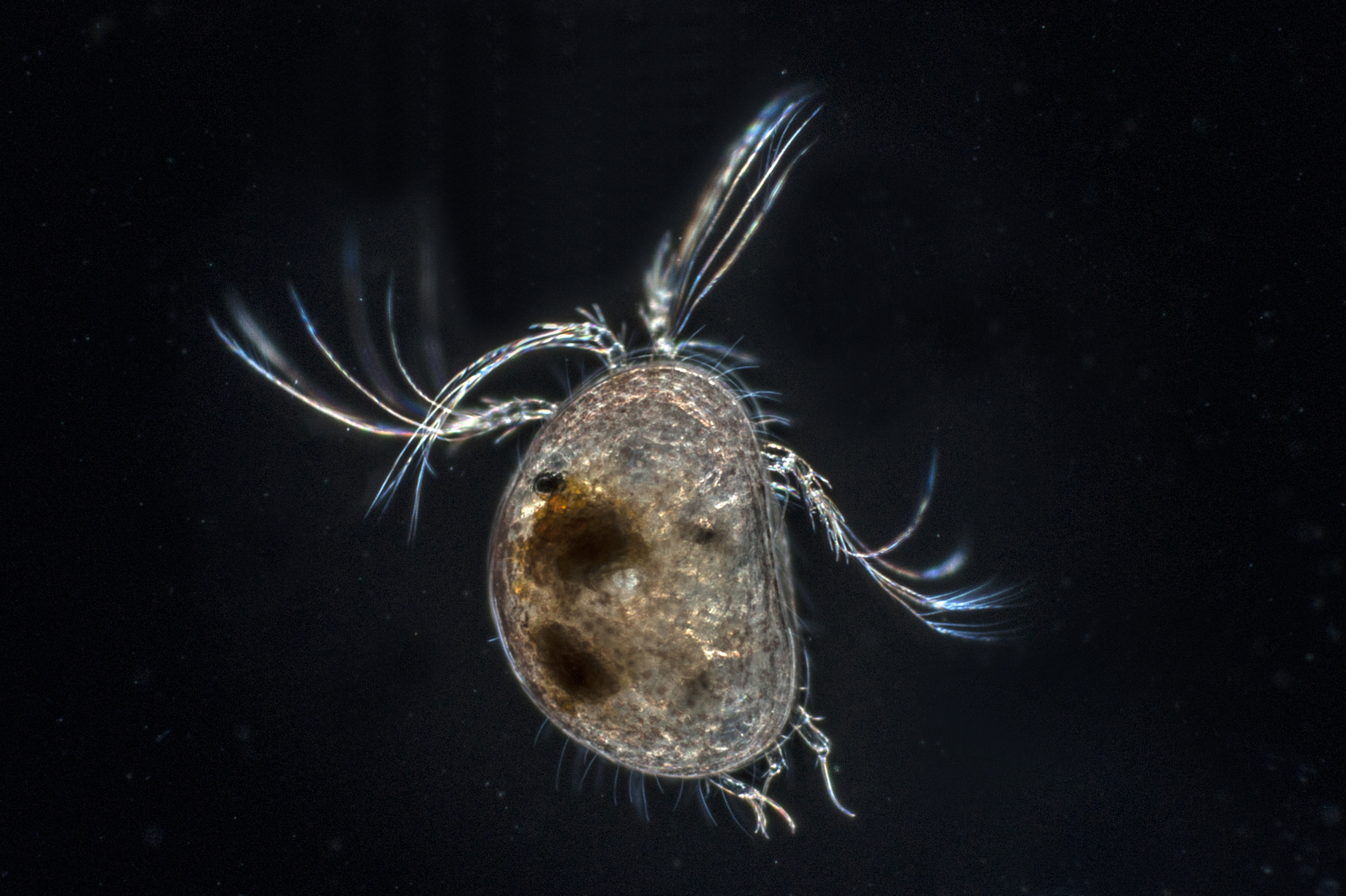
This process allowed them to create a 3D reconstruction of the ostracod and reveal some of the finer aspects of its anatomy. As well as revealing antennae, mandibles, and eyes, this reconstruction also highlighted a “large and stout” penis - the oldest of its kind ever found in the fossil record.
In honour of its massive member, the ostracod was dubbed Colymbosathon ecplecticos, which is Greek for ‘outstanding swimmer with a large penis’.
Ostracod’s are known for having some of the largest penises relative to their body size in the animal kingdom - as much of a third of their total volume can be taken up by their penises. They also produce some of the largest sperm, irrespective of their body size. A 1mm-long ostracod is capable of producing a 10mm-long sperm, which is nearly 200 times the size of an average human sperm!
How do you fossilise a penis?
The soft parts of animals are rarely preserved, but on very rare occasions, a cocktail of perfect preservational conditions can turn these fragile structures into rock-hard fossils that are able to stand the test of time.
In the case of Siveter’s discovery, the exquisitely preserved ostracod was found in a layer of volcanic ash that, 425 million years ago, rapidly buried it, preventing any of its soft parts from breaking down.
These kinds of rocks bearing well-preserved fossils are known as Konservat-Lagerstätte.
- "Its penis splits into two, and then each of those splits again, like a branching tree." 14 weirdest, most baffling genitals nature ever invented
- Do male birds have penises? The surprisingly bizarre way birds have sex
The Coalbrookdale Formation - the rocks in which Colymbosathon ecplecticos was discovered - is one of the UK’s best and most scientifically significant Konservat-Lagerstätte. It spans an important part of the Silurian Period and records some of the earliest evidence of several major groups of modern animals, such as sea spiders.
Why did the penis evolve?
While Colymbosathon ecplecticos may have the oldest penis known to science, this doesn’t necessarily mean that it’s the owner of the first-ever penis. It’s likely the penis evolved in an earlier ancestor that hasn’t yet been discovered.
Most early aquatic animals didn’t need penises. Instead, females released eggs into the water while males swam by and released sperm, fertilising them externally. This is how most fish and corals reproduce today.
However, this scattergun approach is far from the most effective fertilisation method; not only are most eggs and sperm washed away by ocean currents, they’re also gobbled up by other animals.
- It has a fake penis and is the only female mammal on the planet to lack an external vaginal opening…
- "The male rubs a ridge on its penis against ridges on its abdomen, thereby setting the pond – and any female in it – abuzz..."
A much more effective method is internal fertilisation, whereby a penis delivers sperm directly into a female’s reproductive tract.
It’s believed that internal fertilisation evolved independently in different groups of animals, as did the reproductive organs used to deliver sperm. The structures we call ‘penises’ therefore aren’t necessarily homologous, meaning there’s no single ‘proto-penis’ that all other penises evolved from. That said, the reason penises evolved in different groups is broadly the same: to increase the chances of fertilisation.
Are large penises better?
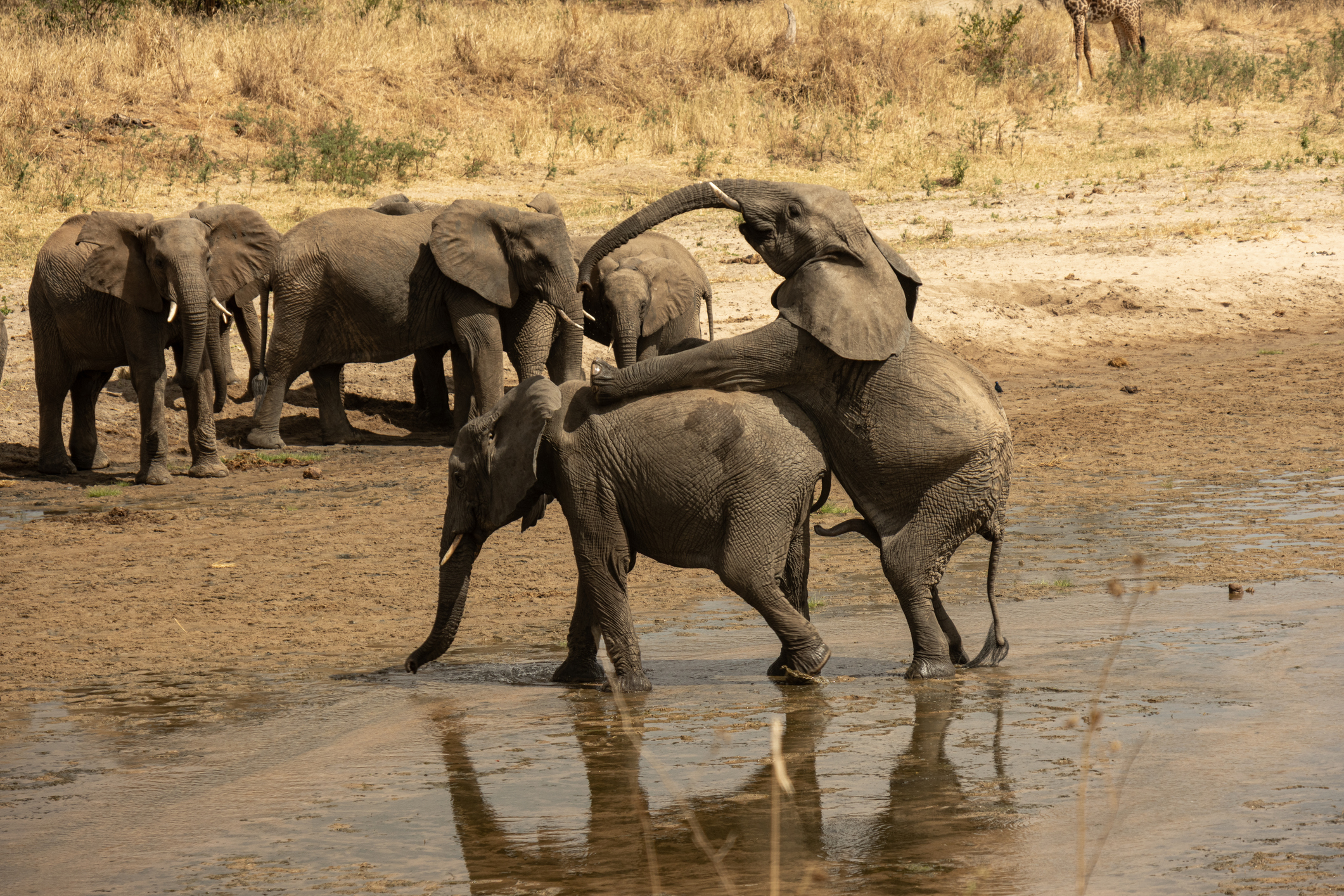
When it comes to sex, size can certainly matter.
In 2018, a study examining penis evolution across species found that sexual selection, and particularly female choice, is largely responsible for driving diversity in penises.
- The world's smallest penis will surprise you: "Evolution didn't forget to finish the job. Bigger is only better when bigger helps..."
- "It has – proportionally – the longest penis in the animal kingdom. The human equivalent would be a man impregnating his neighbour via the letterbox."
This study also found evidence to suggest that human penises, which are significantly larger than those of other great apes, have been sexually selected, with increased penis size preferred by women in some sampled studies.
In animals where females mate with multiple males, sperm from different males have to compete to fertilise the eggs. This can drive an evolutionary arms race, with males evolving increasingly elaborate reproductive equipment to give their sperm an advantage.
Colymbosathon ecplecticos and other ostracods serve as a great example. Some species have evolved enormous penises, along with huge sperm and specialised ejaculatory pumps known as Zenker's organs, to increase the chances of fertilising the eggs of females. In this rivalrous reproductive environment, prioritising size is useful.
However, bigger isn’t always better and, in the case of ostracods at least, supersizing sexual organs comes with some pretty disastrous downsides.
Another study published in 2018 found an inverse correlation between genital size and long-term species viability among ostracods - put simply, ostracods with bigger penises went extinct quicker. According to the researchers involved, this is because giant genitals require a lot of energy to maintain, taking away from reserves that may sustain an animal through food shortages.
A bigger penis isn’t inherently better. Its size only matters in the context of how a species reproduces and how much competition there is between males. In some animals, like ostracods, a large penis provides an evolutionary advantage (to a point). In others, there may be little benefit to investing in size at all. Take gorillas, for example. Because they live in a harem structure where a dominant silverback has exclusive mating rights, there is little-to-no sperm competition, so evolution hasn’t selected for large penises or large testicles. As a result, an erect gorilla penis is only about 3-6cm (1.1 to 2.4 inches) long.
At the end of the day, evolution doesn’t favour the biggest penis - it favours the one that works.
top image: Lions mating. Credit: Ayzenstayn/ Getty Images.
More wildlife stories from around the world:


