It’s amazing how many ways nature has evolved to hurt humans, but a common one among a wide range of species from multiple taxonomic groups, including insects, spiders, centipedes, fish and marine invertebrates, is the ability to produce toxins that can make us feel as if we are burning. Some are just a mild irritant, but some can kill us. It’s probably worth knowing which is which.
- "Its rear end's equipped with 2 tufts of bristles, each shaped like a grappling hook." The butt that's armed with menacing weapons ready to fire
- “Effects range from internal bleeding to manipulating behaviour or liquifying a host.” These are the deadliest weapons in the animal kingdom
10 animals that cause burns
Bombardier beetles
Beware the bombardier beetle, my son, the spray that burns, the ooze that stings! Lewis Carroll didn’t write this, but it’s good advice. These beetles, which are found all over the world apart from Antartica, carry around the schoolboy’s dream of a well-stocked class laboratory, usually, one ‘canister’ of hydrogen peroxide and another of hydroquinone.
If threatened, they mix the two together, resulting in an exothermic (ie, hot – it can reach 100˚C!) reaction with which to repel their assailant. They can eject this scalding liquid with force, and some can direct it wherever they choose. Charles Darwin, no less, once got a mouthful of it – proof that even the cleverest minds can fall for the oldest tricks.
Fire coral

Fire coral is not a coral and it doesn’t set you on fire. Instead, it’s a hydrozoan, and so more closely related to the Portuguese man-o-war than it is to true corals, and it possesses specialised stinging cells that can leave the victim with a burning sensation lasting several hours, according to the DAN divers website.
You’ll find them in tropical and sub-tropical waters – so, no further north than the Red Sea – but it’s hard to say what they look like because their appearance varies depending on what they are growing on and environmental conditions, but they are usually hard, branching organisms of a yellowy-green or brownish colour.
- "It dies, roasted alive" – Meet nature’s 10 strangest killers that weaponise fire, wind and heat to kill
- Two-thirds of coral killed from severe heatwaves
Lonomia caterpillars

Many species of caterpillar possess urticating hairs containing irritating venoms, but it is the larvae of moths in the Lonomia genus that are said to cause “burning pain, headaches, nausea or vomiting”. This can lead to dangerous bleeding in the skin, lungs, kidneys and even brain and can be fatal. There are at least seven species that can cause this reaction, and all of them are found in South America. The caterpillars of these so-called giant silkworm moths have a bizarre, feathery appearance.
Blister beetles

Much less dangerous than the Lonomia caterpillars, though certainly still irritating, are the blister beetles, a family of insects found worldwide and which all possess a chemical called cantharadin that causes blisters, often accompanied by what are described as “tingling or burning sensations”, within 24 hours of coming into contact with them.
The beetles don’t need to explode all over you like the bombardier, you simply have to come into contact with them. Cantharadin is actually secreted by the male and acts as a courtship stimulant – it’s why in the late Middle Ages, blister beetles were taken as an aphrodisiac known as Spanish fly throughout Europe, even though it doesn’t work as one and human ingestion would result in all the symptoms listed above!
Tarantulas
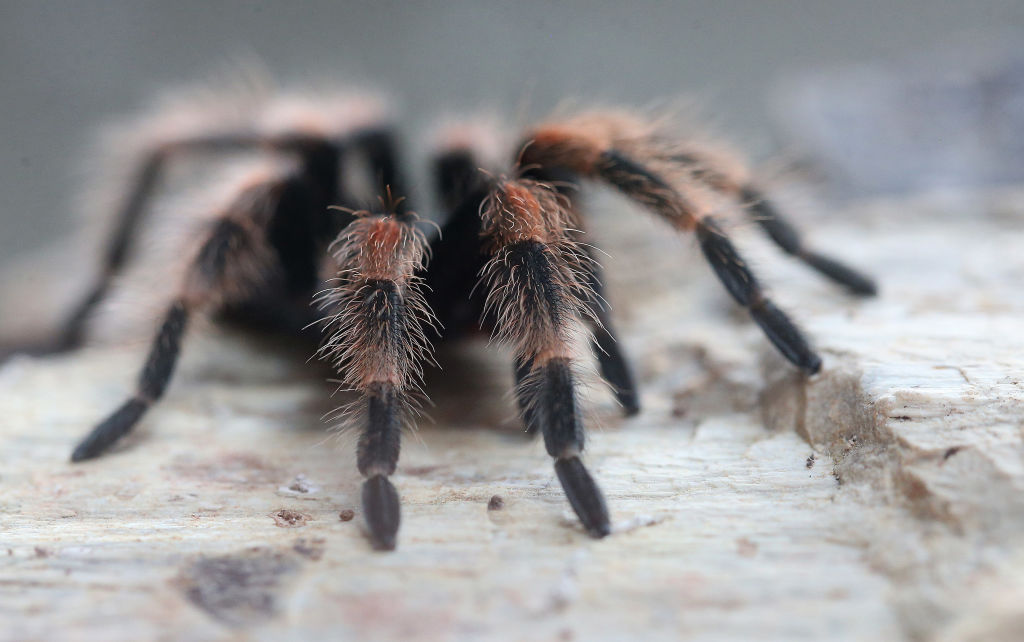
These famously hairy spiders are popular pets, but look out for the New World theraphosid tarantulas – they possess irritating hairs, or setae, that can cause itching and swelling if they come into contact with your skin and (this sounds painful) “an immediate burning or stinging sensation” should they touch your eyes. This paper reported how one man had a week-long skin rash and subsequent eye irritation after handling a Chilean rose tarantula.
- “There were hundreds crawling across the trail.” Huge, hairy animals surround hiker in Texas desert
- Scientists observed the hunting behaviour of tarantulas – and discovered something groundbreaking
Cone snails

Cone snails are marine invertebrates that look innocent enough but are actually potentially deadly – while mild stings are said to be similar to a wasp or bee sting resulting in “localised burning and sharp stinging symptoms”, a really bad case can result in first severe numbness and then total paralysis, preventing the victim from breathing (and therefore death).
While they are found in tropical warm seas throughout the world, the vast majority of species inhabit the Indian and western Pacific Oceans and predominantly coral reefs. This person believes they were stung by a cone snail and reports how it “felt like a spike went into [their] foot and that within a minute their “foot felt like it was on fire”. At least he survived to tell the tail.
Giant centipede

With a maximum length of 20cm, the Scolopendra giant centipede (known by numerous common names including the black flame centipede) is found over much of Asia and the Pacific islands. A man who was bitten twice on his left index finger reported “the immediate onset of burning pain” that spread into the back of his hand, following by reddening and swelling and pain eventually reaching his arm and armpit. In total, the pain lasted 48 hours.
- This deadly creepy crawly is a foot long with 21 legs, venomous enough to kill a bat - and a small child – and has eaten flesh from a human corpse
- A snake the weight of a grizzly bear and a giant centipede that hangs from cave ceilings – meet 11 of the Amazon's deadliest animals
Reactions to bites appear to vary a lot, depending on the individual and the particular Scolopendra centipede, but this incident is probably not untypical. That said, there is one case of someone dying after being bitten by this species – a girl in Vietnam who was bitten on her head and died after 29 hours. That is a one-off – but intense burning pain is not.
Millipede
Significantly less nasty than giant centipedes are the similar-looking millipedes – there are a group of millipedes distributed from Central to South America that secrete chemicals that can cause “mild pain and transient burning sensations” in anyone who comes into contact with them. Other symptoms include the skin going a dark-red or black colour and inflammation, but these all died down within a few weeks.
- Centipedes vs millipedes: what's the difference?
- Gigantic millipede lost to science for 126 years rediscovered in remote Madagascan jungle
Stonefish

A research paper published in 2025 looked at 135 incidents in which people were stung by the dorsal spines of a stonefish on Reunion Island in the Indian Ocean. Victims told the scientists that at first the pain was like being cut, and this was followed by a building up of intense pain that had the “sensation of burning from inside”.
The stonefish has 13 spines that are linked to venom sacs, but, according to the study, it made little difference to the pain levels how many penetrated the skin. No one in the dataset died, but fatalities do occur. Stonefish are found in many warm water oceans of the world and are almost impossible to spot as they camouflage themselves on rocky or sandy seabeds.
Fire birds
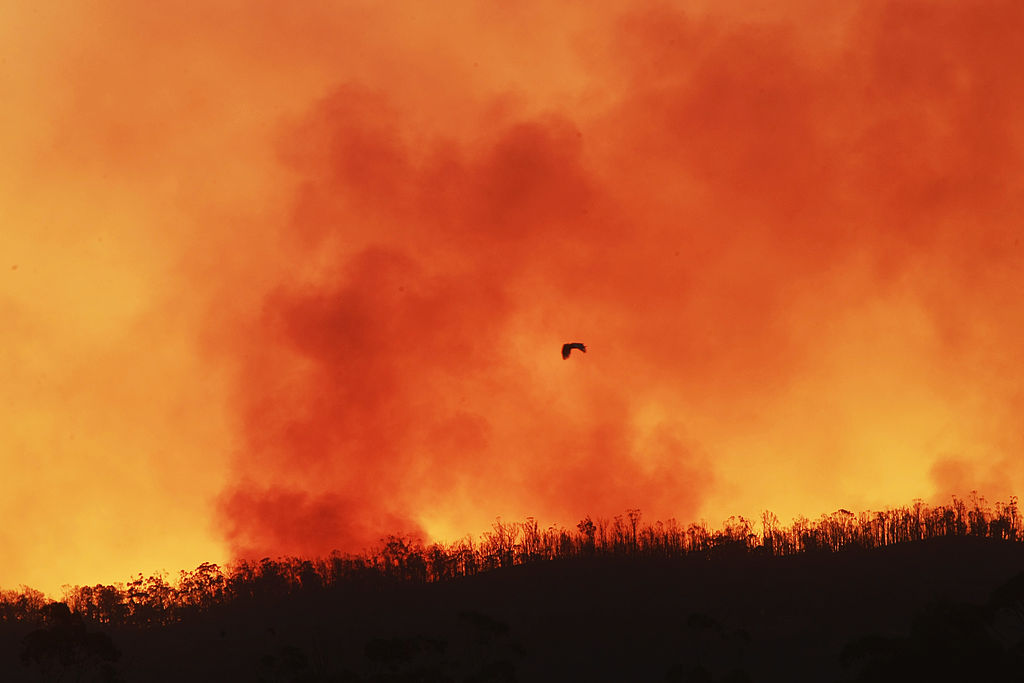
Last in this list, because they don’t produce any venoms and they don’t actually inflict any harm, but they can spread fire. And we are not, of course, talking about birds that can literally breathe fire like some mythical dragon, but they do use it for their own benefit – indeed, this behaviour is really utterly remarkable.
In Australia, when bush fires occur, species such as black and whistling kites and brown falcons will pick up burning sticks and drop them in areas that have not yet been set alight. This flushes out prey such as grasshoppers and other invertebrates, which they can then feed on. Though this paper on their novel behaviour was only published in 2017, the Aboriginal people of Australia have been singing about it for thousands of years.