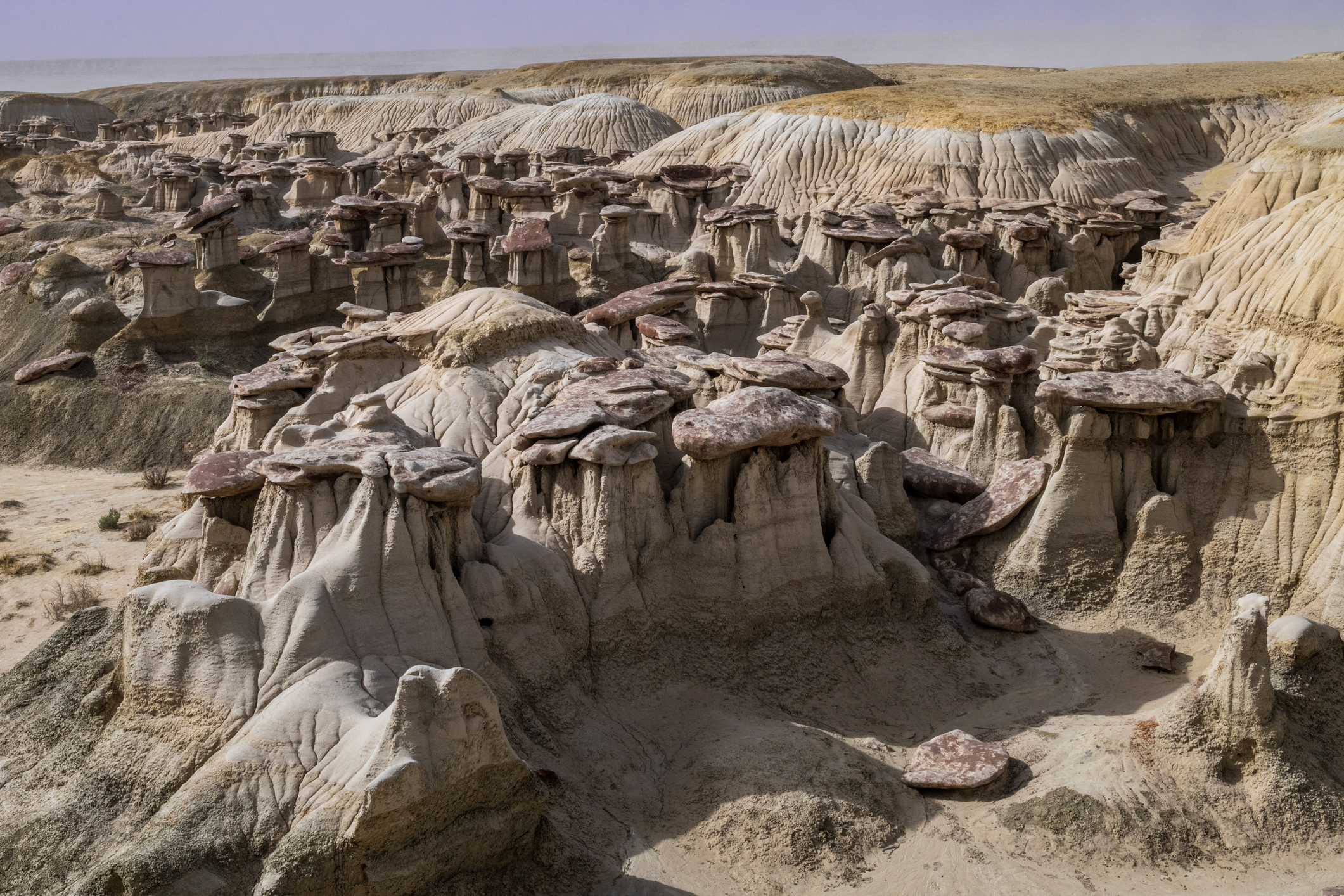
In a remote corner of the south-west USA, there is a desert where you can wander among cities of giant mushrooms. Or that is how it appears.
It's a stark, sombre land of pale stone outcrops capped with dark-brown rocks backed by ochre- or olive-coloured hills that could be lifted directly from a fantasy video game. These dry, weather-eroded landscapes are generically called 'badlands' in the US.
This is Ah-Shi-Sle-Pah Wilderness, a 29.4 km sq desert located in San Juan County, in the north-west corner of New Mexico.
- The ‘world’s smallest desert’ covers just 1 square mile, is in Canada and was carved out by ancient glaciers – but it’s not actually a desert
- The world’s largest desert is enormous and there’s hardly any rain – but it’s not hot. Here’s why
Ah-Shi-Sle-Pah is a rough translation from the native Navajo (the original inhabitants) name for the region, meaning 'grey salt' and is a good description of much of the muted, grey-coloured soils and rock that cover the valley floors.
The area is composed of layers of sandstone, shale, mudstone and bituminous coal that were deposited 75 million years ago in the late Cretaceous period.
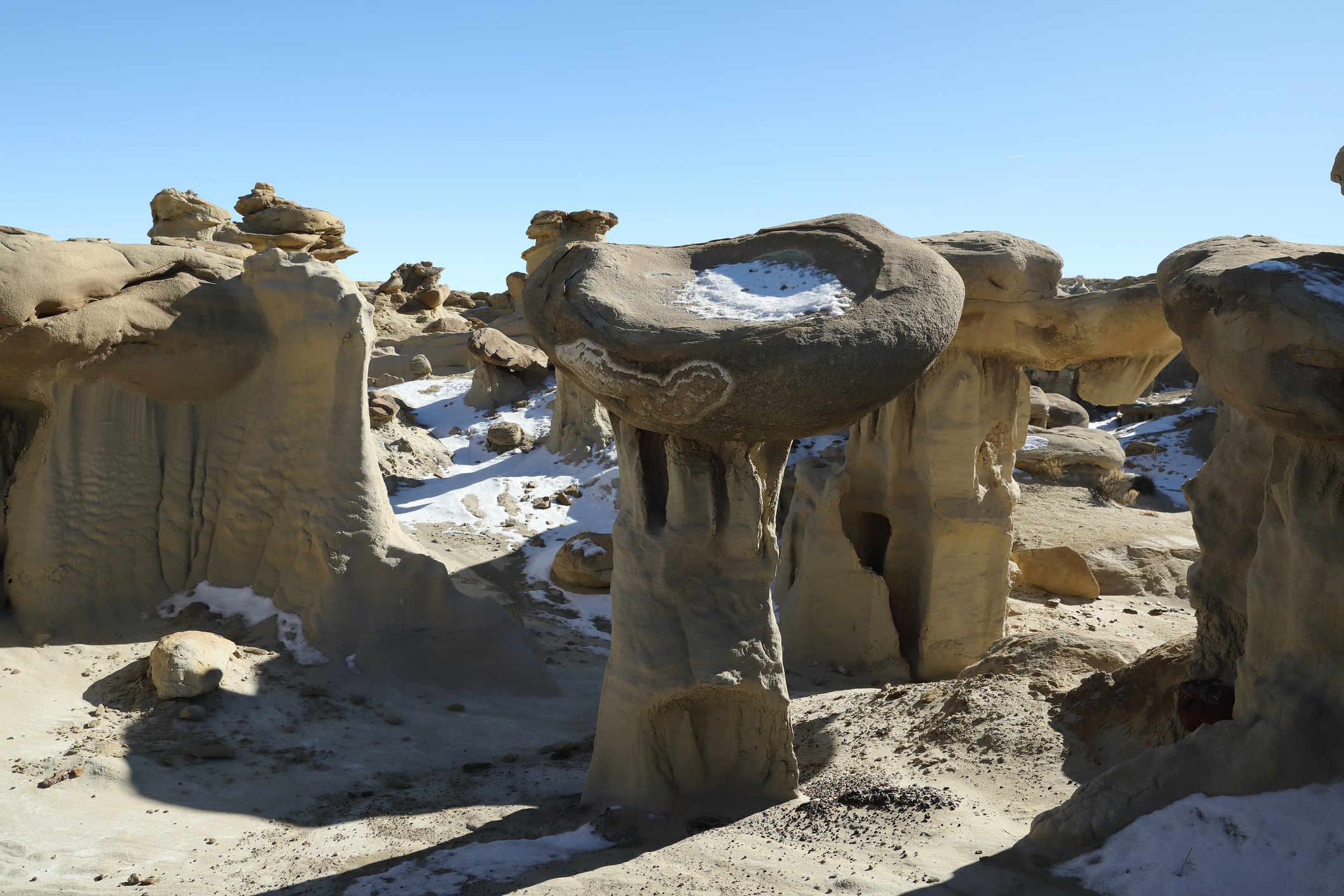
Since then, wind, water and ice have washed much of the softer mudstone away and shaped the sandstone creating the extraordinary spires, pillars, mushroom shapes and other bizarre formations known by the spooky name of 'hoodoos'.
Though the region is little visited and undeveloped, some of the more extraordinarily wind-withered hoodoos (also called fairy chimneys and tent rocks) have been given descriptive names. These include the King of Wings, a gravity defying sliver of horizontal rock jutting from a hoodoo that appears to be blessing the landscape.
Bird's Nest Arch and Mushroom Seat are fairly self-descriptive while the Alien Throne and the Egg Hatchery look as if they've been created by the Swiss artist Hans Ruedi Giger whose designs inspired the Alien movie series. Chocolate City is an area of blocks of brown stone sitting atop a paler substate, and there are plenty of other hoodoo oddities to trigger visitors' imaginations.
- These 50-million-year-old giants are taller than the Statue of Liberty – and there are thousands of them
- How many species of dinosaurs were there on the planet?
While the forms of the hoodoos may suggest mythical monsters and aliens, there were very real giant creatures living here once. Fossils are common and legendary Swedish dinosaur hunter Charles Hazelius Sternberg prospected Ah-Shi-Sle-Pah in 1921, finding dinosaurs, crocodiles and turtles.
Much of his collection can be seen today in the Museum of Evolution in Uppsala, Sweden. Modern visitors can easily find the honey-combed stones that signify fossilised bones. There are also petrified tree stumps and fallen trunks dating to 120 millions ago that look as if they are living organisms.
- New giant dinosaur with 'bizarre' horns discovered in the wild badlands of Montana
- Bizarre ‘witch croc’ that looks just like a dinosaur discovered in New Mexico
Though the fossils reveal this land was once wooded, the modern landscape is virtually treeless. The predominant vegetation, where there is any at all, is sage brush and Grand Basin scrubland. Small stunted piñon-juniper trees can be found in clefts in the hills and on the fringes of the Wilderness.
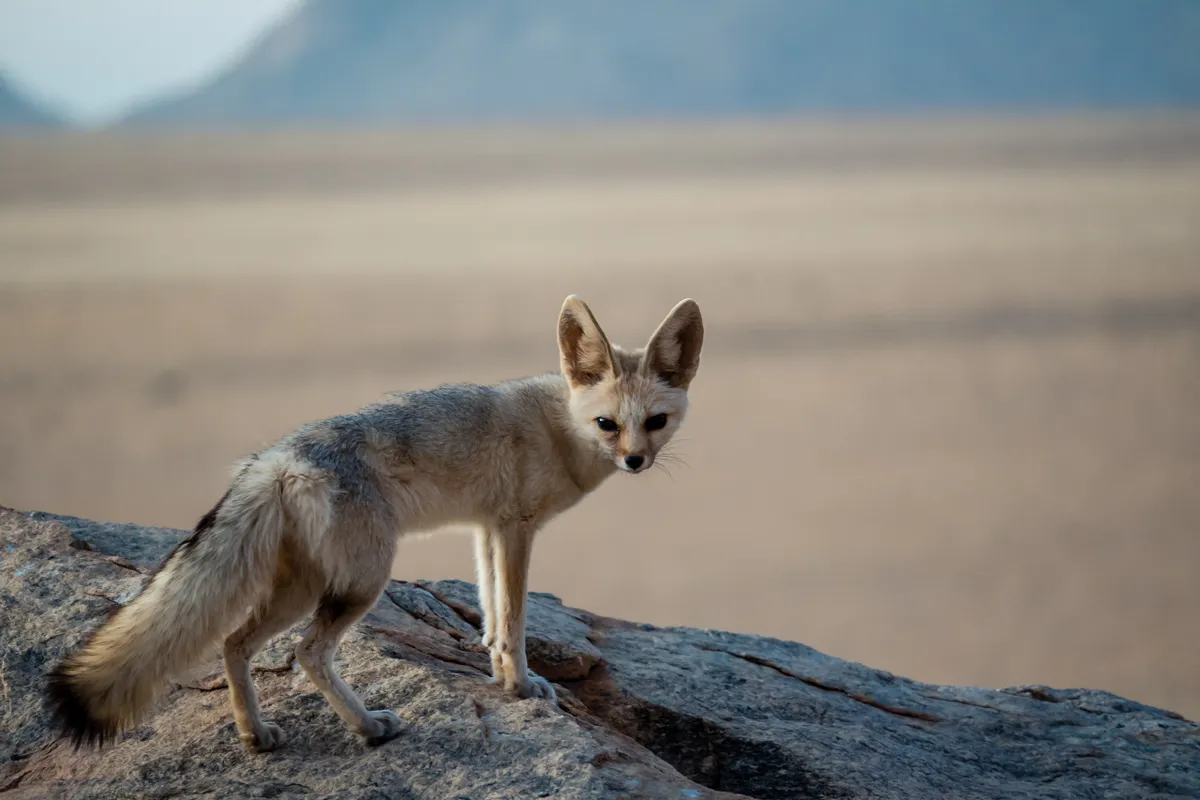
The plants provide home and food for rabbit species, such as the desert cottontail and the black-tailed jackrabbit, while numerous reptiles including rattlesnakes and beautifully coloured collared lizards thrive in the dry lands. Both reptiles and rabbits are prey for rare ferruginous hawks, desert falcons and golden eagles.
Ah-Shi-Sle-Pah was named a Wilderness Study Area in 1992, which is a designation of federal land that has wilderness characteristics. Though this does offer the landscape some protection, its great defence from development and exploitation is its remoteness and the complete lack of facilities for tourists. While some hunting is permitted, the few visitors are likely to have this dramatic, rugged land all to themselves.
top image: Sunset behind the hoodoos at Ah-Shi-Sle-Pah Wilderness, New Mexico. Credit: Diana Robinson Photography/ Getty Images
More wildlife stories from around the world:
- It’s 50 million years old, the size of Wembley Stadium and could fit 12 Boeing 747s inside – but the only way in is via a 100-metre plunge
- "We have to leave right now. If we just hang around, we’re all going to die.” The cave that's so deep it could swallow six Eiffel Towers
- Scientists just photographed a place that's never been seen by humans before. What the images reveal is shocking