
With its maze of slow-moving channels, ancient cypress trees draped in ghostly Spanish moss, and dense murky waters, it’s no wonder Caddo Lake was chosen as the inspiration for M Night Shyamalan’s 2024 hit thriller movie of the same name.
But beyond its atmospheric role on screen lies a remarkably vibrant ecosystem – home to the world’s largest flooded bald cypress forest and an exciting array of North American wildlife.
Where is Caddo Lake?
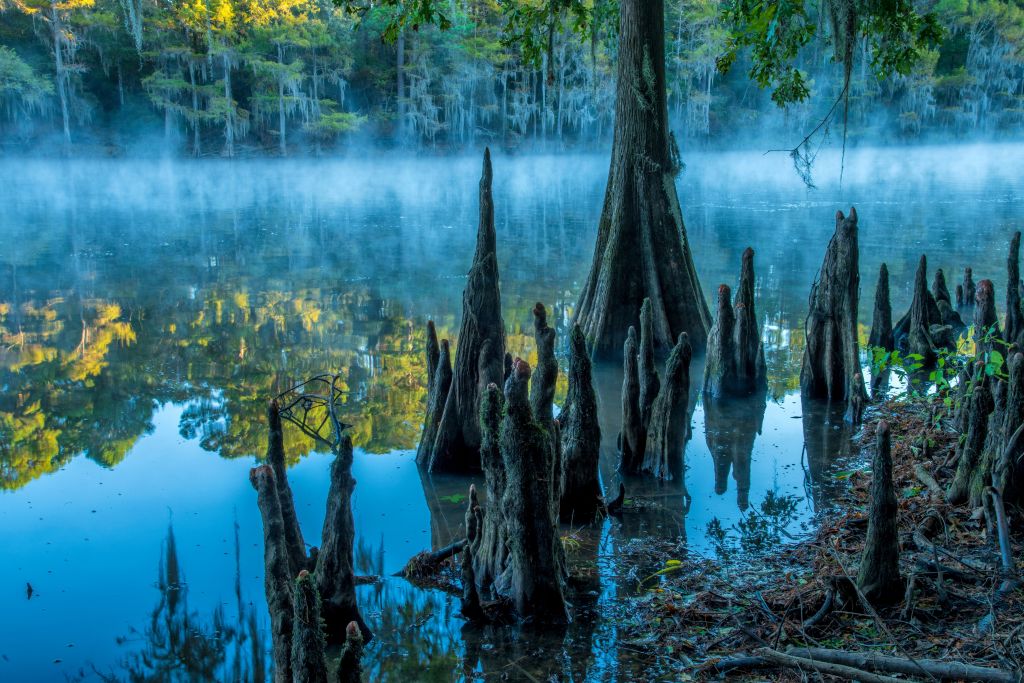
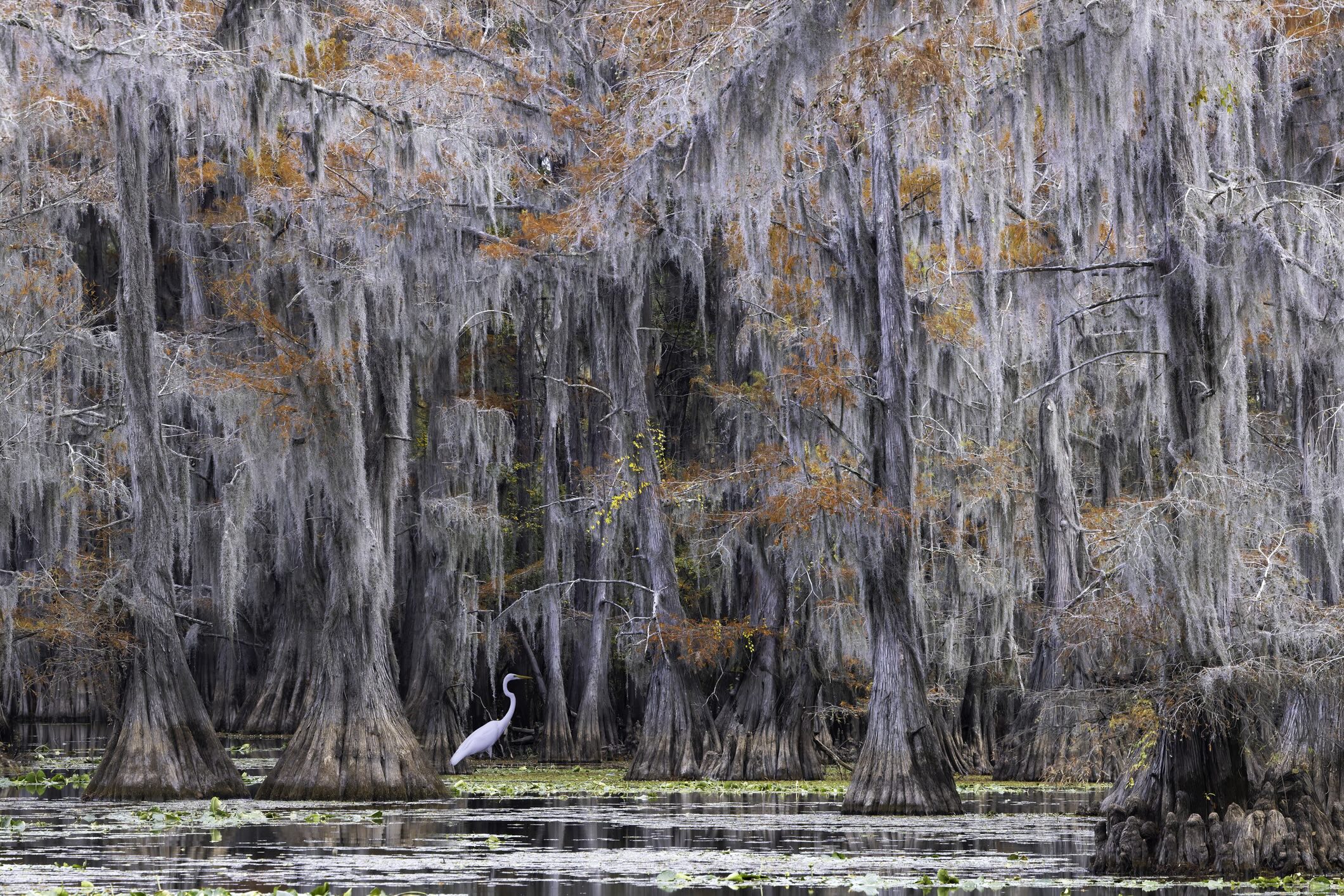
Caddo Lake is a lake and wetland on the border of Texas and Louisiana. The surrounding area is a wetland featuring the world’s largest flooded bald cypress forest. Its trees are draped in Spanish moss.
Caddo Lake is the largest natural freshwater lake in the US South. A dam was added in the 20th century. It includes the 484-acre Caddo Lake State Park, which opened in 1934.
- When a 3,700m mountain collapsed, it created the deepest lake in the US. Here's what lives there now
What is a bald cypress tree?
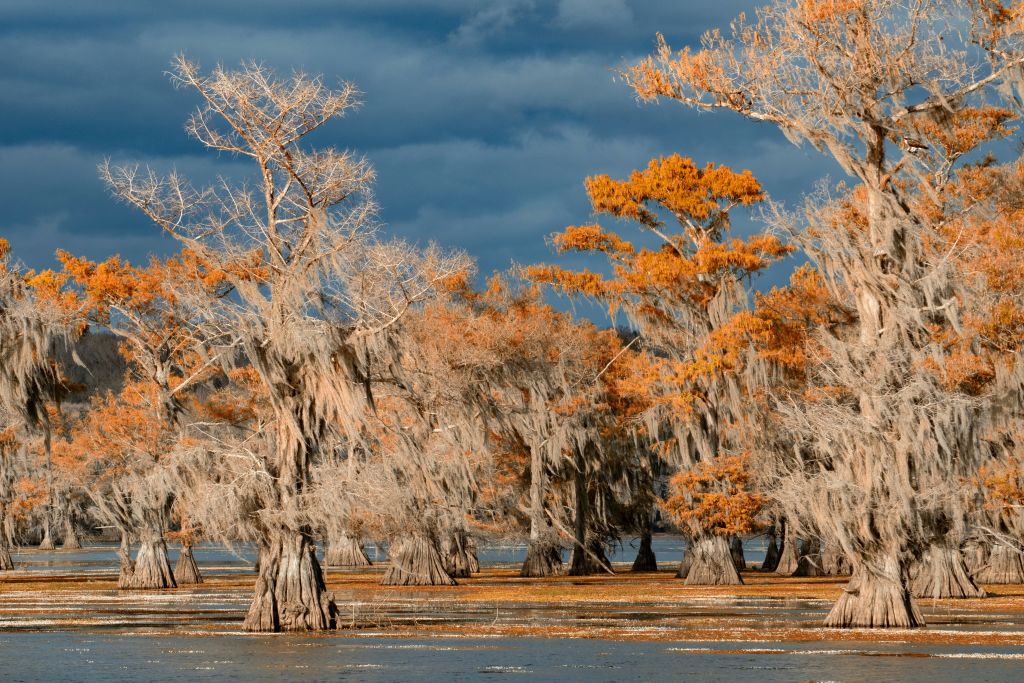
Bald cypress trees grow along waterways, and take their name from their bald appearance, due to the fact that they shed their leaves every autumn.
How big is the lake?
Caddo Lake covers an area of nearly 26,000 acres – that's roughly twice the size of the island of Bermuda.
What animals are found in Caddo Lake?
Wildlife abounds in the areas surrounding Caddo Lake, thanks to the three diverse habitat types – bottomlands, mesic and uplands – which support a range of wildlife.
Fish
The lake harbours more than 70 species of fish, including the paddlefish – the oldest surviving animal species in North America.
Birds
Caddo Lake is within the Central Flyway, a migratory path for many species of birds. Permanent residents include great blue herons and woodpeckers. Smaller birds are also able to build nesting sites in the tree cavities and fallen logs of the bald cypress and water tupelo trees.
Prothonotary warblers can be heard around the lake, often seen gathering moss for their nests.
Owls are often found in the swamp forests, most notably the barred owl. Bald eagles and other raptors are often spotted overhead.
Amphibians
The southern leopard frog, Blanchard’s cricket frog and various chorus frogs – known for their distinctive breeding calls – are regularly seen around the waterways.
Reptiles
Caddo Lake is home to around 32 snake species, living in the water and surrounding swamp areas. These include western rat snakes, garter snakes and the northern cottonmouth, the latter of which is a venomous species.
American alligators are also found around the lake.
Waterfowl
The shrubs and swamp grasses of the lake provide ideal habitats for waterfowl such as wood ducks.
Mammals
The loblolly pines and white oak trees produce pinecones and acorns, which offer a food source for grey squirrels and other species.
Feeding on berry-producing shrubs in the upland habitats and forested areas, white-tailed deer, raccoons and Virginia opossums have plenty to sustain them in the park.
Also seen in the park are bobcats, river otters and beavers.
Top image: Caddo Lake, Texas. Credit: Dukas/Universal Images Group/Getty Images


