
Found in the cool, nutrient-rich waters of the Atlantic and Indian Oceans off the coast of Cape Town in South Africa, this vast underwater wilderness is dominated by giant bamboo kelp (Ecklonia maxima), creating a thriving marine habitat that rivals the world's most celebrated forests.
Where is the Great African Sea Forest?
The Great African Sea Forest is the only forest of giant bamboo kelp on Earth. It's found along the south-western coast of South Africa, stretching over 1,000 kilometres from the cold Atlantic waters of the Western Cape around the Cape Peninsula and eastwards along parts of the country's southern coastline.
- Scientists discover ancient deep-sea 'superhighway' that spans the entire globe
- Deep-sea submersible discovers 'giant' animal 5,922m down in Pacific abyss
What is a kelp forest?
Kelp forests are highly productive underwater ecosystems found along coastlines worldwide, providing food, shelter and breeding grounds for thousands of marine species – making them among the most productive ecosystems on the planet.
Unlike terrestrial forests, the Great African Sea Forest exists entirely beneath the waves. Towering fronds of kelp can grow several metres tall, forming dense underwater canopies that sway rhythmically with the ocean currents.
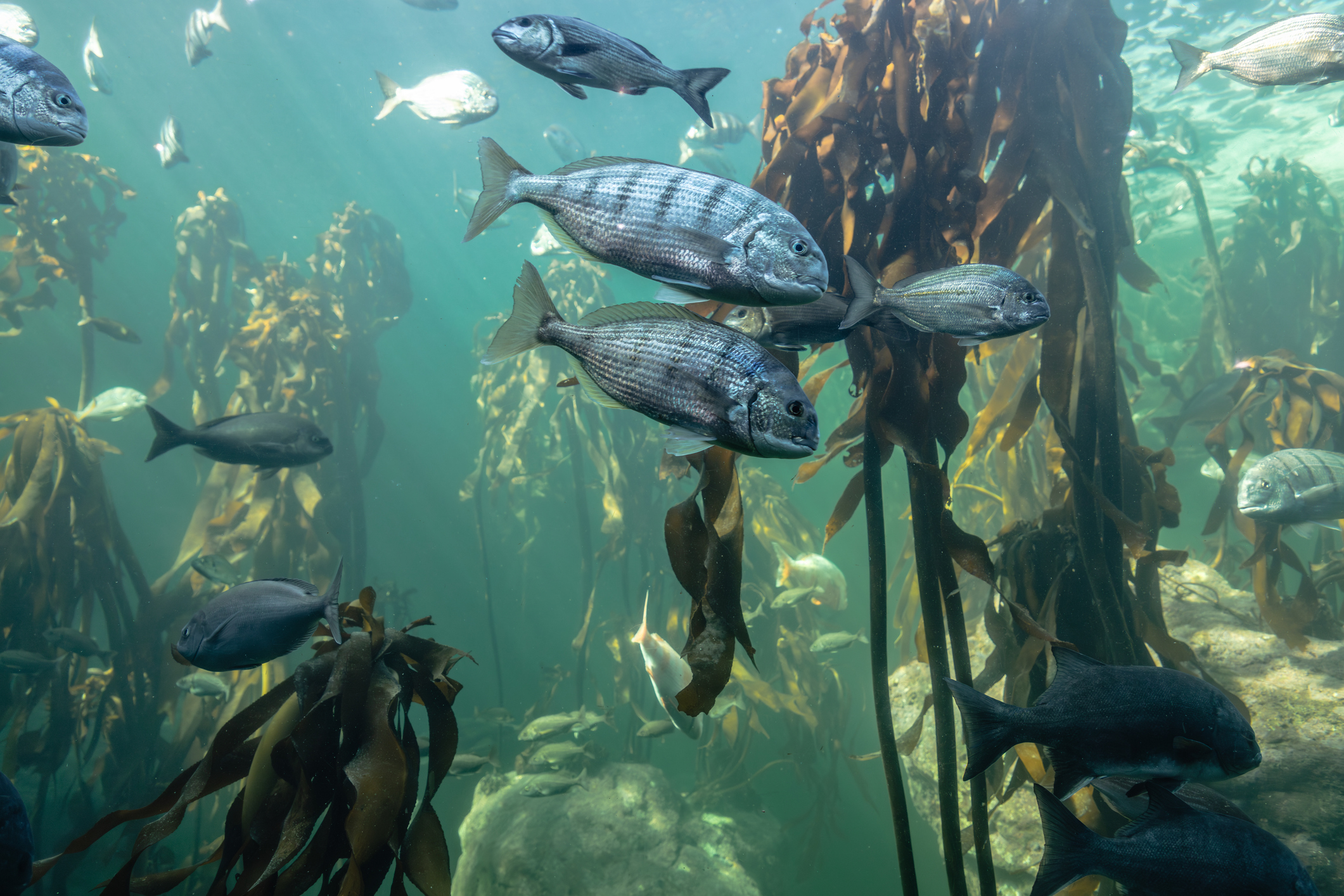
At the heart of the sea forest is giant bamboo kelp, a species uniquely adapted to South Africa's coastal waters. Using gas-filled floats to keep its fronds near the sunlit surface, the kelp captures energy through photosynthesis while creating a complex three-dimensional habitat below. The result is an underwater world teeming with life.
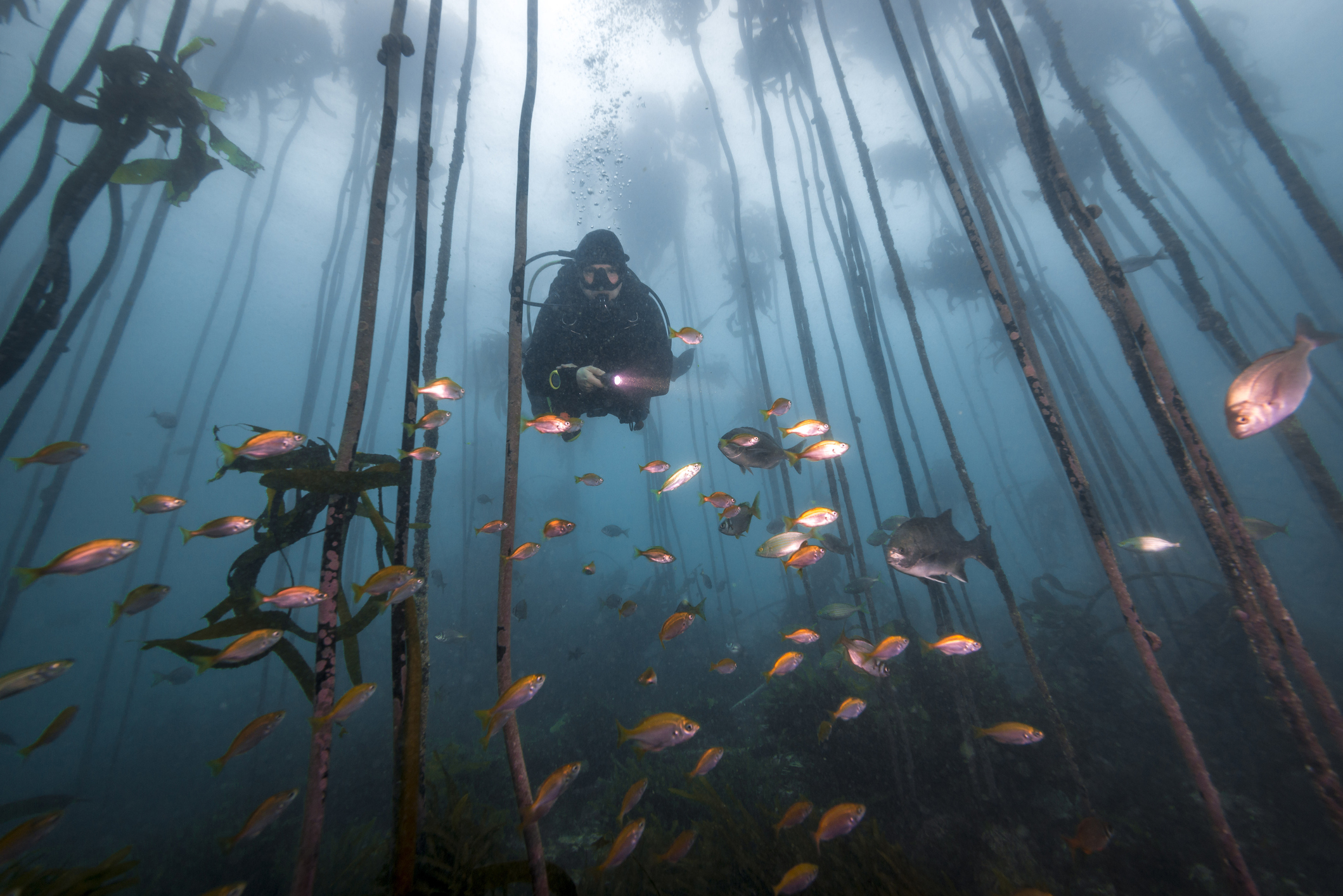
What wildlife lives there?
Among the forest's most iconic residents is the Cape fur seal, which uses the kelp as a refuge from predators and a hunting ground for fish. Beneath the canopy, colourful sea stars, sea urchins and crustaceans cling to rocky reefs, while schools of fish weave through the kelp stalks. The forest also supports species found nowhere else on Earth, highlighting its global conservation importance.
One of the sea forest's most charismatic inhabitants is the pyjama shark, a small, striped species that spends much of its time resting among the kelp. Other predators, including sharks, rays and large fish, patrol the ecosystem, helping to maintain its ecological balance. During seasonal migrations, dolphins and whales can often be spotted offshore, benefiting from the abundance of life supported by the kelp forest.
It's also home to common octopuses – one of which starred in the Netflix documentary film My Octopus Teacher.
Why is it so important?
Beyond its remarkable biodiversity, the Great African Sea Forest plays a vital role in combating climate change. Kelp absorbs carbon dioxide as it grows, helping to remove greenhouse gases from the atmosphere. The forest also protects coastlines by reducing wave energy, limiting erosion and providing natural resilience against increasingly severe storms.
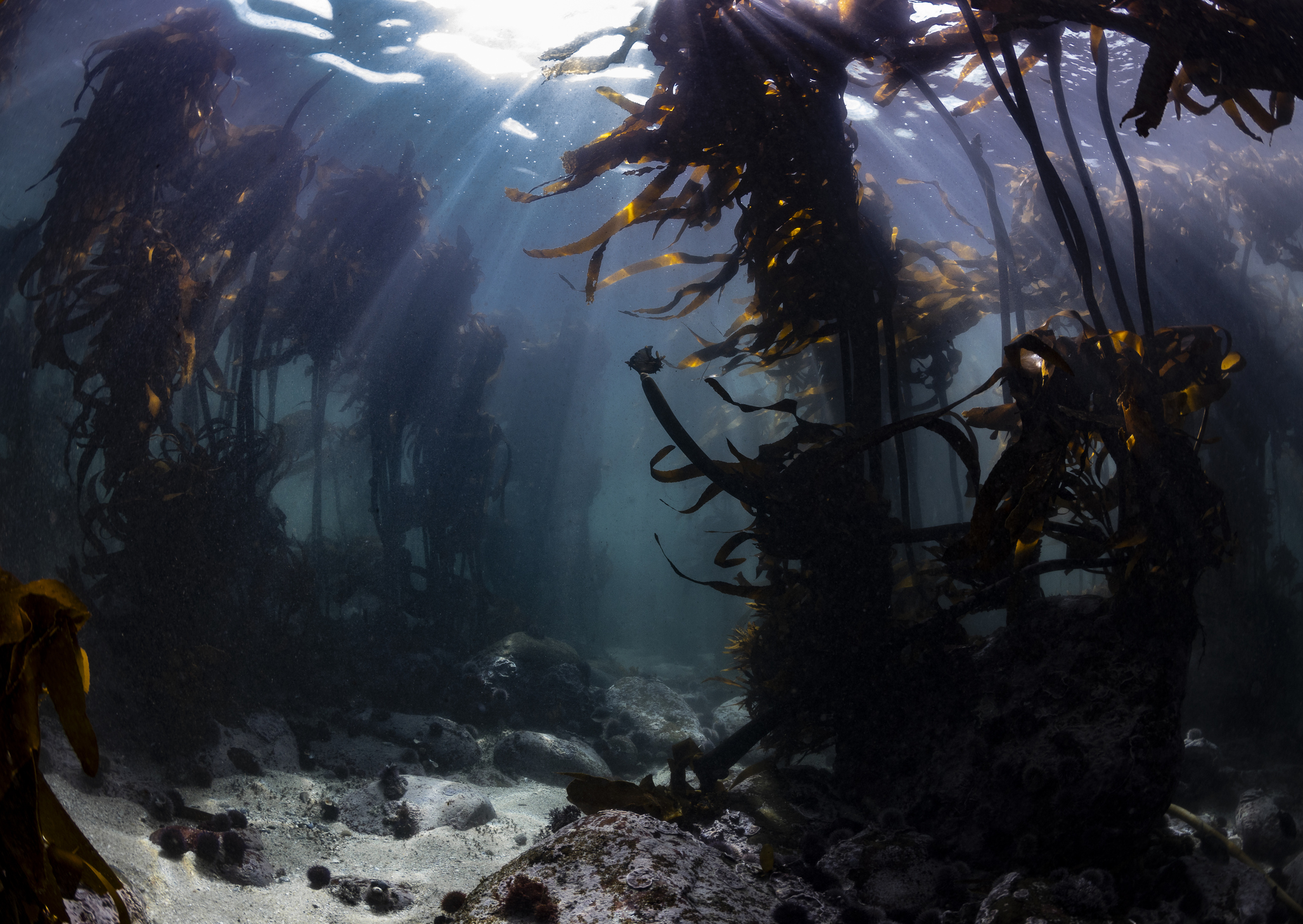
For centuries, local communities have depended on the rich waters surrounding the sea forest for food and livelihoods. Today, scientists continue to study the ecosystem, uncovering new insights into its complexity and resilience. Increased awareness of the forest has also inspired conservation efforts aimed at protecting its biodiversity from threats such as overfishing, pollution and climate change.
More amazing wildlife stories from around the world
- "As we approached the overhang, we spotted it – a bizarre creature with a fleshy beard lurking in the shadows"
- “Its prey was still alive.” Photographer captures blue dragons feeding in unbelievable detail
- “As the great whites move in for the kill, the seals do something astonishing.”
- Drones film sperm whales headbutting each other. It's the first time the behaviour has been caught on camera


