In June 2026, a dried-up river in southern Africa, began flowing again having largely vanished since it ran strongly between 2008-2016. And over the late 19th and 20th centuries the river was dry for an entire lifetime of local people before transforming back into a living river. For instance, no water appeared between the 1880s and 1957 but then it returned for the next 25 years, turning the dry channel into a flourishing wetland.
- The Colorado River vanished for 5 million years. Scientists may have just figured out where it went
- An American town woke up one day and mysteriously found itself on the opposite side of the Mississippi River to where it had been. We now know why...
The Savuti Channel, within Chobe National Park, in northern Botswana, is one of the world's most mysterious waterways, and appears and disappears without any pattern. It runs for 100km from the Linyanti river system through a gap in a sand ridge to the Mababe Depression but its descent along its entire length is less than 18m so flow is sluggish at the best of times.
When it does fill with water, it creates the Savuti Marsh in the Depression, a huge vibrant wetland. The explorer David Livingstone was unimpressed when he passed through the region in 1851. The Channel was flowing and the Savuti Marsh was a thriving wetland that Livingstone disparaged as “a dismal swamp”. The water seems to take the landscape by surprise too. Trees that have established themselves during the dry periods can become swamped and eventually die. When the waters retreat again, stark skeletons of dead trees stud the grasslands.
- It’s larger than New York State and contains more than 30 billion tonnes of carbon – equivalent to 3 years of global fossil fuel emissions
- "It's famous for the mighty river that snakes through its forests, but high above the canopy, another vast river is moving…" – Discover the Amazon's 'Flying River'
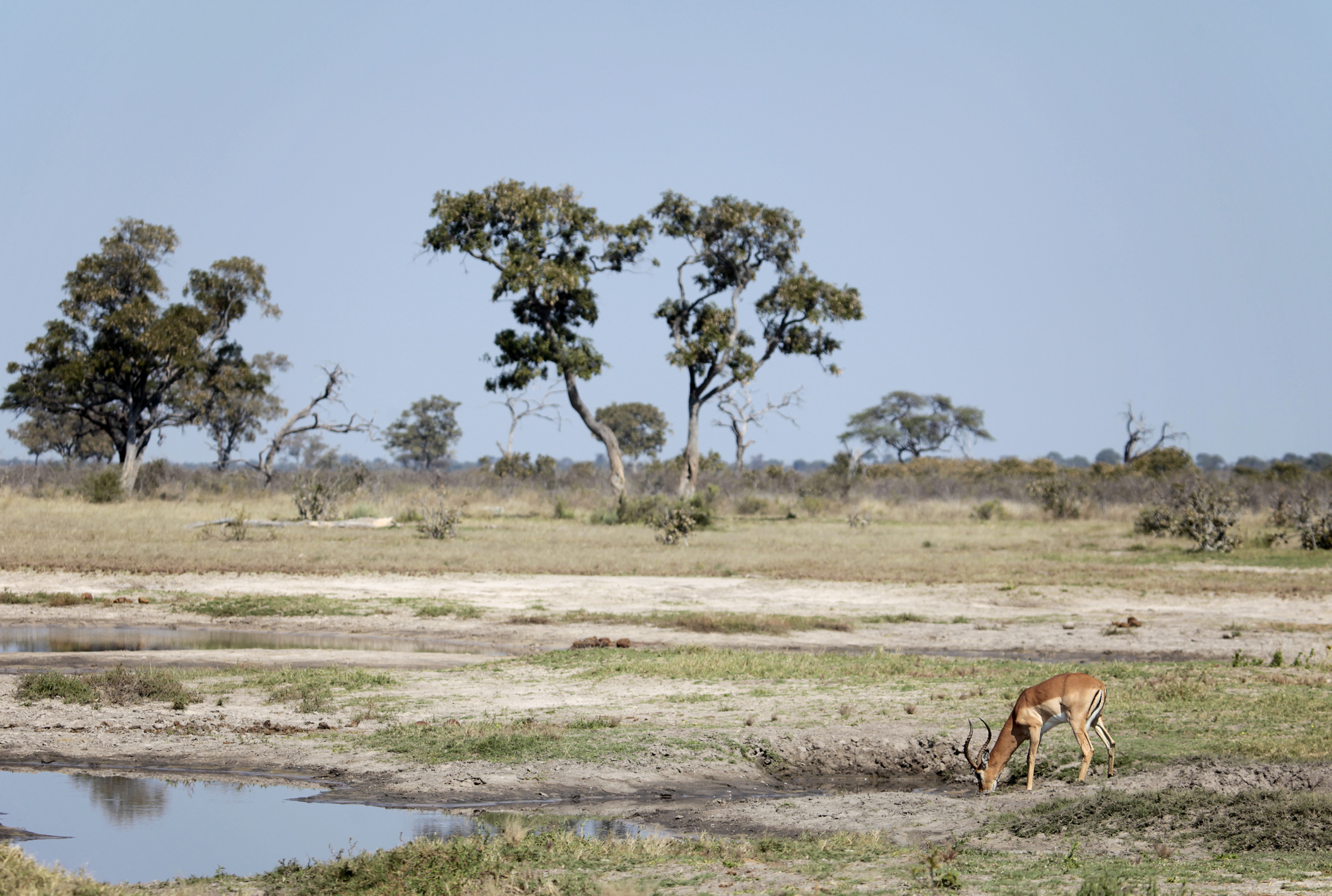
Strangely, the Savuti Channel is unaffected by rainfall or lack of it. But its impacts on the landscape and the wildlife, whether it flows or not, are profound and each time it runs, the resulting ecosystem is different. When it is filled with water, the lush wetlands it creates are abundant with huge herds of buffalo, elephants, zebras and other grazers.
When the Savuti Channel runs dry, the region becomes more arid, though seasonal rains means it does not become desert and the Savuti Marsh still receives some water. Instead the landscape around the Channel becomes a dry grassland and scrubby savannah of camelthorn and silver terminalia, and many grazing animals periodically move to more favourable conditions.
The documentary The Stolen River, made by Dereck and Beverly Joubert, explored the slow drying of the Savuti Channel in 1980s, and revealed that life can be tough for predators that don't tend to migrate with the herds. The lions of Savuti, for instance, hardened by the dry conditions, learned to hunt down the largest mammals including giraffe, buffalo and even elephant.
They filmed extraordinary behaviour, such as when a hippo pushed lions aside to get to the spilled stomach contents of a dead elephant, while elephants dug down desperately into the earth for water. And poignantly, they recorded that as the river completely vanished, all the crocodiles and hippos died out.
- When a pride of lions went down to the waterhole, they bumped into a hippo. Here's what happened next
- Wild animals stranded on island in Kenya. Scientists visited 5 years later – and found something worrying
- 11 of the biggest animals on Earth – number 4 is absolutely massive!
So what is behind the Savuti Channel's erratic behaviour? The most widely accepted explanation is that the region is subject to regular minor earth tremors linked to the East African Rift System (EARS). This the complex series of tectonic plates and microplates in the Earth's crust that meet and move together along fault lines running through much of eastern Africa. These tremors are largely imperceptible but because the Savuti Channel is so flat, even a slight change to its gradient can redirect water or block or alter its flow to reopen old, dry watercourses.
Despite the enigmatic nature of its main source of water, the Savuti region is one of the world's great wildlife hotspots and seasonal rains and sporadic waterholes . Savuti sits directly in the path of Africa's second largest zebra migration.
Between November and April, thousands of zebra follow the rains through this landscape, providing hunting opportunities for lions, leopards and hyenas. Some 120,000 elephants call the Savuti region home, 30-35 per cent of the world's entire African elephant population. It's a popular destination for safaris at any time but if the Savuti Channel is running when you visit, you are extremely lucky. The transformation of the landscape and the subsequence abundance of wildlife is truly miraculous.
top image: The Savuti Channel in Northern Botswana. This was the scene in May 2010 just 3 weeks after the waters returned to flood the old dry channels. Credit: Steve Allen/ Getty Images
Discover more wildlife stories from around the world: