
Within just half an hour’s boat ride from Alva Beach, Queensland, Australia, is an underwater haven where scuba divers can cruise alongside Napolean wrasse, giant trevally, barracuda and spotted eagle rays as well as green, hawksbill and loggerhead turtles.
This is the SS Yongala, a passenger ship that vanished mysteriously more than a hundred years ago and was missing for nearly half a century.
Built in 1903, the Yongala was a 350-foot (around 107 metres) luxury steamship that carried both passengers and cargo.
On 23rd March 1911, the ship had left the city of Mackay, Queensland, and was continuing to Townville, roughly 200 miles further north.
As the ship was leaving Mackay, a nearby signal station got word that a tropical cyclone was on the way. They put up flags to warn ships of the danger but Yongala didn’t see them and didn’t have a radio for anyone to send a message.
- In 1941, a massive WWII ship sank off the coast of Albania. Divers just went down there – and found a rare mammal living among the wreck
- When the Titanic sank 3,800m into the Atlantic Ocean, strange animals moved into the wreck
“Ironically, a wireless destined for installation in Yongala had recently been dispatched from the Marconi company in England,” says the Maritime Museum of Townsville on its website, adding that even with this equipment, the ship likely would not have received the information because the coastline did not yet have radio stations that could transmit messages to vessels.
So, the Yongala sailed straight for the storm. “The lighthouse keeper on Dent Island in the Whitsunday Passage watched Yongala steam past into the worsening weather,” says the Maritime Museum of Townsville. “It was the last sighting.”
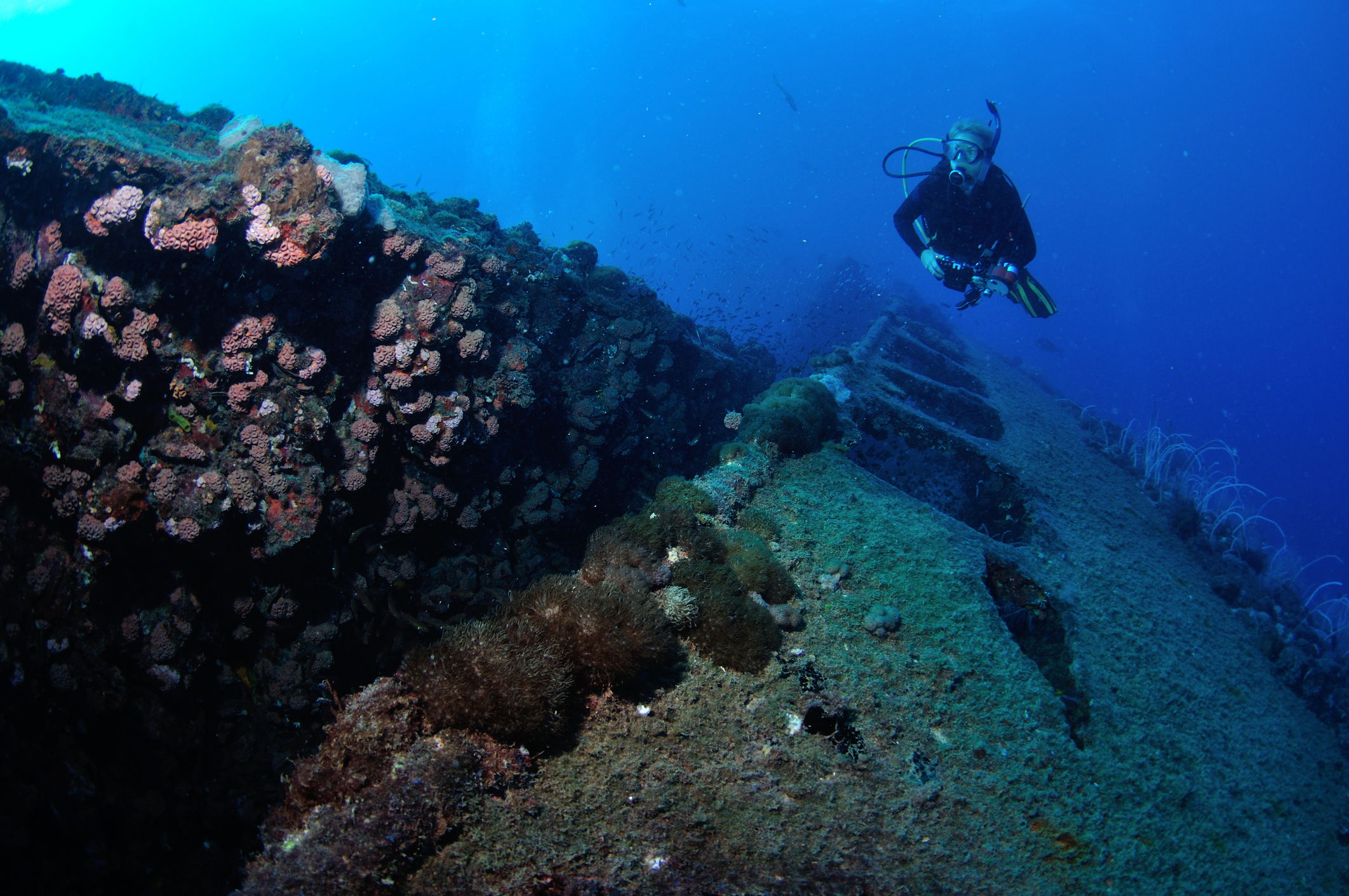
Then, she disappeared. All 122 souls onboard died and no human bodies were ever recovered. One corpse did wash up later. Experts believe it was that of a racehorse named Moonshine that was being transported by the ship.
At first, people weren’t worried by the Yongala’s late arrival into Townsville as they assumed she had been delayed by the storm.
- Sunken warships fill this eerie lagoon – and they're scattered with gas masks, skulls and bullet casings
- "At first, they are little more than bare surfaces in the ocean’s vast expanse.” Why do sunken ships make good artificial reefs?
- This haunting shipwreck in North Carolina has its own 'shark ballroom'
But days later, she still hadn’t arrived. She was declared missing on 26th March 1911 and seven vessels went out looking for her, with no luck. “Extensive searches and wreckage washed up on distant beaches give no clue as to the vessel’s whereabouts,” says Queensland Museum on its website.
No-one would see the Yongala again for 47 years.
The first clue to her whereabouts came in 1943. A minesweeper got snagged on something underwater but didn’t know what it was, marking the spot of the obstruction so other ships could avoid the hazard.
In 1947, a survey ship called the HMAS Lachlan investigated the area and suggested there could be a shipwreck down on the seabed.
The wreck was finally re-discovered in 1958. According to the Queensland State Archives, local skipper Bill Kirkpatrick and German salvage diver George Konrat found the wreck. “Kirkpatrick later returned with divers from the Queensland Underwater Research Group, who managed to recover a mud-filled safe,” it says. “Despite its condition, the safe bore a serial number matching the one issued to the Yongala, finally confirming the ship’s identity.”
- It's longer than the Leaning Tower of Pisa, weighs 499 tonnes and sits 24 metres below the surface, where sharks patrol Noonu Atoll’s tropical waters
- 10 incredible, dramatic shipwrecks around the world that are just teeming with marine life
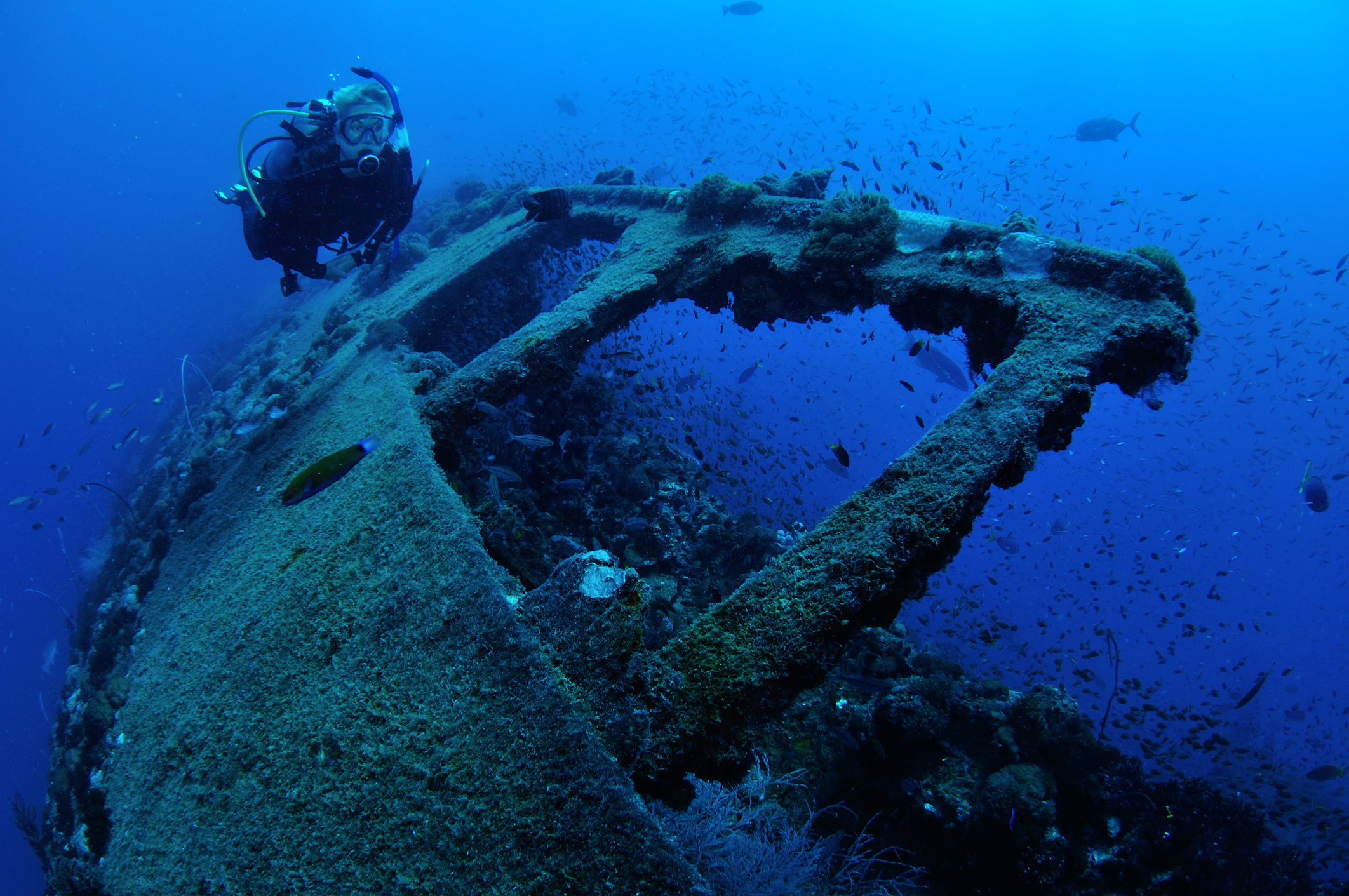
Now, she rests on the seabed between around 14 and 28 metres deep. Her century (and counting) on the seafloor has given plenty of time for corals to encrust her structures and marine life to make themselves at home on this accidental artificial reef.
Entering the structure of the wreck itself is forbidden but the marine animals that throng the wreck entice scuba divers from around the world.
There’s even have the chance of seeing bull sharks. “They generally cruise just out of view 20 to 30 metres out from the wreck,” says Yongala Dive on its website. “Look out from the wreck into the blue to have a chance at spotting them.”
The largest species of marine stingray – elusive smalleye stingrays, which can have a two-metre wingspan – can be seen here too, according to Yongala Dive: “Smalleye rays often cruise in out of the blue, and soar over the top of the wreck with an entourage of whiptail rays.”
top image: The SS Yongala. Credit: Allan C. Green, Public domain, via Wikimedia Commons
More fascinating environmental stories from around the world:


