
A new study on an ice shelf estuary on the Petermann Ice Shelf – the first known estuary of its kind – has found this brackish body of water may be to blame for the glacier’s recent iceberg breakaway.
By applying modern methods to years of ocean measurements and satellite images, scientists have revealed how and when the estuary formed.
The Petermann Ice Shelf in northern Greenland connects the wider Greenland Ice Sheet to the Arctic Ocean. On August 4, 2026, an iceberg the size of Manhattan, New York City, broke away from the ice shelf, marking the glacier’s largest loss of floating ice since 2012 and the largest calving event since 2020.
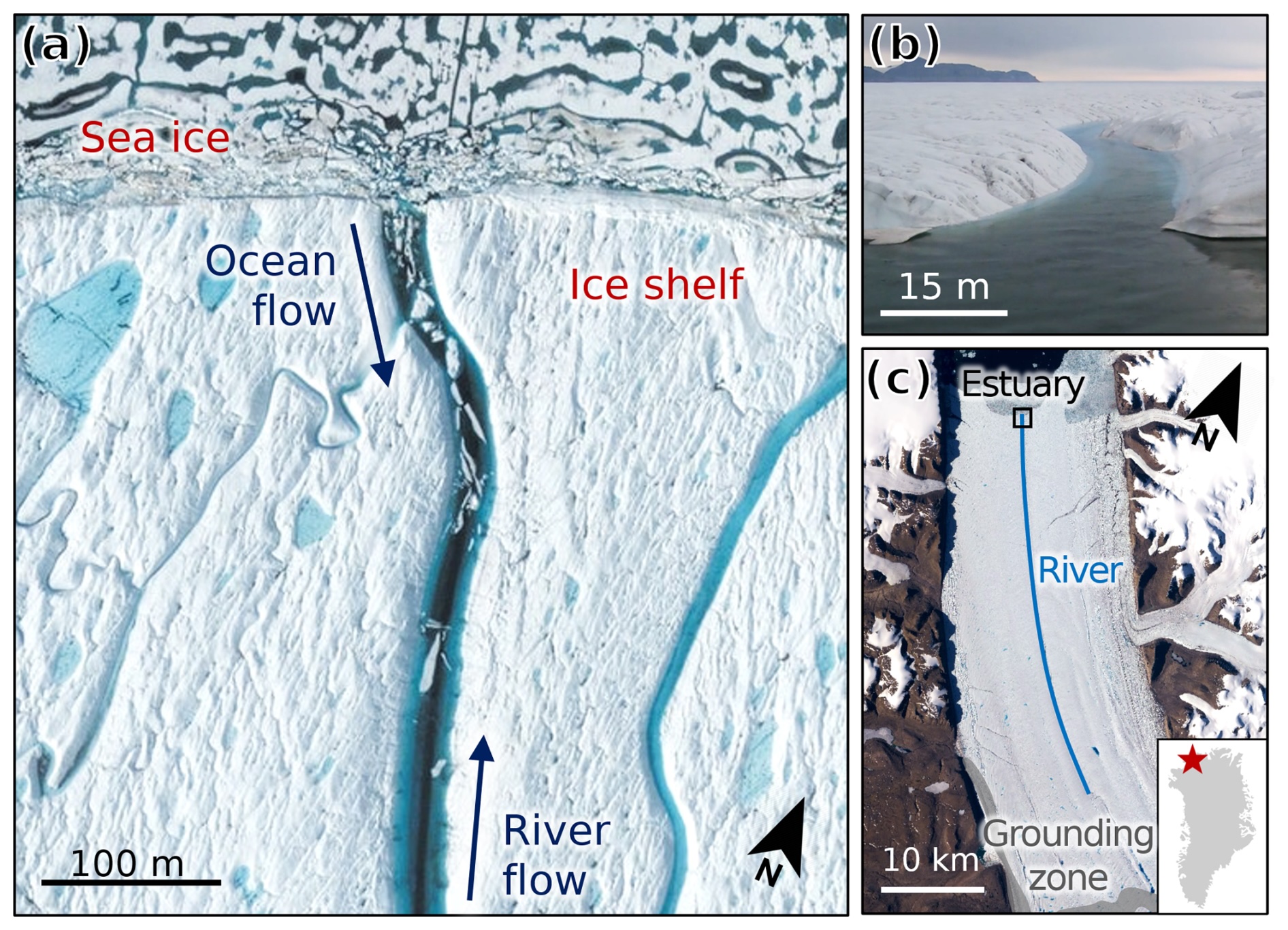
In 2021, shortly after the glacier’s last major calving event, a NASA-funded team of scientists discovered an ice shelf estuary using high-resolution satellite imagery. The estuary was the first of its kind found anywhere in the world, prompting the team to investigate it further.
The first study on this ice shelf estuary, published in Nature Geoscience in 2021, revealed that such bodies of water promote fractures and calving, but it wasn’t until the latest study led by scientists from the Cooperative Institute for Research in Environmental Sciences (CIRES), published recently in The Cryosphere, that the behaviour of the estuary was able to be properly measured.
“For the first time, we were able to measure how quickly the river cut into the ice shelf to form the estuary, which revealed more complex estuary behaviour than was previously suggested,” said the study’s lead author, Michela Savignano. “We did this using a new method for calculating elevation of the river channel above sea level during the melt season from satellite imagery.”
- Satellite images reveal hidden cause of melting glaciers in Greenland
- What the largest glacier on Earth?
This latest research has helped the CIRES-led team explain the August calving event.
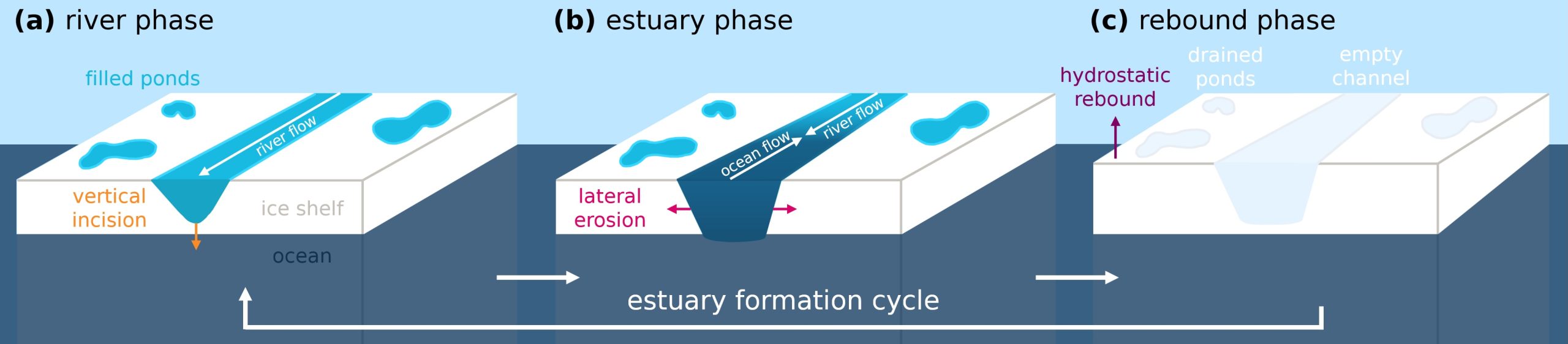
“We think the process of the estuary forming and reforming over multiple melt seasons weakened the ice shelf due to the loading and unloading of ocean water, and potentially contributed to the calving event that happened in August of this year,” said co-author Alison Banwell.
In summer, when air temperatures are above freezing, glaciers and surface snow melt, leaving pools of water on the surface of the ice shelf. This creates instability and makes them more susceptible to collapse, which is what happened in the case of the famous 2002 breakup of the Larsen B Ice Shelf, when a 2,717-square-kilometre section (larger than the country of Luxembourg) disintegrated in less than six weeks.
Interestingly, rivers have been shown to be beneficial to the overall health of an ice shelf, as they can carry water from the ice shelf into the ocean, reducing the pressure and weight of water pooling on the surface. However, this latest study suggests that estuaries - the bodies of water where salt water from the ocean and fresh water from the surface of ice shelves mix - might be harmful.
“We’ve known for a couple of decades that lakes can be harmful to the overall health of an ice shelf, whereas rivers can actually be beneficial,” Banwell said. “Our new research suggests that estuaries can also be harmful.”
According to the authors of this latest study, this is because the supraglacial river that flows from the Petermann Ice Shelf, over time, cut deeper and deeper into the ice, eventually dropping below sea level at its mouth. As a result, warmer, salty ocean water mixed with river water and flowed backwards into the river, destabilising the ice shelf.
By looking at satellite images of the estuary from 2013 to 2018, the researchers were able to conclude it first formed in 2014, but then disappeared when all of the surface water on the ice shelf drained or froze. It formed again during the 2016 melt season and this cyclical pattern of the estuary forming and reforming continued up until 2018, when a crack in the ice cut off the river upstream of the estuary.
- Why scientists just drilled 1,000m to the bottom of the ‘Doomsday Glacier’
- Powerful before-and-after photos reveal "haunting" retreat of Arctic glaciers
The results of this latest study paint a particularly grim picture for the future of ice shelves in other parts of the world, particularly in Antarctica where roughly 75% of the continent is surrounded by ice shelves.
“We think estuaries may become more common on other ice shelves as they melt and thin, which they’re going to do at increasing rates in the future,” said Banwell. “In Antarctica, estuaries could begin forming within 30 years, weakening ice shelves that currently play a substantial role in mitigating future sea level rise. Our research will help us to understand when and where that is most likely to happen,” Savignano added.
The Manhattan-sized iceberg that broke off the Petermann Glacier is currently drifting through the Nares Strait after surviving a collision with Joe Island. As it moves further south into water waters and narrower channels, it’s expected to fracture and shed smaller chunks before eventually melting entirely.
Find out more about the study, published in The Cryosphere.
More wildlife stories from around the world
- Gigantic iceberg breaks free in Antarctica, revealing ghostly mega-nest beneath
- Arctic bobtail squid seen alive in natural habitat for first time ever
- When a giant iceberg calved from the Antarctic Peninsula, it revealed a deep-sea world never seen by humans
- Colossal flood explodes through Greenland Ice Sheet. What scientists find in aftermath astounds them
Top image: Iceberg (not the iceberg from the study). Credit: Grafissimo/Getty Images


