
Deep in the remote waters of the North Atlantic Ocean, there’s a Lost City. But maybe not the kind you’re thinking of.
This isn’t a submerged civilisation that has been lost to history but a unique type of hydrothermal system that may help to explain the origins of life itself.
In December 2000, ocean scientists were 2,300 miles off the coast of Florida exploring waters around 793 metres deep when they found vents of scalding 93°C (200°F) water gushing from towering chimneys. In a nod to the mythical Atlantis, it’s called the Lost City Hydrothermal Field.
- Was it the lost city of Atlantis or a crashed UFO? The strange Ferris wheel-sized circle found at the bottom of the sea
- From New York to Mexico City, some of Earth's biggest cities are sinking, say scientists
Although they were discovered less than three decades ago, scientists think the Lost City could be 120,000 years old.
While many deep-sea vents are created by volcanic activity, the Lost City was formed by something called serpentinisation. This is when seawater meets a type of igneous rock called peridotite in the Earth’s upper mantle.
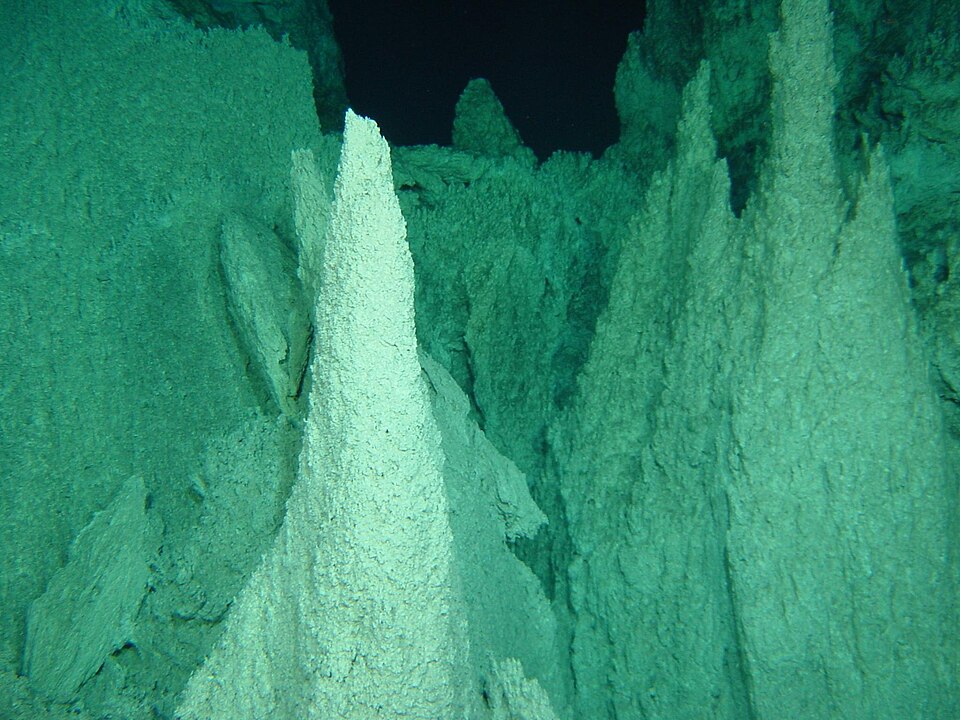
When the two come together, it causes a reaction that creates hydrogen, methane, heat and minerals that build tall rock chimneys that dominate the underwater landscape.
Some of these huge structures reach 60 metres tall, making them bigger than Cinderella Castle’s at Walt Disney World's Magic Kingdom.
The largest vent, Poseidon, is made up of four towers that reach 60 metres at their highest. It was named after the Greek god of the sea. The main chimney of the ‘IMAX’ tower is around eight metres tall but has additional pillars that pile up like stalactites and reach 30 metres. Another tower, called Nature, is also 30 metres tall.
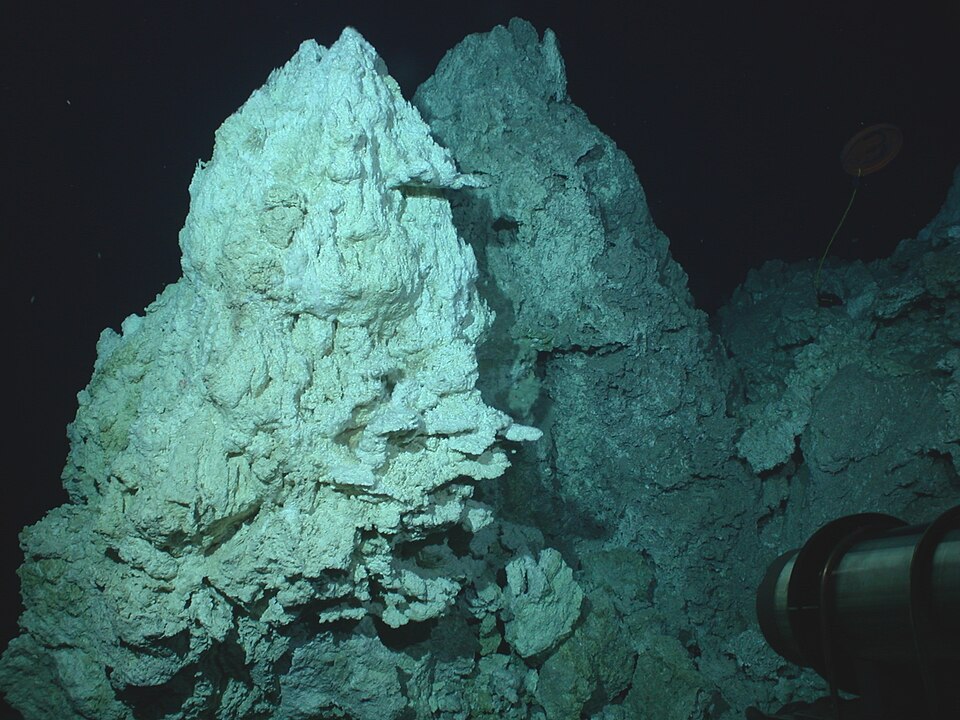
The authors of a 2019 Marine Policy paper describe the vent system as “one of the most important deep-sea scientific sites in the world.”
This extreme environment is so deep that there’s not enough light for photosynthesis but life still prevails. Lots of bacteria and tiny single-celled microorganisms called archaea make up microbial biofilms that cling to the inner and outer surfaces of the chimneys.
Because there’s no sunlight to power their biological processes, these organisms survive on chemical energy from the dissolved gases in the seawater.
Scientists believe that studying the lifeforms that have made their home here might hold clues to how life on Earth first began.
- 3 miles down, deep-sea robots discovered an incredibly hostile habitat with scorching 400°C waters, smoking black chimneys and – somehow – life...
- The same size as Casablanca, this arid landscape holds over 15 staggering 300m rock towers older than the dinosaurs – and America’s deadliest snake
“The detection of these organic building blocks from a non-biological source is possible evidence in our quest to understand the origin of life on this planet and other solar bodies,” says Giora Proskurowski, a marine geochemist at the Woods Hole Oceanographic Institution (WHOI), in a statement.
That means that studying this unique environment could even help experts understand whether there might be life in space because this process of chemosynthesis could support life on other planets.
The bacteria and microorganisms then form the foundation of its own food chain. Corals, crabs, shrimp, jellyfish and more have all been found here.
Some conservation experts are worried about the future of this exceptional ecosystem.
Located on an underwater mountain called the Atlantis Massif in the High Seas, the Lost City is an Area Beyond National Jurisdiction (ABNJ). This is concerning for conservation experts: because the waters aren’t owned by any one nation, it’s harder to protect.
There is hope. A legally binding global agreement called The High Seas Treaty entered into force in January 2026 and this could help protect remote parts of the ocean like the Lost City.
“The new High Seas Treaty sets out the world's first global legal process to establish networks of representative and well-connected marine protected areas in the High Seas, including highly and fully protected areas where no harmful industrial activities are allowed,” writes the High Seas Alliance on its website.
- When a deep-sea robot ventured down into the Atlantic's Doldrums, it found something massive no one expected – leaving scientists stunned
- It's over 75 million years old and like something out of a fantasy video game with outlandish giant mushrooms, fairy chimneys and an alien throne
The irregular shape of the mountainous seabed around the Lost City means commercial trawling for fish isn’t possible but conservation experts are still worried about the threats of human impacts, including deep-sea mining.
That’s why they want conservation measures in place. “If such a step [to protect the site] cannot overcome systemic inertia and resistance to precaution, what comes around may go around,” write the authors of the Marine Policy paper. “Atlantis, the fictional island mentioned by Plato, exemplified the destruction of a society corrupted by its material wealth and advanced technology.”
These researchers hope impactful human activities such as fishing and mining will steer well clear of this extraordinary habitat. They write: “Some unique deep-sea locations such as Lost City should be ruled as ‘off limits’.”
top image: Diver exploring reef life and old wrecks, Alacranes, Campeche, Mexico. Credit: Rodrigo Friscione/ Getty Images
Discover more environmental stories from around the world:
- "Unrelated thoughts and ideas flow together, inanimate objects become loaded with emotional meaning and senses blend into one another"
- It cost an eye-watering $40,000 to sink this ship and turn it into a reef – and the costly reason weighed less than a pineapple
- "The idea was that they would inhale the spores and become infected. And they did — most died within days. The island was then burned to kill the spores"


