
A tiny brown mushroom found in Florida’s swamps has revealed an unexpected chemical combination: psilocybin, best known for its psychedelic effects, alongside an amatoxin belonging to the same family of poisons found in some of the world’s deadliest mushrooms.
Small and sometimes even camouflaged, these mushrooms have been often missed by historical mycologists – the ‘dark magic’ mushroom is one of them.
- It makes you hallucinate tiny, pint-sized people – and scientists have no idea why
- "Unrelated thoughts and ideas flow together, inanimate objects become loaded with emotional meaning and senses blend into one another"
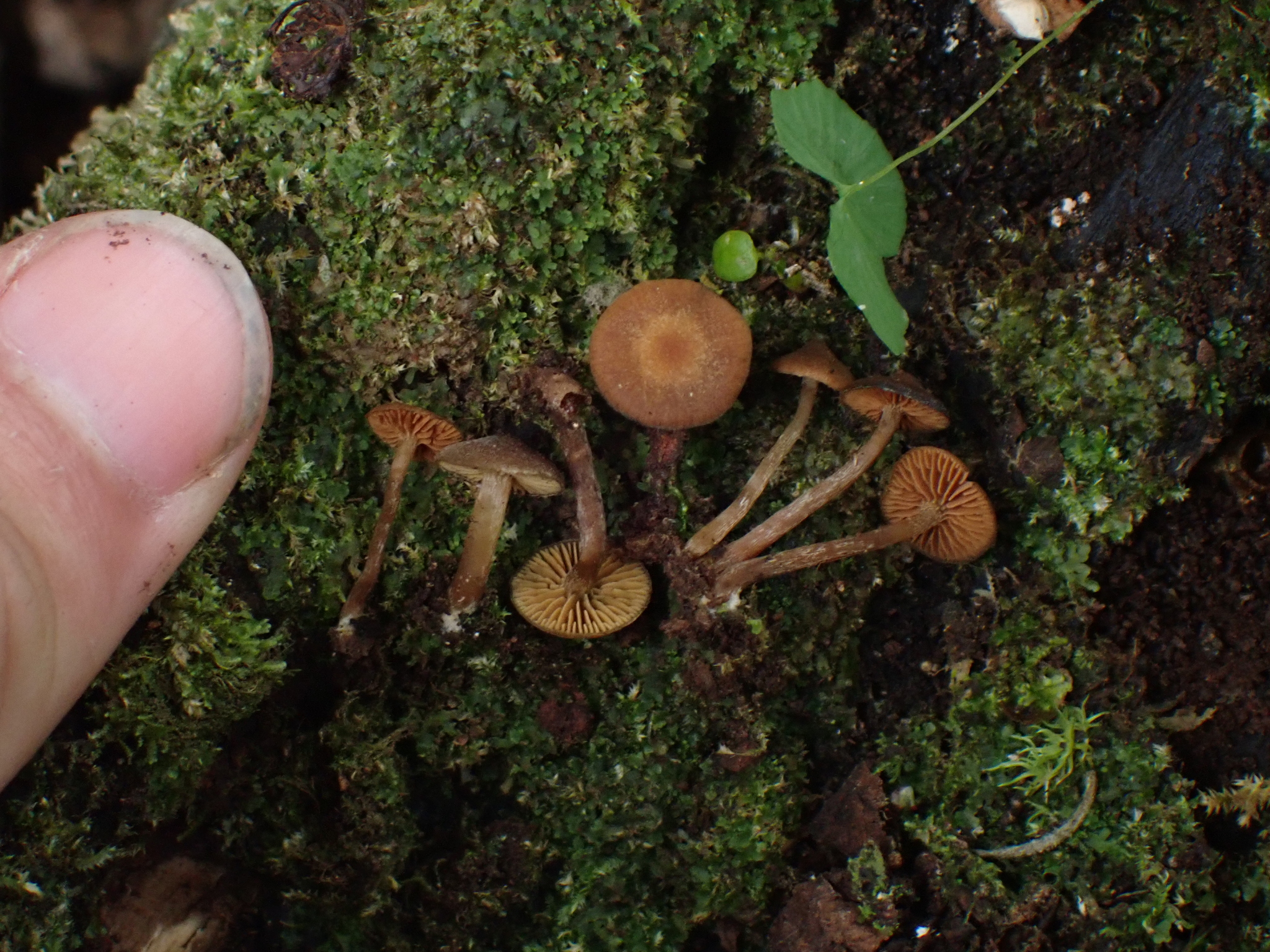
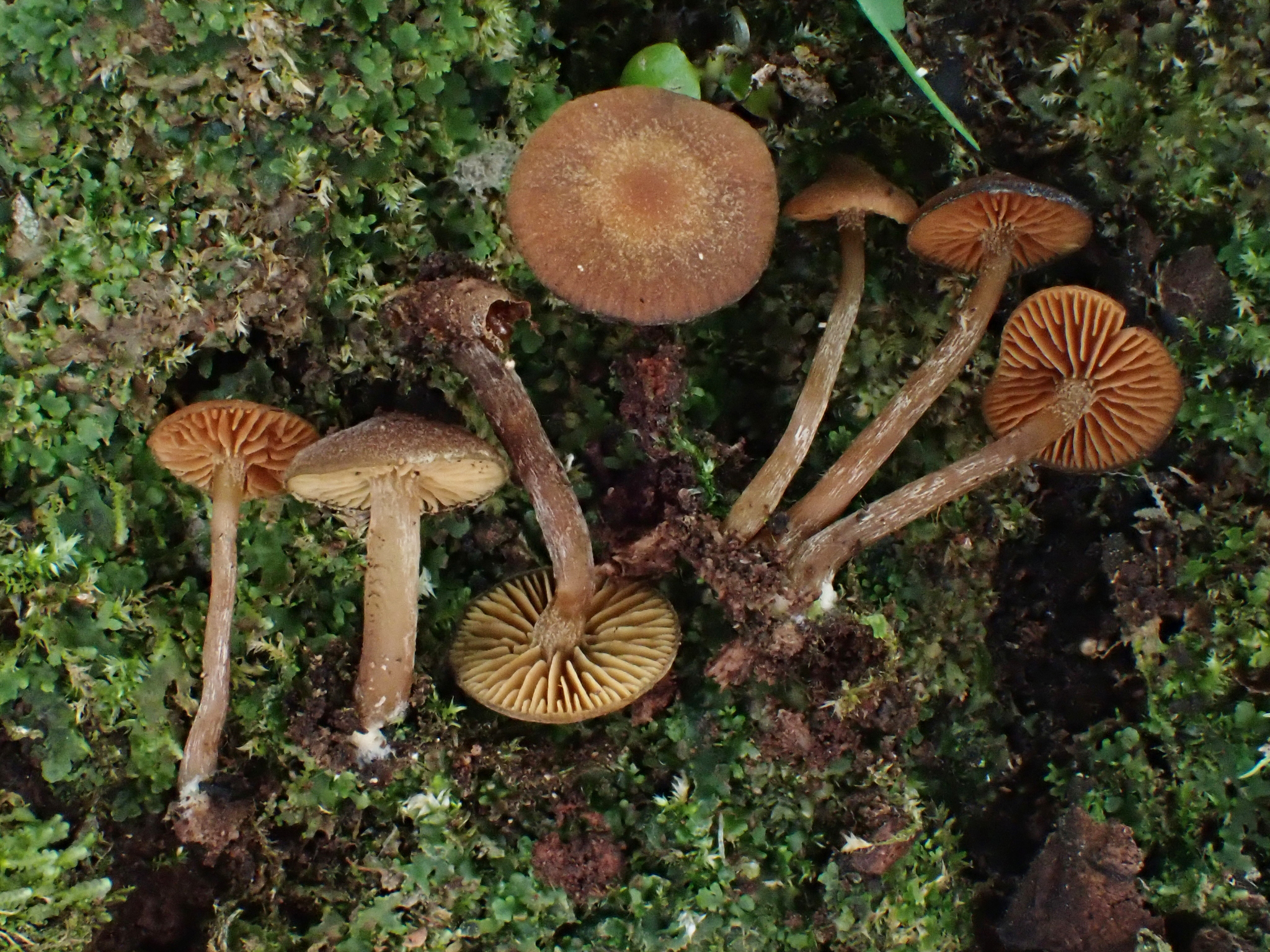
Andrew Kunik, a fungal biology researcher from the University of Florida, specialises in the species of mushrooms often overlooked due to their unassuming looks. When he and his team came across Galerina indica in the field, emerging from moss-covered palm trunks, Kunik already had a suspicion they might’ve stumbled across something new.
While some species from the genus Galerina are known to contain amatoxin, such as the extremely poisonous Galerina marginata (colloquially known as ‘funeral bell’), this mushroom was staining blue – a feature associated with some psilocybin-producing mushrooms, although not a reliable indicator.
“The fact that it was a Galerina species but it was staining blue suggested that it might contain some particularly interesting chemical combinations,” Kunik told BBC Wildlife Magazine.
An unsolved mystery
But the scientists couldn’t be sure exactly what they had found – not until chemical analysis in the lab, which was performed with the help of Michael Christopher, a chemist and mass spectrometrist at the University of Florida.
“There was a eureka moment during the chemical analysis when we saw the psilocybin and amatoxin signatures,” said Kunik. “We weren’t so surprised to see the amatoxins, given there are other species of Galerina that produce them. But we were very excited and astonished by the discovery of the psilocybin.”
Alongside Galerina indica specimens, the researchers analysed two other unidentified Galerina species – and they too revealed fascinating information, as one of them also contained psilocybin but not amatoxin. As Matthew E. Smith, a professor of plant pathology at the University of Florida, told BBC Wildlife Magazine, only one species of Galerina was known to contain psilocybin.
“It was described in a report from the 90s that no one has followed up on since then,” he said. “But our study revealed two different species of Galerina that contain psilocybin. To find two related species making this compound was quite exciting.”
To investigate how Galerina indica came to produce psilocybin, the researchers compared its genes with those of other psilocybin-producing fungi and found evidence of a horizontal gene transfer: a process in which genetic material moves between species rather than being inherited from parent to offspring.
Reconstruction of the evolutionary history of the Galerina genus suggests that the ‘dark magic’ mushroom acquired the genes needed to make psilocybin from an unrelated fungus around 15.5 million years ago.
The unknown
Two big questions remain: where does the ‘dark magic’ mushroom occur, and why does it produce both compounds?
“There are only a handful of collections and reports of this species worldwide that we know of,” says Kunik. “Subtropical Florida, tropical India, and some reports of it in European greenhouses.”
According to Smith, it’s quite unusual to find the same species of mushroom in a natural, undisturbed habitat on two continents, further adding to the mystery of Galerina indica.
And why exactly did this mushroom evolve to be both toxic and ‘magic’? One hypothesis is that it’s a defence mechanism. Mushrooms are soft and easily eaten by passing animals – so may rely on chemical defences instead.
“It may be more difficult for an organism such as a nematode or a snail to be able to evolve resistance to both amatoxin and psilocybin because these chemicals work differently,” explains Kunik.
- Nature’s weirdest defenders: From blood-shooting lizards to slime-spewing fish, 10 creatures that fight back dirty if attacked
- "It's up to 1,200 times more poisonous than cyanide." 10 most poisonous animals in the world, from frogs to sharks – and even butterflies. Yes that's right...
But it’s difficult to have a definitive answer without further research. Smith says studies have shown that psilocybin can affect the behaviour of nematodes (small, slender worms), but he’s not aware of a study that tested their response to both psilocybin and amatoxin. The fact that the type of amatoxin identified in Galerina indica has never been recorded before only further complicates things.
The discovery raises fresh questions about how these compounds affect animals – and why some fungi produce both, and further research is needed to answer questions about the ‘dark magic mushroom’.
“I want people to be excited about this discovery. It changes our view on what’s possible in the world of fungi,” says Smith. “But I also want this to be a gateway for people to realise how much we still don’t know about fungi, and that you don’t need to go to the Amazon to find something really cool.”
Read the full findings published in the journal Current Biology.
Top image: Galerina indica fruiting on mossy decayed palm log in a swamp in Florida. Credit: Andrew R. Kunik


