
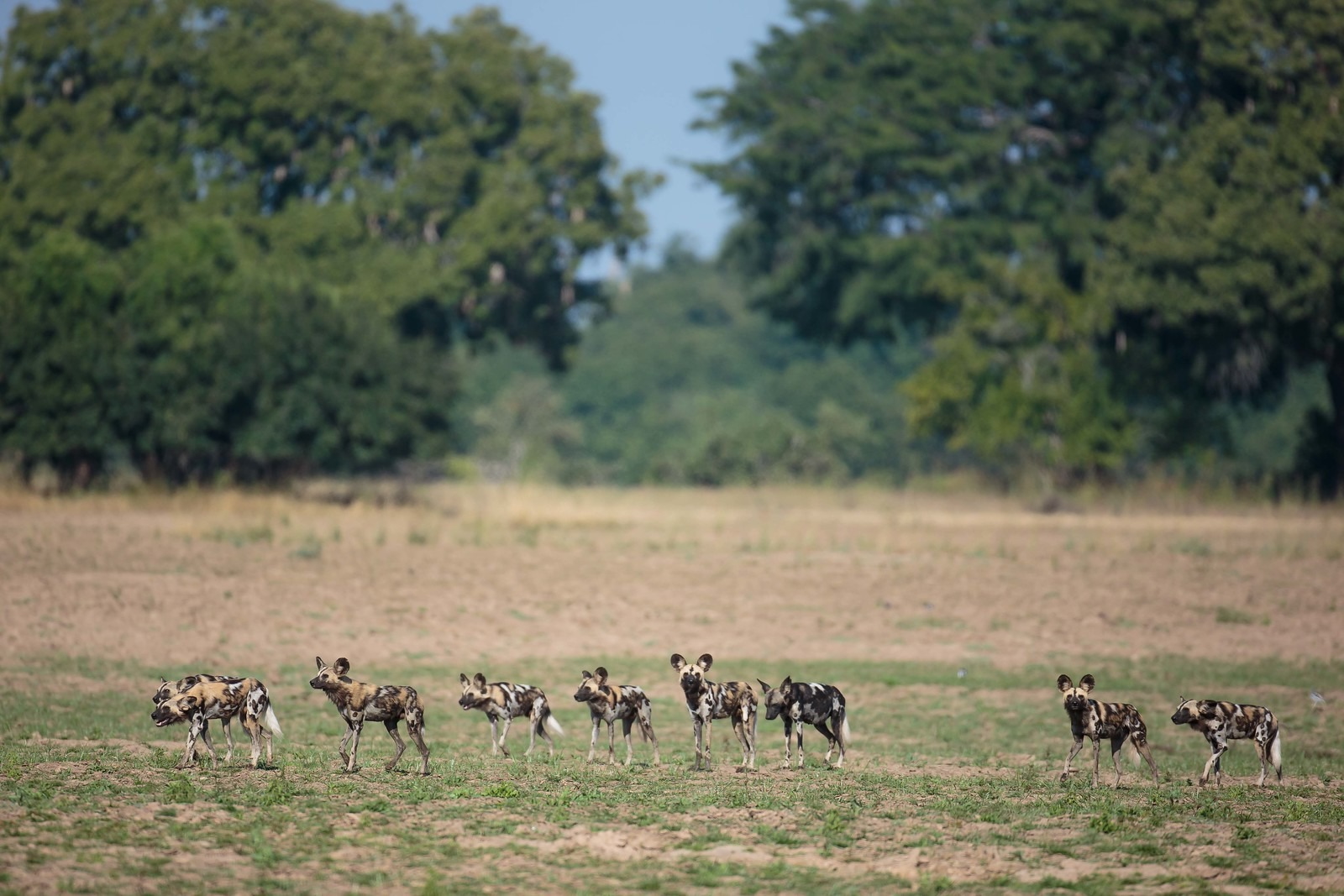
A trio of African wild dogs in southern Africa has completed the longest single journey by any African mammal ever recorded, according to a new study.
The findings have given hope to conservationists that African wild dogs are still capable of making extraordinary journeys across the continent that are necessary for their survival, despite the challenges they face, including cities, roads and bushmeat snares.
The three brothers covered 4,126 kilometres, the longest recorded dispersal of any African mammal. The distance they moved as the crow flies – 546 kilometres – is also the longest on record.
“I was thrilled, not only by the distance but by the fact that they pulled off a movement between the Kafue and Luangwa ecosystems,” said Professor Scott Creel of Montana State University, the paper’s lead author.
“The area they crossed has quite a strong ‘human footprint’, few protected places, and lots of barriers, like cities, roads and reservoirs. Despite being diverted several times, they kept at it.”
- I finally managed to photograph Africa’s incredible wild dogs. These are my best shots
- 16 wild dog packs were just tracked through the Zambian wilderness - here's why
- 10 rarest dogs in the world
- Wolf vs dog: what’s the difference?
- 10 most beautiful wild dogs on the planet
The Zambian Carnivore Programme (ZCP), working with the Zambian Department of National Parks and Wildlife (DNPW) and conservation partners, including The Nature Conservancy (TNC), used GPS collars to track 19 groups of African wild dogs as they ‘dispersed’ from their birth litters, looking for mates and new territory across thousands of kilometres of Zambia and beyond.
‘Dispersals’ are one-way, one-off movements, distinct from ‘migrations’ where animals cycle seasonally across landscapes or from ‘nomadism’, where roaming animals don’t have a fixed home range.
The dogs repeatedly climbed and descended the Great Rift Valley escarpment, crossed rivers and major roads, skirted cities and lakes, and passed through Zambia’s heavily industrialised Copperbelt mining region, as well as moving into, or close to, five neighbouring countries, including Mozambique, Zimbabwe and Malawi.
- ‘I spent 4 days tracking a leopard in Mozambique. It led me to something terrifying.’
- The weirdest dogs on the planet, including that looks like a cuddly bear
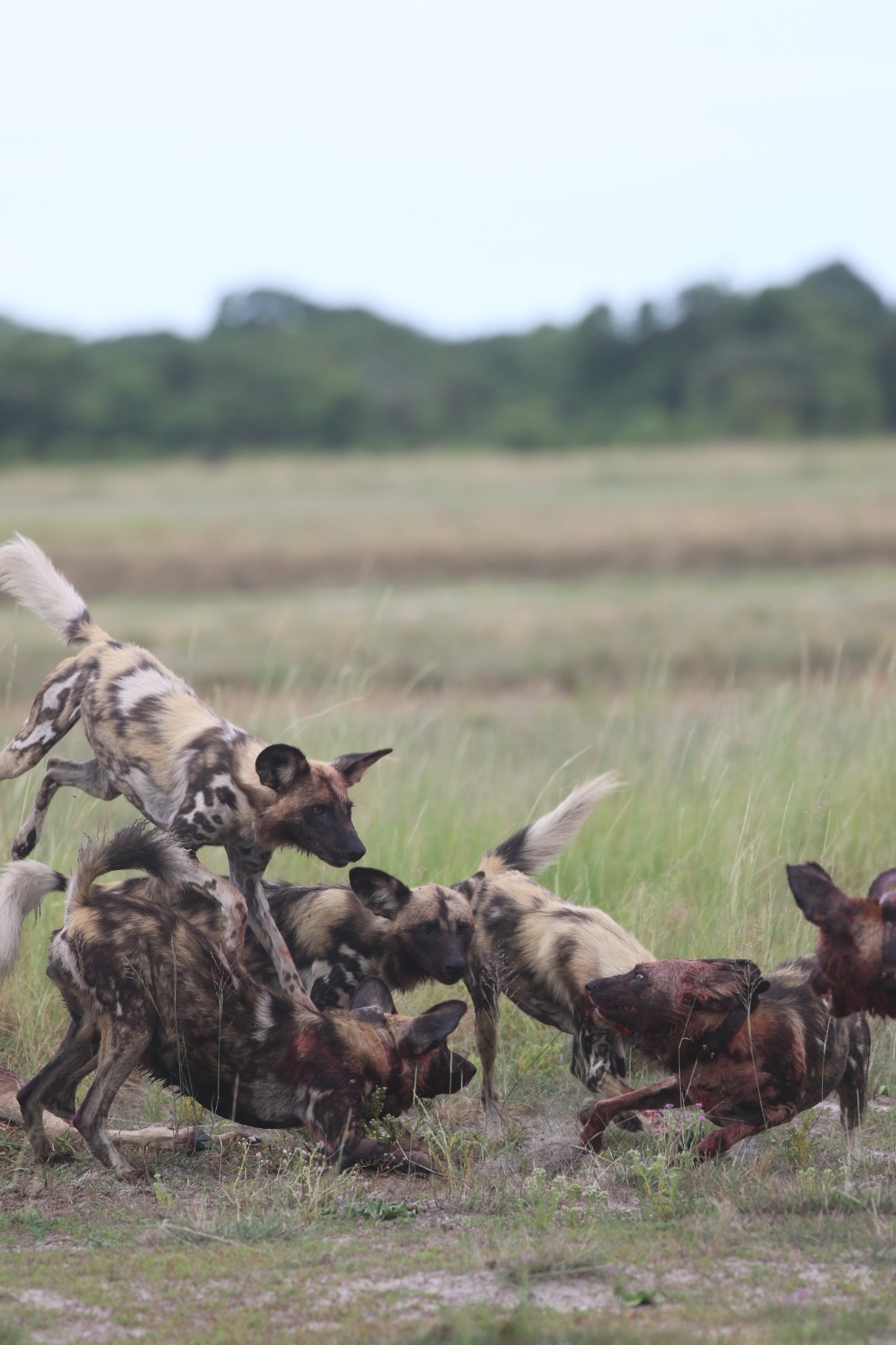
African wild dogs (Lycaon pictus), also known as painted dogs, are listed as Endangered on the IUCN’s Red List, with around 6,600 adults remaining in 39 distinct populations across Africa.
They’re among the continent’s widest-ranging carnivores, living in highly social packs and moving between different populations for their long-term survival.
The greatest threats they face are the fragmenting of their habitat with farms, mines, roads, towns and cities, declining numbers of their natural prey, bushmeat snares, disease, and conflict-encounters with people.
Making such long-distance journeys are dangerous, with many of the dogs in the study not surviving, including some that were killed in bushmeat snares, sometimes after travelling for more than 2,000 kilometres. But the study, published in the journal Ecology, shows that big wild animals can still move through increasingly human-dominated landscapes to reach protected areas.
The finding that African wild dog populations in Eastern and Southern Africa appear to still be connected, supporting the natural movements needed to maintain healthy populations of many wildlife species, including large carnivores, is a hopeful sign. Almost 40% of Zambia is under some form of nature conservation designation.
The findings highlight the importance of connectivity for wildlife and a ‘landscape approach’ to conservation, including working with communities on community lands surrounding national parks and the wildlife corridors and pathways between them, rather than protecting national parks alone as isolated islands.
By revealing where animals can still move successfully between existing protected landscapes, the research can focus governments and conservation organisations on wildlife corridors, pathways, landscapes and buffer zones.
“We now know that wild dogs can still connect all of the populations in the entire country, and at least some parts of adjacent nations,” said Creel. “That’s fantastic news. It shows that conservation efforts by the Zambia Department of National Parks and Wildlife and its NGO partners are working quite well and should continue to receive support.”
Find out more about the study, published in the journal Ecology.
More wildlife stories from around the world
- “I camera-trapped the Congo jungle for a year. These are my best photos”
- Remote cameras catch chimps teaching youngsters how to use tools to hunt
- Researchers put cameras in the second largest rainforest in the world. Here’s what they found
- Mysterious new monkey species with orange lips discovered in the Congo rainforest
Top image: Tracking African wild dogs. Credit: Scott Creel


