
Mother Nature has experimented with many bizarre body plans since life evolved more than four billion years ago. Some of these are so unusual that scientists are unsure how to classify them - they originated on Earth, but they may as well be aliens when compared to other, more recognisable organisms.
10 creatures that are more alien than animal
Bigfin Squid
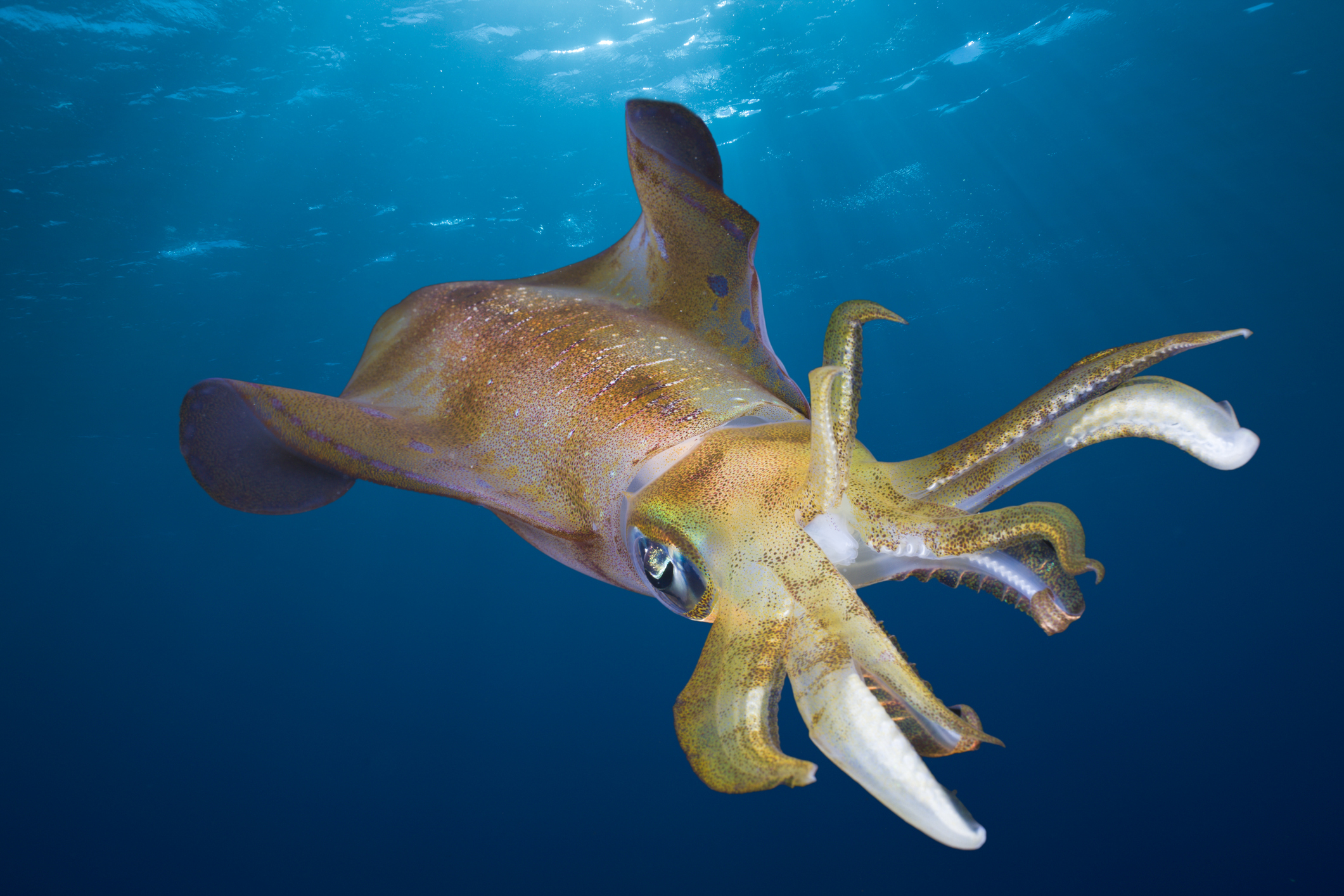
In the deepest parts of Earth’s oceans - the appropriately named hadal zone - there are giants that can grow up to 8m in length!
While not quite as large as their shallower dwelling cousins, giant squids (12m) and colossal squids (14m), bigfin squids are the deepest dwelling squid known to science, with sightings as deep as 6,212m.
Most of the bigfin squid’s extraordinary length comes from its streamer-like tentacles, which extend perpendicular to its body, forming unnerving ‘elbows’ that give it an uncanny resemblance to the functional supernatural character Slender Man. And just like Slender Man, the bigfin squid thrives in the dark, lurking at levels where sunlight never reaches, waiting for prey to bump into its tentacles.
- “I screamed before the rest of it came into the screen.” Deep-sea scientists film rare creature deep in Pacific Ocean
- It’s so deep it could swallow 24 Empire State Buildings stacked one on top of the other – and they’d still be submerged
The bigfin squid has only been observed 70 times, with the first sighting taking place in 1988. In 2007, a remotely operated submersible filmed a bigfin squid while retrieving oil drilling equipment from the seabed. The footage went viral and thrusted this bizarre, deep-sea alien into the public eye for the first time.
Pigbutt Worm
There are few animals that fit their name quite as well as the pigbutt worm - even its latin name, Chaetopterus pugaporcinus, roughly translates to ‘resembling a pig’s rear’.
This butt-shaped worm looks like something you might find on the surface of Mars, but it actually lives just below the ocean’s oxygen minimum zone between 875m and 1,200m. It has been observed hovering around this layer, with its mouth parts facing downward, collecting floating particles of organic detritus, known as marine snow.
It’s unclear exactly how they feed, but current hypotheses suggest they produce clouds of mucus to capture floating particles, which they later draw into their mouths and ingest.
Their strange shape is a result of their segmented bodies, which feature a highly inflated middle segment. This rounded central section helps them maintain neutral buoyancy and remain suspended within the oxygen minimum zone.
Tully Monster
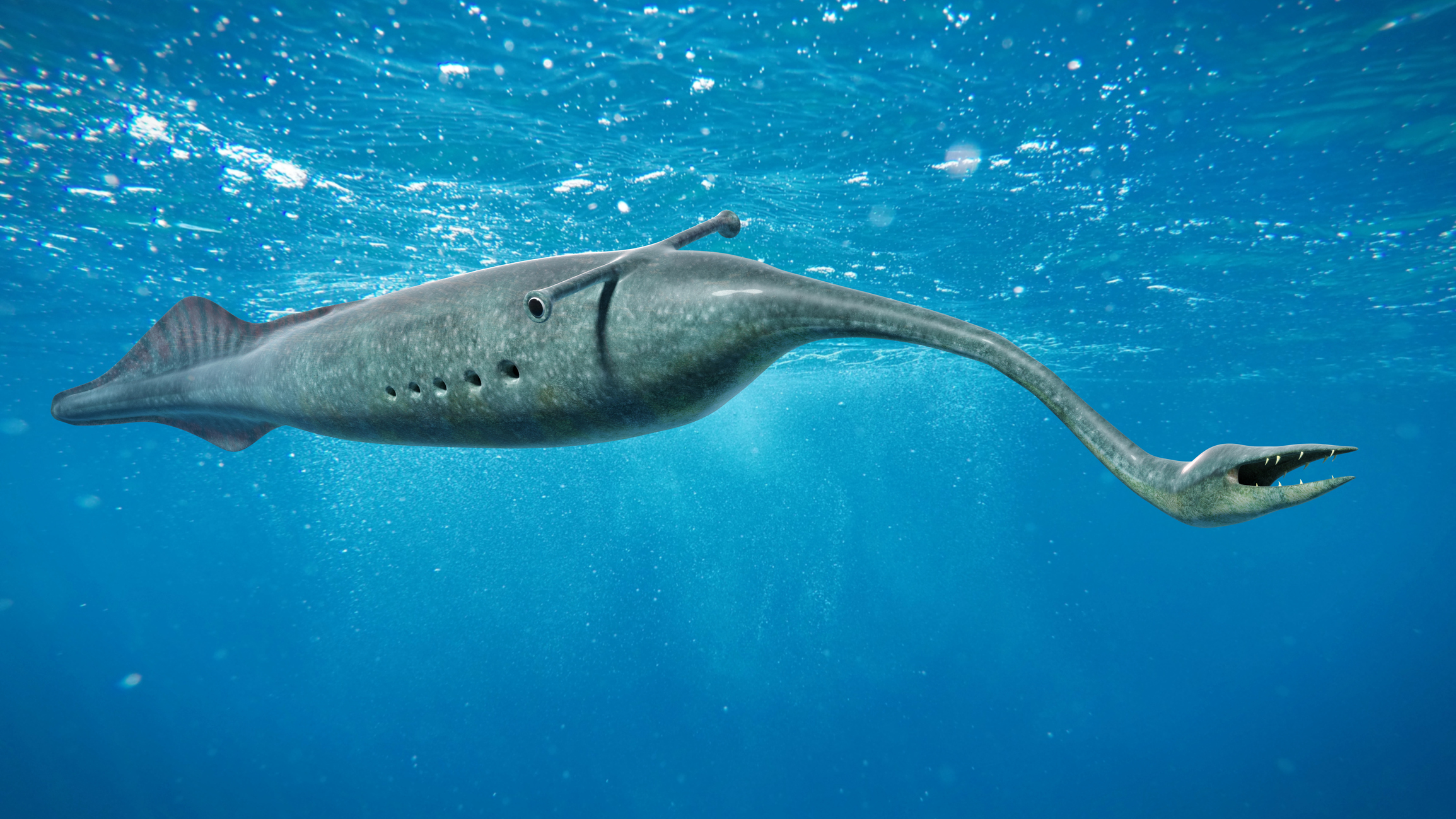
Since its discovery in the 1950s, Tullimonstrum - or the ‘Tully Monster’ - has been the subject of a lot of academic controversy.
This strange creature, with the body of a squid, the fins of a cuttlefish, stalked eyes, and a unique, trunk-like appendage (known as a proboscis) tipped with a toothy ‘beak’, has been placed in a number of different groups, from molluscs to vertebrates.
Tullimonstrum lived during the Late Carboniferous (311-306 million years ago) and is known from a trove of fossils uncovered from the famous Mazon Creek fossil beds of Illinois, US. Despite being represented by hundreds of fossils, its body plan is far from clear - though scientists have reached a consensus on the fact that it’s a bilaterian (meaning it has bilateral symmetry).
- “That’s amazing!” Marine biologists film rare ‘headless chicken monster’ deep in the Pacific Ocean
- It's been confirmed – the kraken monster really did exist, 84 million years ago...
Aside from its position on the tree of life, scientists are unsure how Tullimonstrum fed. It likely had something to do with the ‘beak’ at the end of its proboscis, with some researchers suggesting it used this structure to grasp prey before licking it to death with a long, rugged tongue.
Sollasina
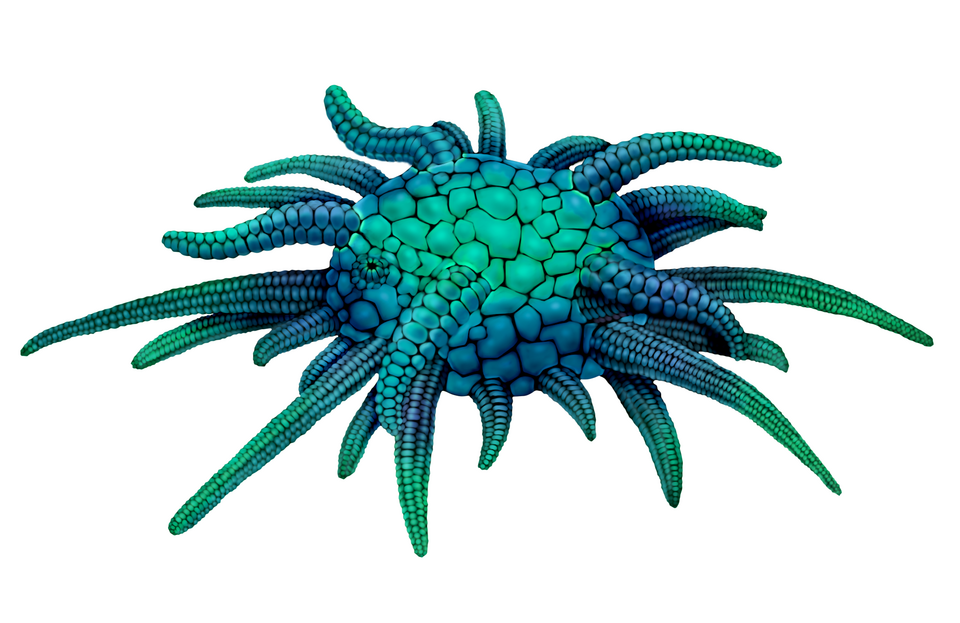
No, this isn’t a reimagining of the face huggers from the sci-fi franchise Alien, it’s a real-life animal that lived on the seafloor roughly 430 million years ago.
Sollasina is an echinoderm, meaning it’s distantly related to today’s starfish, brittle stars, and sea urchins. The most well-known species, Sollasina cthulhu, looks like a mixture of all three of these animals - it had 45 tentacle-like tube feet, a body composed of many hard plates, and a mouth surrounded by five large teeth, which it used to scrape algae from the seafloor.
To get around, Sollasina walked on its tube feet, much like starfish do today. Like starfish and other echinoderms, Sollasina exhibits five-point radial symmetry. These kinds of animals have tops and bottoms (like us and other bilaterians), but they have no distinct left, right, front, or back sides. Instead, their bodies are arranged in five equal sections around a central axis.
Sollasina measures just 3cm across, which makes it roughly the same size as a £2 coin.
- "It has five limbs covered in hundreds of hydraulic, rubbery feet and no head – or even a defined front, back, left or right" – what on Earth are echinoderms?
- "It looked more like something from Alien than an animal." 10 weirdest prehistoric bugs, including a car-sized one that weighed the same as a Labrador
Siphonophores
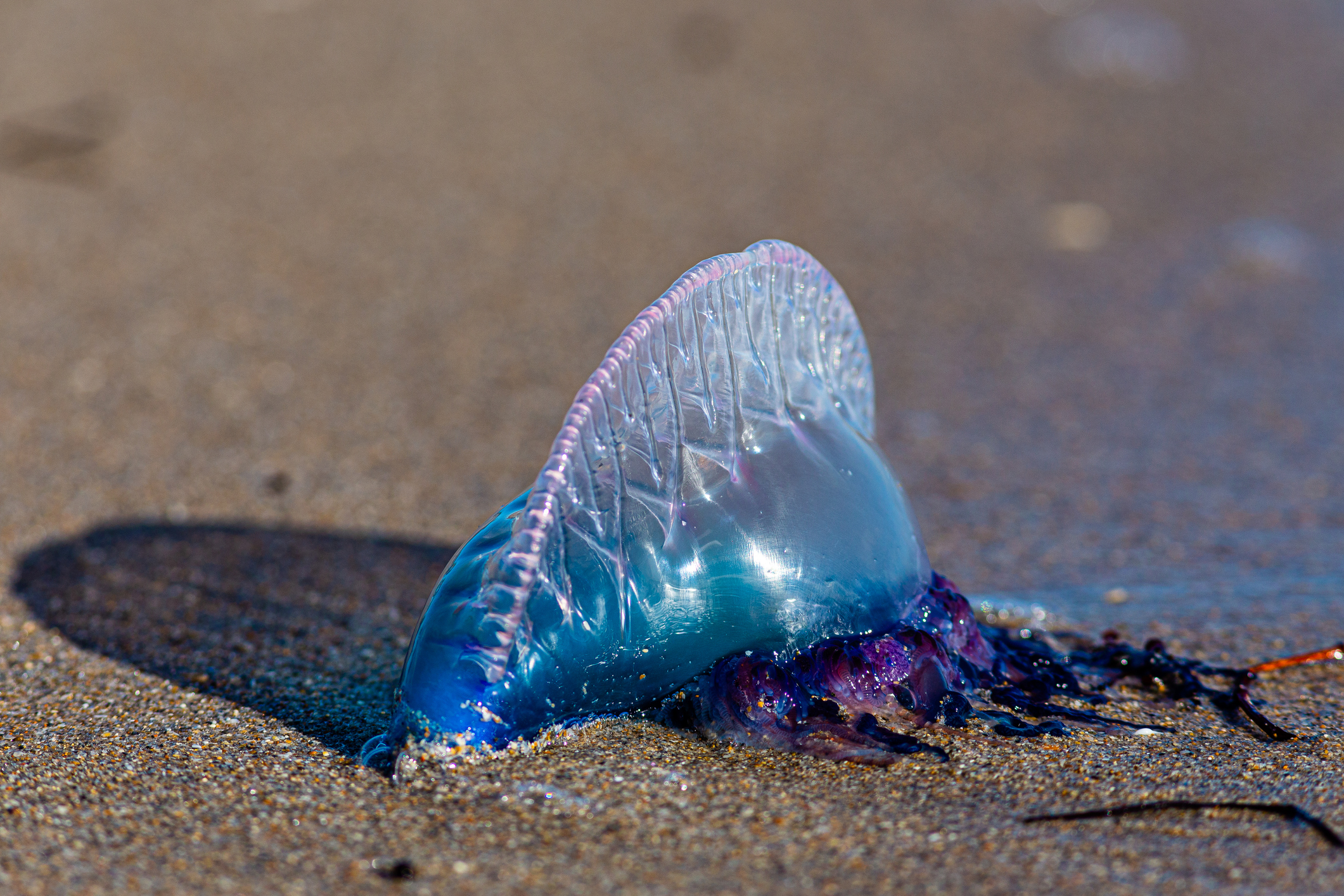
They may look like jellyfish - and do ultimately belong to the same phylum (i.e. Cnidaria) - but siphonophores comprise their own distinct group that stretch the definition of what it means to be an animal.
A single siphonophore can be made up of thousands of zoids, which themselves are morphologically and functionally specialised depending on their role in the larger, colonial organism. Some zoids play a role in feeding, while others are involved in moving and sensing.
- If you've never seen a deep-sea 'galaxy', you NEED to watch this
- It's longer than 4 buses put together, yet only as thick as a coin – and is one deadly predator...
The Portuguese Man O’War (Physalia physalis) is one of the most well-known siphonophores. It uses a gas-filled bladder known as pneumatophore to harness the wind and ‘sail’ across the surface of the ocean.
The majority of siphonophores, however, live in the deep sea. They’re also predatory, using their stinging tentacles to catch and incapacitate prey. Some are also known to emit blue, green, and red lights to attract prey.
In 2020, a giant siphonophore belonging to the genus Apolemia was discovered off the coast of Western Australia and estimated to be 47m long, making it the longest animal ever recorded!
Antarctic Scale Worm
The deep sea is home to many nightmare-inducing animals, but few, if any, are more terrifying than the Antarctic scale worm (Eulagisca gigantea).
The ‘scales’ projecting from the side of this worm are known as elytra. A single scale worm can possess as many as 1,200, with 15 pairs on up to 40 body segments.
These scales give them a flattened appearance and serve as protection against predators. When threatened, many scale worms roll into a tight ball and use their scales to protect their delicate undersides.
What often looks like a giant head in the photos of these worms is actually a massive, retractable proboscis. This proboscis houses a pair of jaws, which can be ‘thrown’ at prey before being reeled back into the worm’s body. Their prey consists of everything from sea spiders and small fish to other scale worms.
Typhloesus
Looking a bit like a flying carpet crossed with a sea cucumber, Typhloesus is an extinct, ocean-dwelling animal that has left scientists so confused as to its place on the tree of life that they’ve resorted to calling it an ‘alien goldfish’.
Typhloesus was first described in 1973 after it was discovered in Montana, US, in 330-million-year-old rocks. It has a 9cm-long, spindle-shaped body with a well-defined tail fin, but the rest of its anatomy is confusing, to say the least.
It was originally thought Typhloesus represented the first known body fossil of a conodont - a primitive group of jawless fish distantly related to lampreys and hagfish. This was based on the presence of conodont-like teeth, which were later shown to originate from the gut of Typhloesus, suggesting it had eaten conodonts rather than being one itself.
In 2022, researchers took a closer look at Typhloesus’ enigmatic body plan and revealed several features characteristic of molluscs, though they were hesitant to officially place it in this group. Their best bet is that Typhloesus represents a lineage of predatory gastropods that is very distantly related to a living group known as the heteropods, or sea elephants.
Xenoturbella
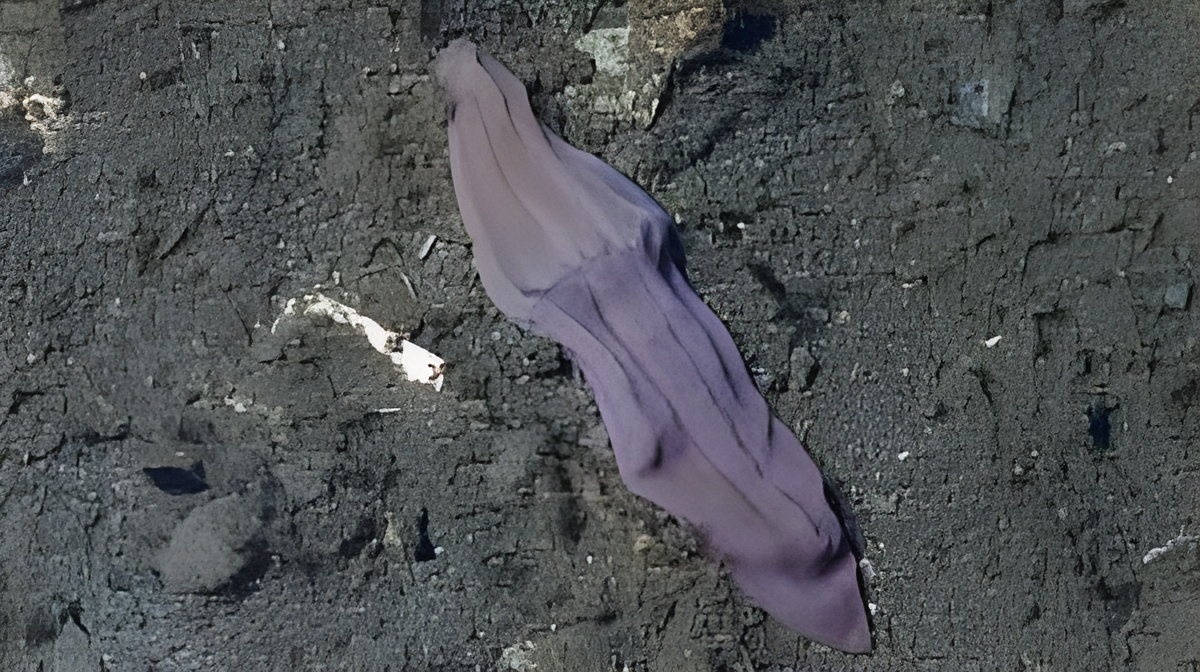
It might look like a discarded stocking, but Xenoturbella is a living, breathing animal that grows up to 20cm in length and can be found in cold waters across the Atlantic and Pacific oceans.
Xenoturbella’s name roughly translates to ‘strange flatworm’, which at first seems like an apt description. However, molecular studies have shown that Xenoturbella isn’t actually a worm at all.
Instead, Xenoturbella belongs to its own distinct phylum known as the xenacoelomorphs - a small group of bilaterally symmetrical animals that may be the sister group to deuterostomes (e.g. echinoderms and vertebrates) and protostomes (e.g. arthropods, molluscs, and worms).
Xenoturbella has been found at varying depths, with some sighted near hydrothermal vents up to 4km deep! Despite their relative simplicity, they’re predatory animals and are known to feed on soft, juvenile bivalves by enveloping them and excreting digestive enzymes that break them down into easy-to-eat goo.
Sea Pigs
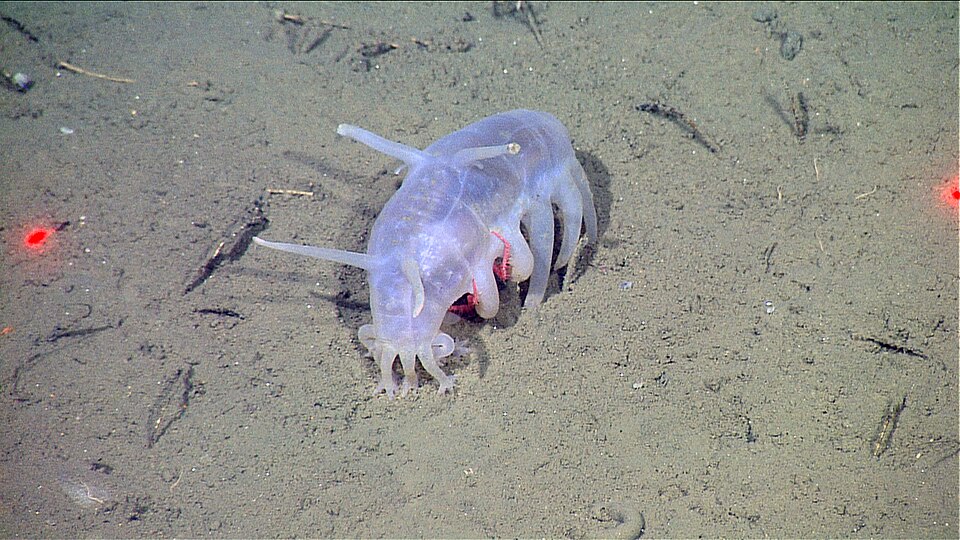
Not only do sea pigs look otherworldly, they also use a method of locomotion that befits their bizarre appearance.
To move along the ocean’s vast, virtually flat abyssal plain, sea pigs inflate and deflate their elongated tube feet, harnessing the power of hydraulics to get about. They’re also known to drift along on deep-sea currents.
Named after the terrestrial animals they loosely resemble, sea pigs (also known as Scotoplanes) grow to lengths of 15cm and possess six pairs of tube feet. They also have 10 tentacles that project from their mouths, helping them to rummage through silt and extract morsels of food.
They’re found at depths of up to 5,000m and often in large numbers, with hundreds gathering to feed or mate. Like other sea cucumbers, sea pigs are known to host other animals and have been documented sheltering juvenile king crabs from predators.
Bone-Eating Zombie Worm
In 2002, a remotely operated submersible filming a decaying gray whale in the Monterey Canyon just off the coast of California, US, captured footage of feathery red plumes growing out of its bones. A sample of these organisms was brought up to the surface and later identified as a brand-new type of bristle worm, Osedax.
Also known as snot worms, zombie worms, or bone-eating zombie worms, these strange, little-finger-sized creatures live inside a mucus-covered tube, with a feathery red plume sticking out of one end and a clump of specialised roots at the other. Their roots secrete an acid that allows them to bore into bones and access the nutrients hidden within, while their feathery plumes act as gills.
- "What’s grosser than gross? A parasite that eats your tongue – and then lives in your mouth as your tongue." 7 most disturbing, creepiest parasites in the world...
- It’s deep enough to hide Mount Kilimanjaro, contains bone-eating worms and is the world’s largest habitat
Interestingly, only female Osedax eat bones. The males are a fraction of the size and live inside the female’s protective tube, waiting for her eggs to emerge before fertilising them. A single female can host a fraternity of up to 100 breeding males!
To learn more about Osedax, scientists deliberately sink animal carcasses and wait months, sometimes years, before returning to see what has infested them. This has helped them discover more than 30 species since the first, Osedax rubiplumus, was first described in 2004.
top image: Portuguese Man o' war on the beach of Padre Island, Texas. mlharing/ Getty Images
More wildlife stories from around the world:
- From anal ventilators to boiling, toxic fart machines: 10 weirdest and deadliest bottoms on the planet
- "An endless supply of lethal razor-sharp teeth…" The astonishing weaponry of one of the world's deadliest, most feared predators
- 32 years ago, researchers made it their mission to protect one of the world’s rarest parrots. Now, the dazzling bird is having one of its strongest nesting seasons on record


