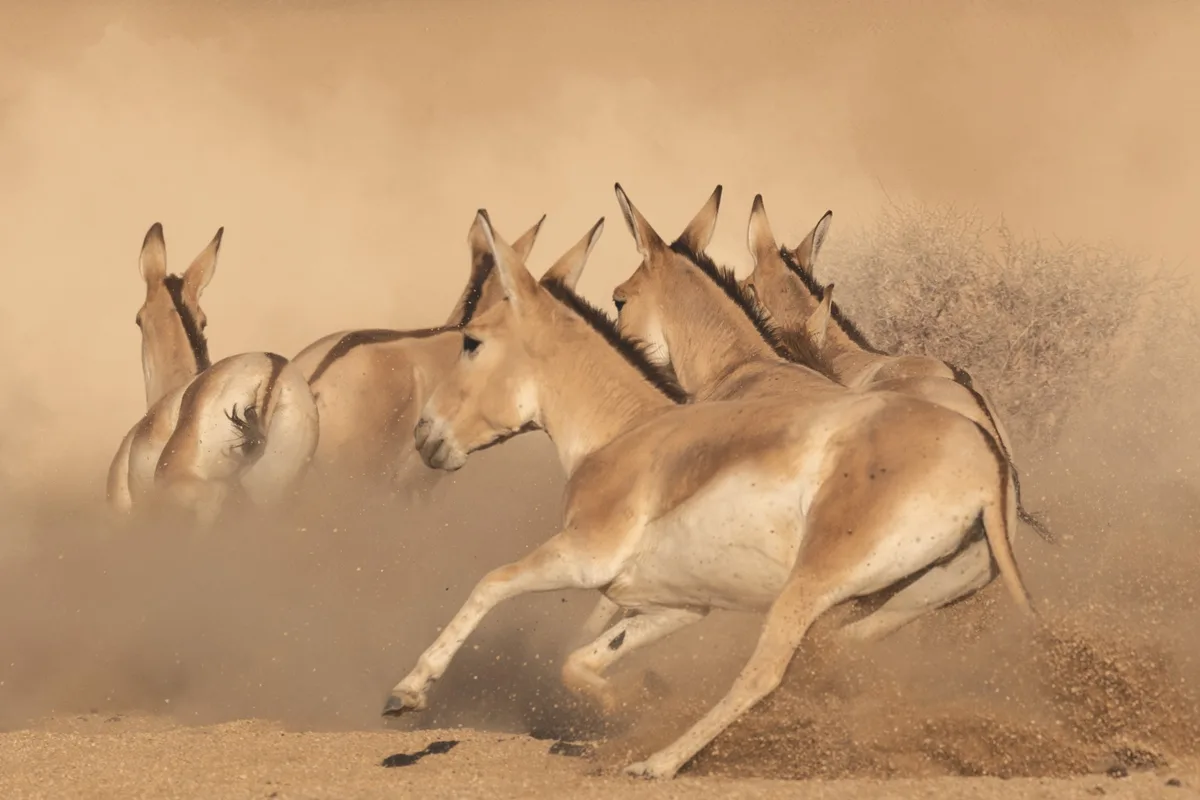
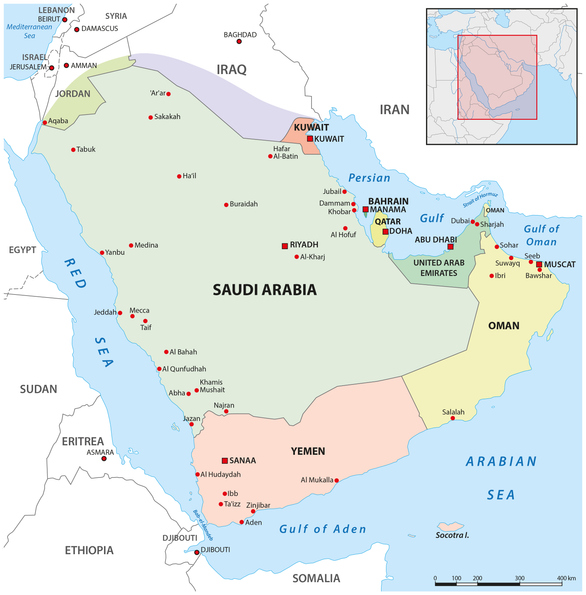
Once home to one of the world's oldest civilisations, the Arabian Peninsula is the largest peninsula in the world - about the size of India or 3,237,500 km 2 - and has nine countries on it.
Located on the continent of Asia, most of its land mass is surrounded by seas including the Persian Gulf, the Strait of Hormuz, the Arabian Sea, and the Red Sea. It is the only land bridge between Africa and Eurasia and although now it is hot and arid, it is thought this wasn't always the case.
- 8 deadliest deserts on the planet and some of the dangerous wildlife you’ll find lurking there
- The ‘world’s smallest desert’ covers just 1 square mile, is in Canada and was carved out by ancient glaciers – but it’s not actually a desert
Also called Arabia, the Arabian Peninsula is made up of Bahrain, Kuwait, Saudi Arabia (the biggest country on the peninsula), the UAE, Yemen, Oman, Qatar, with Iraq and Jordan on its borders. It is believed that humans may have lived in the area as far back as 130,000 years ago and the oldest Homo sapiens fossil found in the Peninsula was discovered in the Nafud Desert dating around 90,000 years ago. Al-Magar was a Neolithic civilisation discovered in the south west of Saudi Arabia, and is thought to be one of the first communities to use agriculture and animal husbandry.
The Arabian Peninsula is mainly covered by the Arabian Desert, which measure around 900,000 square miles. Within this desert there are several sub-deserts, made up of several deserts, including Nafud in the north, The Empty Quarter and Al-Jafurah in the east. The land is made up of a diverse mix of marshy coastline, mountains, coral reefs, deserts as well as pastures. It is an area rich in wildlife and although there are few lakes and no rivers, there are wadis, which fill with water after rainfall.
- Discover one of the world's most beautiful yet rarest big cats
- It has huge ears and can run twice as fast as Usain Bolt
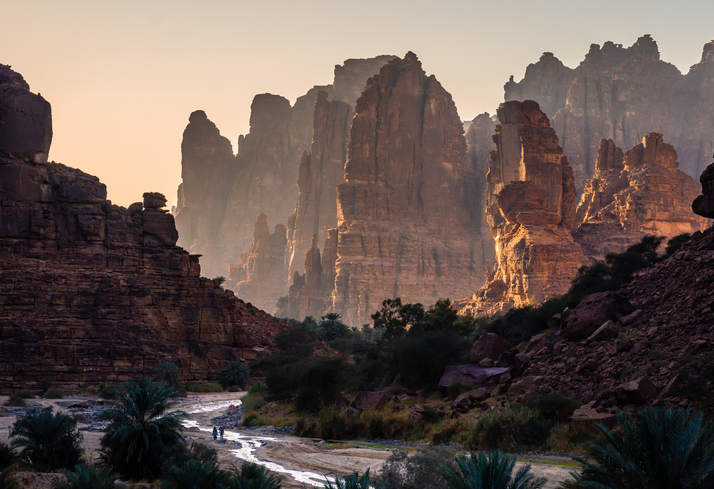
Wildlife on the Arabian Peninsula
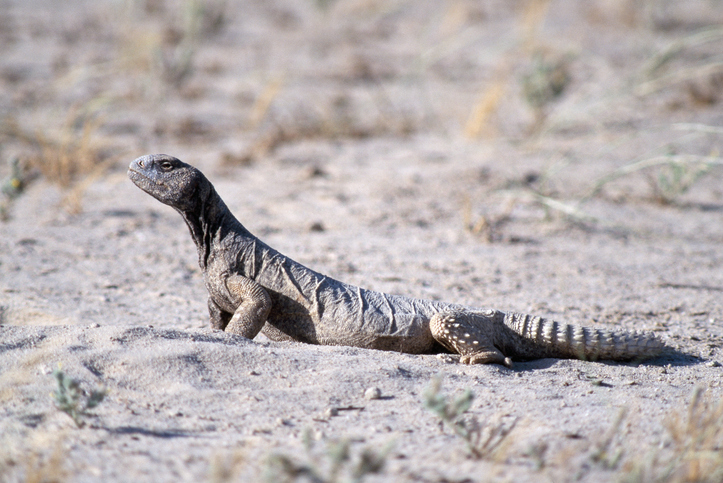
The Empty Quarter - often dubbed the Gateway to Hell - is the largest continuous body of sand in the world and one of the deserts within the Arabian Peninsula, stretching almost 650,000km2. It receives a few millimetres of rain a year. Despite its name, it isn't empty at all and is home to highly adapted species including the desert hedgehog (Paraechinus aethiopicus), Ruppell's sand fox (Vulpes rueppellii), hares and an Arabian spiny-tailed lizard (Uromastyx). The Arabian oryx (Oryx leucoryx), sand gazelles (Gazella marica) and red-necked ostriches (Struthio camelus camelus) have all been reintroduced to the area.
One of the world's rarest cats also lives in the Arabian Peninsula, the Arabian leopard (Panthera pardus nimr). The IUCN have classified it as Critically Endangered on the Red List, and estimate that there are only 120 Arabian leopards that exist in the mountains and deserts of the peninsula.
Asiatic cheetah also once roamed the Arabian Peninsula, but became locally extinct in the 1970s. More recently they have been the focus of significant reintroduction efforts after scientists found evidence of mummified cheetahs in the north of the county, which date from 4,000 to 120 years.
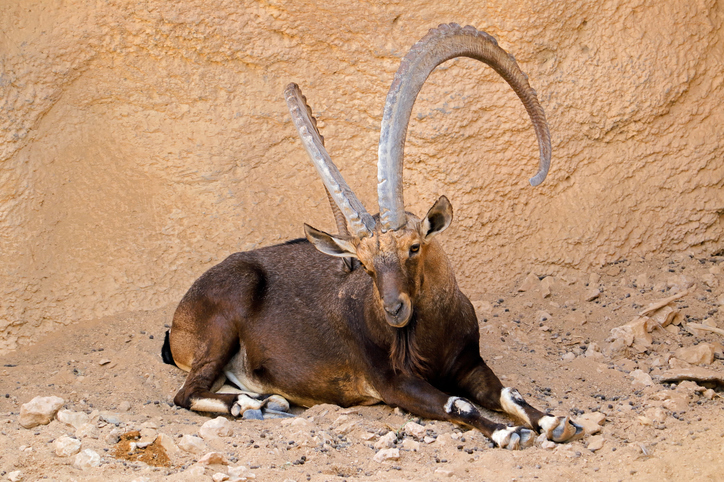
Other animals include Arabian hares or Cape hares (Lepus capensis), which were brought to the Prince Mohammed bin Salman Royal Reserve in Saudi Arabia earlier this year to be reintroduced to the country. The reserve stretches 25,000km2 in north-west Saudi Arabia, features 15 different ecosystems, and has reintroduced many other animals including Arabian sand gazelles, Nubian ibex and the the Arabian oryx.
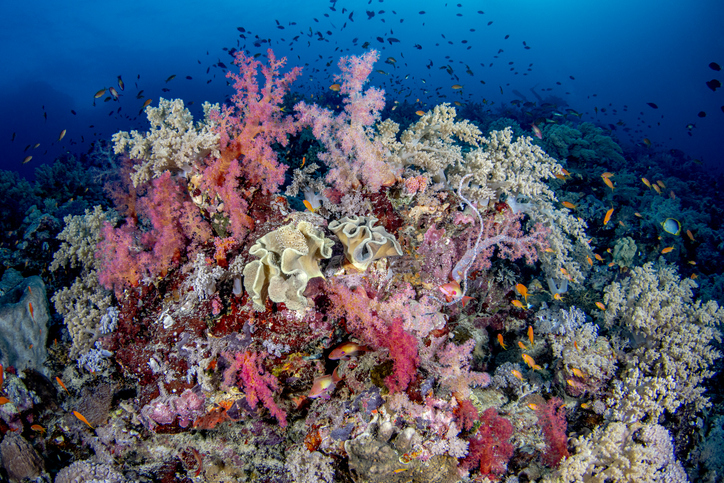
But it's not just about land animals in the Arabian Peninsula. The coastal waters of the Red Sea divide Africa and the Arabian Peninsula and are home to hundreds of kilometres of coral reefs that support a varied range of species including Dugongs, cousins of manatees. There are also plenty of sharks in the Red Sea, including hammerhead, tiger shark and thresher sharks.
Coastal wetlands of the Arabian Peninsula are also a significant lifeline for migratory birds and biodiversity. They include mangroves, seagrass beds, salt marshes and coral reefs. The Hawar Islands in Bahrain is home to one of the largest colonies of Socotra Cormorant endemic to the area.
- Struggling in the heat? Meet the animals that can survive the hottest temperatures on Earth – even a sweltering 149 degrees celsius
- What’s the hottest place on Earth? And where's the biggest desert?
- 10 desert plants that thrive in hostile and inhospitable conditions – often in extreme temperatures
- Researchers went into the oldest desert on Earth and discovered something "really unique" about the way beetles run
Top image: Desert Hedgehog (Paraechinus aethiopicus) Credit: PhotoStock-Israel via Getty