
Powerful and beautiful, the iconic leopard is one of the most glamorous of wild animals, living in a diversity of geographical territories and represented by numerous subspecies. It also varies greatly in appearance, from the long-haired Amur leopard of snowy regions to the black panther, the famous melanistic Indian leopard portrayed by Bagheera in Rudyard Kipling’s The Jungle Book.
Philip Muruthi and Nakedi Maputla from the African Wildlife Foundation explain all you need to know about this iconic feline.
What are leopards?
Leopards are large carnivores belonging to the cat family. They are part of the genus Panthera, which comprises four other large cat species – the tiger, lion, jaguar and snow leopard. Leopards have rosettes (rose-like markings) on their coats, as do snow leopards and jaguars – the latter can be differentiated by the black spots in the middle of some of their rosettes.
- Watch dramatic, heart-stopping BBC footage shows desperate, ravenous leopard mother risking death for her cubs, high in the treetops
- ‘The leopard was crouched 3m away, its golden eyes locked on mine. What happened next is still a blur’
Where do leopards live?
Leopards are widely distributed across Africa, the Middle East and Asia. They can tolerate many different habitats and are found in forests, savannahs, shrublands, grasslands, rocky outcrops, mountains and deserts, but tend to prefer the cover of wooded habitats over open areas.
How many species of leopard are there?
Leopards are generally understood to be divided into different subspecies, though their classification is still under review by the IUCN (which is the governing authority for all species). Note that despite their name, snow leopards are not a subspecies of leopard but are a separate species within Panthera and more closely related to tigers.
In 2017, the Cat Classification Task Force of the Cat Specialist Group recognised the following eight subspecies of leopards:
African leopard (P. p. pardus)
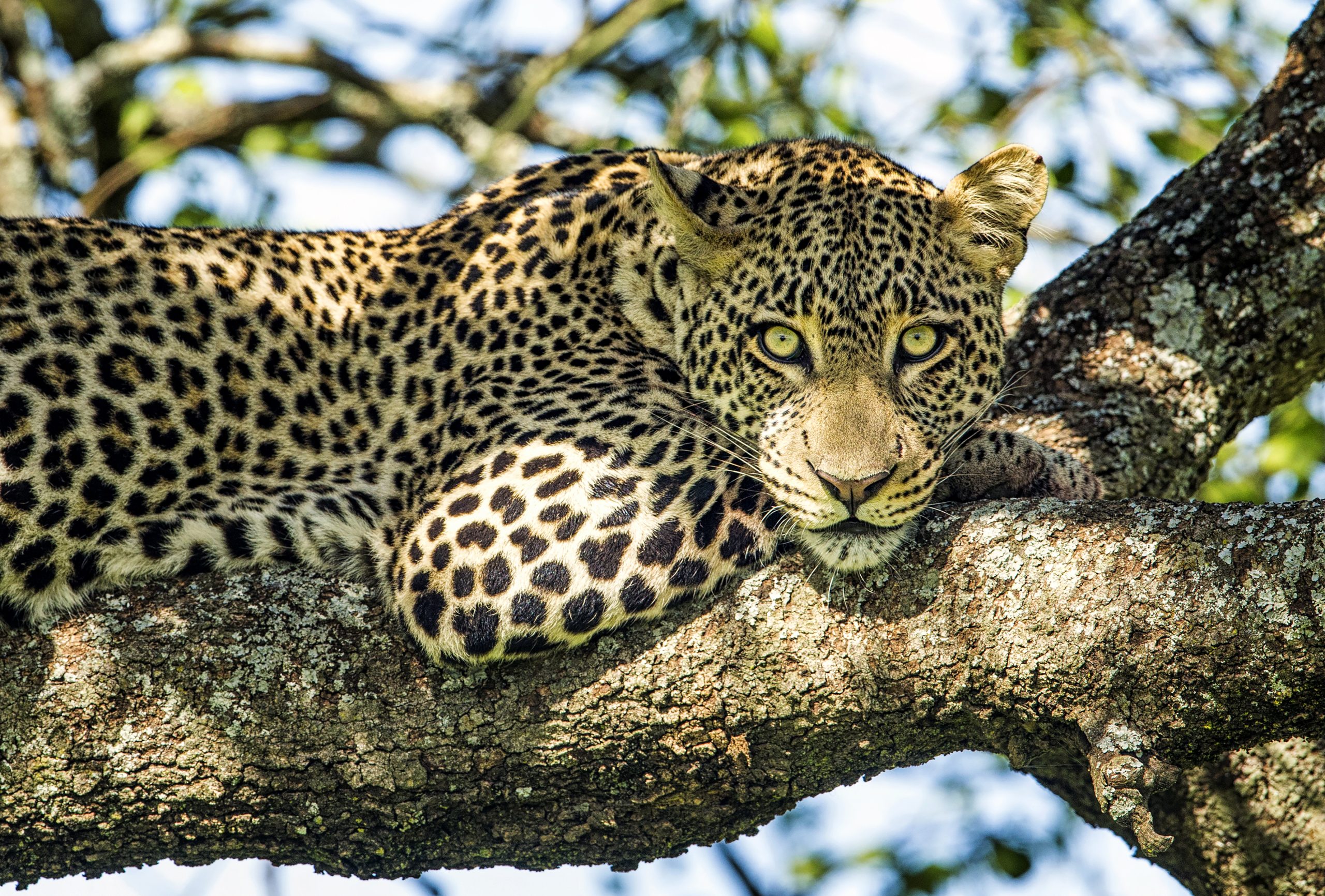
The African leopard is the most widespread leopard subspecies native to most of Sub-Saharan Africa. It is listed as Vulnerable on the IUCN Red List of Endangered Species.
Amur leopard (P. p. orientalis)
This subspecies is native to the Primorye region of southeastern Russia and northern China. It is listed as Critically Endangered on the IUCN Red List.
Indian leopard (P. p. fusca)
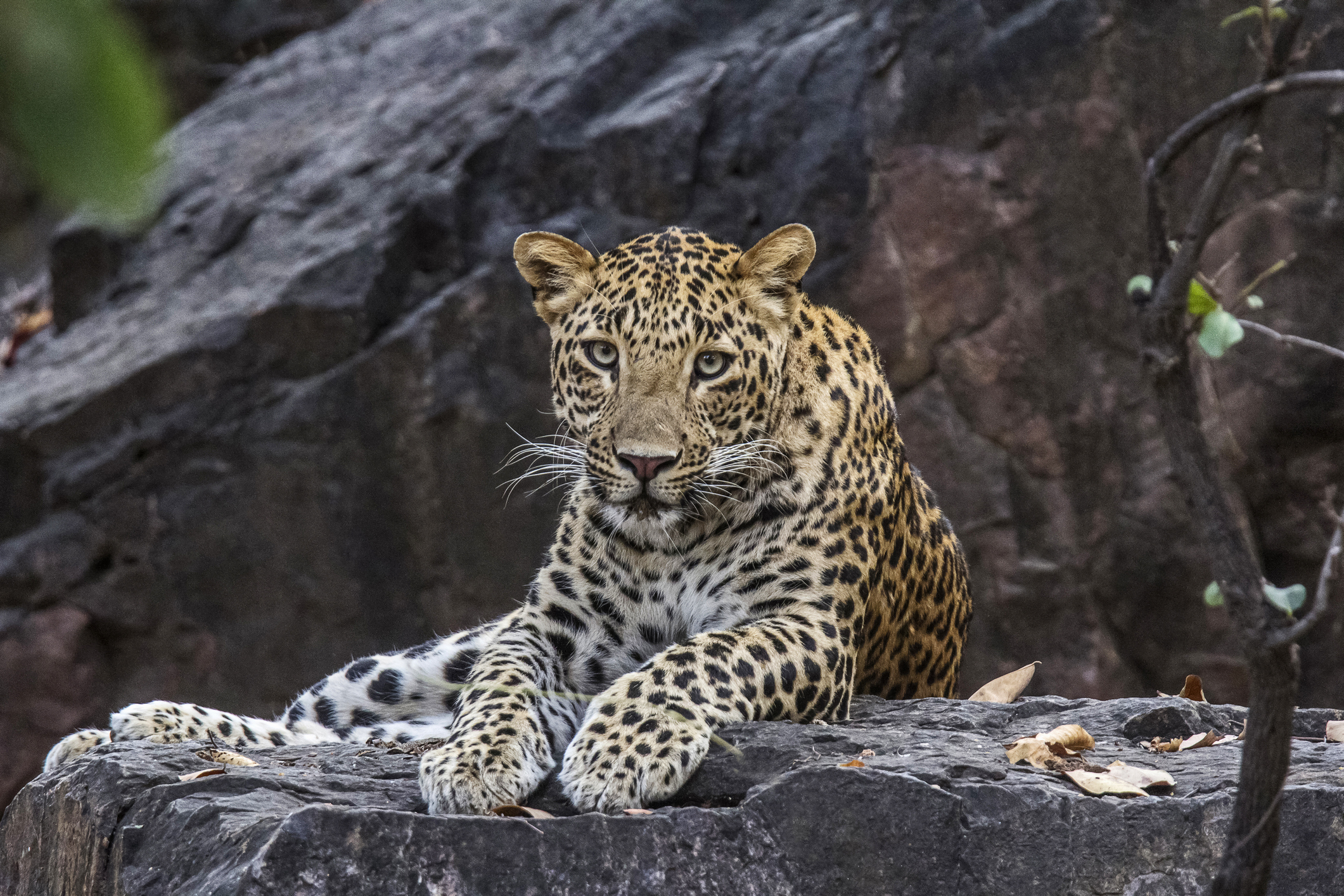
Widely distributed on the Indian subcontinent, this subspecies is listed as Near Threatened on the IUCN Red List.
Indochinese leopard (P. p. delacouri)
This subspecies is native to mainland Southeast Asia and southern China. It is listed as Critically Endangered on the IUCN Red List, with an estimated 77 to 766 mature individuals remaining.
Javan leopard (P. p. melas)
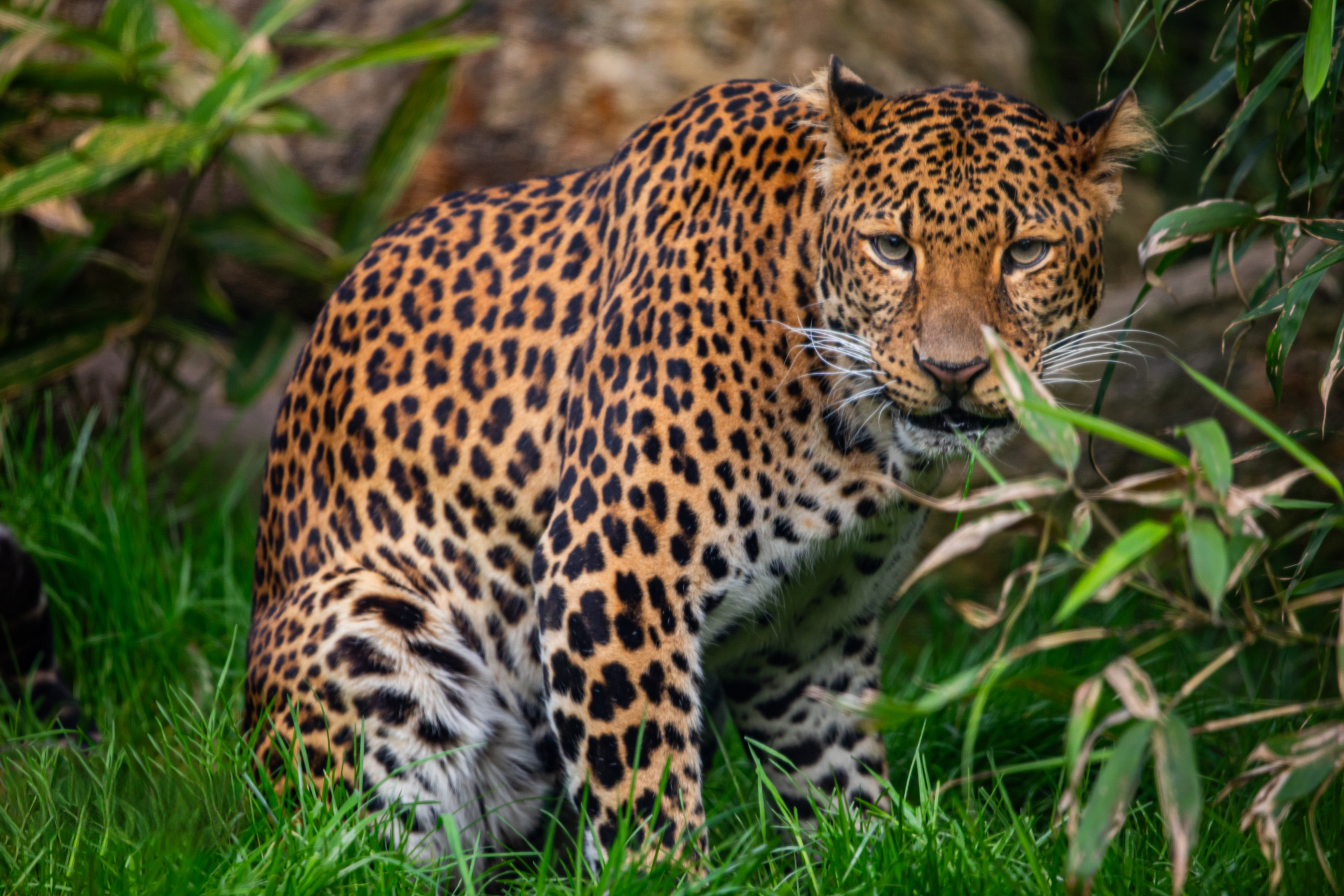
This leopard subspecies is confined to the Indonesian island of Java. It has been listed as Endangered on the IUCN Red List since 2021, with 324 mature individuals remaining.
Arabian leopard (P. p. nimr)
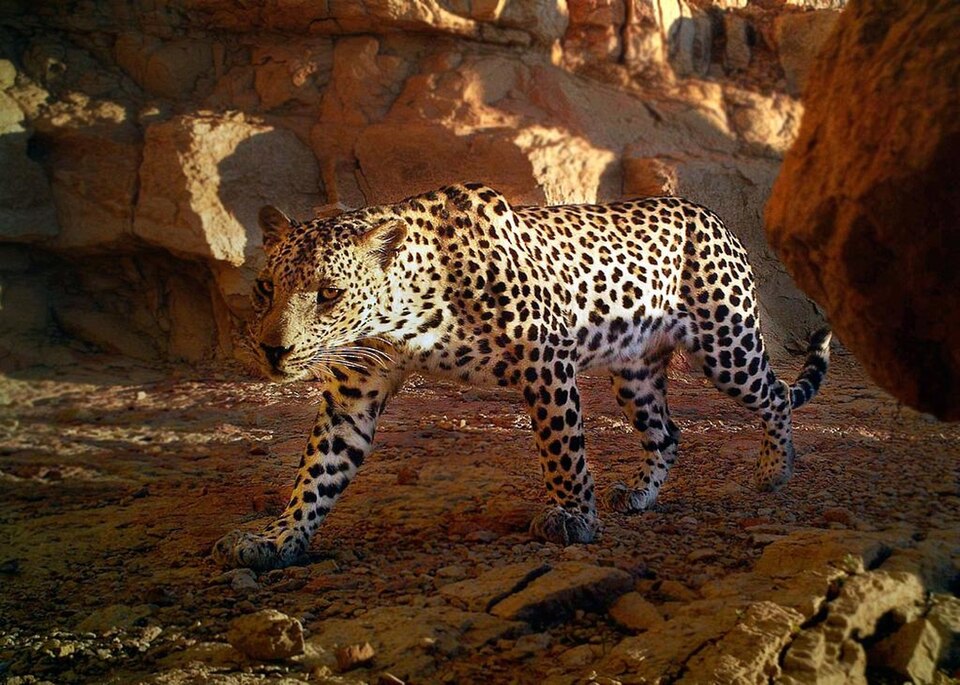
This subspecies is native to the Arabian Peninsula. It used to be widely distributed, but today its population is severely fragmented. The subspecies is listed as Critically Endangered on the IUCN Red List, with only about 70-84 mature individuals remaining.
Persian leopard (P. p. tulliana)
Also called the Anatolian leopard and Caucasian leopard in different parts of its range, this subspecies is native to the Iranian Plateau and the surrounding region. Listed as Endangered on the IUCN Red List, there are 450 to 626 estimated mature individuals remaining in the wild – but the population is decreasing.
Sri Lankan leopard (P. p. kotiya)
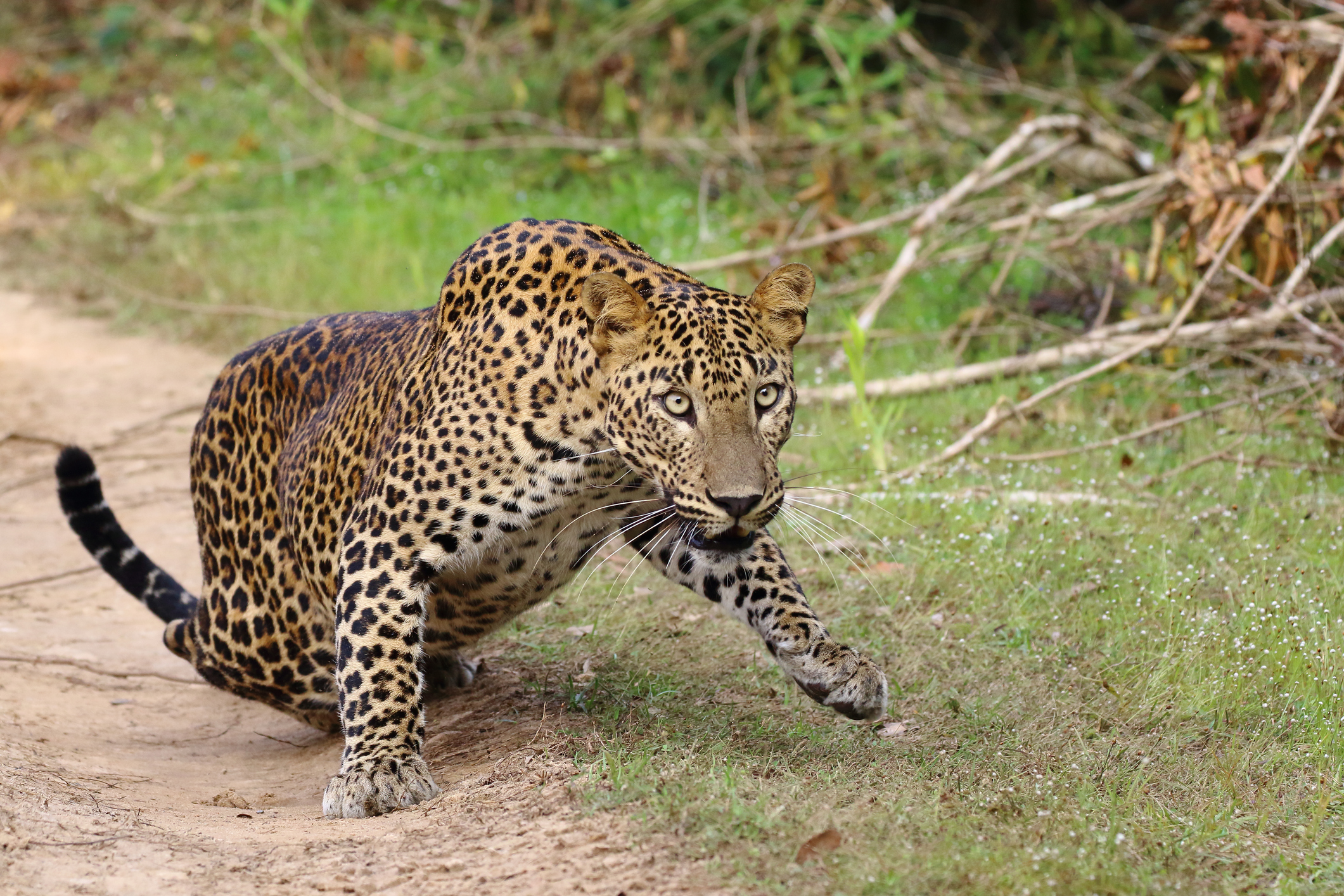
Native to Sri Lanka, this leopard is listed as Vulnerable on the IUCN Red List, with just over 770 mature individuals remaining.
What do leopards eat?
Leopards are carnivorous and eat a broad range of prey, from insects and fish to ungulates such as impala, gazelle, kudu and duiker. Their diet is dictated by what is available, making them one of the most successful large cat species to survive in the wild and in human-dominated landscapes.
How do leopards hunt?
Leopards use two main hunting strategies: stalking and ambush. They also scavenge given the opportunity. Interestingly, they are the only known wild cats to systematically drag the carcasses of their prey high up into tree branches – especially if there are other scavengers roaming around. The behaviour has been observed in other cats, but only a handful of times.
- 8 fearsome, lethal hunters: Meet nature’s ultimate attacking machines – according to Steve Backshall
What is the world’s largest leopard?
The Persian leopard holds this title, with a total body length (including tail) reaching almost 2m and a weight of up to 70kg. At the other end of the spectrum, the Cape leopard (still the African leopard subspecies, but geographically isolated) is the world’s smallest leopard, with males only weighing about 35kg.
- What’s the world’s largest cat?
- Which big cat has the strongest bite?
- Is there a lion in your living room? How your pet cat has more in common with wild cats than you might think
- Cats of the world: a gallery of amazing feline images
What is the world’s rarest leopard?
With only about 100 individuals left in the wild, the Critically Endangered Amur leopard has been pushed to the brink of extinction. Ranging across south-eastern Russia and north-eastern China, this rare subspecies has been decimated by poaching and the trade in its beautiful spotted fur.
What threats do leopards face?
Human activity is the primary threat to leopard populations. Habitat loss and fragmentation has caused their range to reduce by a third worldwide in the past three generations (about two decades), while the commercialised bushmeat trade has caused a sharp decline in prey populations across swathes of African savannah. Poaching and human-wildlife conflict is also a concern. When leopards prey on livestock, farmers will respond by killing the felines. There are also natural predators to contend with, including lions, spotted hyenas and other leopards.
Why do leopards have spots?
They actually have rosettes, an evolutionary adaptation to help them blend in with their environment, allowing them to hide from danger and stalk their prey without detection. It also means that they are able to hunt during the day or at night. Even melanistic Indian leopards have rosettes – they are just less visible against the surrounding dark fur.
Are leopards social creatures?
No, leopards are very solitary and mark their territory with urine, faeces or by scratching trees to warn off other leopards. The males have large territories that overlap several female territories, and the only times leopards are seen together is when the opposite sexes meet to mate or when a female is caring for her young. Mothers give birth at any time of year after a gestation period of just three months, usually to two or three cubs.
African Wildlife Foundation is an Africa-based global conservation organisation working to protect wildlife and their habitats as essential parts of a modern and prosperous Africa.
Top image: Young female leopard from Wilpattu National Park. Credit: Namal Kamalgoda/Getty Images
