
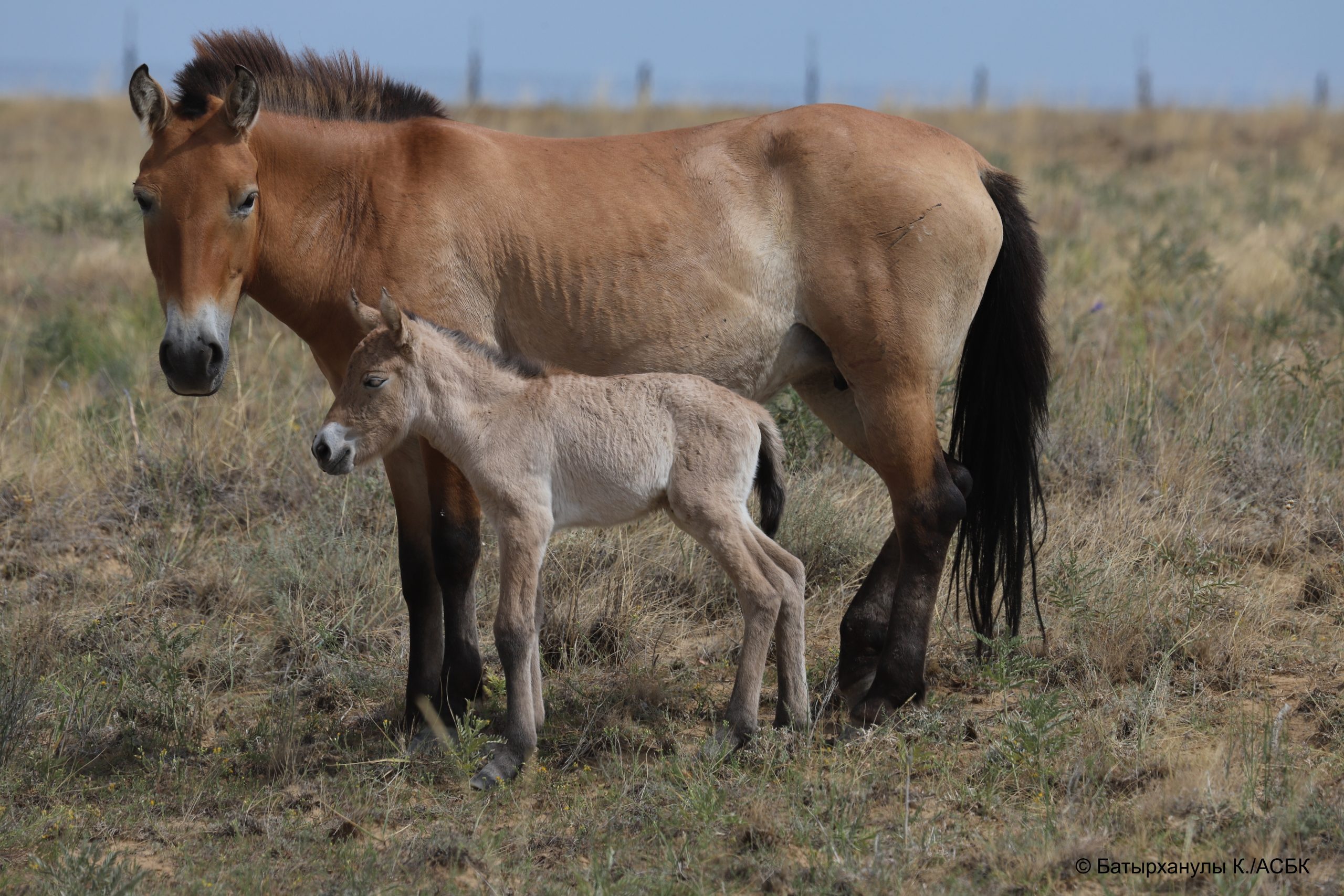
A Przewalski’s horse foal was just born in the steppes of central Kazakhstan, marking the first foal born in the area in 200 years – an important step towards the restoration of the species.
- It looks like a horse, but this is no ordinary horse… Przewalski’s horse is the world's only true wild horse with ancestors that roamed Europe over 20,000 years ago
- It looked like a horse and acted like one, but this horse was different. The size of a lamb, it was the first horse on Earth and ancestor of all today
The male foal was born at the Alibi Reintroduction Centre for Wild Ungulates located within the Altyn Dala State Nature Reserve in central Kazakhstan. It’s the first offspring of seven-year-old horse named Tessa, who arrived in Kazakhstan from Tierpark Berlin in 2024 as part of a large-scale international project to return wild horses to areas where they once thrived.
The Przewalski’s horse, also known as the kertagy, is the last surviving species of wild horse in Eurasia, currently listed as Endangered on the IUCN Red List. This rare horse disappeared from the wild in the mid-20th century due to habitat loss, competition with domestic livestock and hunting. It owes its survival to zoos and international breeding programmes.
The last wild herd of Przewalski’s horses was observed in the Gobi Desert in Mongolia in 1969, and several decades later, Mongolia became the first country to begin the reintroduction of the species – Kazakhstan is now following in its footsteps.
The Kazakhstani reintroduction programme was launched in 2024, when the first seven Przewalski’s horses arrived in the country from Prague Zoo and Tierpark Berlin, and were then transported to the Alibi Reintroduction Centre. The animals were released into spacious enclosures, where they spent a year adapting to the new natural conditions.
Seven more individuals were brought over in 2025, followed by another eight in 2026. The project aims to bring approximately 40 horses to Kazakhstan by 2029.
A story of hope
The animals have now successfully adapted to their new environment, demonstrating characteristic feeding, and exploratory and social behaviours. The biggest indicator of this assimilation is mating between individuals.
Soon after birth, the foal stood up, followed his mother, and then – most importantly – began nursing. It is now exploring the steppe, gradually learning to survive on its own in the wild.
Specialists will continue to monitor the herd, tracking movements and collecting data on both the adults and the new generation.
“This is much more than the birth of one foal. It is the first new generation of Przewalski’s horses born in the steppes of central Kazakhstan and a very important milestone for the whole reintroduction programme. For me, seeing him standing beside his mother in the Kazakh steppe is something I will remember for the rest of my life,” said Albert Salemgareyev, project coordinator, Association for the Conservation of Biodiversity of Kazakhstan.
“I am extremely proud of our team and grateful to everyone in Kazakhstan and among our international partners who have contributed to making this possible. I hope this is only the first of many foals and many more good stories to come from Altyn Dala.”
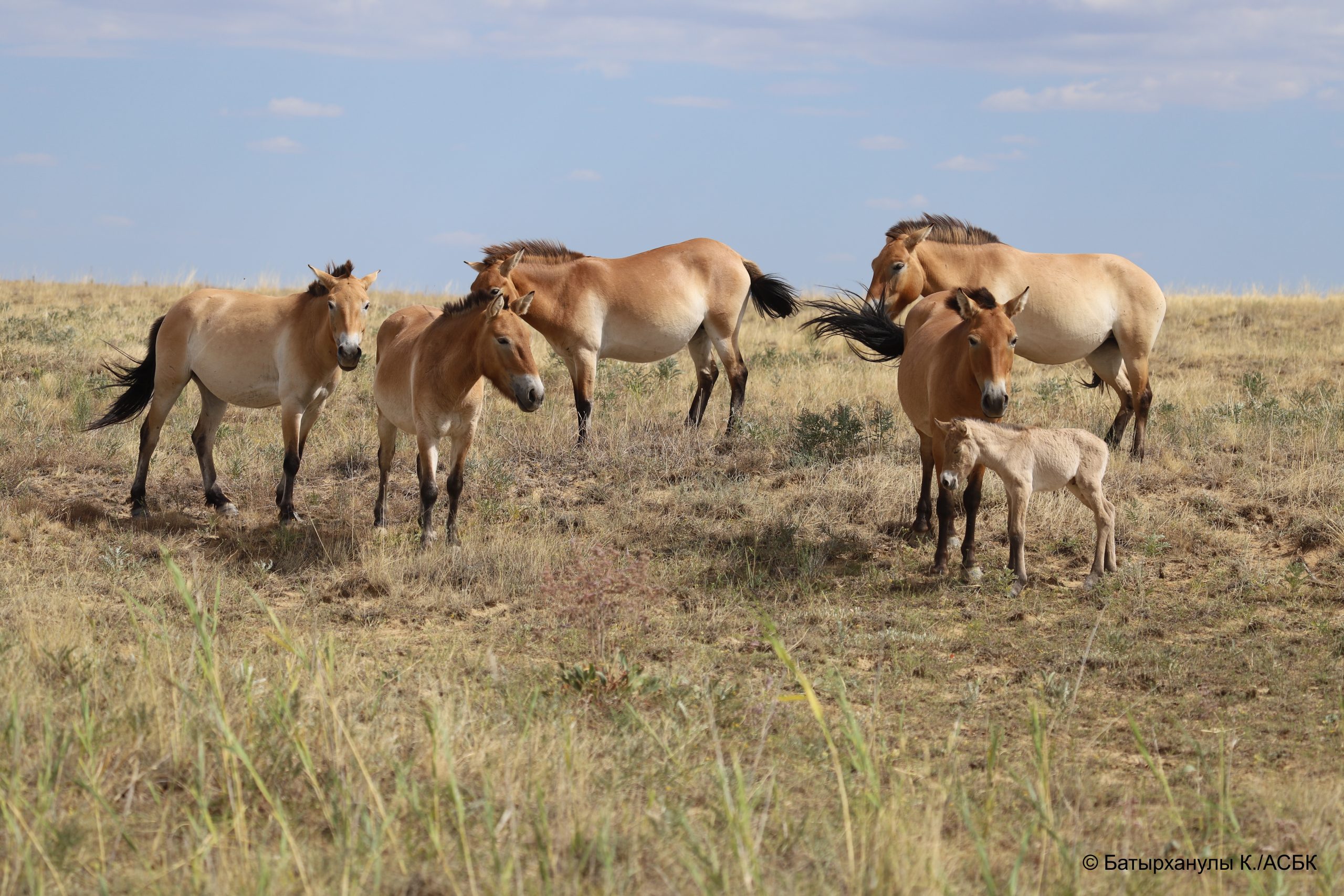
This newborn foal contributes to the broader mission of conserving Kazakhstan’s steppes, helping maintain the genetic diversity of the population and giving scientists the opportunity to better understand the development and behaviour of these wild horses at different stages of their lives.
“The first foal was born thanks to an enormous amount of work that began long before the horses arrived in Kazakhstan. Preparing the territory and infrastructure, organising the complex logistics required to transport the animals, their acclimatisation, daily monitoring and the care provided by specialists - all of this was essential for the horses to adapt successfully,” said Vera Voronova, Executive Director of the Association for the Conservation of Biodiversity of Kazakhstan.
“Now we have a new task: to observe how the first generation of Przewalski’s horses born on Kazakh soil grows and develops. We very much hope that this first generation of foals will mark the beginning of a self-sustaining population.”
Top image credit: Kanat Batyrkhanuly, ACBK
