
Throughout its 4.5-billion-year history, Earth has been bombarded by countless asteroids, the vast majority of which have been too small to puncture our atmosphere, burning up into harmless clouds of gas and cosmic dust long before reaching the ground. However, there have been a handful of larger impacts that have reached the surface and, in doing so, wreaked havoc.
- Mega volcanoes, asteroid impacts and global cooling: The five deadly mass extinctions that changed life on Earth as we know it forever
- When a rock the size of four Mt Everests hit Earth, it made oceans boil – then something even more astounding happened
These kinds of asteroids are known as “planet killers” and they typically measure more than 1km across. An asteroid this size can weigh upwards of one billion tons and set off a chain of unstoppable, apocalyptic events, including massive tsunamis, worldwide fires, nuclear winters, acid rain, mass extinctions, and more.
- "Any animals standing within 1,500km of the impact would have been instantly vaporised." 10 deadly, terrifying times to be alive...
- "Water will evaporate, leaving a dry barren surface - it will become an even hotter version of Venus…" 10 ways Earth – and life on it – could die
As larger asteroids reflect less light and can often hide in the glare of the Sun, many “planet killers” remain undiscovered. In 2022, astronomers detected a 1.5km-wide asteroid orbiting between Venus and Jupiter. While this asteroid’s current orbit places it a somewhat safe distance from Earth, it has still been labelled “potentially hazardous”.
The asteroids that have made this list were all “planet killers” - and then some. Their impacts didn’t just scar Earth’s surface; they transformed the course of our planet’s history, reshaping ecosystems and altering the very fabric of life itself.
6 most apocalyptic asteroids to ever hit Earth
Manicouagan impact
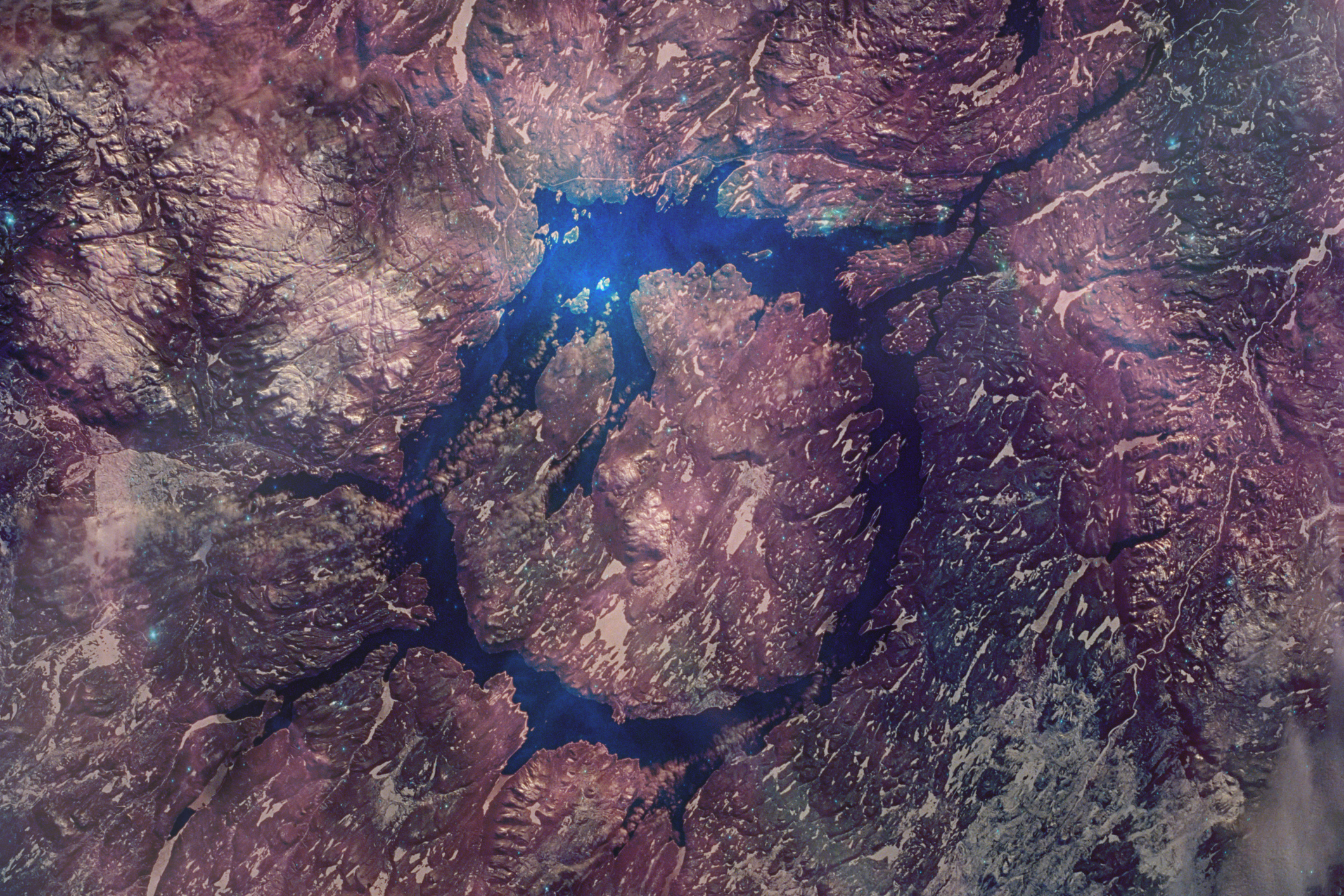
In central Quebec, Canada, there’s a ring-shaped lake known as the “Eye of Quebec”. At 1,942 km2, this lake, and the island that lies at its centre, is larger than Greater London and can clearly be seen from space!
This almost perfectly circular structure is thought to have been formed by an asteroid impact that occurred approximately 214 million years ago, during the Late Triassic. Based on the size of the lake - which actually sits in the crater created by said impact - scientists estimate the asteroid in question measured roughly 5km across.
- "One day it’s there. The next it’s gone. Then it’s back again." 11 weirdest, bizarrest lakes on the planet – including one that contains a fluid that's not water...
- The strange, very peculiar lake that forms a mythical dragon's giant eye every spring
While the original crater rim has been heavily eroded by glaciers, shrinking from 100km to 72km across, the impact’s central uplift - a 952m-high peak known as Mount Babel - remains at the centre. The impact was so powerful that an ejecta blanket of shocked quartz has been found in similarly dated rocks layers as far away as England and Japan.
It has been suggested the so-called ‘Manicouagan impact’ may be linked to an extinction event, though radiometric dating has ruled it out as the cause of the infamous Triassic-Jurassic mass extinction - an event that wiped out nearly 70% of all species. Instead, the timing of the impact coincided with a smaller, more localised extinction that killed off many North American lizard-like archosaurs and non-mammalian therapsids.
Today, the island that lies at the centre of the “Eye of Quebec” contains an IUCN-protected ecological reserve that protects a pristine boreal and alpine ecosystem, home to woodland caribou, black bears, and moose.
Popigai impact
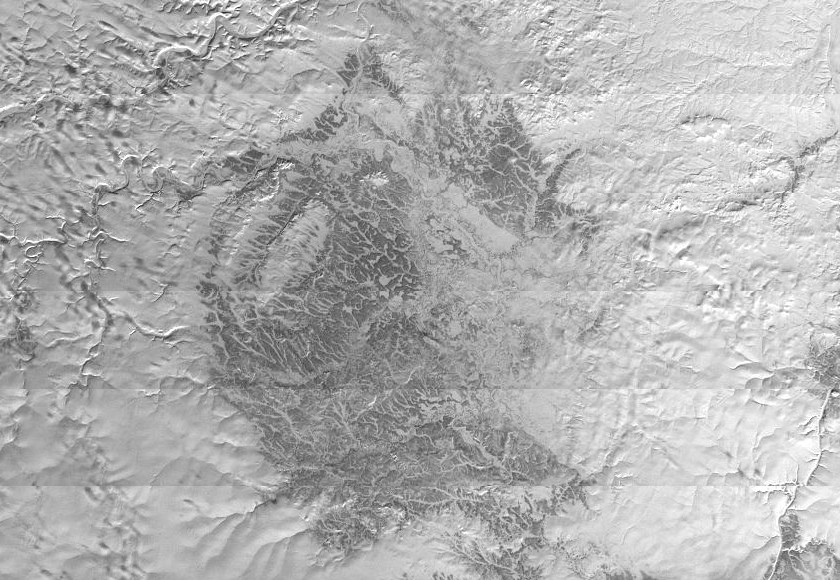
35 million years ago, around the same time cats were beginning to evolve in Europe and Asia, a roughly 7km-wide asteroid smashed into northern Siberia, Russia. This impact created a crater that measures 100km across, making it the fourth largest verified impact structure on Earth.
The shock pressure from this particular impact was so extreme that it instantaneously transformed graphite in the ground into diamonds. These ‘impact diamonds’ can be found within a 13.6km radius of the impact point and while they may be unsuitable as gems, it’s thought they may have some industrial uses.
300km east from the outpost of Khatanga and 880km northeast of the city of Norilsk, the crater is situated in one of the most remote areas on Earth, making it incredibly difficult to study. The area was also historically off limits due to the large deposits of diamonds found there. However, a major investigatory expedition was undertaken in 1997, greatly advancing understanding of the crater and the impact that caused it.
Subsequent studies suggest the Popigai impact may have coincided with the Chesapeake and Toms Canyon impacts. If this timing is correct, it could point to a disturbance in the asteroid belt that unleashed a multi-type asteroid shower that sent multiple asteroids crashing into Earth.
Some have also linked this particular impact to an extinction event that took place between the Eocene and Oligocene. This extinction is marked by the glaciation of Antarctica and a large turnover in animal species. It’s unclear exactly what triggered this period of global cooling, but recent dating of the Popigai impact strengthens its association with the start of this period.
Sudbury impact
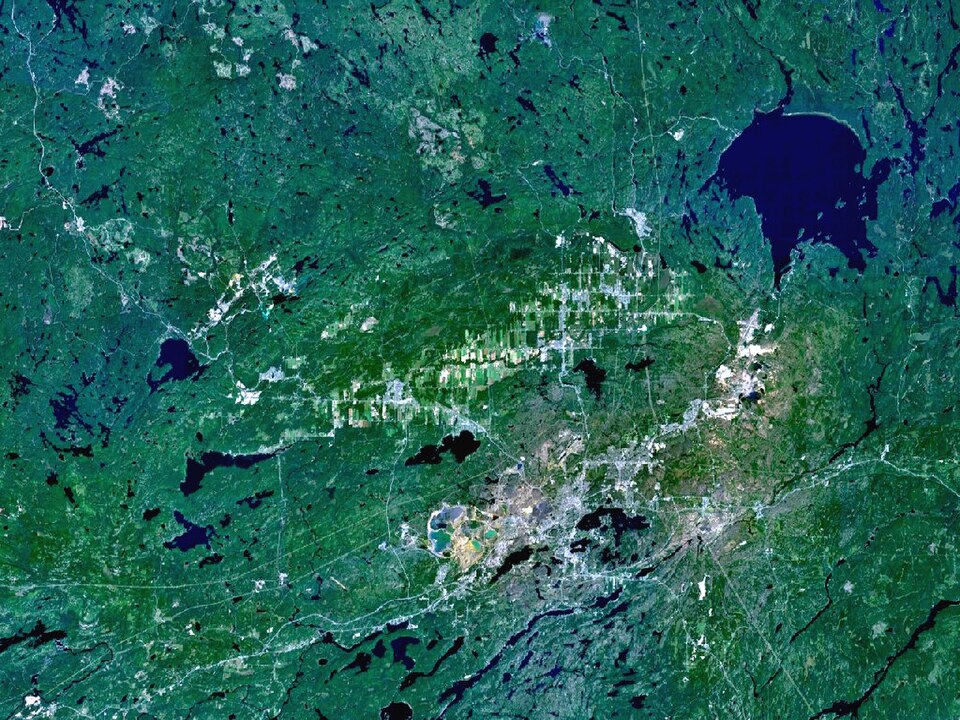
There are few craters that are as large, or as old, as the Sudbury impact structure in southeastern Ontario, Canada. While it’s not nearly as well-defined as the “Eye of Quebec”, which lies just over 1,000km north, it’s more than twice as large - and more than eight times as old!
The original crater is thought to have measured at least 200km across and formed roughly 1.8 billion years ago. The subsequent deformation and erosion of the Sudbury Basin has made this crater difficult to study, though scientists have been able to estimate an approximate size for the asteroid that created it; at 15km-wide it’s as large as, if not larger than, the asteroid that wiped out the dinosaurs.
Despite being similar in size to the dinosaur-killing asteroid, the impact that carved out the Sudbury Basin was far less destructive in terms of extinction. Striking Earth 1.8 billion years ago, it hit a planet devoid of complex life - it wasn’t until a billion years later that the first animals evolved. Even so, it likely wiped out countless single-celled organisms, potentially influencing the course of life’s evolution in the ages that followed.
The nature of the impact was so violent that it punctured Earth’s crust, causing deep, mantle-derived magma to erupt and mix with minerals from the asteroid. The extreme heat resulting from this impact separated heavy, valuable metals such as nickel, copper, and platinum, leaving them for future generations of walking, talking great apes to discover, mine, and export around the world.
Chicxulub impact
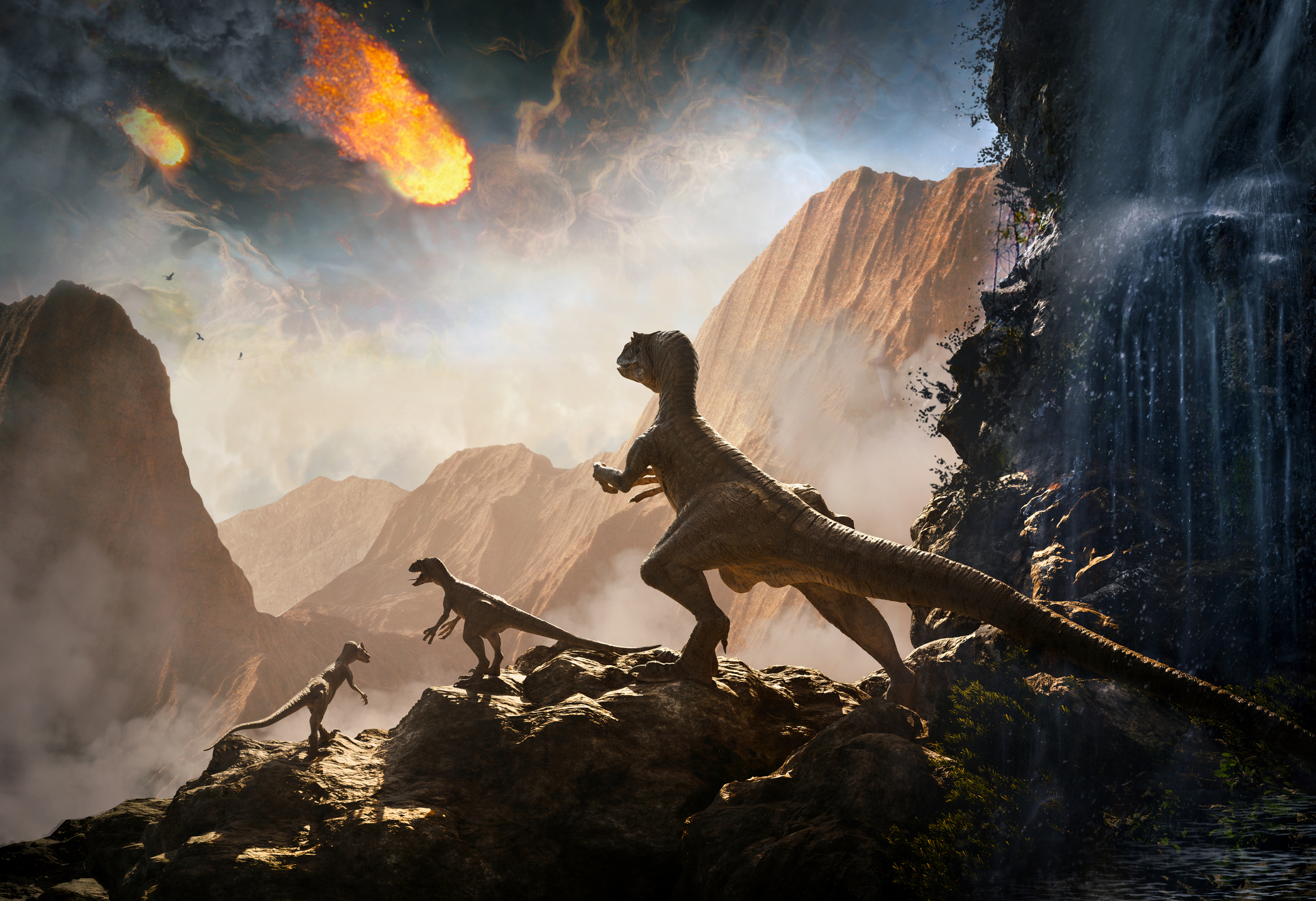
There are bad days, and then there’s the ‘Last Day of the Cretaceous’ - 24 hours that brought one of the most dominant and enduring dynasties in Earth’s history to an abrupt end.
Although this impact didn’t trigger the deadliest mass extinction of all time - that grim title belongs to the aptly named ‘Great Dying’ at the end of the Permian - it is by far the most famous, wiping out the non-avian dinosaurs.
66 million years ago, at a time when T.rex, Triceratops, and many other well-known dinosaurs were roaming across Earth, a roughly 15km-wide asteroid crashed into Mexico’s Yucatán Peninsula, digging a hole nearly 200km across and 30km deep. The impact was so powerful it released roughly 5 to 10 billion times the energy of the atomic bomb dropped on Hiroshima.
- What killed the dinosaurs? It may not have been a meteorite that delivered the deadly blow, say scientists
- 10 deadliest dinosaurs on the planet: meet the ferocious prehistoric beasts that ruled Earth
Anything standing within a few hundred kilometres of the impact site was instantaneously vaporised. Those farther from the impact arguably suffered an even worse fate. In the minutes that followed, seismic shockwaves equivalent to magnitude 11 earthquakes rippled across the planet, while megatsunamis up to 4.5km high drowned coastlines across the world.
The apocalypse didn’t stop there. As debris re-entered the atmosphere after being thrown into low Earth orbit, it heated the air to oven-like temperatures, causing forests (and any surviving animals) to spontaneously ignite. The soot generated by these worldwide fires, as well as the finer debris from the initial impact, blocked out the sun and triggered a nuclear winter that may have lasted two to three decades.
Given the scale of these cataclysms, it’s little surprise that around 75% of all species on Earth became extinct following the Chicxulub impact - if anything, it’s surprising that anything survived at all.
Late Heavy Bombardment
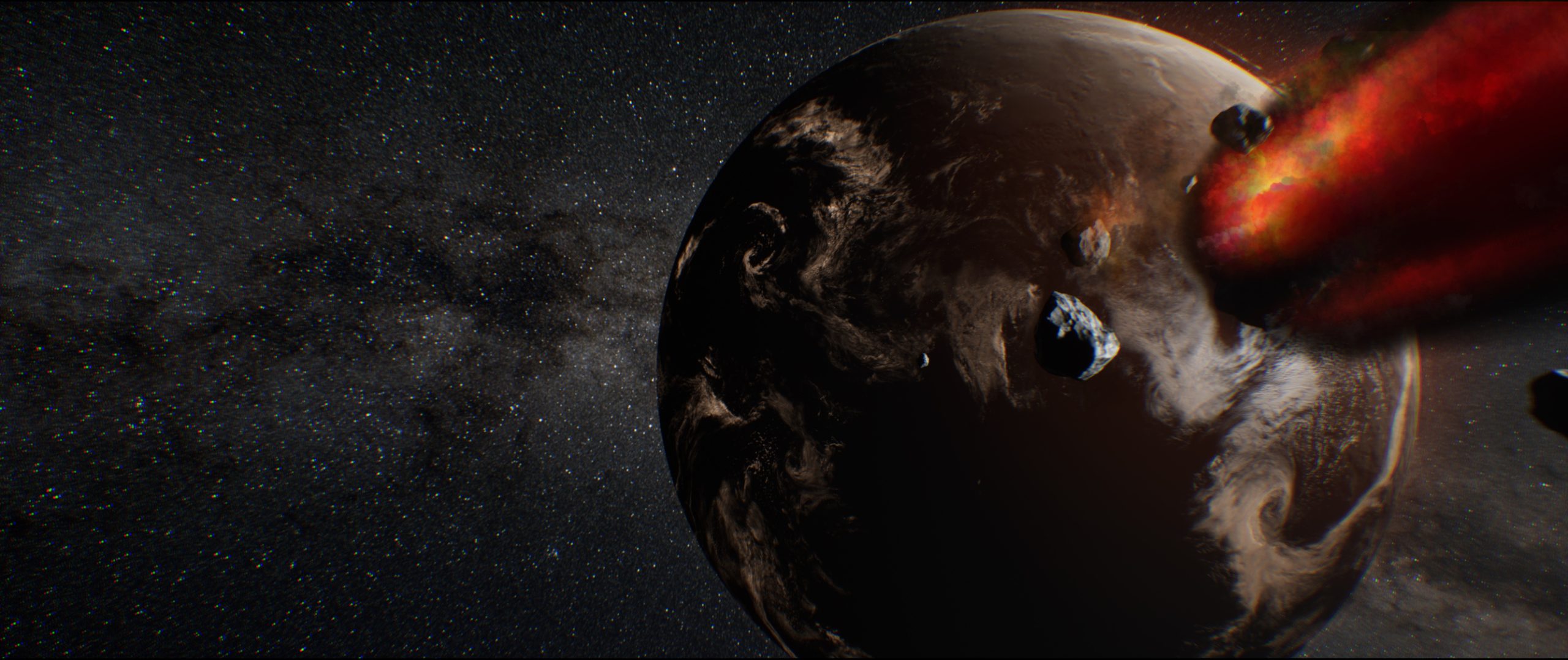
Shortly after Earth formed 4.5 billion years ago, there may have been a 300-million-year-long period where a disproportionately large number of asteroids and comets collided into Mercury, Venus, Earth, and Mars.
This period is known as the Late Heavy Bombardment (LHB) and it’s thought it may have been caused by a sudden change in the orbits of the Solar System’s gas giants, which threw the asteroid belt into disarray and sent huge chunks of rocks (and ice) hurtling towards the inner planets.
As a result of Earth’s active geological cycle (plate tectonics and erosion), which recycles a lot of ancient craters, evidence for the LHB on our planet isn’t very forthcoming. Instead, scientists look at scarred surfaces on the Moon, Mercury, Venus, and Mars, the distribution of asteroids in the asteroid belt, and the dates of impact melt in Moon rocks to work out the legitimacy of this theory and whether such craters are associated.
By extrapolating lunar cratering rates to Earth, scientists have suggested the LHB may have produced over 22,000 craters under 20km wide, around 40 basins about 1,000km across, and several giant basins approaching 5,000km in diameter.
It has been suggested that this sustained period of extraterrestrial pummeling may have broken up the early Earth’s rigid, single-plate crust, initiating the subduction and fracturing processes that developed into modern plate tectonics. A significant portion of early Earth’s water may have also been brought by water-rich asteroids that impacted during the LHB.
If the LHB was a key precursor to plate tectonics and Earth’s oceans, it could be argued it was the opposite of apocalyptic - without it, Earth may have never developed the conditions required for life, or at least life as we know it, to emerge.
Vredefort impact
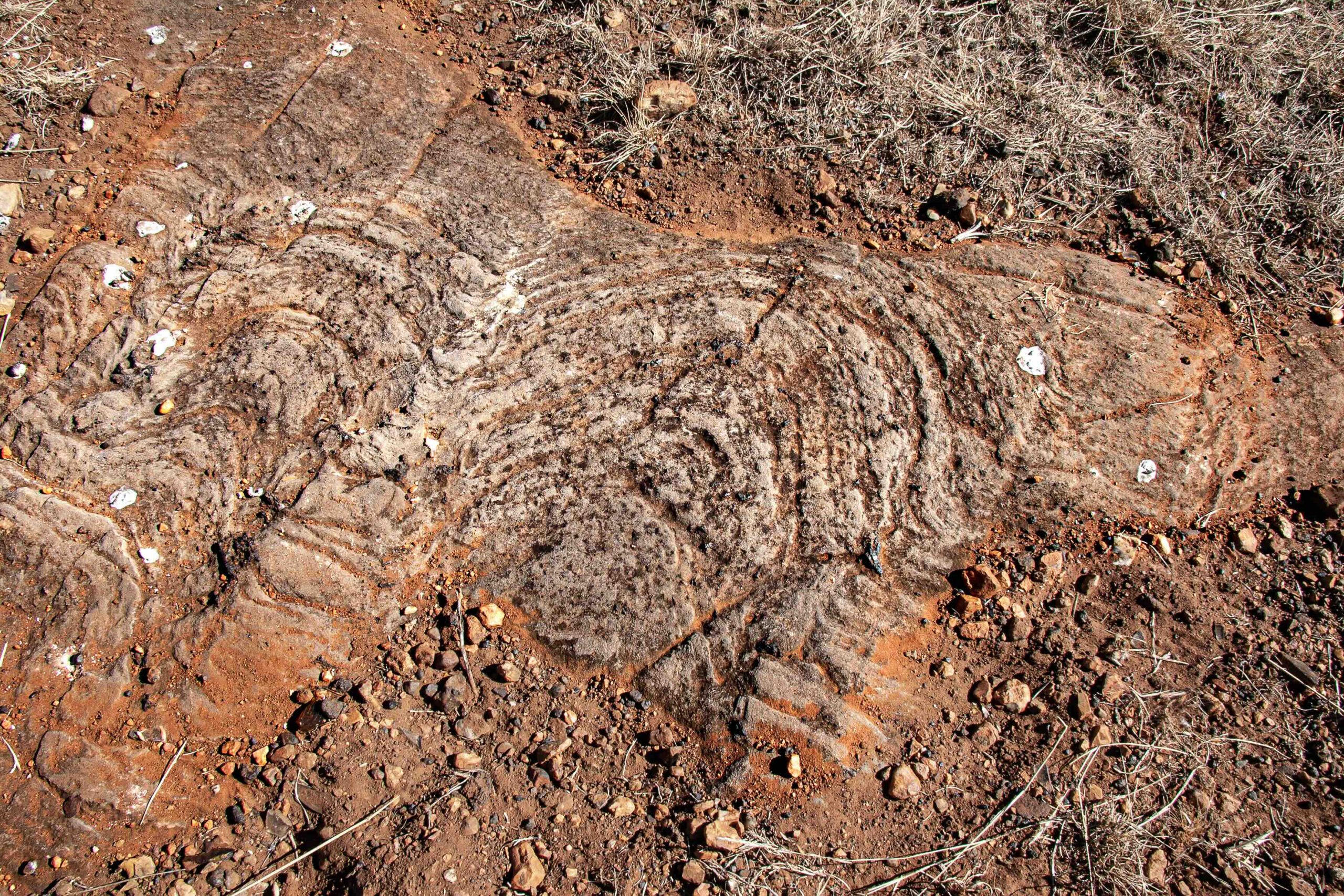
At 25km wide, the asteroid that created the Vredefort impact structure in South Africa is the largest confirmed asteroid to ever hit Earth. It triggered catastrophic global cooling, wiped out an untold number of species, and was twice the size of the asteroid that killed the dinosaurs.
According to estimates, the asteroid released seven times as much energy as the dinosaur-killing asteroid, suggesting it may have triggered the most apocalyptic event Earth has ever seen.
Like the Sudbury impact, the Vredefort impact occurred before the emergence of complex, multicellular organisms - 2.023 billion years ago, to be exact - so it wasn’t quite as devastating from an extinction perspective as the Chicxulub impact. However, that’s not to say it wasn’t an ecological disaster; countless simple, single-celled species would have been eradicated by the impact and subsequent chain of cataclysms.
- "99 per cent of the species that have ever lived have gone extinct": Why life needs extinction and how it can be a force for good
- When the Earth burned for 5 million years: Great Dying could happen again with just as deadly results, scientists warn
The crater formed by the Vredefort impact is estimated to have measured 300km across, though none of the original rim actually remains - billions of years of erosion have completely worn it away. What remains is the Vredefort Dome, a central uplift ring roughly 70km wide. This dome was created when the ground beneath the crater rebounded upward, pushing rocks that were once 35km deep inside Earth up to the surface.
Impacts of this magnitude, and the immense multi-ringed structures they create, are so rare on Earth that to find comparable examples you must look elsewhere in the Solar System. Anubis on Ganymede and Valhalla on Callisto - two of Jupiter’s 115 officially recognised moons - are giant multi-ringed impact basins that closely resemble what the Vredefort impact structure would have looked like billions of years ago.
Top image credit: Aunt_Spray/Getty Images

