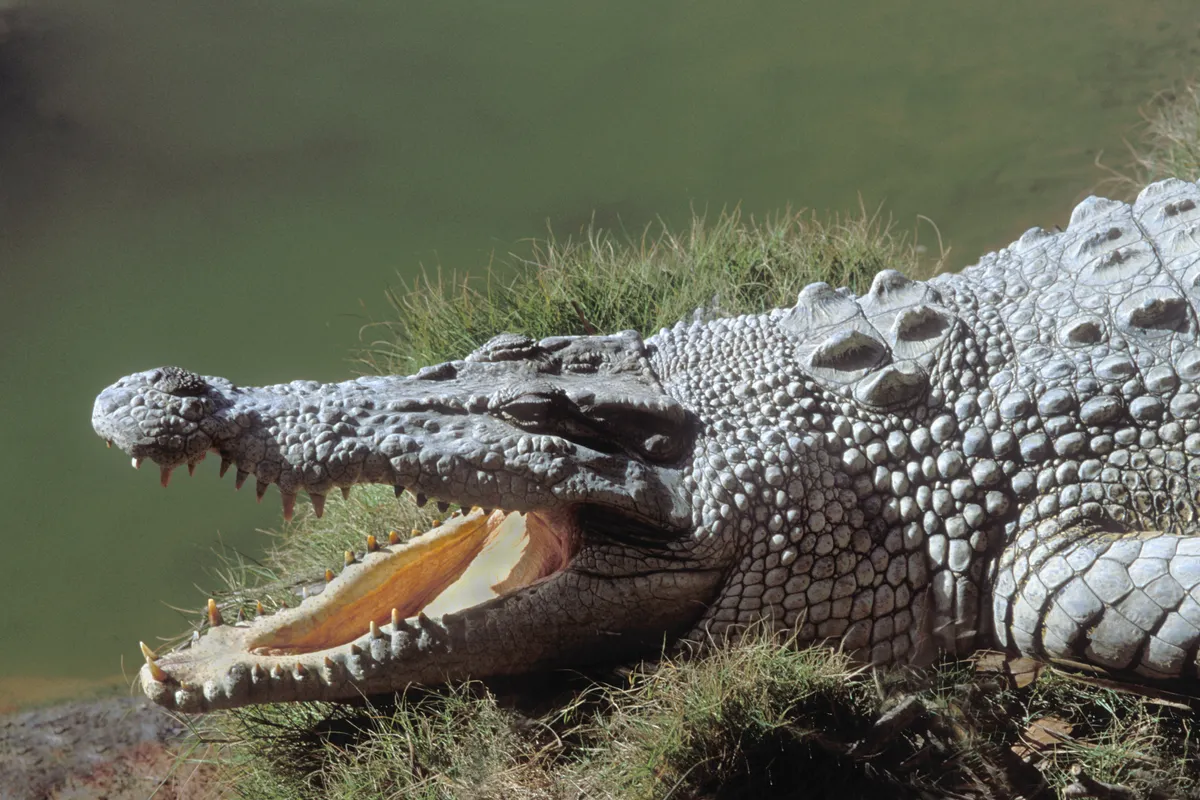
The American alligator is a formidable apex predator. Armoured with bony plates and equipped with a muscular tail and some of the most powerful jaws in the animal kingdom, this aquatic reptile has stalked the wetlands of the south-eastern United States for millions of years.
But look beyond its blood-thirsty reputation, and you’ll find that the American alligator is an attentive parent, an expert engineer of wetland habitat, and a once-vulnerable species that came surprisingly close to extinction.
Where does the American alligator live?
The American alligator is native to the south-eastern USA, from coastal North Carolina, south through Florida, and west to eastern Texas, with populations extending inland in parts of its range. It favours freshwater wetlands, including swamps, marshes, lakes and slow-moving rivers.
- There is only one place on Earth where crocodiles and alligators live together in the wild – and it's here
- "It can run at speeds of 35mph, climb 30m up a tree in seconds and is an excellent swimmer…" 8 most dangerous, deadliest animals in Florida's Everglades
What does it eat?
The American alligator is an opportunistic carnivore whose diet changes as it grows. A juvenile feeds largely on insects, amphibians and small fish, while a larger adult can tackle turtles, snakes, birds and mammals. Small prey is swallowed whole. When it comes to larger prey, the alligator may shake its catch apart or spin its body in the famous ‘death roll’ to tear off manageable pieces.
How powerful is its bite?
Extremely. In one study, a large adult American alligator generated a bite force of 9,452N. The jaws are built for crushing and holding, helping the alligator break turtle shells and subdue sizeable prey. Its mouth will contain roughly 74–80 teeth at any one time, and worn or broken teeth are continually replaced throughout its life.
How does it find prey?
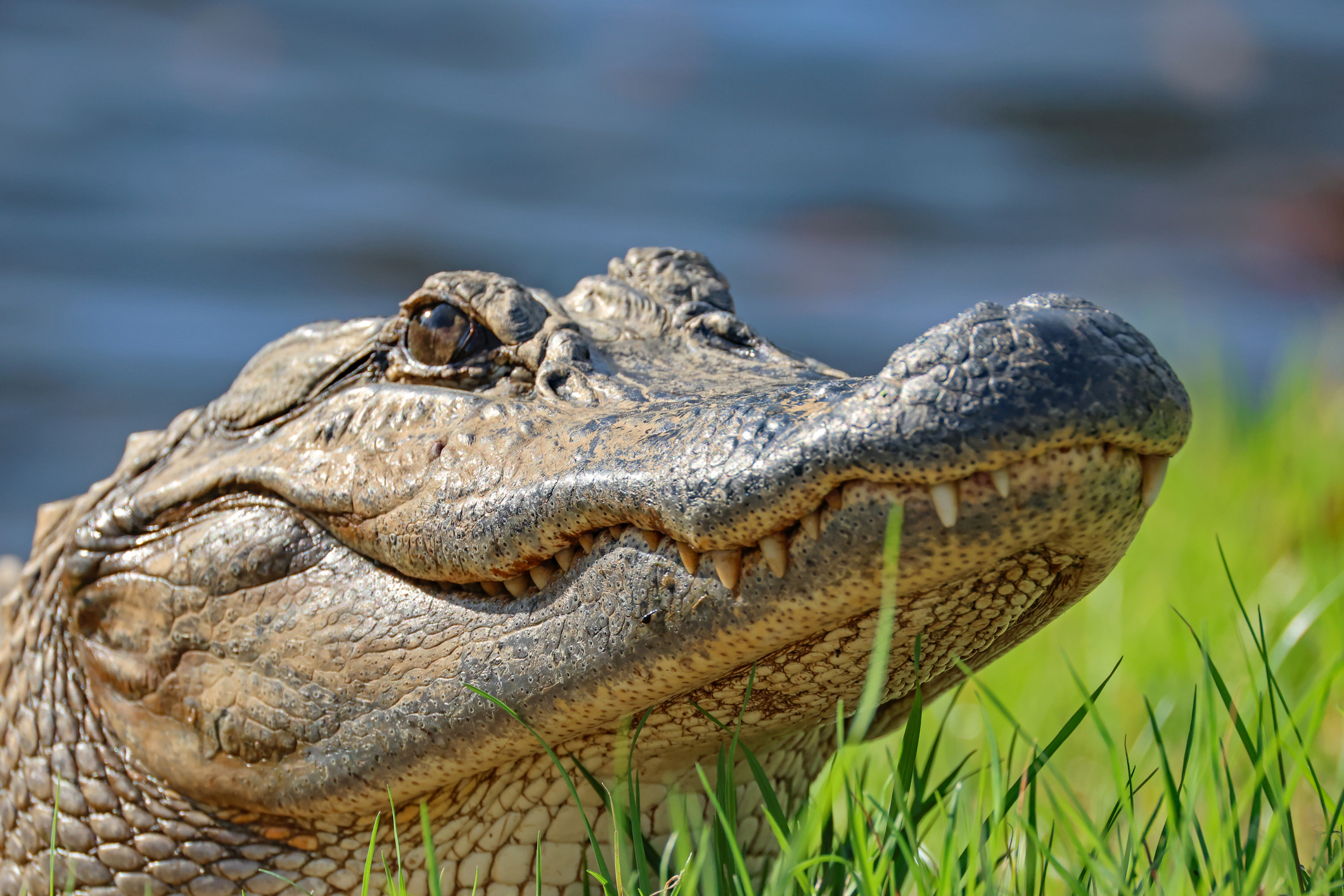
Those intimidating jaws are also remarkably sensitive. The small dark bumps dotted around the alligator’s mouth are specialised touch receptors known as integumentary sensory organs. Experiments have shown that these can detect minute pressure changes and vibrations, including ripples created by movement of prey at the water’s surface. Some receptors are sensitive enough to outperform a primate fingertip, giving the alligator a finely tuned sense of touch despite its heavily armoured appearance.
How does the American alligator breed?
Courtship begins in spring, when the American alligator uses head and tail slaps and deep bellows to communicate to potential mating partners and ward off rivals. A male bellowing in water can produce low-frequency vibrations that make droplets dance above its back and the vocalisations can convey information about the caller’s body size.
- It straddles two US states, contains 15,000 alligators, and is home to a snake as long as a bed
- One of the world’s biggest predators can’t breathe underwater – yet it can stay submerged for hours
After mating, a female builds a mound nest from vegetation and soil, then typically lays about 32–46 eggs. She guards the nest through the roughly two-month incubation period and once they hatch she carefully carries them to the water in her mouth. The youngsters stay under the protection of their mother for up to two years.
What determines whether a hatchling is male or female?
Temperature. The American alligator lacks the differentiated sex chromosomes familiar in mammals. Instead, conditions inside the nest during a critical stage of incubation influence sexual development. Constant incubation around 33°C tends to produce males, while cooler temperatures around 30°C produce females; very warm temperatures can also favour females. Even small differences in nest temperature can therefore affect the sex ratio of a brood.
Why are alligator holes important?
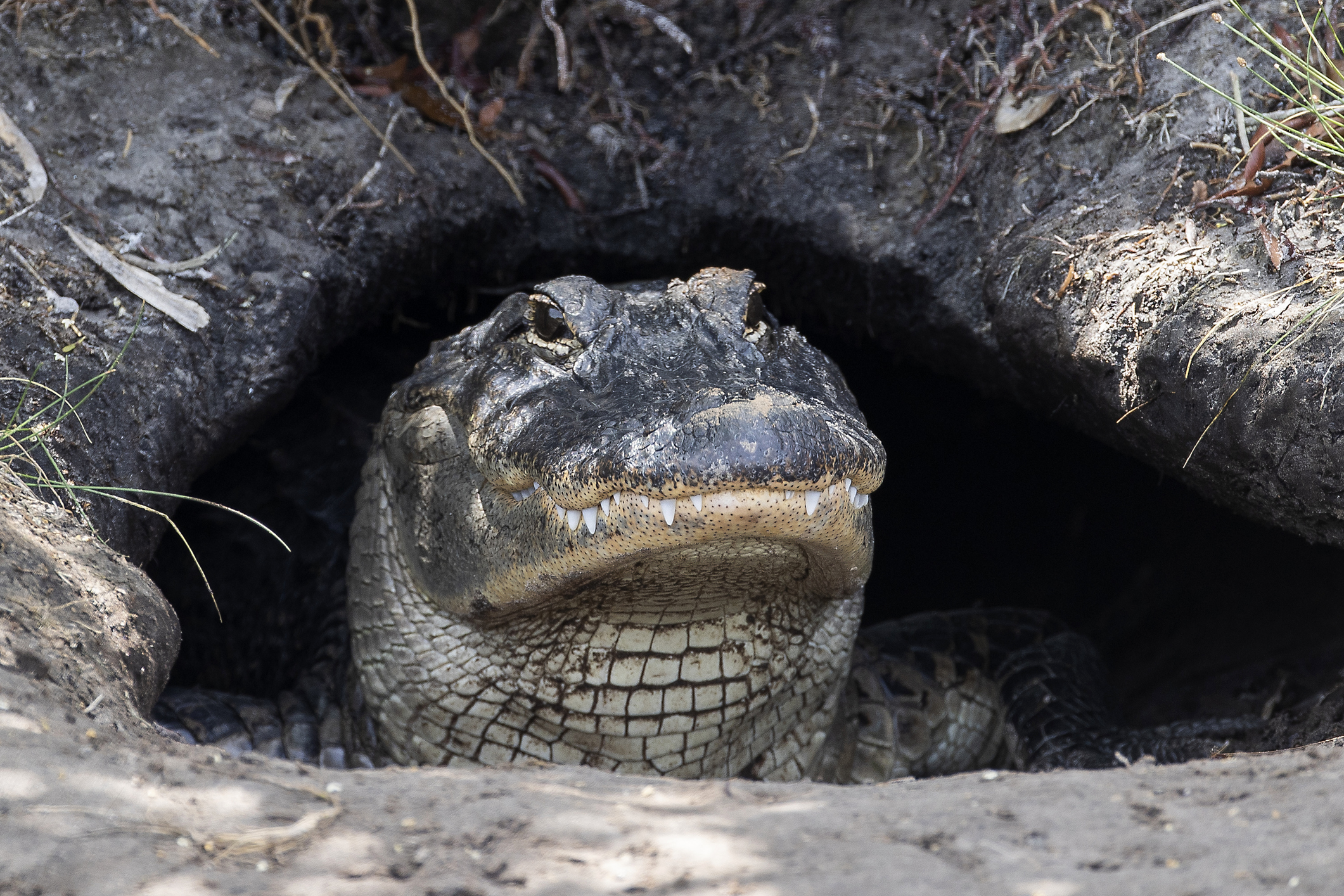
The American alligator is cold-blooded and when temperatures fall it will dig a depression called an ‘alligator hole’ in the mud, which fills with water and provides protection from the cold. In places such as the Everglades, these excavations may retain water when surrounding marshes dry out, creating aquatic refuges for fish and other wildlife once abandoned. By disturbing sediment, they also help distribute nutrients and enrich the soil. For this reason, the alligator is often described as an ecosystem engineer: its everyday behaviour can help shape the wider wetland community.
How can you tell an alligator from a crocodile?
The easiest clue is the snout. The American alligator has a broad and rounded snout, while the American crocodile’s is narrower and more pointed. Their teeth also give them away: when an alligator closes its mouth, the large fourth tooth in its lower jaw fits into a socket and is usually hidden; in a crocodile, it remains visible. There is a difference in habitat, too. Crocodiles have specialised salt glands on their tongues that allow them to cope better with sea water, whereas the American alligator is principally a freshwater animal.
- Crocodile vs alligator: what's the difference between these two fearsome predators?
- "I was dragged into the murk. I clawed at the sand in hope of grabbing a rock to hit it with and pry my leg out from its jaws"
Is the American alligator endangered?
No. The species is regarded as one of the great wildlife recovery stories of the USA. Heavy hunting, habitat loss and pollution caused severe declines during the 20th century, and federal protection followed in 1967. Numbers recovered strongly after hunting controls and other conservation measures, and the species was removed from the US endangered species list in 1987. Today, nearly five million American alligators are estimated to live across the south-eastern United States. Habitat loss and human–alligator conflict remain concerns in some areas, while hunting and trade are closely regulated.
Length: Females average about 2.6m; males about 3.4m
Weight: Very large males can approach 454kg
top image: A large American alligator with its mouth wide open. Credit: Felipe Correa/500px / Getty Images
Discover more interesting reptilian stories from around the world:
- Stomach, liver and intestines of 245 million year old marine reptile unearthed in Chinese mountains
- Blind snake that looks like a massive earthworm discovered on roadside in China
- "They have some of the deadliest venom in the world, which can cause paralysis, including of the diaphragm, potentially leading to respiratory failure."