
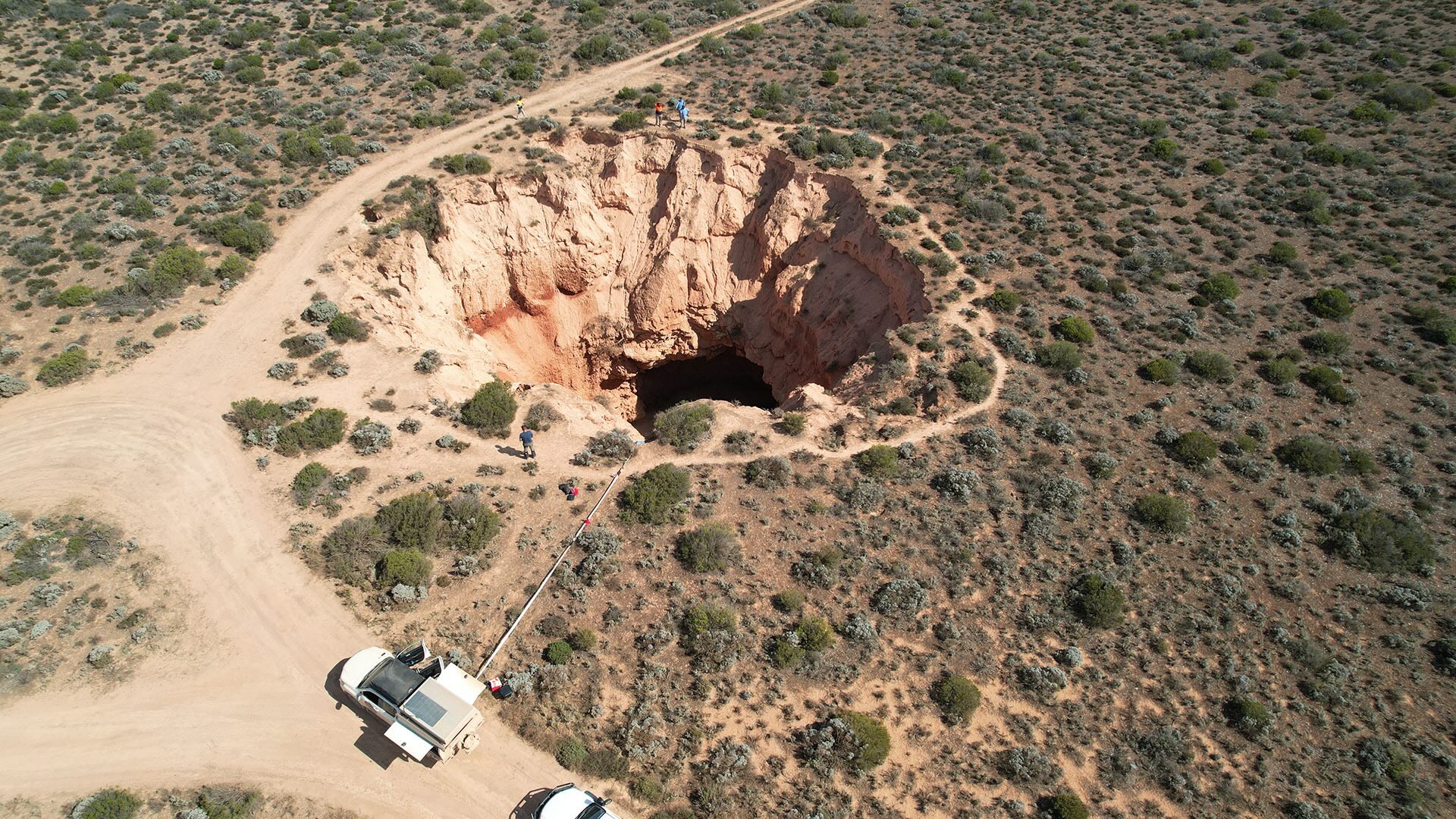
Scientists in Australia have found a new way to identify hidden cave systems in dry landscapes: by locating shallow, sediment-filled trenches on the Earth’s surface, which form when underground caves gradually collapse.
The technique was first used during a study of trenches found across the Nullarbor Plain – a flat, 200,000km² limestone landscape in southern Australia.
“From the surface, these features can look remarkably like shallow valleys or drainage channels,” explains Matej Lipar, who led the study, “but our evidence shows they have a very different origin.
“By combining mapping, geophysical surveys, cave records and sediment analysis, we found these trenches are linked to deep cave systems beneath the Nullarbor Plain.
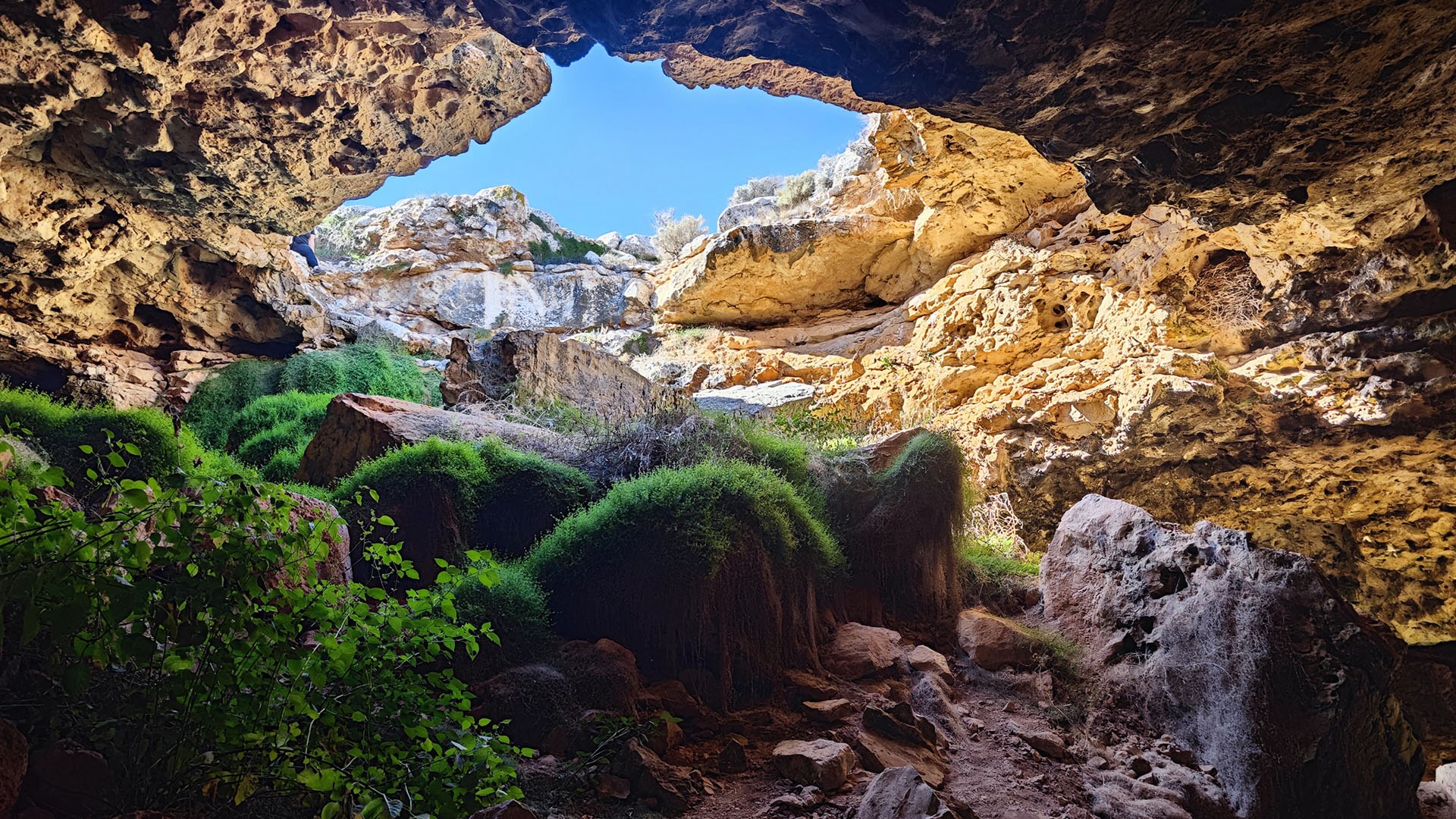
“Over time, the cave roofs progressively collapsed causing sagging of overlying material, eventually creating shallow depressions at the surface.”
- "Stop, prevent your death! Go no further." These are the 9 deadliest caves on the planet
- Deep in the New Mexico desert lies a hidden kingdom of 119 ancient caves – home to aerial hunters that catch prey at 60mph
Some of the trenches are more than 20km long and around 100–500m wide, but at less than 9m deep, they can be hard to spot. To get around this problem, the researchers came up with a nifty trick to help find them.
“Because the landscape is so vast, it appears to be a flat, endless plain. But when we created exaggerated digital models of the terrain, the trenches became much easier to see and identify,” says Lipar.
The findings, published in the journal Communications Earth & Environment, challenge the idea that the depressions were carved out by flowing water, as their appearance might suggest, adds Lipar. “Unlike typical valleys, the trenches don’t have connected streams or other signs that water once flowed through them. Instead, geophysical surveys found deep underground cavities, while several trenches lined up with known caves and areas where the ground has collapsed.”
Caves are important as they can preserve evidence of past environments on Earth, while also providing a home for specialised cave-dwelling animals.
The team say this new way of identifying hidden cave systems on the Nullarbor Plain can be applied to other dry landscapes around the world, allowing us to learn more about these important subterranean ecosystems.
The technique could also help scientists interpret similar features on Mars and other planets.
“Cave systems are not always obvious from the surface,” says co-author Milo Barham, “but the dry and stable landscape of the Nullarbor is excellent for removing a lot of ‘noise’ to allow us to recognise subtle landscape characteristics. This gives us a useful set of indicators for identifying hidden cave systems elsewhere – including on other planets such as Mars.”
More stories from around the world
- Scientists went into an ancient cave in New Zealand and found a 'lost world' hiding within
- An elephant-like animal was discovered in this gigantic underwater cave. And that’s not all
- Climbers descend 60m vertical shaft in Greece – and find bear scratch marks at the bottom
- Researchers went into a 25m-deep tunnel in Greece – and found an unidentified creature clinging to the walls
Top image: researchers explore underground cave. Credit: Matej Lipar


