An extraordinary image of an elephant carrying a deceased calf has been announced as the overall winner of the Wildlife Photographer of the Year 2026 competition.
Titled The Aftermath, the powerful photo was taken by Italian photographer Federico Veronesi. Veronesi was tracking elephant marks in Namibia’s Huab River Valley when he came across an unusual pattern of drag marks in the sand of a dry riverbed. When he caught up with the group, its source quickly became clear: the female elephant emerged carrying the calf, its leg wedged between her tusk and trunk.
“This photograph works on so many levels,” says Kathy Moran, chair of the Wildlife Photographer of the Year jury. “Emotionally it’s a gut punch, heartbreakingly poignant. Intellectually it’s proof that animals have cognition. This photograph says it all!”
The overall winner, as well as 19 category winners, was announced by naturalists and TV presenters Chris Packham and Megan McCubbin at a ceremony hosted at the Natural History Museum, London. It was the first time in the competition’s history that both the adult and young overall winners were recognised for black-and-white photography, demonstrating the enduring power of monochrome photography.
The organisers note that there were 65,000 entries for the competition, which is developed and produced by the Natural History Museum, London, from 121 countries and territories around the world. The images are judged anonymously by a panel of seven experts on photographers’ creativity, technical excellence and originality.
An exhibition of 100 selected images will open at the museum on Friday 16 October 2026; tickets can be booked online now.
Young Wildlife Photographer of the Year, 11 – 14 Years (and overall Young Wildlife Photographer of the Year 2026)
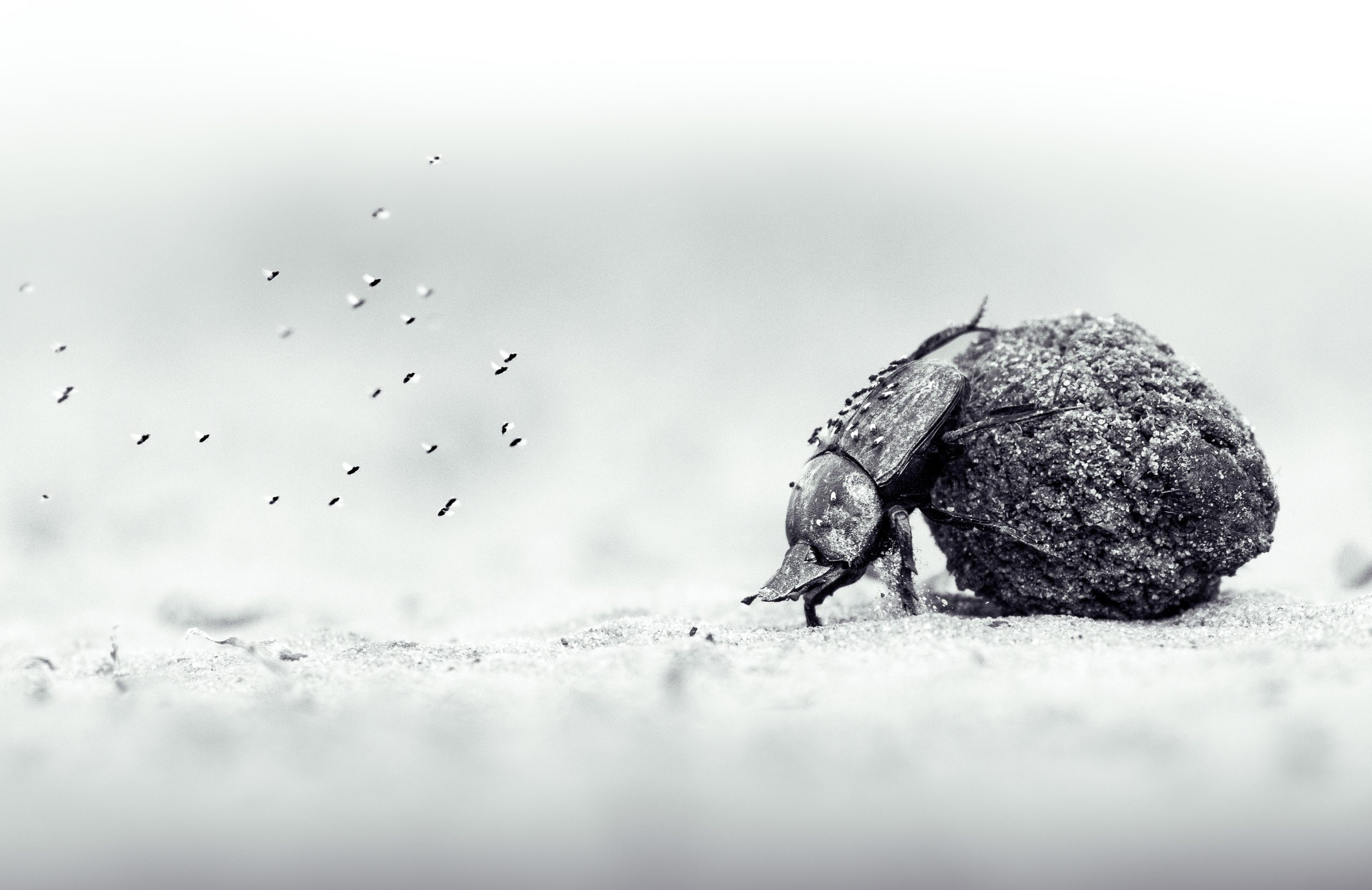
Labour of Love by Oscar Whitfield
Whitfield took this image of a dung beetle at Zambezi National Park, Hwange District, Zimbabwe. The sunshine and heat created dry dust all around. - Oscar Whitfield / Wildlife Photographer of the Year
Young Wildlife Photographer of the Year, 10 Years and Under
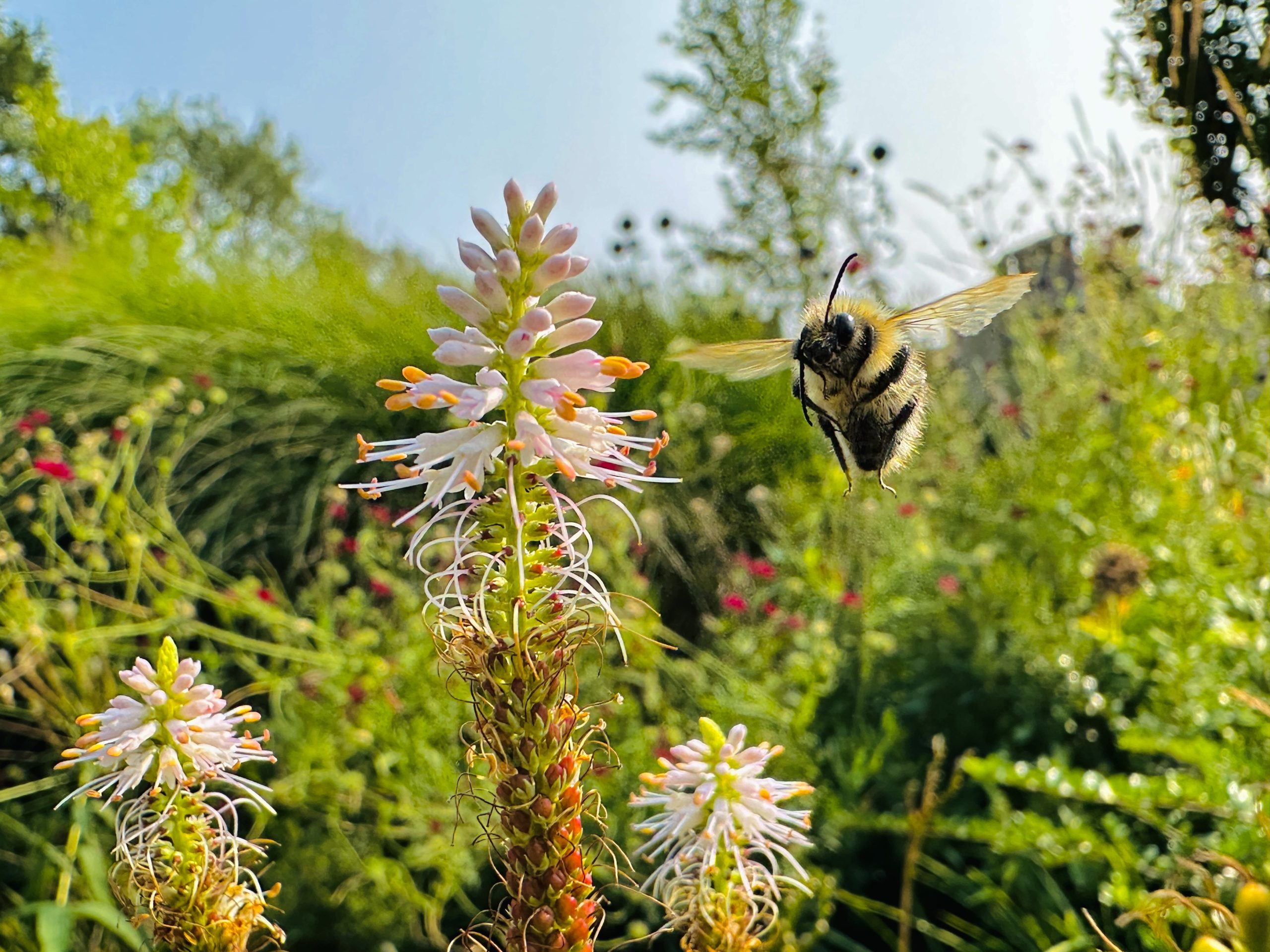
Flight of the Bumblebee by Amelie Davis
Davis took this image of a common carder bee in southern England. She had been taking photographs of bees for several months and on this August afternoon, the garden was “teeming with bees”. As she didn’t have her camera, Davis borrowed her dad’s smartphone. - Amelie Davis / Wildlife Photographer of the Year
Young Wildlife Photographer of the Year, 15 – 17 Years
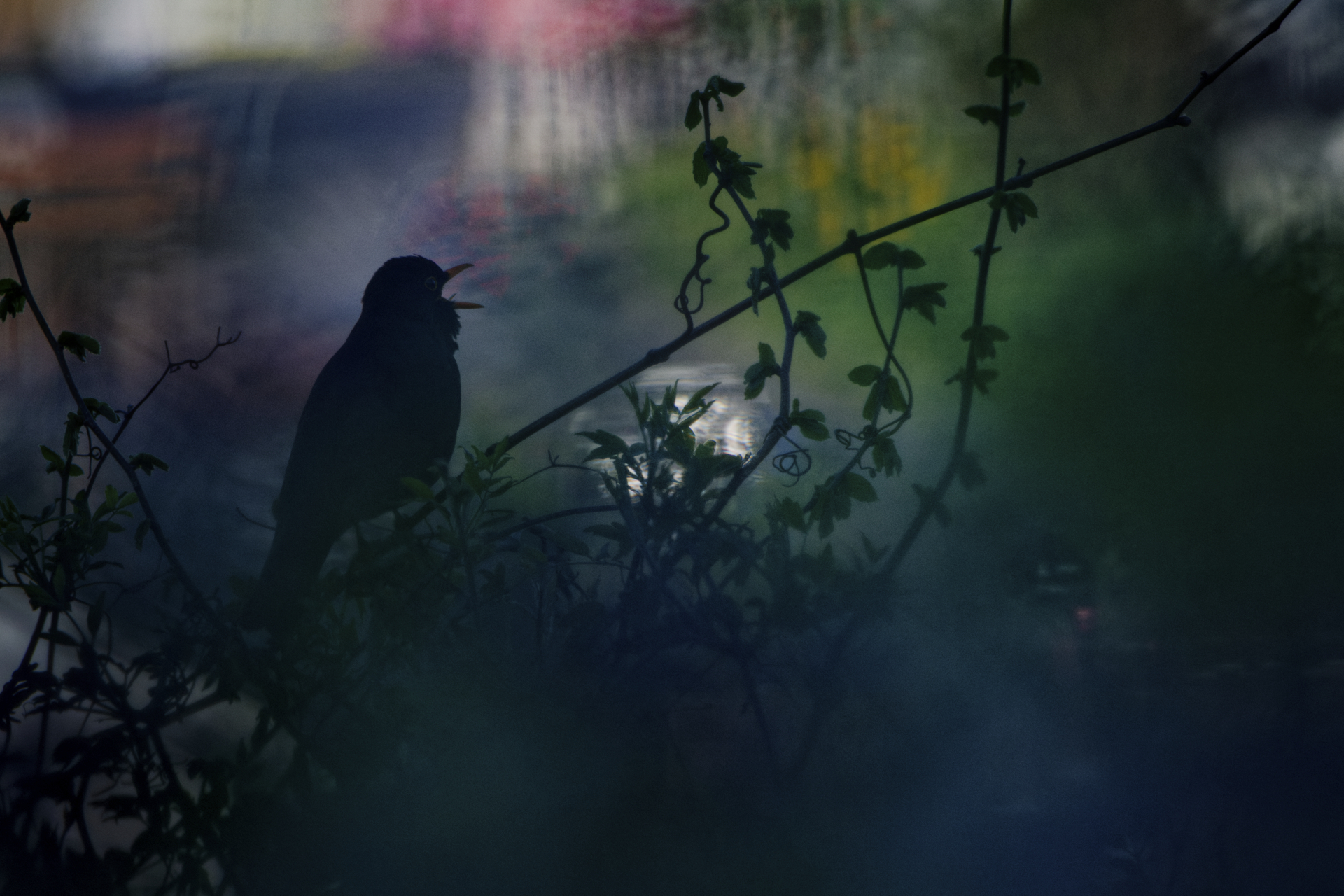
Birdsong Painted in Light by Konrad Gräeter
“Blackbirds are very common in the small town of Schriesheim (in Germany), where I live, and are among my favourite birds in spring, especially because of their beautiful song,” says Gräeter. He had to crouch on the steep slope of the vineyard and point his camera through a gap in the foliage to frame the bird within its landscape. - Konrad Gräeter / Wildlife Photographer of the Year
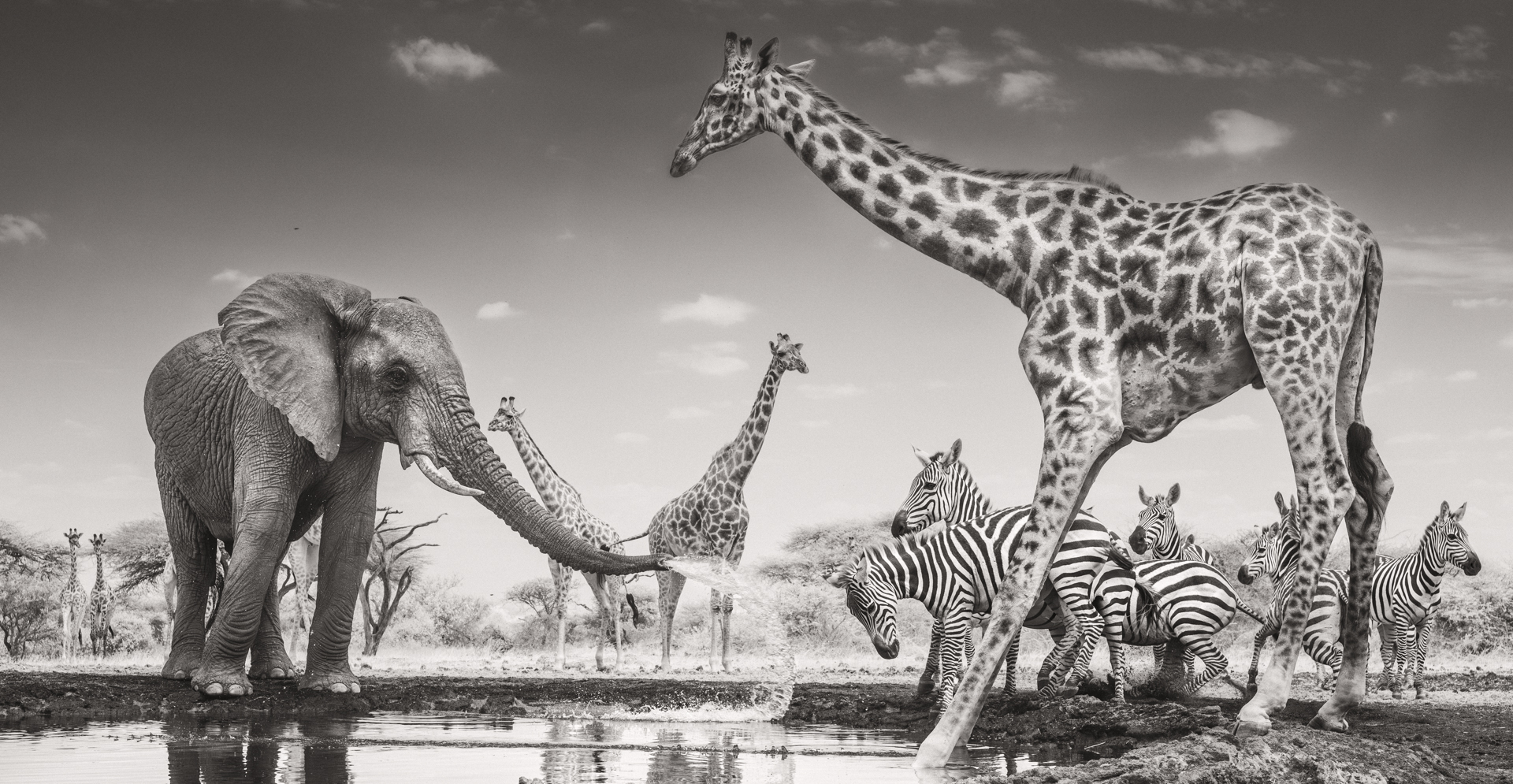
In this image, a young bull elephant sprays a group of zebras as they congregate around a watering hole in the Kenyan Chyulu Hills. Larger animals, such as elephants, usually have priority over others for access. - James Lewin / Wildlife Photographer of the Year
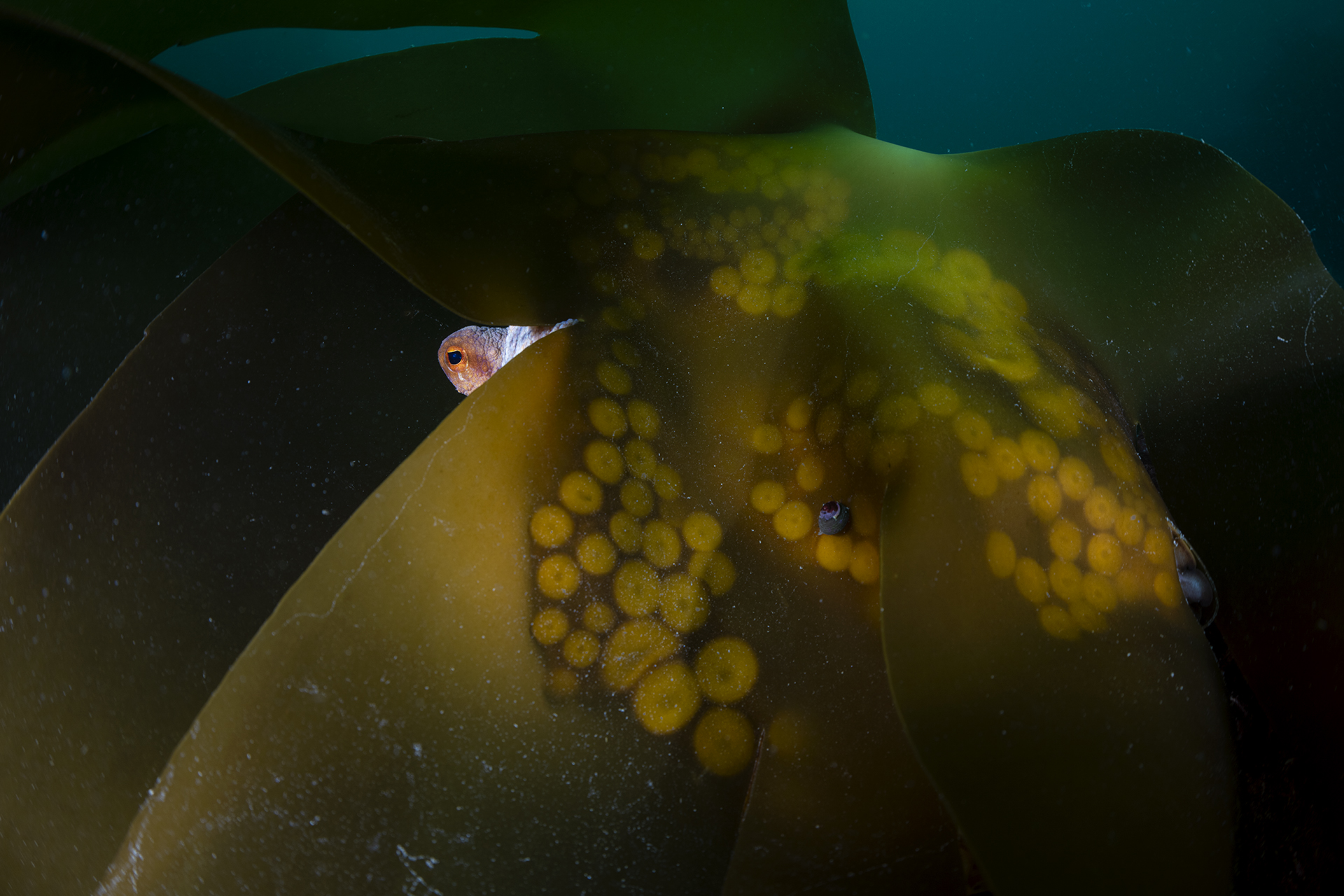
“The distinct pattern of suckers traced through this thin blade of kelp as the octopus clung to the other side,” says Sanders. “Very slowly, a single eye emerged from the corner of the kelp; peering over its leafy veil, the octopus stared out at me. We remained perfectly still, watching one another with a seemingly shared curiosity.” - Aaron Sanders / Wildlife Photographer of the Year
Behaviour: Birds
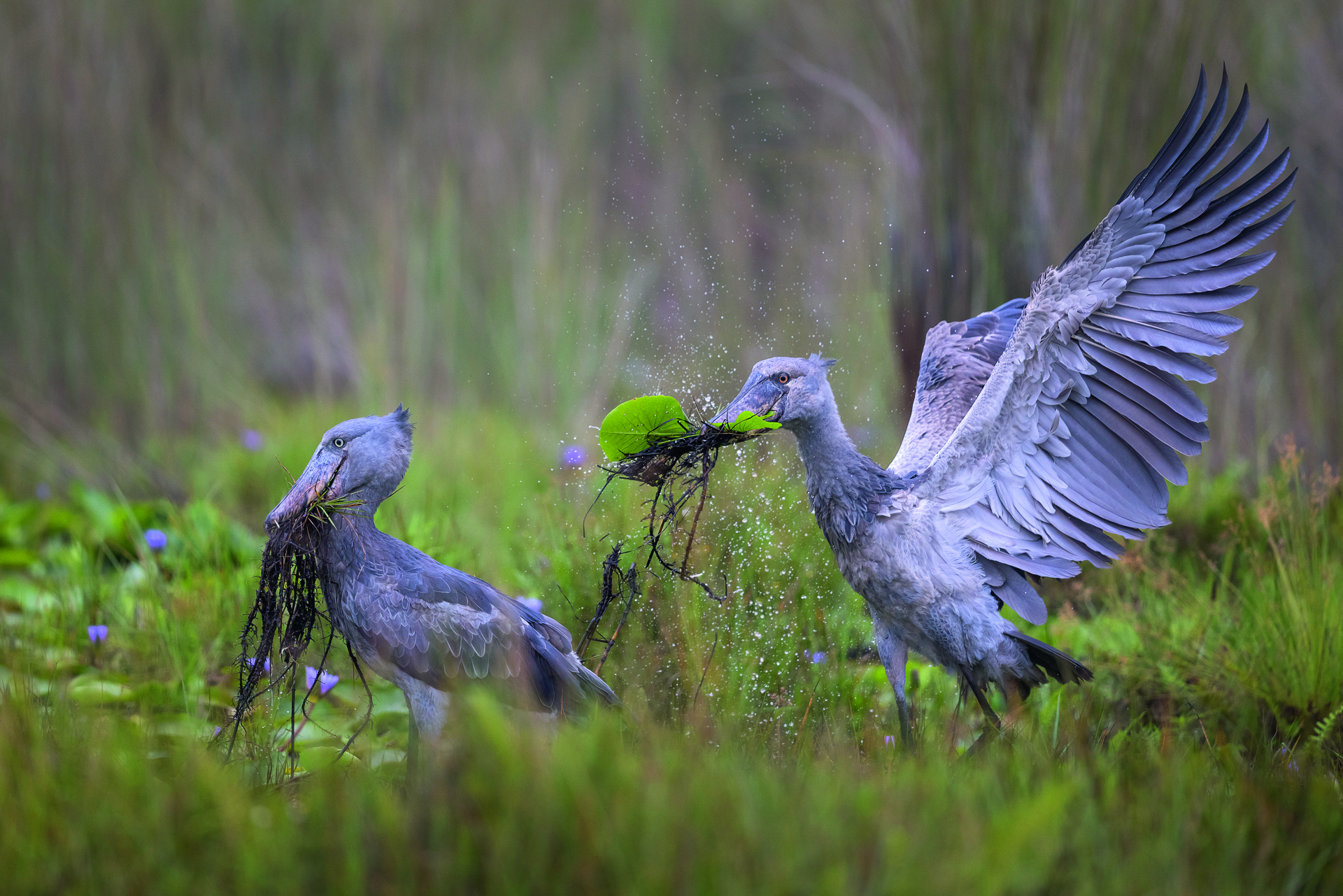
Scenes from the Swamp by Isak Pretorius
Pretorius spotted two elusive shoebills while exploring Uganda’s Mabamba Swamp. The birds pulled out vegetation, dropped it and then repeated the process several times. “These shoebills were displaying strange behaviour. It was an adult with a youngster – I'm still not sure what they were up to,” says Pretorius. - Isak Pretorius / Wildlife Photographer of the Year
Behaviour: Amphibians and Reptiles
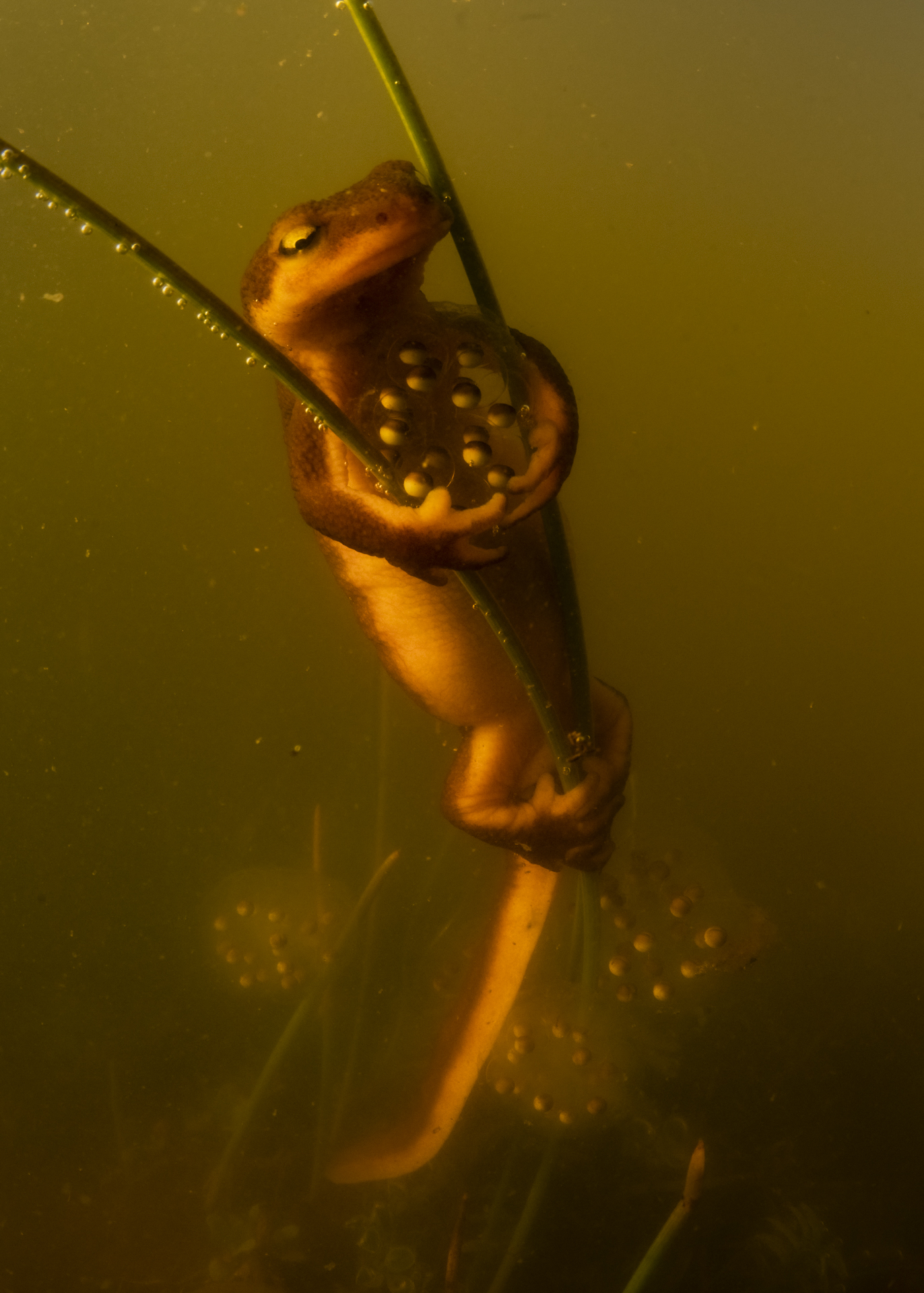
Protective Pose by Anton Sorokin
Sorokin found a California newt laying its eggs as it clasps vegetation that already holds another newt’s egg clutch. Despite documenting newt behaviour each winter, Sorokin hadn’t seen this pose before. He waded along the edge of the pond, carefully dipping his camera and lighting beneath the surface. - Anton Sorokin / Wildlife Photographer of the Year
Behaviour: Invertebrates
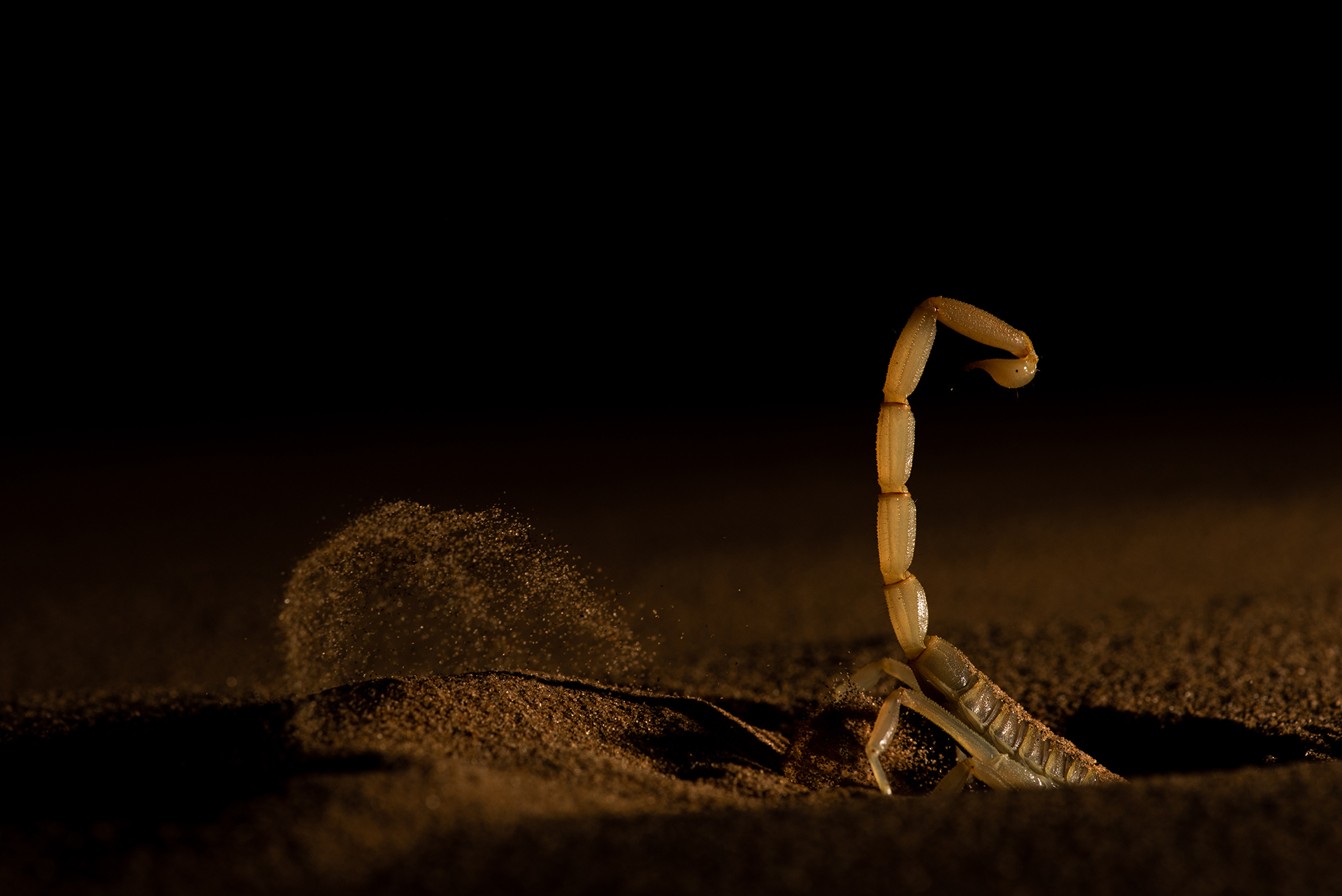
Shifting Sand by Sitaram Raul
“Many species of scorpions live in the vast desert of Rajasthan and some are yet to be described. While roaming at night, I found this particular species that burrows into the sand,” explains Raul. - Sitaram Raul / Wildlife Photographer of the Year
Oceans: The Bigger Picture
Night-Time Catch by Alex Lindbloom
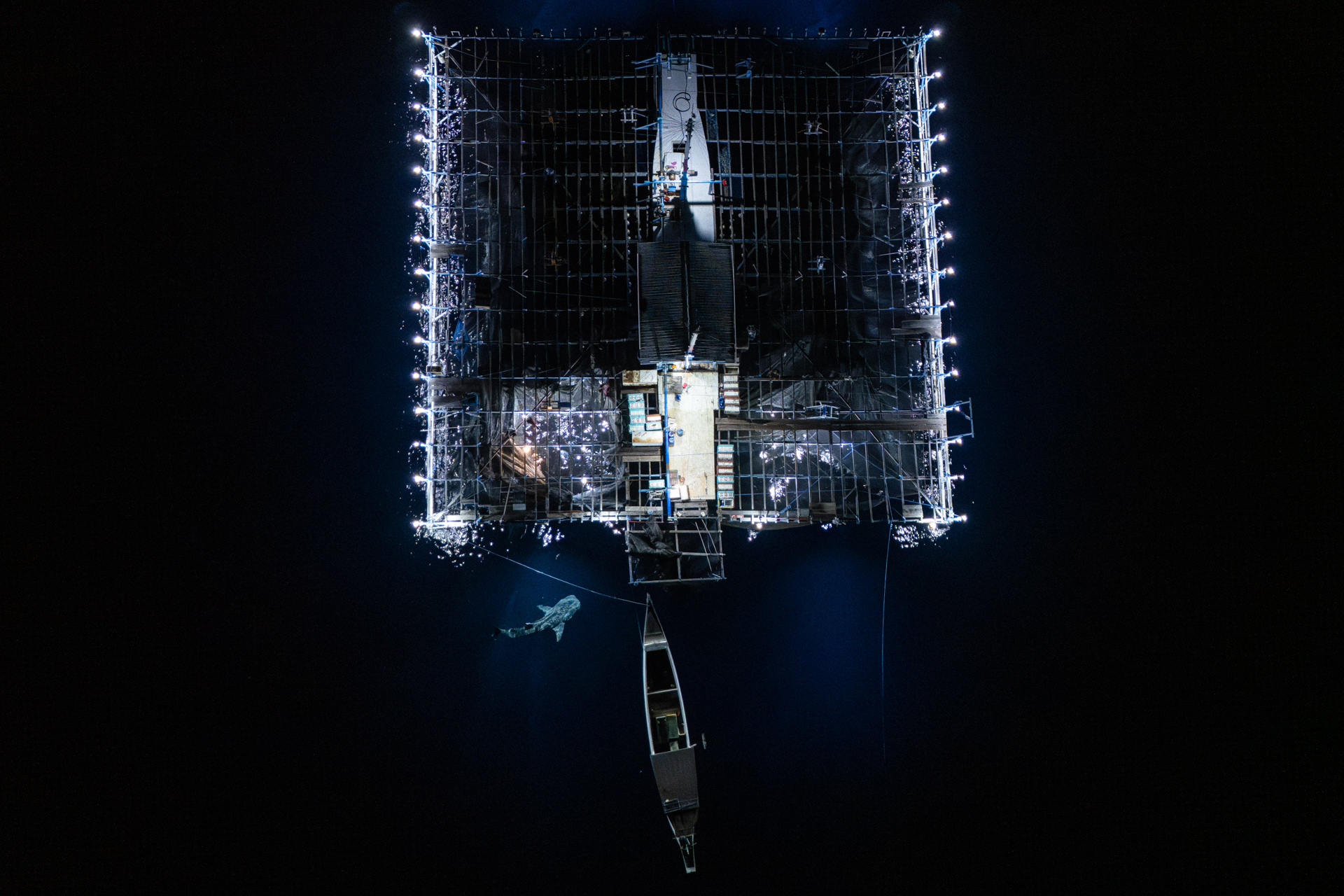
Here, a whale shark investigates the catch of a ‘bagan’, or mobile net-fishing platform, in the waters off Papua. Lindbloom started searching for sharks around dawn when the nets were still in the water. - Alex Lindbloom / Wildlife Photographer of the Year
Plants and Fungi
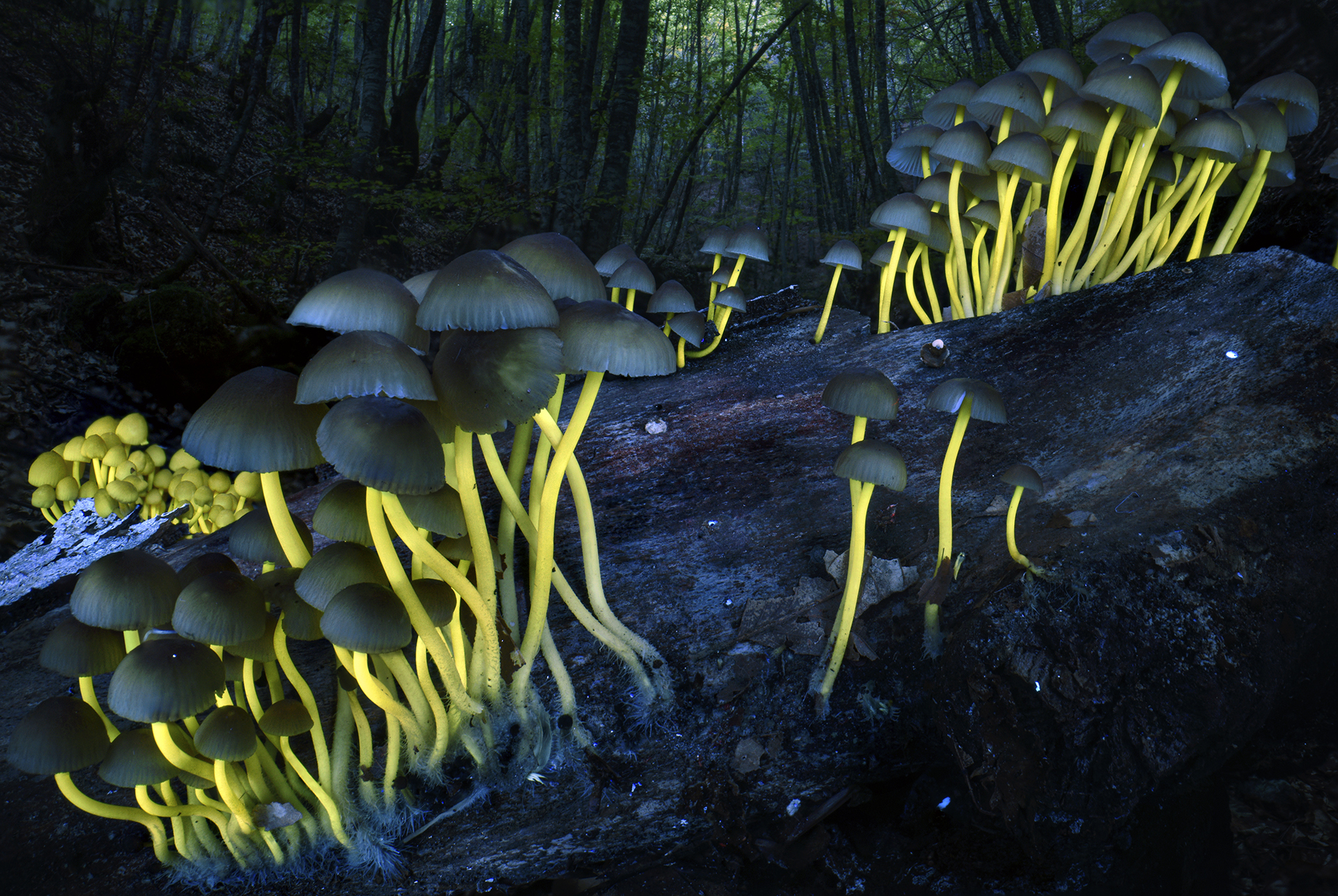
Shedding Light by Agorastos Papatsanis
“Not all mushrooms fluoresce in the same way,” says Papatsanis. “In Mycena renati, ultraviolet light does not produce a cold blue glow, but a warm, yellow-grey fluorescence.” - Agorastos Papatsanis / Wildlife Photographer of the Year
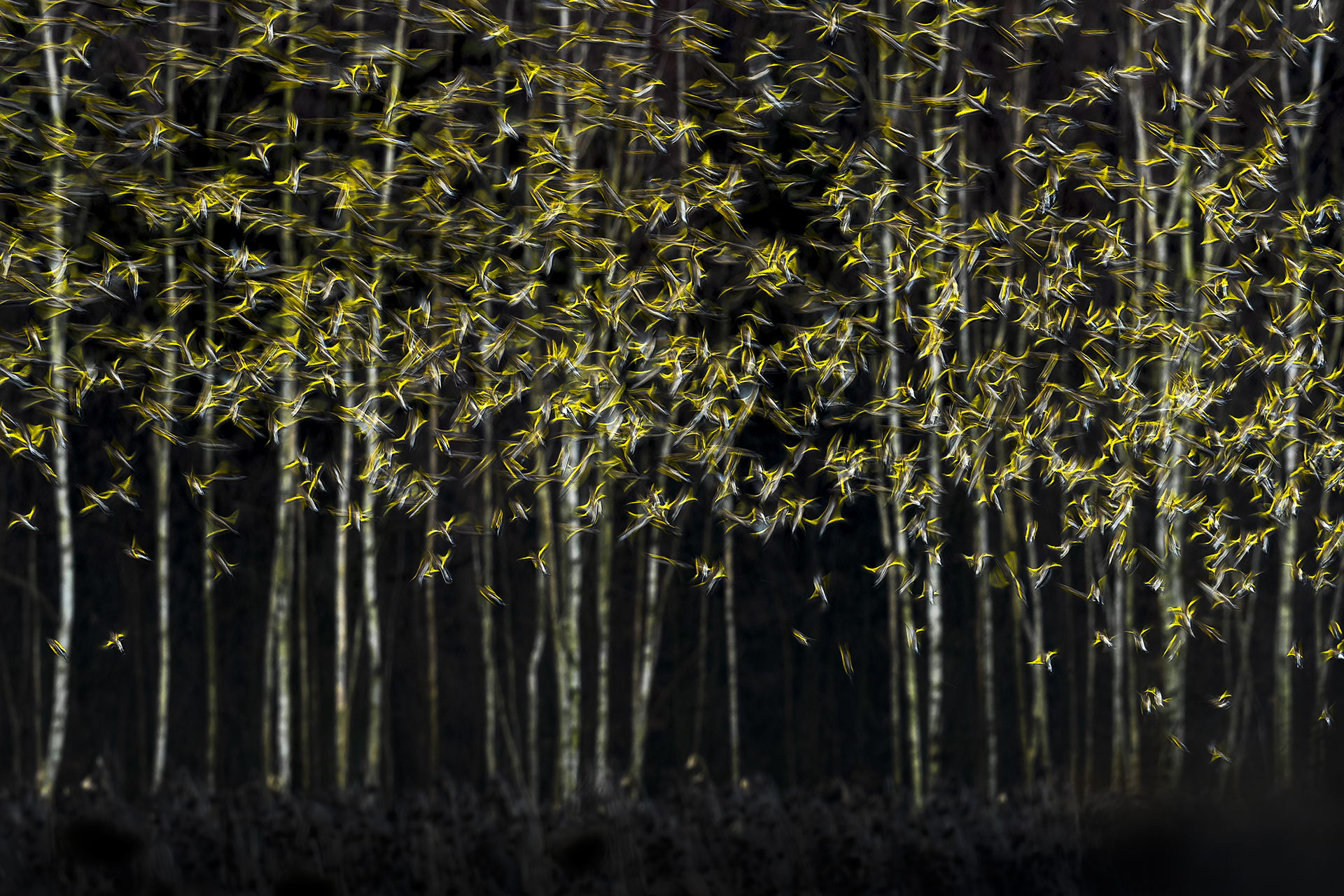
Michalski was in a field of unharvested sunflowers that had attracted many birds, including goldfinches and bramblings. They were startled by an approaching sparrowhawk and took to the sky. - Michał Michalski / Wildlife Photographer of the Year
Under Water
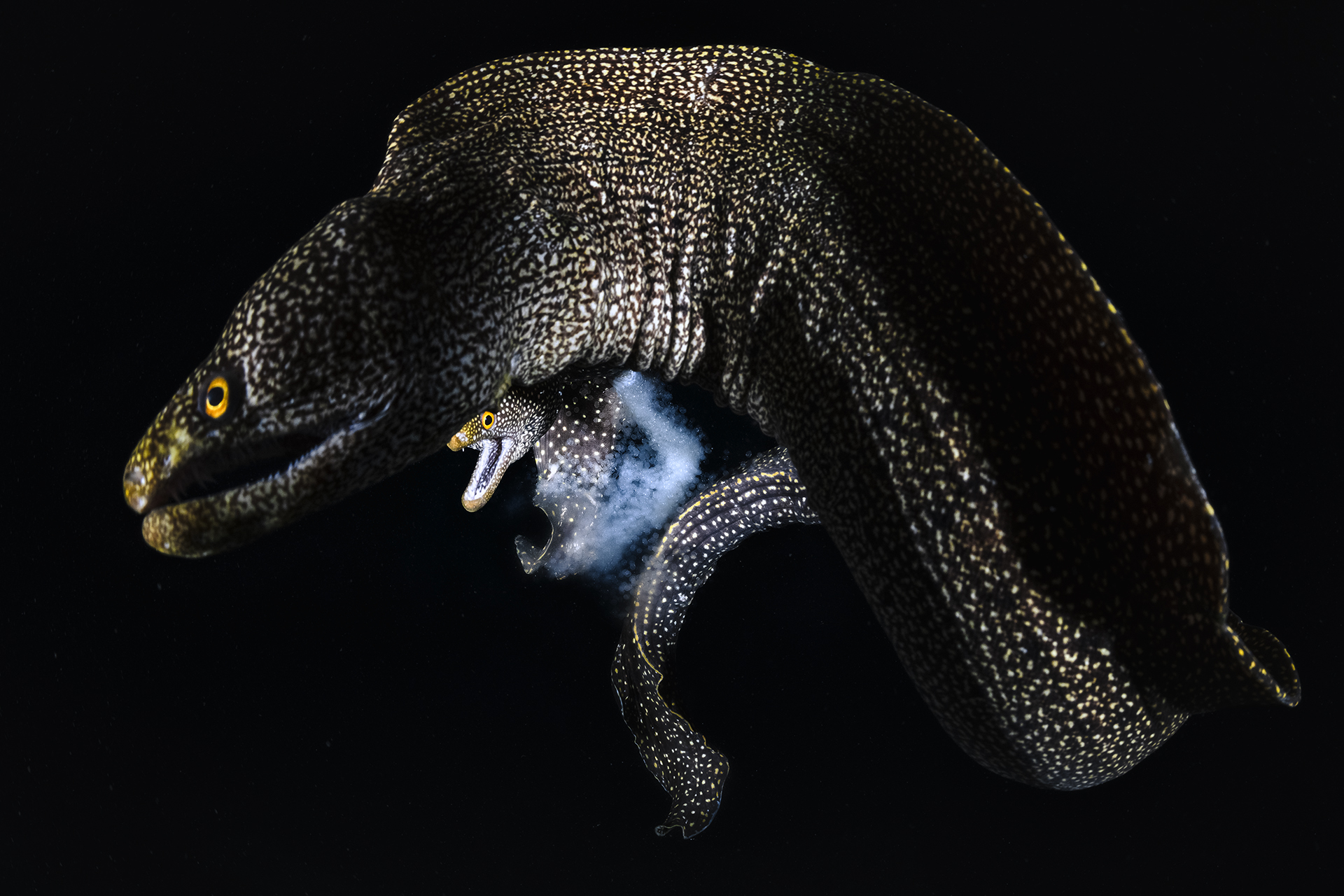
Making Morays by Tony Wu
Wu’s image captures a pair of Abbott’s moray eels during their mating ritual – and it’s likely the first time this has ever been documented. The larger male in the foreground has already released a diffuse cloud of sperm, while the female in the background has just started to eject a stream of eggs. A spawning run like this typically spans around one and a half seconds. - Tony Wu / Wildlife Photographer of the Year
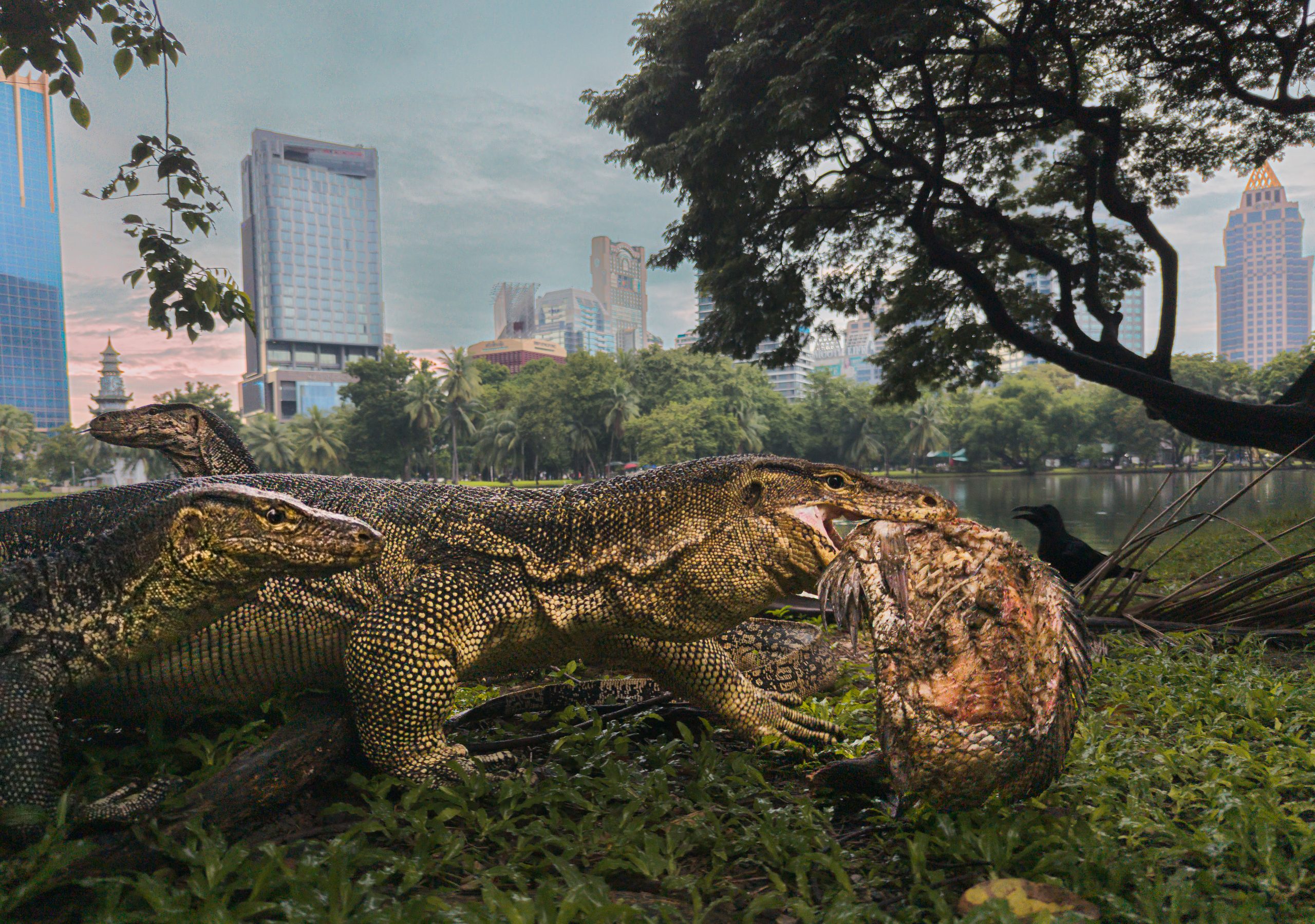
A common water monitor carries a fish in Lumphini Park in Bangkok, Thailand. Finding a lizard wasn’t a challenge for Forestson, as they roam the park freely – helping themselves to the plentiful supplies of catfish and koi in its lakes. - Seth Forestson / Wildlife Photographer of the Year
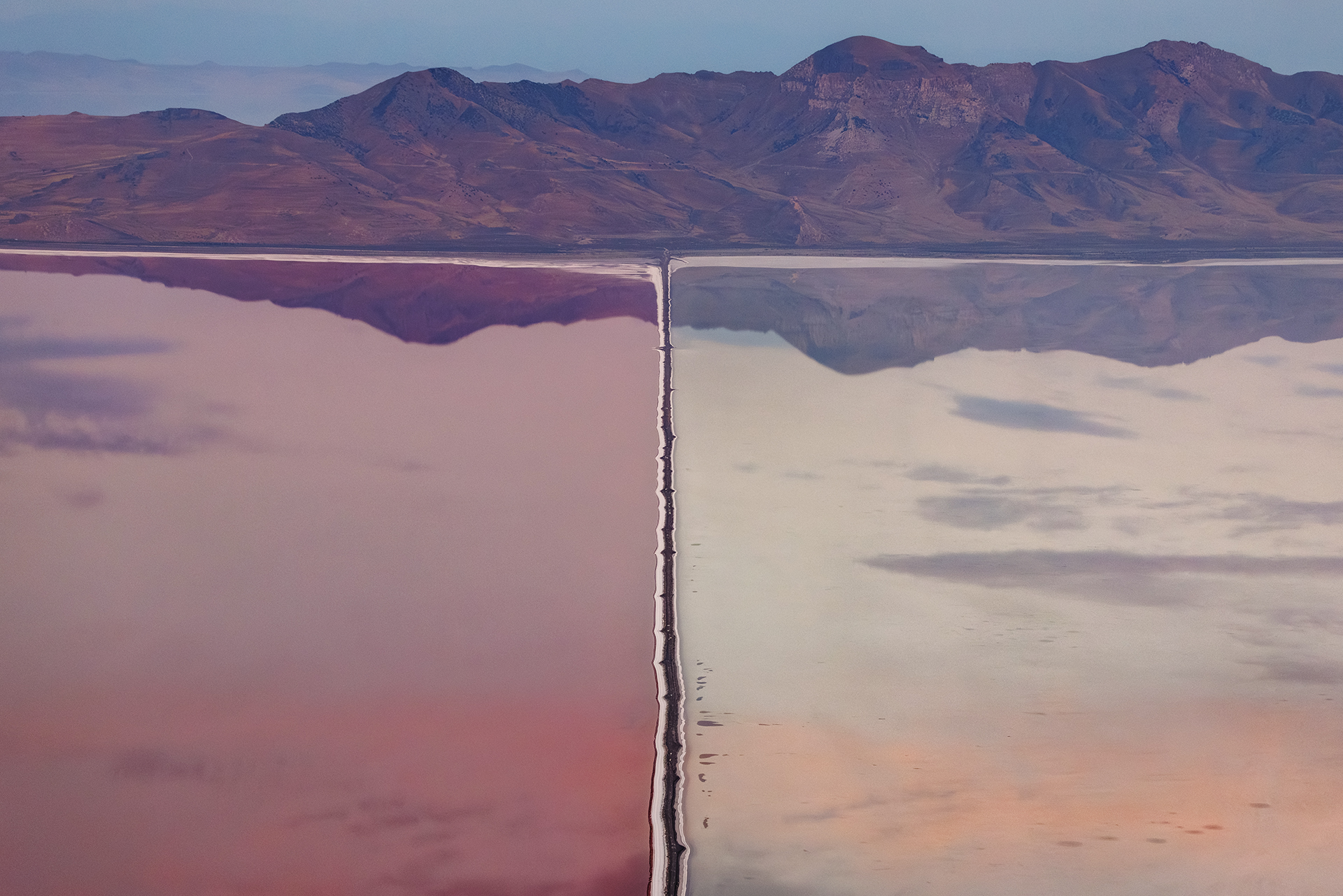
This image of Stansbury Bay, in Utah’s Great Salt Lake, is part of Visbal’s long-term project documenting the industrial footprint on bodies of water. The pink colour on the left-hand side is caused by microbes that thrive in extremely saline water – which can happen when an area is cut off from a fresh water supply. However, the State of Utah has brought the area under conservation management since this image was taken. - Alex Visbal / Wildlife Photographer of the Year
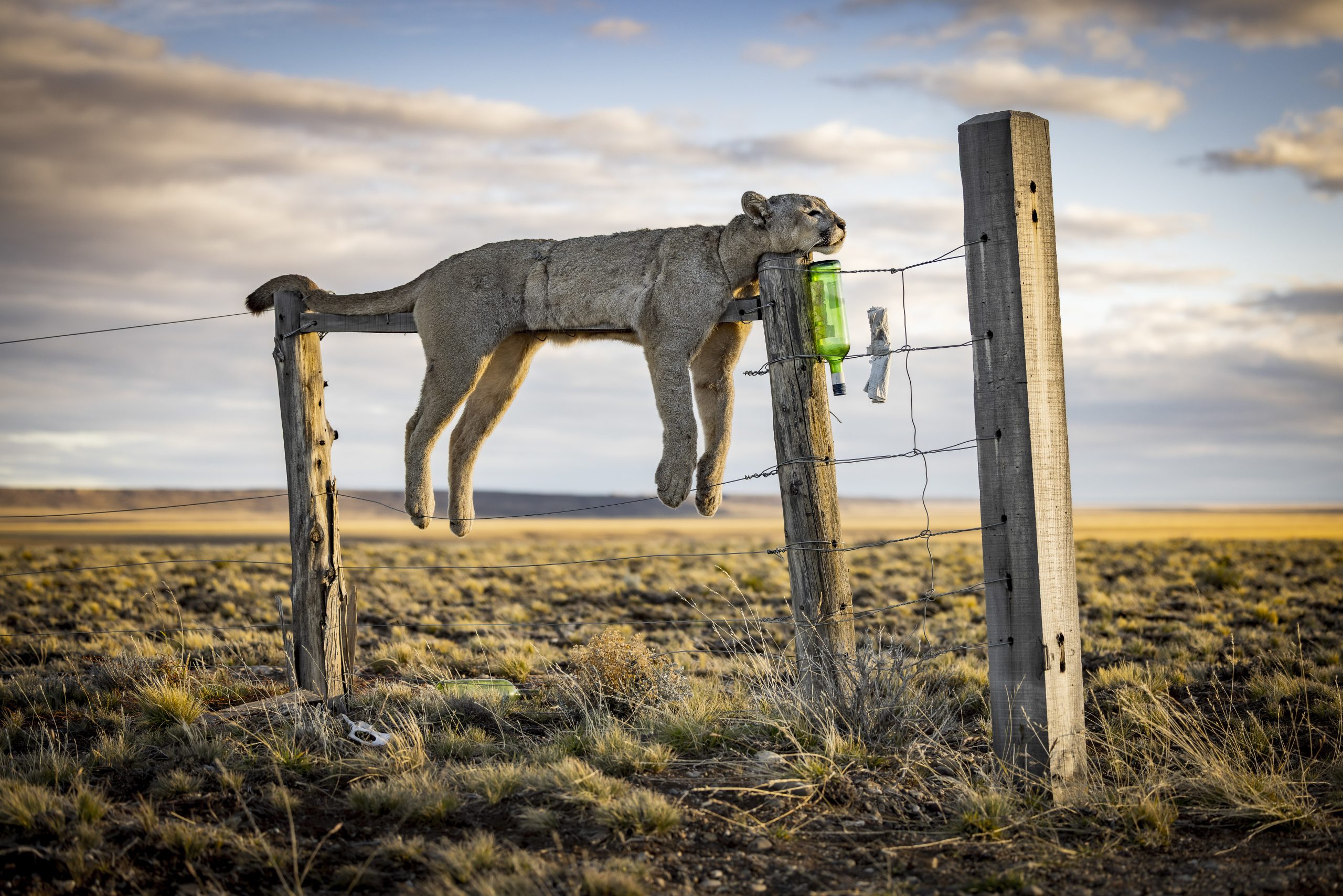
Negroni documents this scene of a dead puma tied to a fence – which he believes has been presented as a hunting trophy – in Argentine Patagonia. This display was one Negroni had “never witnessed or photographed before.” - Francisco Negroni / Wildlife Photographer of the Year
Photojournalist Story Award
Wily Coyotes of San Francisco by Loren Elliott
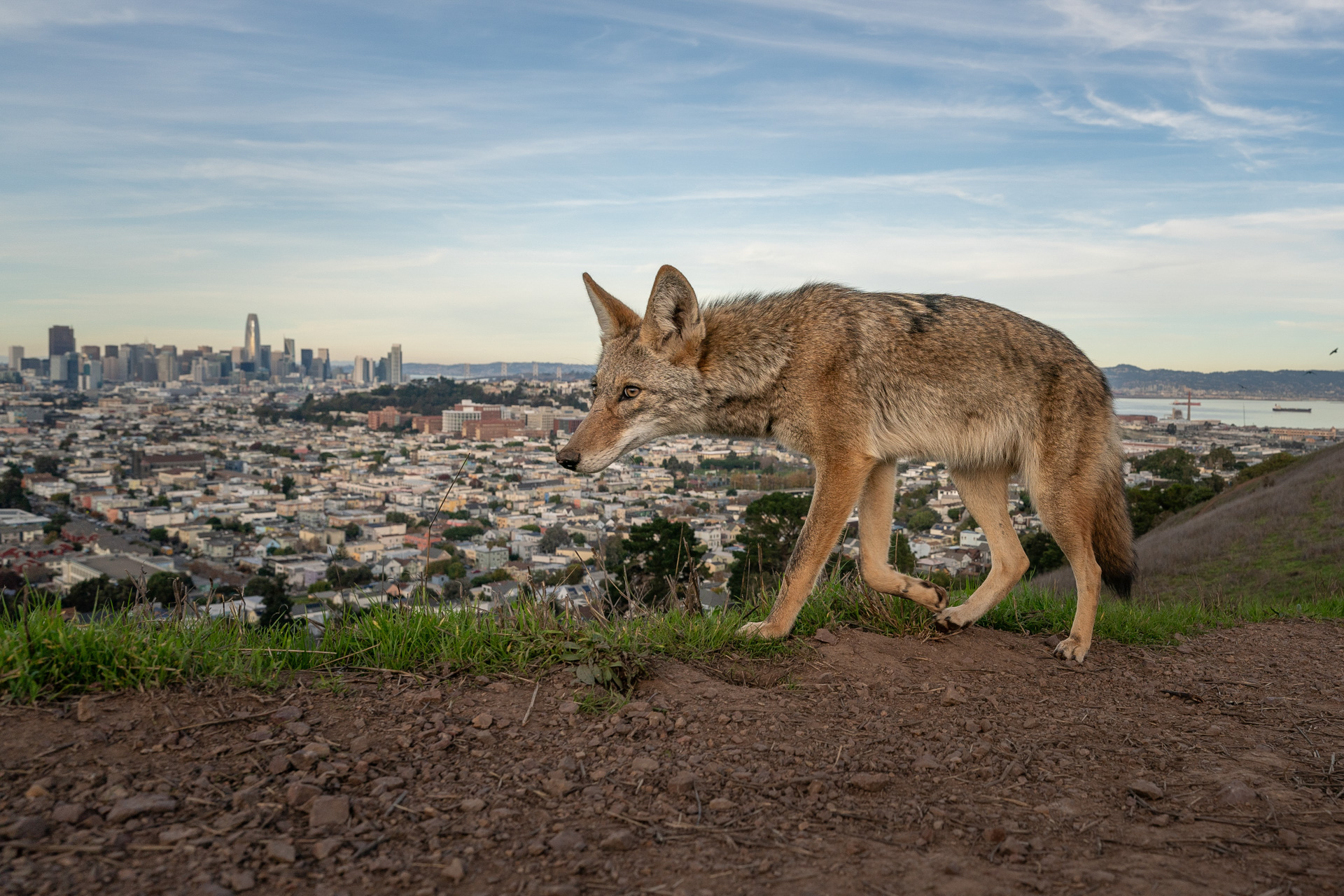
Elliott’s portfolio, Wily Coyotes of San Francisco, documents the animals’ daily lives in and around San Francisco, USA. Here, one coyote pads along a trail in Bernal Heights Park which overlooks the city and bay of San Francisco. This individual is part of a resident pack that Elliott has observed hunting rodents in the park. - Loren Elliott / Wildlife Photographer of the Year
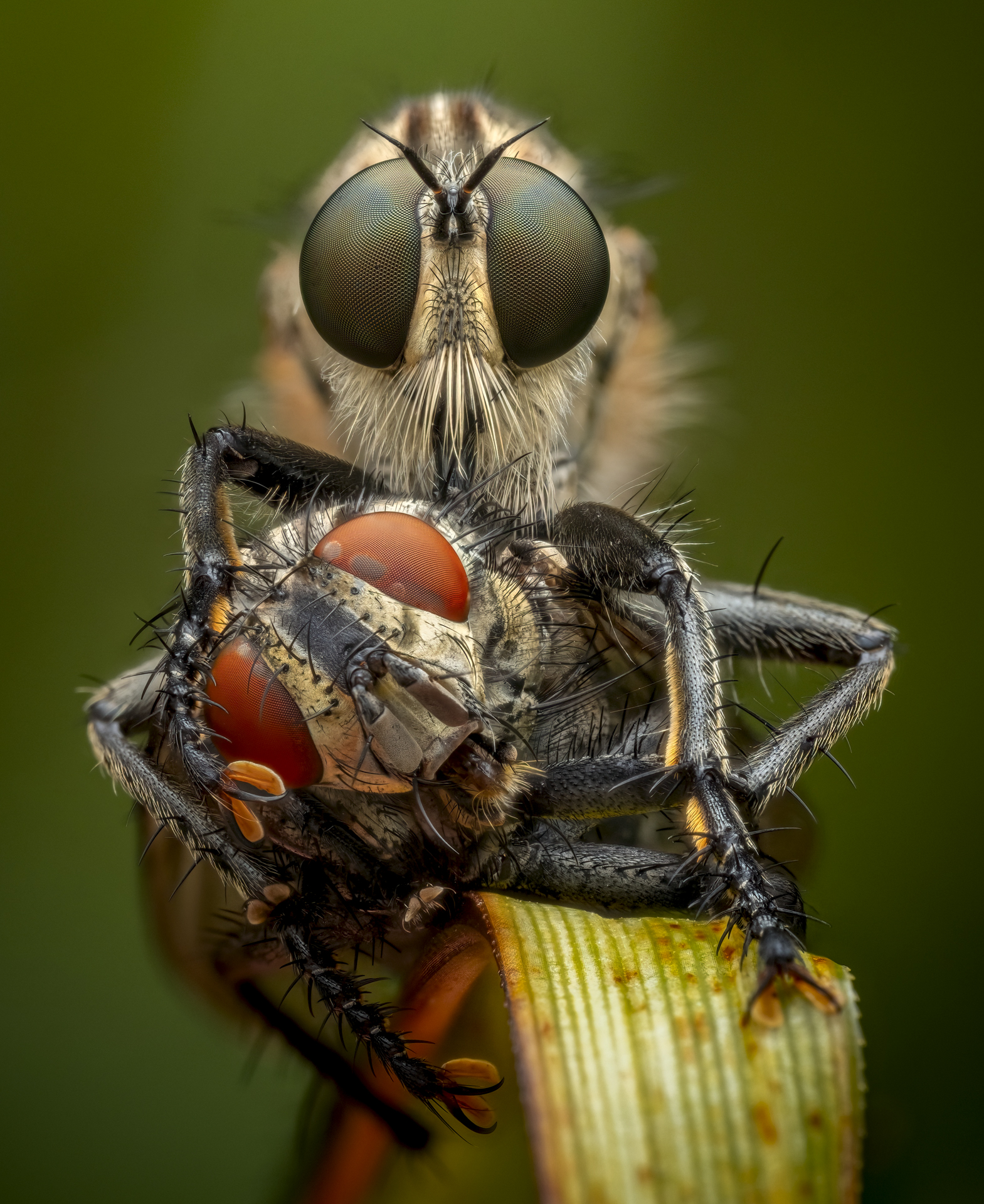
In this image, titled Afternoon Snack, Tinker-Tsavalas captures the moment after a robber fly impales a flesh fly with its mouthparts. There are tiny bubbles forming in the victim’s eyes, which indicate that the robber fly has injected digestive enzymes that liquefy its internal tissues – before they’re sucked out. His portfolio, Hidden Depths, reveals the tiny details of life that often go unnoticed. - Alexis Tinker-Tsavalas / Wildlife Photographer of the Year
Portfolio Award
Secret Worlds by Kutub Uddin
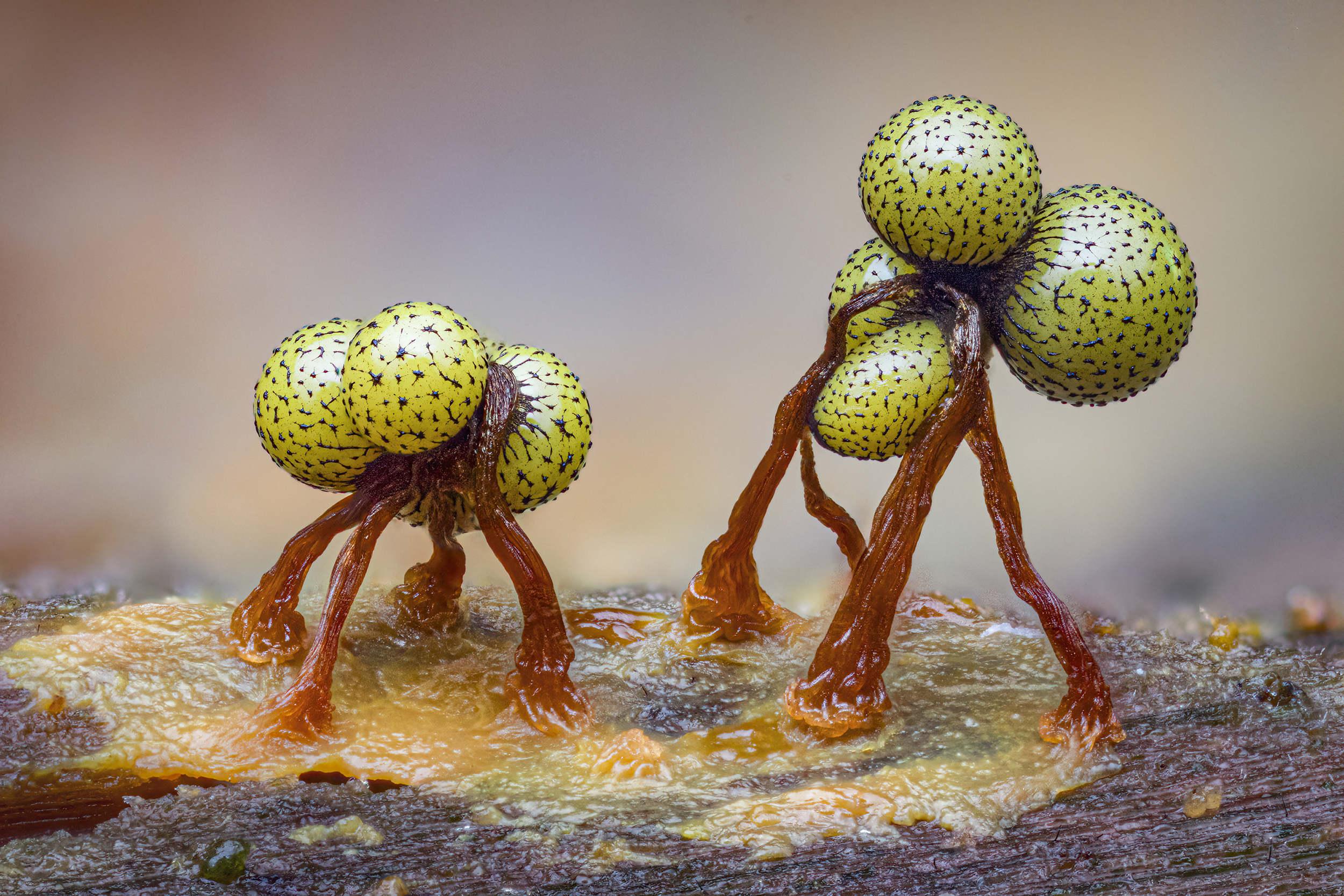
In this image, titled Tiny Dancers, Uddin photographs fine threads, known as capillitium, which emerge on the round, yellow-green bodies. Uddin says they appear like “tiny clusters or unusual textures on the wood, often appearing as minute pins, spheres or dust-like groupings.” His portfolio focuses on slime moulds, which mostly grow on dead wood or leaf litter while feeding on other micro-organisms. The structures depicted in this portfolio are just one to two millimetres high (less than 1/12 of an inch). - Kutub Uddin / Wildlife Photographer of the Year
Sophie is the content creator for discoverwildlife.com and its sister title countryfile.com. She manages the Q+A section of BBC Wildlife and covers the latest natural history TV and film releases.