
A huge reptile that was one of early human's main predators three million years ago has been identified as a previously unknown species by a research team, led by the University of Iowa, USA.
The apex predator prowled the Earth between 3.4 million and 3 million years ago in what is now Ethiopia at the same time as 'Lucy' (Australopithecus afarensis) – widely believed to be an early human ancestor.
The crocodile would have been a significant threat for these early humans and was the largest predator in the ecosystem – meaning it was highly likely that Australopithecus afarensis were eaten by it.
'Lucy' was a skeleton first discovered in 1974. At the time, it was the oldest and most complete early human ancestor – or relative – ever discovered. Because of the find, scientists were able to prove that walking on two legs came before larger brain size.
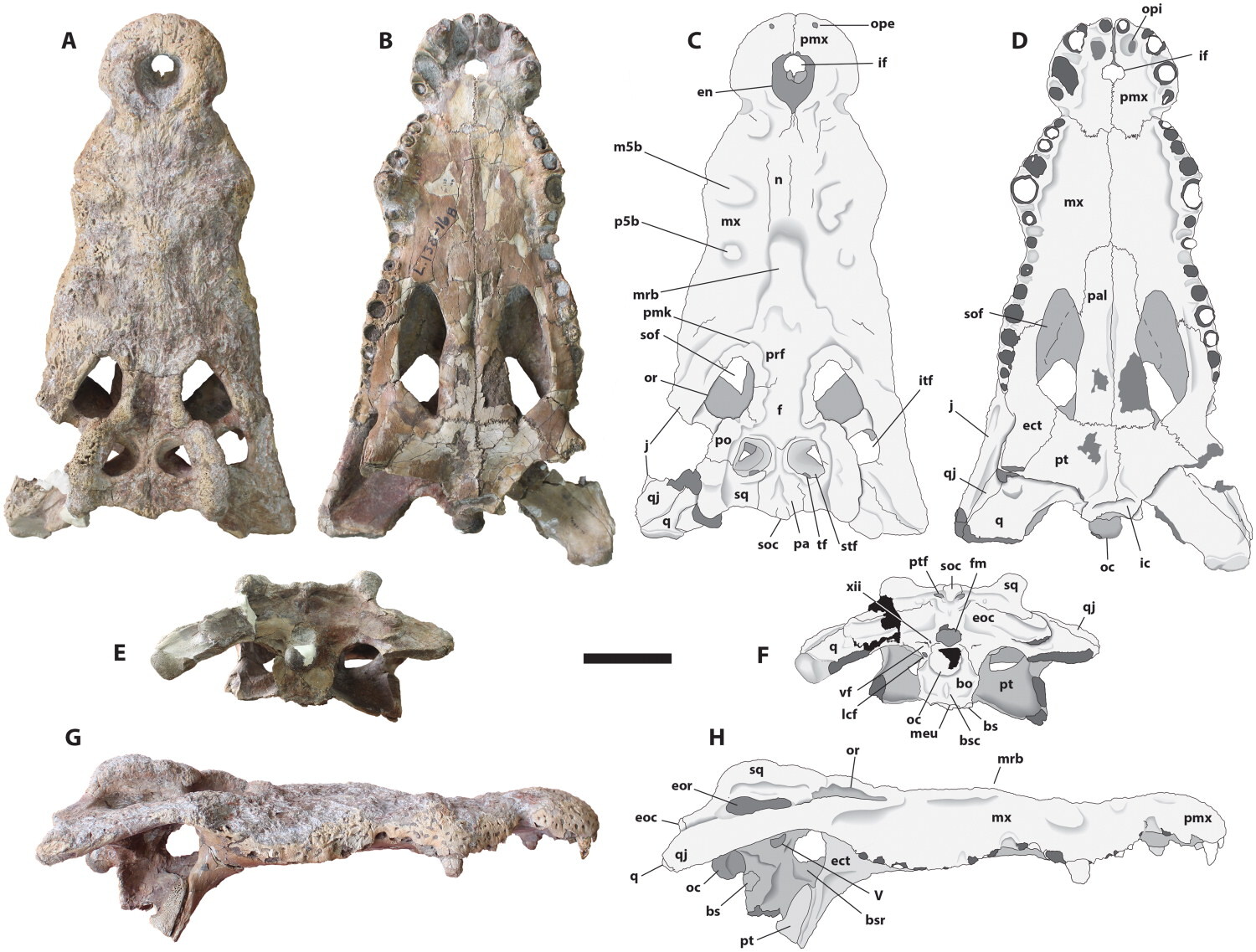
In a study published in the Journal of Systematic Paleontology, researchers have formally described the crocodile and named it Crocodylus lucivenator, meaning Lucy's Hunter. It measured between 12-15 feet long and weighed between 600-1,300 pounds.
It was the only crocodile known to live in the Hadar landscape, in modern-day Ethiopia.
- Fossil of giant, 3 metre tall, flesh-eating 'terror bird' found in Columbia - and scientists think something even bigger killed it
- Staggering crocodile facts: Amazing truths about one of the deadliest – and oldest – predators on the planet, including their rather tender mating strategy...
Crocodylus lucivenator was able to exist in the varying ecosystems of the Hadar during the Pliocene epoch, living in shrublands, wetlands, rivers and waterways. Researchers believe it was an ambush predator, waiting for prey to drink before pouncing.
One of the most unusual features about the crocodile is a prominent hump in the middle of its snout – a feature found in American crocodiles but not in African Nile crocodiles. Researchers believe it was used by male crocodiles to attract a mate.
The snout also extended beyond its nostrils and much farther than any other crocodiles living at the time. It more closely resembles the snouts we see on modern crocodiles.
- Can a human outrun a crocodile?
- Meet the ocean giant with a bite force ten times stronger than a great white
"It was the largest predator in that ecosystem, more so than lions and hyenas, and the biggest threat to our ancestors who lived there during that time," says Christopher Brochu, a professor at the University of Iowa and the study's corresponding author.
"It's a near certainty this crocodile would have hunted Lucy's species. Whether a particular crocodile tried to grab Lucy, we'll never know, but it would have seen Lucy's kind and thought, 'Dinner.'"
Brochu first examined Crocodylus lucivenator specimens during a visit to a museum in Addis Ababa, Ethiopia, in 2016. To identify the species, researchers analysed 121 catalogued fossil remains that were recovered from the Hadar Formation in Ethiopia. Hadar is a particularly important site for understanding human origins and was designated a UNESCO World Heritage site in 1980.
- It turns out we aren't as unique as we think we are: Here are 5 ancient human species that once lived alongside us
- How many species of human have there been?
- Is the human race truly one species or the lovechild of various prehistoric hook-ups? Just how interbred are we?
Top image: an illustration of Crocodylus lucivenator and Australopithecus afarensis. Credit: Tyler Stone, University of Iowa


