
The further back through prehistory you go, the weirder everything gets. As life has evolved over the last four billion years, it has experimented with many bizarre designs. Some proved surprisingly successful, persisting for millions of years, while others were evolutionary dead ends.
10 prehistoric freaks of nature
Atopodentatus
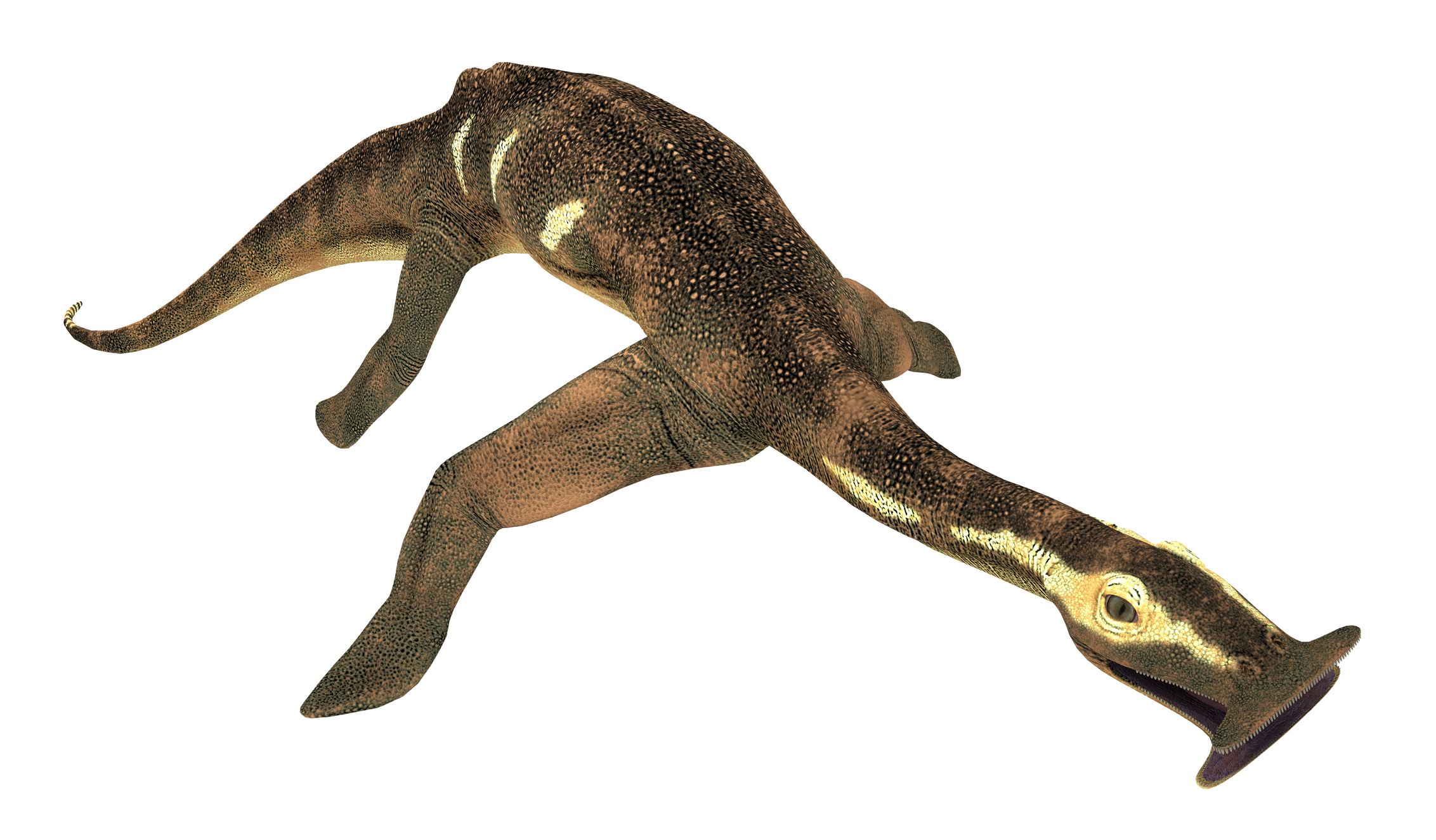
When it was first discovered in 2014, scientists thought Atopodentatus had a face shaped like a purse, with a vertical zipper of needle-like teeth running from the tip of its snout to its forehead.
The discovery of more fossils in 2016 revealed that this nearly 3m-long oddball was even more unusual than originally thought - instead of having a purse-shaped face, its snout resembled the business end of a vacuum cleaner.
A closer examination of the first Atopodentatus specimen revealed its skull was partially distorted and its upper jaw bones had been squished into an unnatural position.
Atopodentatus likely used its vacuum cleaner-shaped snout to hoover up algae and other plant matter from the seafloor. It lived 245 million years ago, during the Middle Triassic, and is thought to be one of the only marine reptiles that was a strict vegetarian.
Desmostylids
Of the four orders of marine mammals that have evolved, only one has actually gone extinct.
This unlucky group is known as the desmostylids and despite looking like a strange cross between a manatee, an elephant, and a hippo, they might be more closely related to horses, tapirs, and rhinos - though scientists are still debating their place on the mammal family tree.
- Can a person outrun an elephant?
- 6 animals that can kill a hippo – "Weighing a mighty 4500kg the hippo is a huge, dangerous animal that only the boldest predator would dare approach"
- It looks like a horse, but this is no ordinary horse… Przewalski’s horse is the world's only true wild horse with ancestors that roamed Europe over 20,000 years ago
Unlike most other marine mammals, desmostylids had four legs, instead of flippers, and a stubby tail that was as useless underwater as it likely was on land. They also had large, forward-pointing incisors and canine tusks - features that gave them characteristically goofy grins.
While they may be the only order of marine mammals to have gone wholly extinct, they did survive for a long time, living from the Early Oligocene (34 million years ago) to the Late Miocene (7.2 million years ago).
Platybelodon
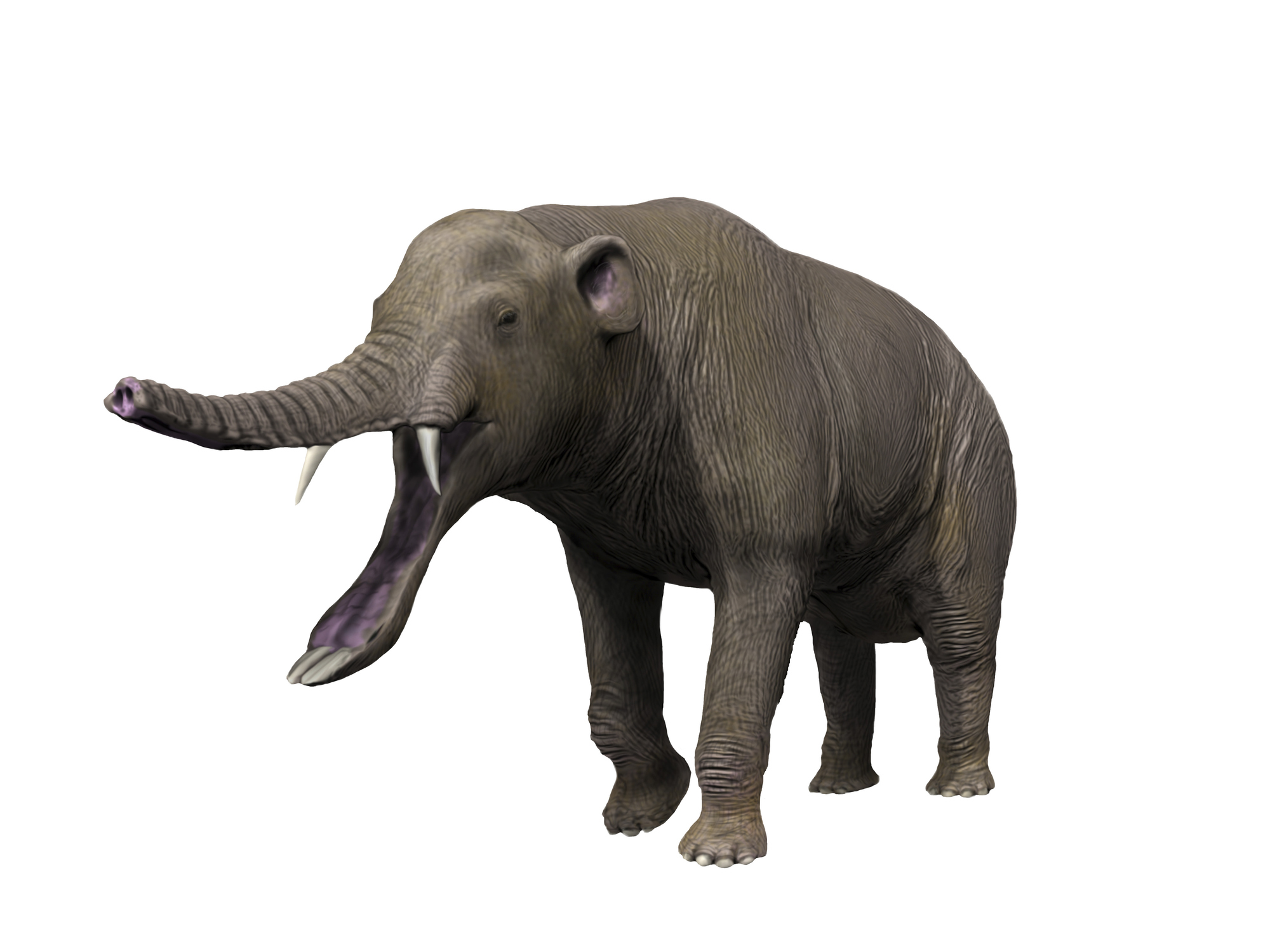
This 3m tall, 3,500kg behemoth looks like the kind of elephant your mind would concoct during a fever dream.
As well as having two pairs of tusks, it also had an elongated lower jaw shaped like a shovel. Its second pair of tusks projected from this shovel-shaped jaw, resembling short, flattened spoons.
Platybelodon belongs to the same order of mammals as modern-day elephants - the proboscideans - but it falls on a far-removed branch known as the amebelodonts, which lived during the Miocene (23-5 million years ago).
- Baby elephant suck their trunks, like human babies suck their thumbs. Here's why they do it...
- Are elephant graveyards a real thing? Is there any truth in the legend elephants go to a special place to die?
For a long time it was thought Platybelodon used its lower jaw like a shovel, scooping up soft plants from shallow waters. However, more recent research has suggested its jaw functioned more like a saw, working in tandem with its trunk to scrape mouthfuls of vegetation from the trunks and branches of trees.
Metopacanthus
There are many strange places where evolution has placed sexual organs, but on the forehead of a Jurassic-aged, deep-sea shark has to be one of the freakiest.
Metopacanthus, like many living chimaeras, had pairs of pelvic claspers, as well as claspers on its forehead known as tenacula. While not penises per se, claspers are sexual organs that males use during mating to transfer sperm directly into the female’s cloaca.
- "100 million years ago creatures living in a coastal lagoon, fringed by trees, had just had a sexual encounter when they would be entombed forever"
- "With sex sessions lasting up to 14 hours, it’s quite a way to bow out" – discover 11 animals that die during or after sex
The ‘deed’ is performed by the pelvic claspers, while the job of the tenaculum is to latch onto the female. The tenaculum is also studded with hooked teeth to provide males with extra grip.
What makes Metopacanthus even stranger than its distant descendants is that it had teeth on its tenaculum and the top of its snout, creating a strange ‘second mouth’ just above its actual mouth. Just what this false mouth was used for is anyone’s guess.
Deinocheirus
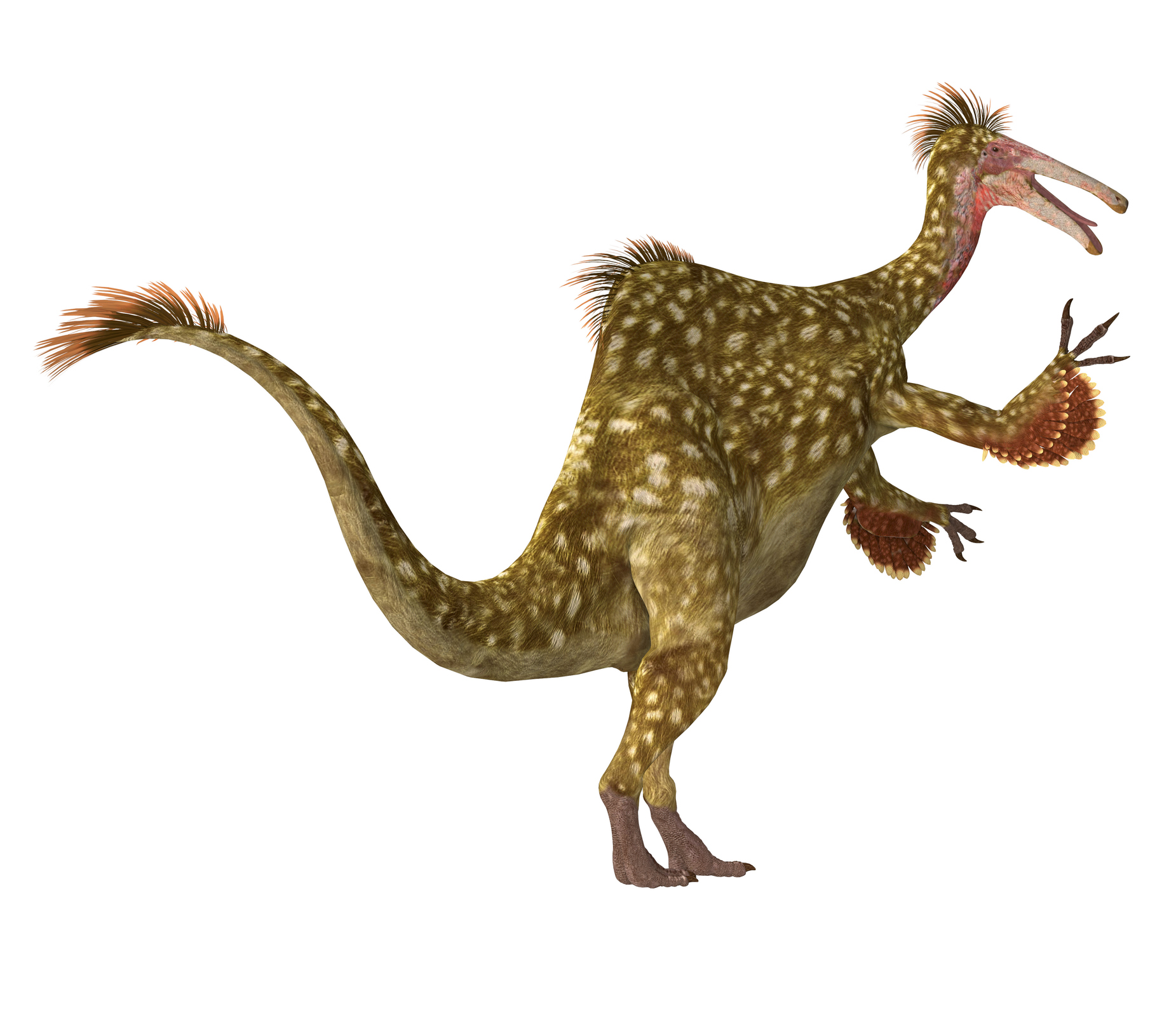
Looking like a cross between a duck, a camel, and an extinct ground sloth, Deinocheirus is perhaps the strangest dinosaur that ever lived.
Despite its giant size (11m-long and 6,500kg) and the fact it belongs to the same group of meat-eating dinosaurs as T.rex, Spinosaurus, and Velociraptor (Theropoda), Deinocheirus was a flexitarian, dining largely on aquatic plants and occasionally fish.
Deinocheirus, or ‘horrible hand’, is named after its giant forelimbs. When it was first discovered in 1965, researchers thought these menacing-looking forelimbs belonged to a bloodthirsty predator. However, it’s now thought Deinocheirus used them like rakes to shovel food into its duck-like bill.
It’s thought Deinocheirus may have also been covered in shaggy, hair-like feathers, just like some of its ornithomimosaur cousins were. It may have even sported an extravagant tail fan that would have rivalled those of today’s peacocks.
Vetulicola
There are freaks of nature, and then there’s Vetulicola. This boxy, eyeless oddity is so strange that, when it was first discovered in 1987, scientists had to erect an entirely new group of animals to accommodate it.
Vetulicola’s name means ‘ancient inhabitant’, which is very apt given it looks nothing like anything alive today - nor anything we know of from prehistory either. It lived during the Cambrian (520 million years ago) and at a similar time to several other evolutionary anomalies, such as Anomalocaris.
While it's fishy in form, it didn’t have any eyes, fins, or jaws. However, Vetulicola did have a mouth, or at least an opening of sorts. This opening was linked to smaller holes along the creature’s sides, which may have been primitive gill slits.
- The incredible reason deep-sea animals don't implode under crushing ocean pressure
- Are humans really descended from fish?
Vetulicola grew up to 9cm long and is thought to have been a filter feeder.
Sharovipterygids
The ability to fly is something that only four groups of animals have mastered: insects, pterosaurs, birds, and bats. That said, countless others have attempted to take to the skies, with varying degrees of success.
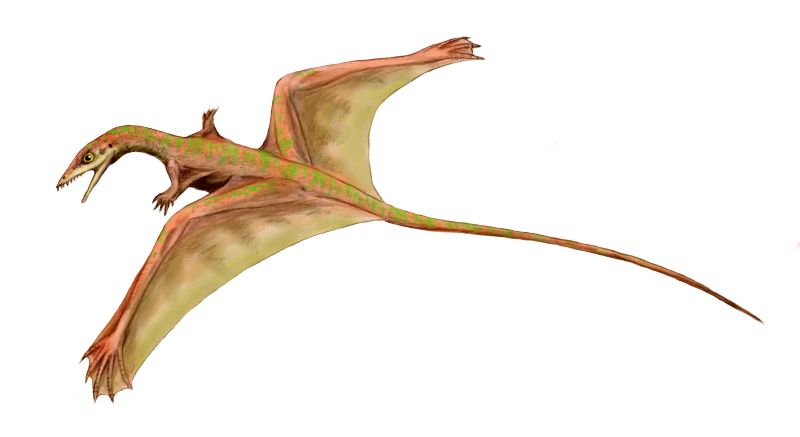
The award for the most extravagant attempt undoubtedly goes to the sharovipterygids, a family of strange, gliding reptiles that lived during the Middle Triassic (230 million years ago). These pioneers lived before pterosaurs evolved and became the first flying vertebrates, meaning there was no successful blueprint for them to copy.
- Why aren’t pterosaurs classed as dinosaurs? Why this Jurassic Park star isn’t what it seems
- What was the first animal to fly?
Instead of evolving wings on their forelimbs, sharovipterygids had them on their hindlimbs. The result was an animal that looked like a wingsuiter who’d bought their kit from a dodgy internet listing.
Sharovipterygids couldn’t fly, and to what extent they could glide is debated. A 2006 study found that, without forewings, controlled gliding would have been very difficult. Instead, sharovipterygids may have used their hind-wings to glide from tree to tree.
Dollocaris
If you were a fan of CBBC’s early 2000s hit Bamzooki, then you may feel as though you recognise Dollocaris. This alien-looking creature wasn’t a ‘zook’ though, it was a real-life animal that lived in the warm, shallow seas that covered much of modern-day France during the Jurassic.
Dollocaris resembled a deep-sea submersible, with a barrel-shaped body, two huge, compound eyes, and three pairs of clawed, raptorial legs. It measured up to 30cm in length and is thought to have lived close to the seafloor where it stalked its prey.
As a poor swimmer, researchers think Dollocaris specialised in the art of ambush. Its large eyes would have been a major advantage on the silty seafloor, helping it spot unsuspecting prey in the murky waters.
Dollocaris belongs to an enigmatic group of arthropods known as the thylacocephalans. While they’re generally regarded as crustaceans, their position on the family tree of this wider group is a mystery.
- It looks like an alien, feasts on whale blubber, has multiple legs and hasn't changed for millions of years – meet this creepy, mysterious deep-sea giant
- Crayfish, crawfish and crawdad: what exactly is the difference?
Entelodonts
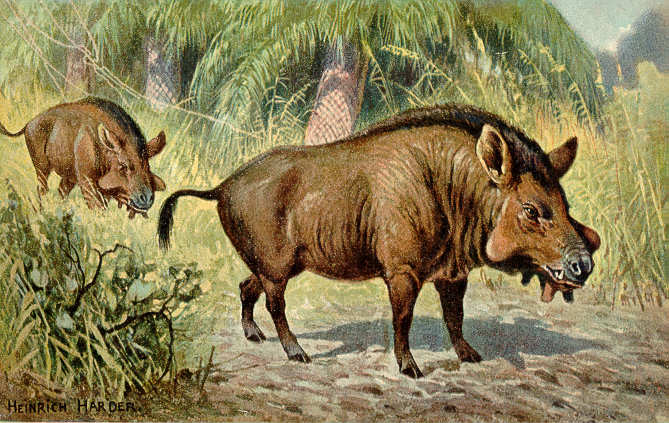
Nicknamed ‘Hell Pigs’ - despite being as distantly related from pigs as we are from lemurs - entelodonts are some of the strangest mammals to have ever lived, not to mention some of the deadliest.
This group of hoofed, pig-like mammals ranged across the northern hemisphere from the Middle Eocene (40 million years ago) to the Early Miocene (16 million years ago), terrorising any other animals that crossed their paths.
The largest species, Daeodon, stood 2m tall, weighed half-a-ton, and had a head that was nearly a metre long, with powerful jaws full of dagger-like teeth. Studies of Daeodon’s and other entelodonts’ jaws have estimated they were strong enough to crush bone.
While their top halves were very bulky, entelodonts had long, skinny legs, resembling those of horses. These legs made them strong runners and meant that few animals could escape them once they’d caught a whiff.
Prototaxites
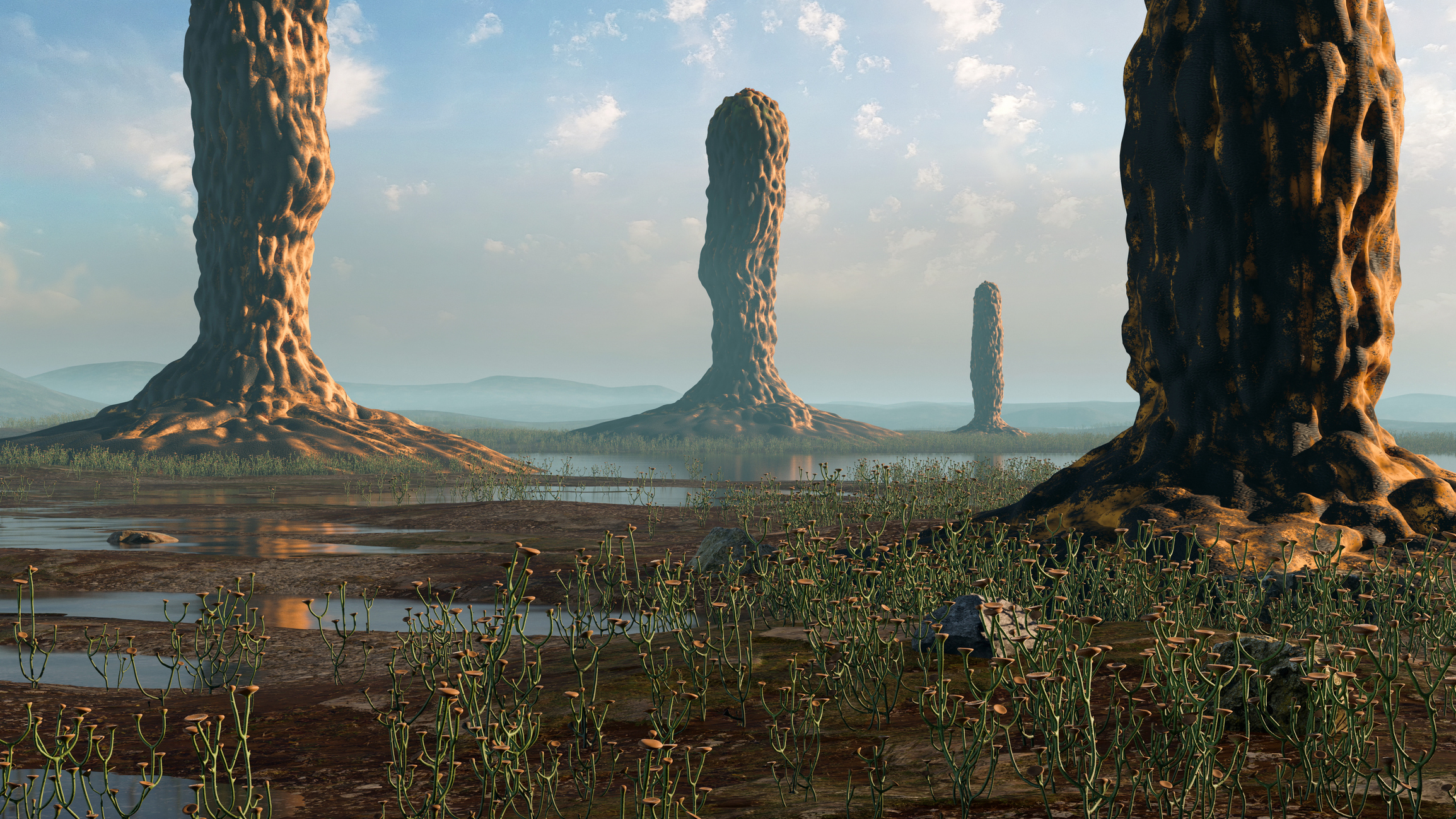
Unlike the other oddities that have made this list, Prototaxites wasn’t an animal - well, at least according to the latest research.
This strange, biological bastion lived from the Late Silurian (420 million years ago) to the Late Devonian (370 million years ago) and was the first giant organism to colonise the Earth’s surface, growing up to 8m tall.
When Prototaxites was first discovered in the mid-19th century, it was first described as a partially rotten, giant conifer. Later studies showed that Prototaxities was not only not a plant, but that it predated the evolution of conifers by nearly 100 million years.
From the early 20th century until 2026, scientists generally agreed that Prototaxites was a strange type of fungus. That was until a recent study found it to be structurally and chemically distinct, suggesting it instead belongs to an extinct, so-far-undescribed kingdom of life.
- Scientists looked beneath one of oldest trees on Earth. What they found is astounding
- "1 in 10 people will sustain long-term damage to their lungs, & for 1%, the infection can spread to their brain & spinal cord." What you need to know fungus storms
The four kingdoms of multicellular life - animals, plants, fungi, and protists - were long thought to encompass all the major forms of life on Earth, living and extinct. Prototaxites has since ripped up the textbooks, revealing that the prehistoric world was far stranger than we once imagined.
top image: Deinocheirus dinosaur fishing by day. Credit: Elenarts108/ Getty Images
More Wildlife stories from around the world:
- This lake in Canada just vanished. And it's not coming back.
- "Domestication proper came much later, in Egypt about 4,000 years ago." How we domesticated the cat
- "Its head, thrashing left and right, sports 4 black eyes and 6 furtive, fleshy feelers that suggest the whiskers of a Chinese dragon puppet
- Which plants existed in prehistoric times?
- Before they shrunk: 6 huge prehistoric ancestors of animals you know today


