A cheetah hurtling across the African savannah in pursuit of a gazelle is one of nature's most breathtaking spectacles.
Its long legs pound the ground, its spine flexes like a spring and its tail sweeps from side to side as it twists and turns in pursuit of its fleeing prey.
The world's fastest land mammal is an extraordinary athlete, capable of speeds that would leave even an Olympic sprinter trailing far behind.
But just how fast can a cheetah really run and which of its feline relatives could claim second place?
You might expect scientists to have a definitive answer as wild cats are among the world's most studied predators.
Yet while the cheetah is the undisputed champion, there is surprisingly little reliable scientific evidence about the top speeds of most other cat species.
- It was the largest cheetah ever, weighing up to 3 times more than today's
- These 9 ruthless, brutal cheetah photos reveal the raw power, speed and lethal grace of Africa's fastest cat
Even the cheetah's famous 70mph-plus reputation turns out to be questionable according to experts. "There is a commonly quoted claim of 70mph plus that is not supported by any reliable source. But the reliable data is still impressive enough." says Sarah Durant, a leading cheetah researcher and professor at the Zoological Society of London.
So what do we really know about the world's fastest cats?
The 10 fastest wild cats – and why scientists can't agree on their speeds
1. Cheetah: The undisputed champion
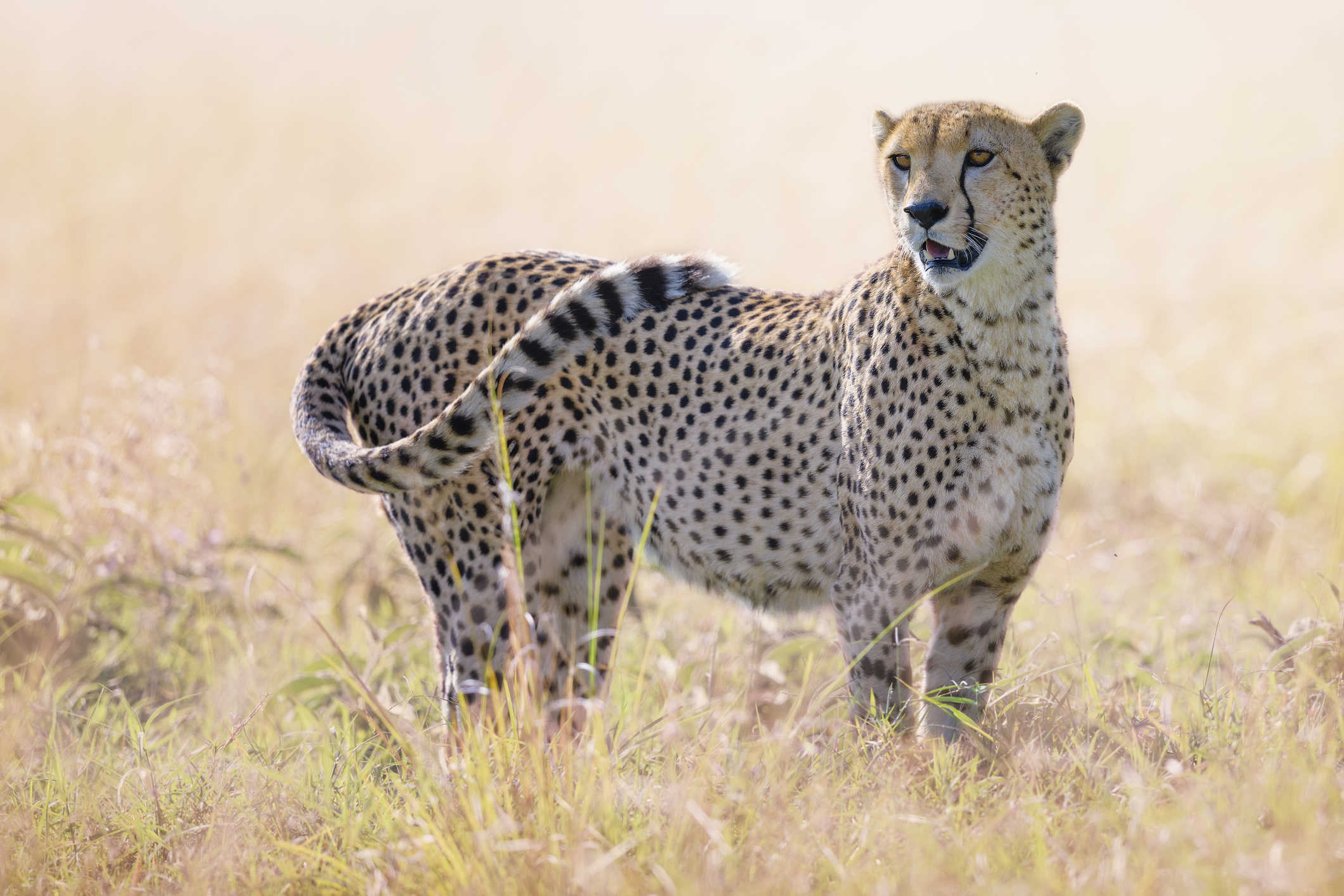
Acinonyx jubatus
If there were an Olympic Games for wild cats, the cheetah would be taking home gold.
Its slender body, long limbs and exceptionally flexible spine are designed for pursuing fleet-footed antelopes. Enlarged lungs and heart help fuel explosive bursts of speed, while blunt claws grip the ground like a sprinter's spikes.
- It's built for pure acceleration and speed – able to reach an amazing 75mph…
- Cheetah vs leopard: what's the difference between these two stunning, beautifully spotted cats?
- Do cheetahs kill and eat people?
Durant points to research recording a maximum speed of approximately 65mph (104km/h), rather than the widely quoted 70mph-plus.
But speed alone isn't enough. Gazelles twist and swerve to escape, forcing cheetahs to brake and turn sharply. Their long tails help them manoeuvre while their flexible spines allow enormous strides.
Research published in 2013 found that cheetahs rarely reach their maximum speed during natural hunts. Instead, they balance acceleration, speed and manoeuvrability to outwit their prey.
2. Lion: The explosive sprinter
Panthera leo
Lions can reportedly reach speeds of around 50mph (80km/h) in short bursts, although reliable scientific measurements of their maximum speed are scarce.
Unlike the lightweight cheetah, these muscular heavyweights are built for explosive acceleration and strength rather than sustained speed. Their powerful hindlimbs propel them towards prey, while retractable claws provide grip during a final lunge.
- Can a person outrun a lion? Just how fast is the King of Beasts?
- Remember Cecil the lion, shot 11 years ago by a trophy hunter? This is what happened next – and it’s good news
- This cave lion was unearthed from Siberian permafrost. Scientists analysed its DNA – and made an unexpected discovery
Lions also have a distinctive advantage: they often hunt cooperatively, with members of a pride working together to surround or ambush prey.
Sarah Durant explains that lions tend to begin chases from further away than leopards, potentially suggesting a speed advantage. But hunting strategy and habitat could also explain the difference.
3. Puma: The athletic all-rounder
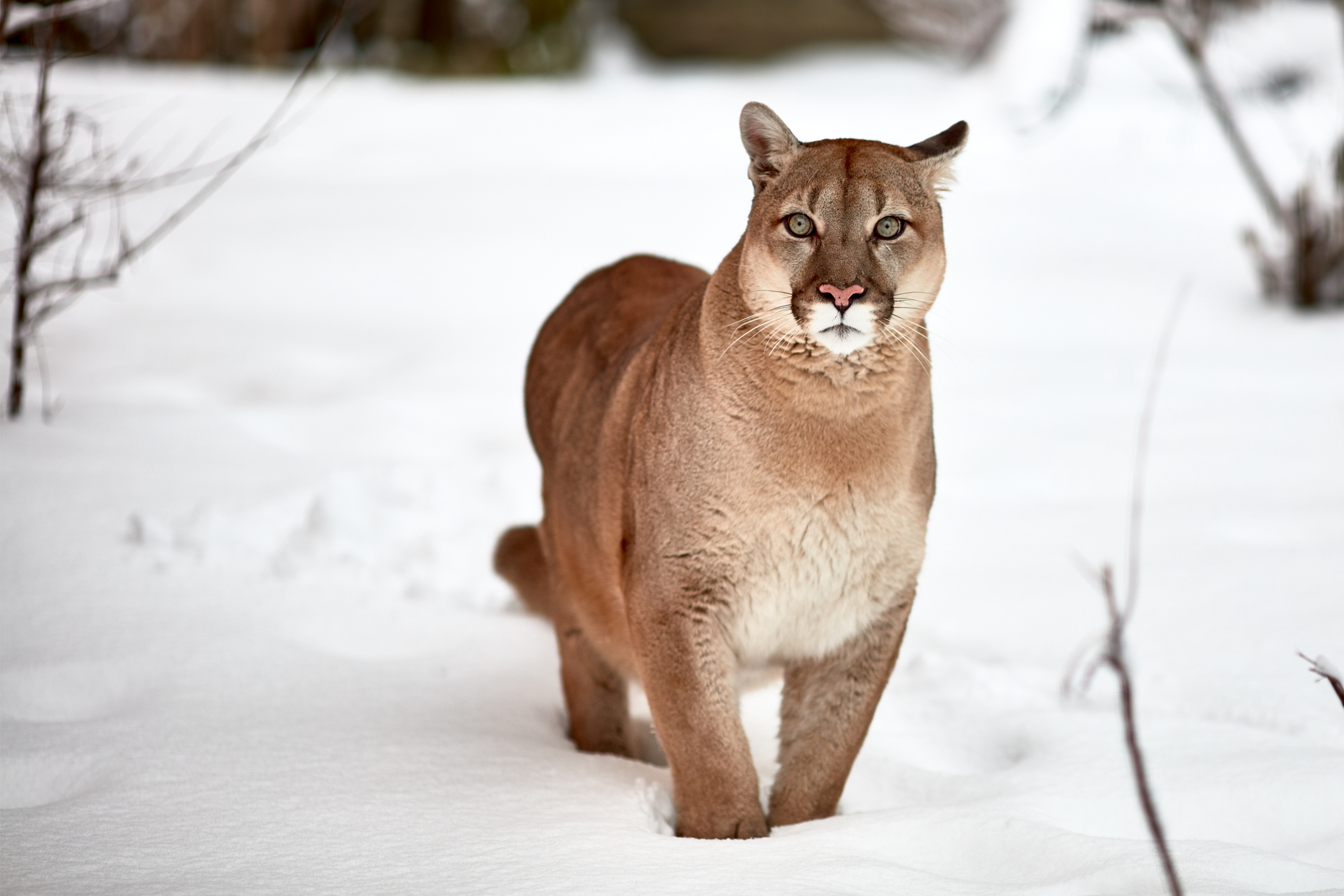
Puma concolor
Also known as the cougar or mountain lion, this American predator is often credited with speeds of up to 50mph (80km/h).
Its real superpower is jumping. Powerful hindlimbs allow it to reportedly leap more than five metres vertically, while its long tail helps it balance when navigating steep, rocky terrain.
Sarah Durant suggests its relatively streamlined physique could make it one of the faster wild cats, potentially capable of beginning pursuits from greater distances than jaguars and leopards.
4. Snow leopard: The mountain athlete
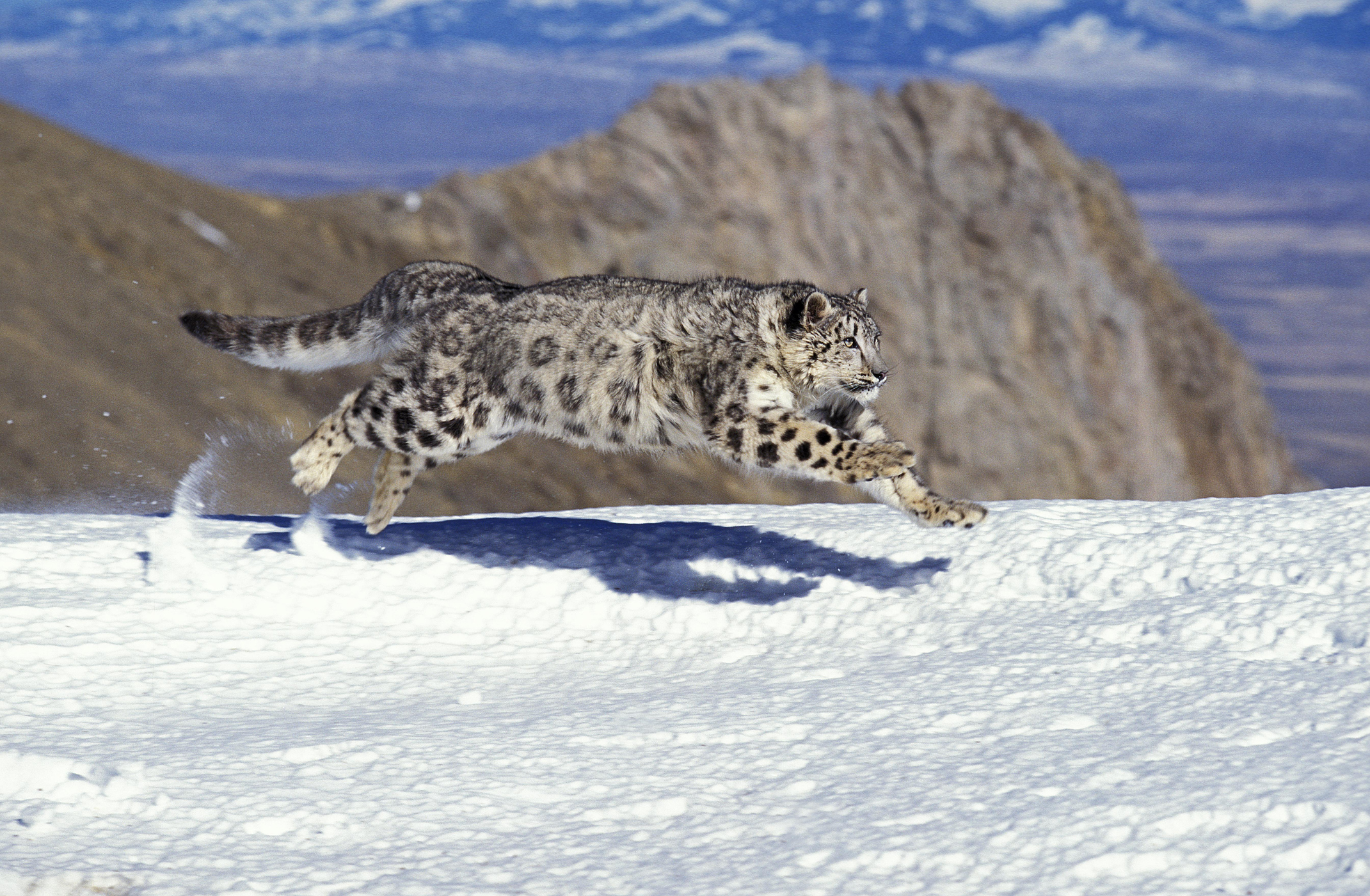
Panthera uncia
Snow leopards pursue prey across some of Earth's most unforgiving terrain - often credited with reaching speeds of up to 40mph (64km/h).
Powerful hindlimbs propel them across rocky slopes, while exceptionally long tails help them balance during spectacular leaps.
Sarah Durant believes they may also be capable of launching pursuits from greater distances than some other big cats.
- It may look adorable – with its fluffy coat, tail and feet – but don't be fooled as this ferocious predator can leap 15 meters and take down prey 3 times its size
- "His face was partially covered in blood, and I could see the cow lying in front of him" – my close encounter with a snow leopard
“Pumas, snow leopards and tigers are likely to be able to start a chase from further away than jaguars and leopards,” she says.
But in the mountains, agility and sure-footedness may matter more than outright speed.
5. Tiger: Power over pace
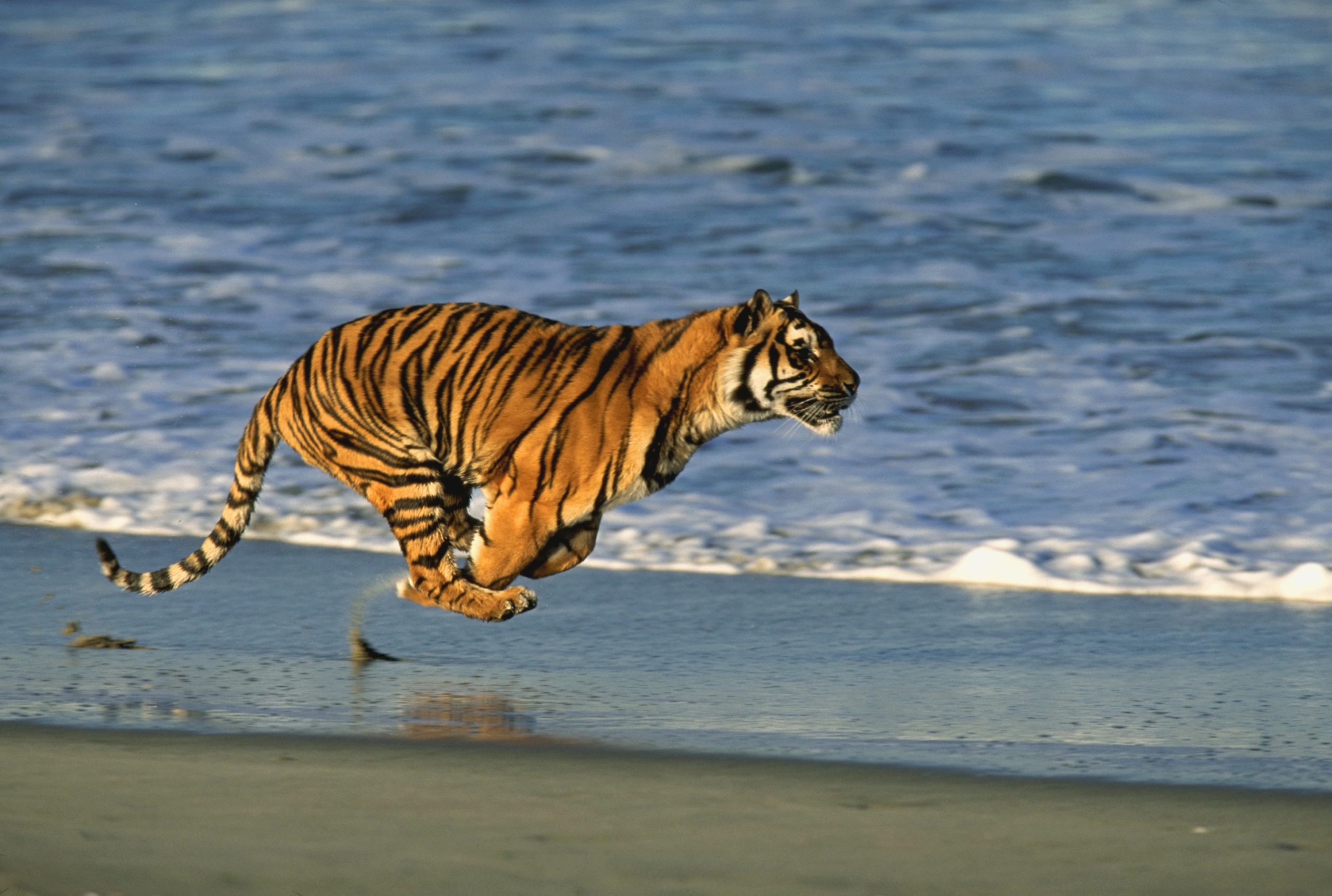
Panthera tigris
Weighing up to 300kg, the world's largest living cat is often credited with speeds of around 40mph (64km/h).
- "They’re built for strength and explosive bursts of speed…" Just how fast are tigers – and can a person ever run faster than a tiger?
- Extraordinary footage shows female tiger carrying newborn cubs up a cliff in India
Despite their enormous bulk, tigers are remarkably agile, with powerful hindlimbs capable of propelling them several metres through the air. They are also accomplished swimmers, sometimes crossing rivers and lakes in pursuit of prey.
Rather than relying on lengthy chases, these striped giants use their camouflage to creep within striking distance before launching an attack.
6. Leopard: The master of surprise
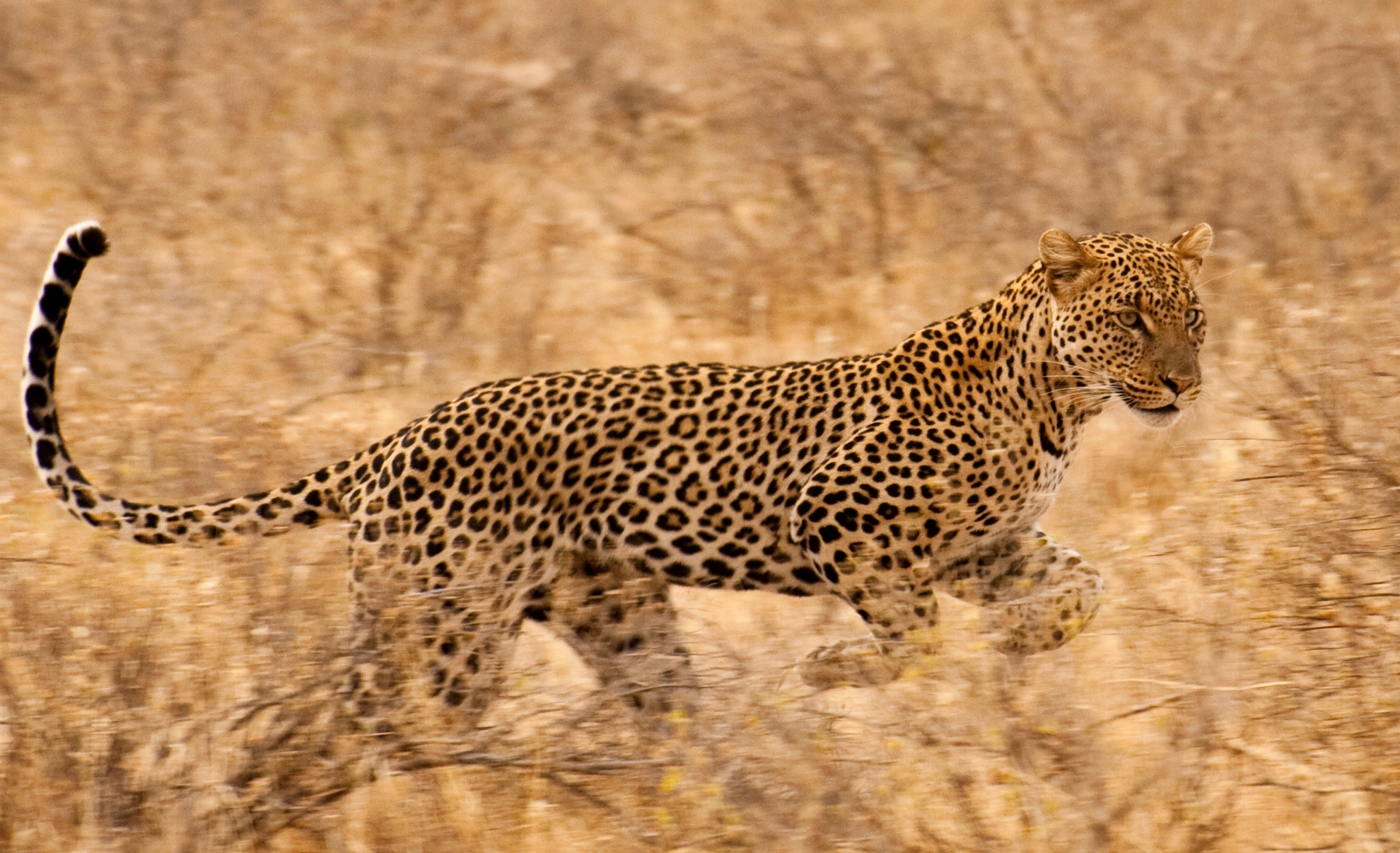
Panthera pardus
Leopards thrive in habitats ranging from open savannahs to dense forests. Their muscular bodies are adapted for climbing, stalking and ambushing prey, rather than prolonged high-speed pursuits - although they can reach speeds of up to 36mph (58km/h).
“Most of the other big cats are built for acceleration rather than speed,” explains Sarah Durant, who says they have evolved to catch prey before it can reach full speed.
Unlike cheetahs, which can gain on gazelles running flat out, leopards rely on stealth and explosive acceleration to strike before their quarry escapes.
- How to avoid a leopard attack
- ‘The leopard was crouched 3m away, its golden eyes locked on mine. What happened next is still a blur’
7. Jaguar: The heavyweight hunter
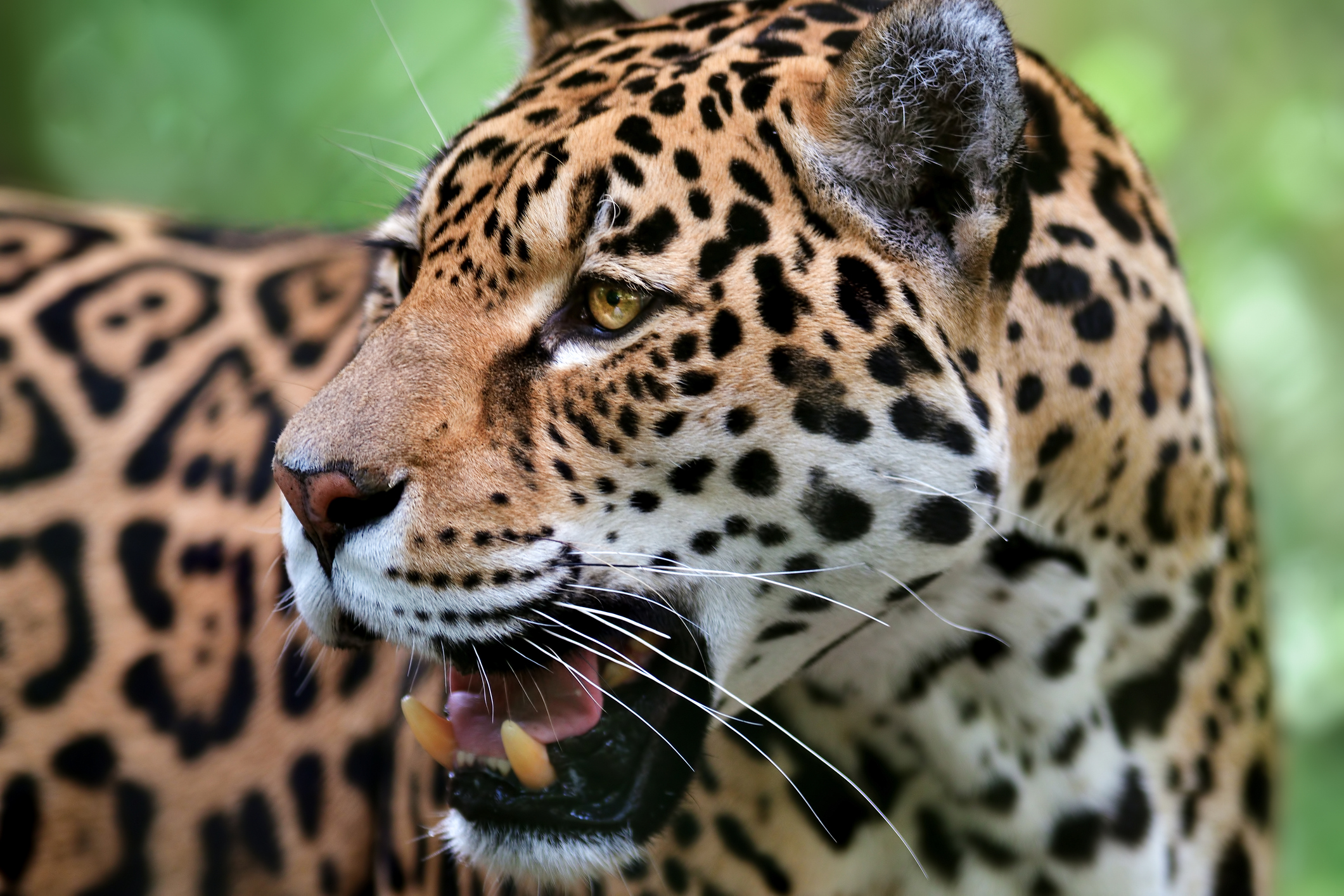
Panthera onca
With its stocky body, muscular limbs and formidable bite, the jaguar is built to overpower prey.
In dense forests and wetlands, stealth and strength often matter more than a lengthy chase.
Sarah Durant says jaguars may need to approach prey more closely than pumas, snow leopards and tigers, although their actual maximum speed remains uncertain with up to 50mph (80km/h) being an unverified estimate.
8. Caracal: The airborne acrobat
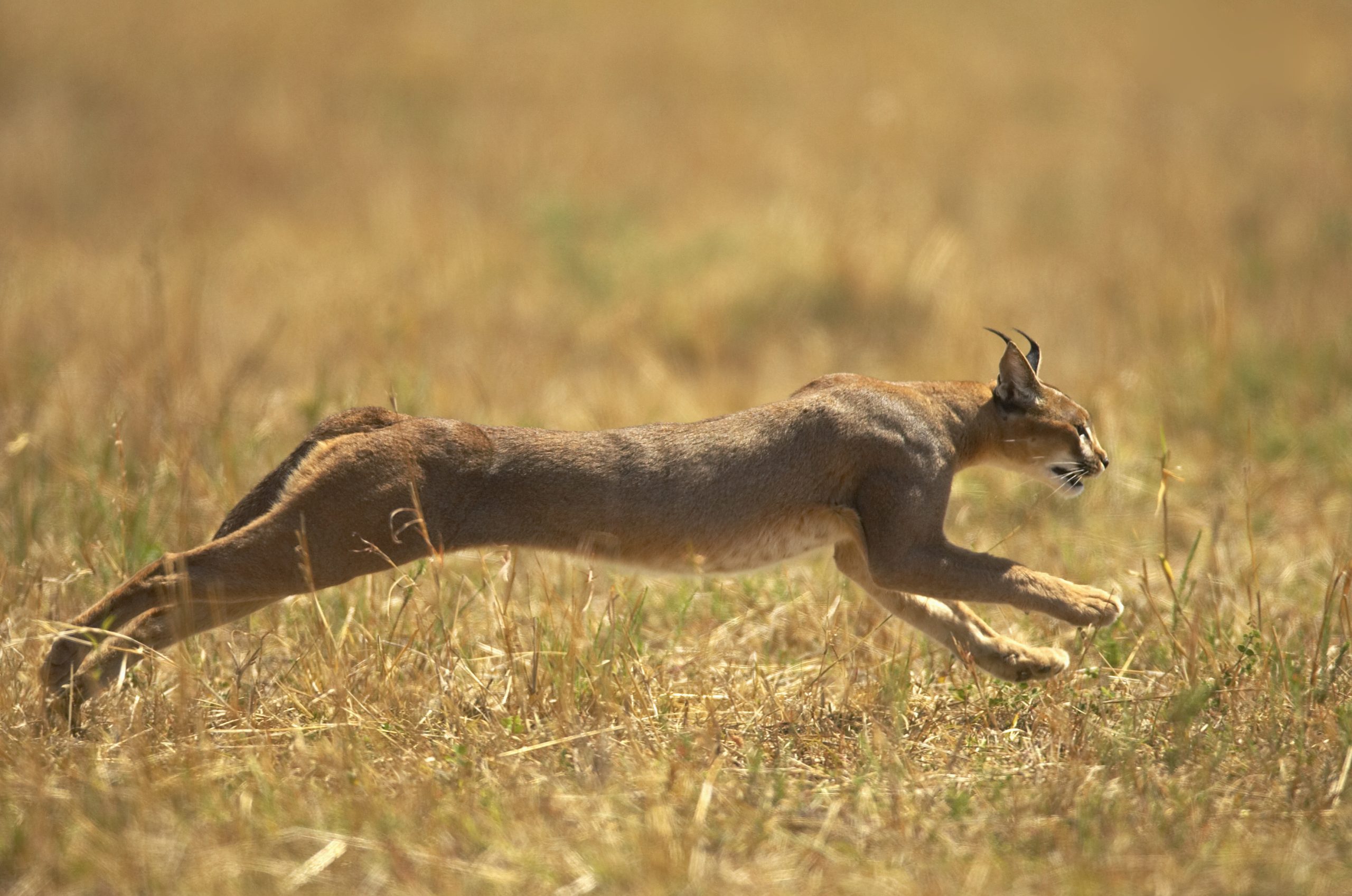
Caracal caracal
Famous for its distinctive black ear tufts and extraordinary leaps, the caracal is one of the feline world's most spectacular athletes.
Found across parts of Africa, the Middle East and Asia, this medium-sized wild cat uses its powerful hindlimbs to launch itself up to three metres into the air, snatching birds in flight with its sharp claws. It can even catch more than one bird in a single leap.
Its muscular legs also deliver explosive bursts of acceleration when pursuing prey on the ground, including rodents and small antelope.
- They leap 10 feet in the air and use their bizarre ears to communicate: Meet the caracal, the most beautiful and striking of all the wild cats
- Odd-looking, tiny killers, expert underwater swimmers and the grumpiest cats: 10 weirdest wild cats in the world
Although frequently credited with speeds of up to 50mph (80km/h), reliable scientific measurements of its maximum running speed are lacking. For this remarkable hunter, agility and split-second timing may be more important than outright pace.
9. Serval: The long-legged hunter
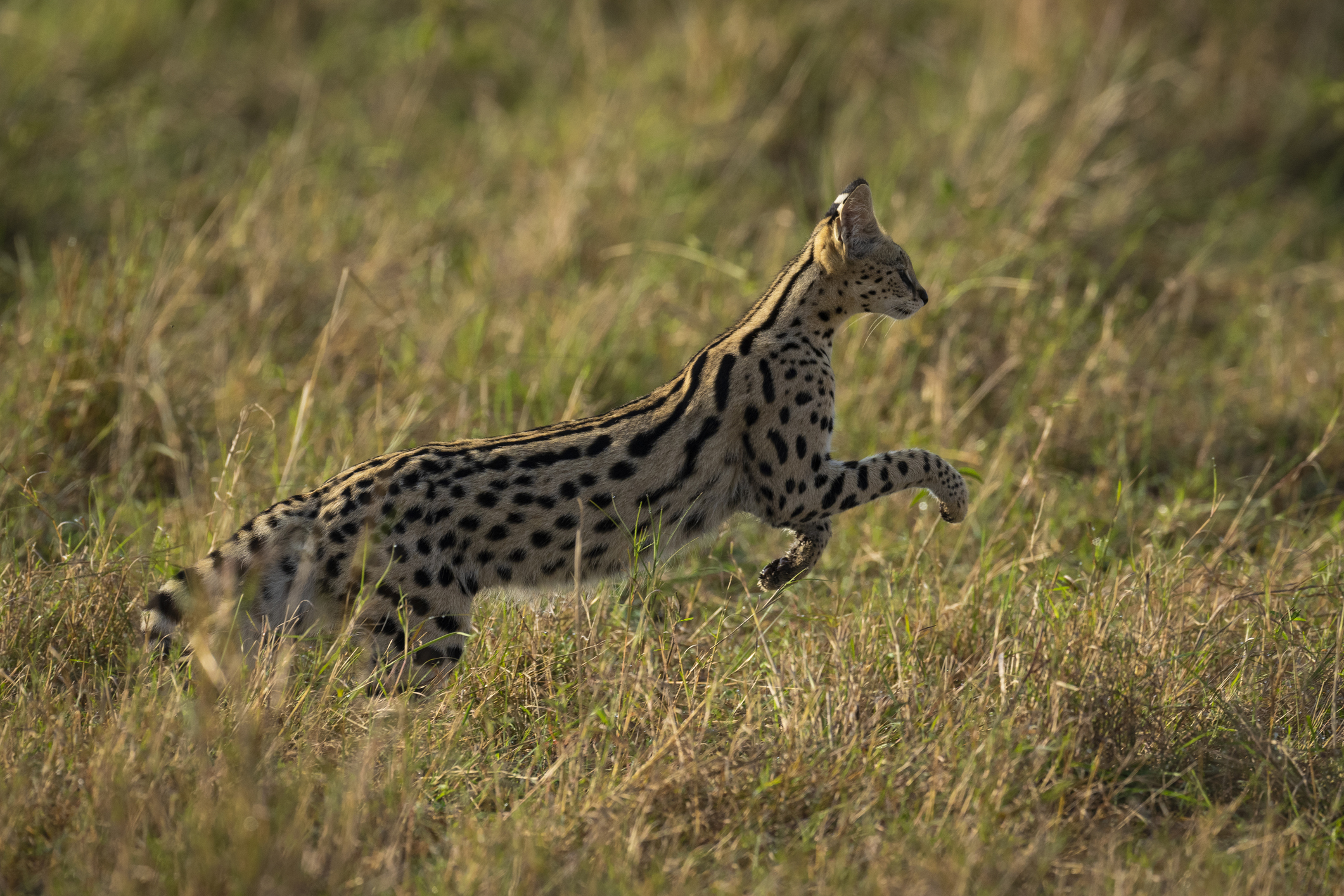
Leptailurus serval
With extraordinarily long legs, enormous ears and a slender, athletic body, the serval looks built for speed.
Found mainly in Africa's grasslands and wetlands, this spotted wild cat has the longest legs relative to body size of any cat. Its oversized ears can detect the faintest movements of rodents concealed beneath dense vegetation.
Rather than relying on lengthy high-speed pursuits, the serval uses its powerful hindlimbs to spring up to three metres into the air before plunging down onto unsuspecting prey. It can even snatch birds in flight.
Although sometimes credited with speeds of up to 50mph (80km/h), its remarkable hunting success owes more to acute hearing, explosive acceleration and extraordinary leaping ability than outright speed.
10. Eurasian lynx: The forest ambusher
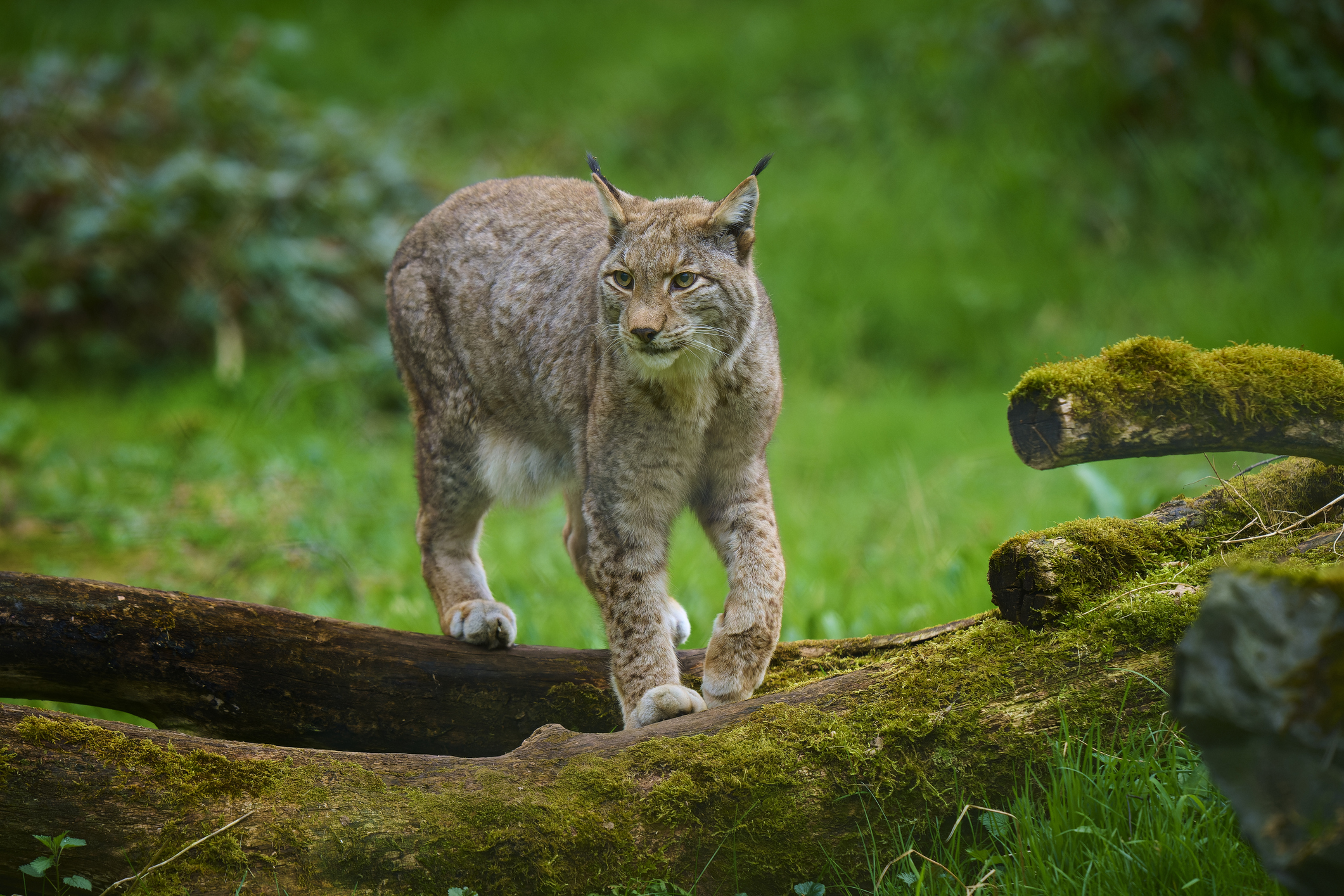
Lynx lynx
With a short tail and powerful legs, the Eurasian lynx is a formidable hunter in the forests of Europe and Asia.
This elusive predator relies on stealth to creep close to prey such as roe deer before launching a short, explosive attack. Its muscular hindlimbs provide rapid acceleration, while broad, fur-covered paws act like natural snowshoes, helping it move across deep snow.
Unlike the cheetah, which can pursue prey at high speed across open grasslands, the lynx is adapted to hunting in dense woodland, where surprise, agility and a well-timed pounce matter more than outright pace.
Although sometimes credited with speeds of up to 50mph (80km/h), its maximum running speed has never been reliably established.
- ‘I braved the vast forests of Finland to track an elusive predator. I’ve never seen anything so awesome.’
- Iberian lynx guide: species facts and where they live in the wild
Why the fastest cat doesn't always win
So can these cats really be ranked from fastest to slowest?
Not with scientific confidence, say experts with anything other than the cheetah being largely speculative.
"I don't think there are good measurements for most species," says Sarah Durant.
She suggests hunting behaviour may offer clues: faster predators might begin pursuits from further away, while slower species need to stalk closer. Terrain, prey and hunting techniques complicate comparisons.
A cheetah racing across open grassland faces very different challenges from a jaguar stalking through rainforest or a snow leopard pursuing prey along a mountainside. Maximum speed is also only one ingredient in a successful hunt. Acceleration, agility, stealth and timing can be just as important.
The cheetah's gold medal position is secure. But until scientists clock its relatives with the same precision, the remaining places on the feline podium are still up for grabs.
top image: Cheetah running in the Masai Mara National Reserve, Kenya. Credit: Carlos Carreno/ Getty Images
Discover more wildlife stories from around the world:
- 5 animals that can kill the gigantic, much-feared, infamous green anaconda
- Australia could be a ‘lifeboat’ for this 20ft-long, ‘saw’-bearing endangered creature, say experts
- Why are elephants so darned huge – and how did they get that way?
- “I'm shaking…” Watch incredible moment deep-sea researchers see something very rare - and very surprising - deep down in the ocean