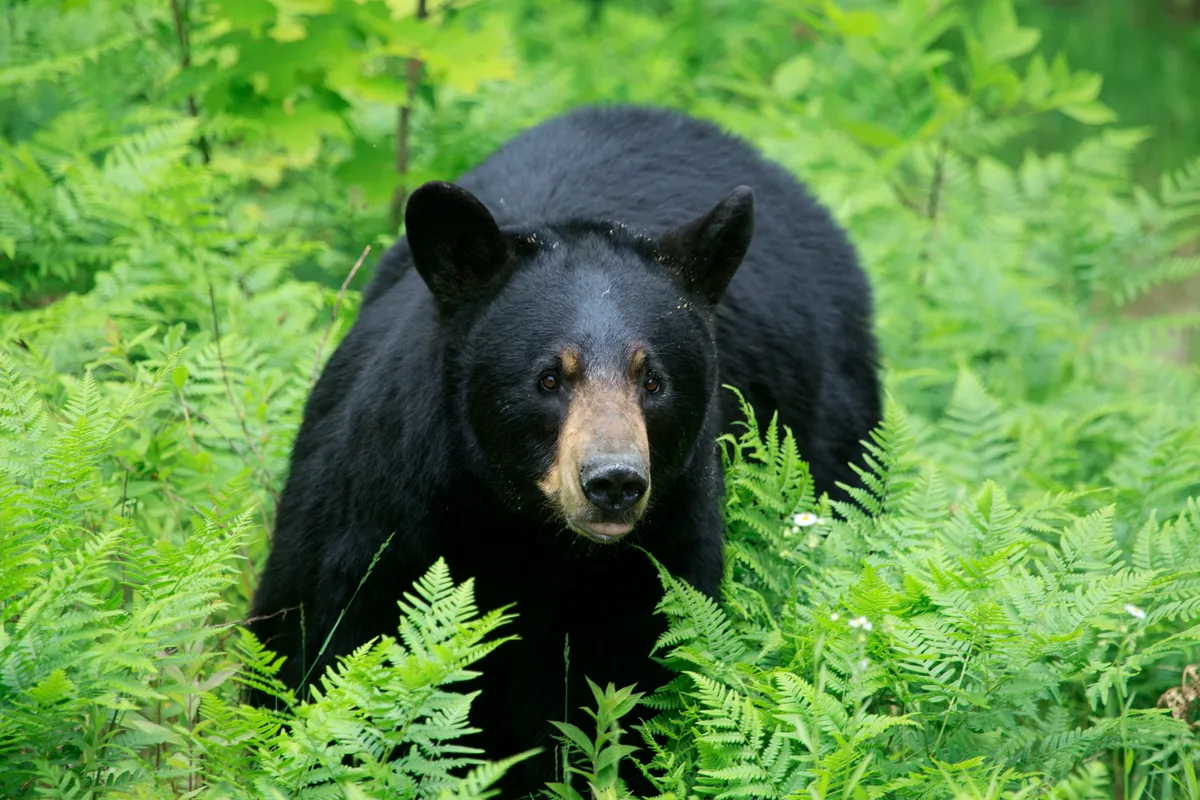
Bears are among the most powerful animals in the world, known for their strength and adaptability across diverse landscapes. While all bears are impressive, some species stand out for their extraordinary size, dominating their habitats with remarkable presence.
- "They are designed for ripping apart blubbery seals, so they will make short work of our puny bodies:" The 10 deadliest bears on the planet
- How to avoid a bear attack
Biggest bears in the world
Polar bear, Ursus maritimus
- Weight: Males – 350-800kg / Females – 150-350kg
- Diet: Carnivorous – polar bears mainly eat ringed and bearded seals

The undisputed kings and queens of the bear world, polar bears are the largest bear in the world and the Arctic’s top predator.
They mainly hunt bearded and ringed seals, but have been known to occasionally attempt to catch walruses, as well as scavenging on dead animal carcasses (such as whales) and at human settlements.
Polar bears are able to swim for long distances and for many hours between sea ice, using their front paws (which are slightly webbed) as paddles and holding their hind legs flat to act as a rudder. They can reach speeds of up to 6mph in water. On land they are slightly faster – able to reach speeds of 40kph.
- Stunning photos of polar bear families in Canada
- It's the largest, most powerful and deadliest bear on the planet – AND views us as prey, able to make short work of our puny bodies...
Kodiak bear, Ursus arctos middendorffi

- Weight: Males – 270-630kg (up to 680kg at peak times) / Females: 180-320kg
- Diet: Omnivorous – salmon, berries, grasses and vegetation
A subspecies of the brown bear, this is the only bear to live on the islands of the Kodiak Archipelago in southwestern Alaska. The Kodiak bear is an example of island gigantism – a phenomenon in which the size of an animal species isolated on an island increases dramatically compared to mainland relatives.
The Kodiak bear is very similar to the other brown bear subspecies, like the grizzly bear (Ursus arctos horribilis), the main difference being the size. It’s thought to have diverged from its brown bear relatives around 12,000 years ago after the end of the last Ice Age.
- What is the biggest bear in the world? Clue: it towers overs humans and weighs almost a tonne
- "It has a nasty habit of going on an explosive attack if startled, using sharp claws to rake down their victims' fronts, ripping off faces and gouging out eyes"
Kodiak bears are surprisingly intelligent in their eating habits – right after hibernation, they eat grasses, flowering plants and animals that may have died over the winter, which allows them to quickly replace the weight lost when sleeping.
Then it’s time for the star of the show – salmon. During peak salmon season, large Kodiak bears have been reported to catch and eat around 30 salmon per day. They often prioritise the brains, flesh and eggs for high fat and protein content.
Kamchatka brown bear, Ursus arctos beringianus

- Weight: up to 650kg
- Diet: Omnivorous – salmon, berries, vegetation, nuts and occasional carrion
The Kamchatka brown bear is the biggest brown bear in Eurasia, found in Russia’s Kamchatka region and adjacent islands. It’s closely related to brown bears in Alaska and northwest North America.
When standing on its hind legs, this bear can measure from 7 to 9 feet tall.
Like the Kodiak, much of this bear’s bulk is built on salmon. In summer they feed on berries, salmon and steelhead, and nuts, mountain ash and other fish in autumn. They are also known to hunt sea otters and take carrion like seals and whales washed up on the shore.
Grizzly bear, Ursus arctos horribilis

- Weight: Males – 180/360kg (inland) or up to 410kg (coastal) / Females – 130-180kg
- Diet: Omnivorous – berries, roots, insects, small and large mammals and carrion
Considerably smaller than their coastal cousins – the Kodiak and Kamchatka bears – grizzlies are still formidable animals.
Grizzly bears occupy a wider diversity of habitats than any other species of bear, from woodlands and forests to alpine meadows and prairies. They prefer access to coastal areas, rivers and streams. Coastal grizzlies are noticeably larger than their inland counterparts due to their access to salmon.
- Battle of the beasts: thrilling footage shows moment two grizzly bears collide in Alaskan wilderness
Though they’re largely vegetarian, they’re powerful apex predators, with a keen sense of smell and surprising agility (they can run as fast as 55kmph (35mph) over short distances). They are able to hunt and take down young or weak caribou, deer and elk.
- Nail-biting footage from a hiker captures his close encounter with a powerful grizzly mama bear as it stalks him to protect her cubs
- Grizzly-polar bear hybrids extremely rare but predicted to rise with global warming, say scientists
Grizzlies’ claws grow up to 10cm in length, and the bears use them to dig out underground rodents and catch salmon in mid-air or pin them to the riverbed.
Eurasian brown bear, Ursus arctos arctos

- Weight: Males – 250-300kg / Females – 150-250kg
- Diet: Omnivorous – berries, roots, insects, fish, honey, carrion and occasional large mammals
These bears are found in northern Eurasia, with over 100,000 brown bears in Russia. It is one of the most common subspecies of brown bears, and they are one of the largest terrestrial carnivores found in Europe.
American black bear, Ursus americanus

- Weight: Male – average 85kg / Female: average 60kg / in general up to 250kg
- Diet: Omnivorous – berries, nuts, fruits, insects, occasionally fish, honey, young elk and deer
The American black bear is the world’s most numerous bear species, with an estimated 750,000 to 950,000 living in Canada and the US. This is the most encountered bear on the continent.
American black bears, despite being smaller than the top contenders on this list, are still incredibly strong – they can flip boulders weighing over 140kg with one paw.
They predominantly live in forests and feed on fruit, nuts, shoots and vegetation.
American black bears are excellent climbers and swimmers – they can often be seen scaling trees, and one adult is believed to have swum nine miles along the Gulf of Mexico.
- What is the most numerous bear in the world? Clue – it's as tall as Michael Jordan
- Forget ligers – here are 3 strange, yet real-life, wild hybrid animals that actually exist in the natural world
Spectacled bear, Tremarctos ornatus

- Weight: Male – 100-200kg
- Diet: Herbivorous (90-95% plant-based)
The spectacled bear is the only living species native to South America – more specifically, the Andes Mountains in northern and western South America. It’s also the last remaining short-faced bear.
They have jaws strong enough to chew through the fibrous plants, palm nuts, tree bark and sugar cane that makes up most of their diet. They can also use their weight to bring down some land mammals like tapirs, but this is a very small portion of their diet.
Spectacled bears are one of four extant bear species that are habitually arboreal – meaning they spend most of their time up in the trees. They’re highly skilled climbers. Unlike the other bears on this list, spectacled bears do not hibernate, since food sources are easily available to them all year round in the Andean habitat.