
There are few animals more recognisable than elephants. Not only are these highly intelligent giants the largest terrestrial animals alive today, they’re also some of the strangest, with flexible noses the length of a king-size bed and pairs of elongated incisors that never stop growing. But what happens if an elephant loses a tusk?
What are an elephant’s tusks made of?
Despite what many people think, elephant tusks aren’t horns - they’re actually elongated, continuously growing incisors that protrude well beyond their mouths. Since they’re teeth and not horns, an elephant’s tusks are made up of the same tissues as ours and other mammals’ teeth.
Anchoring each tusk into an elephant’s jawbone is a root, which is made up of a hard, dense, and bone-like tissue known as dentine. This root is covered in cementum, a softer, calcified connective tissue that protects the root and holds it securely in its socket.
Above the root is a hollow space known as the pulp cavity that houses the dental pulp, which consists of blood vessels, connective tissue, and nerves. Over time, this pulp deposits layers of dentine, pushing a tusk outward.
At the tip of each tusk there’s a very thin layer of enamel - the hardest, most mineralised tissue mammals can make. However, as elephants age and use their tusks, this thin enamel cap gradually wears away, leaving tusks that are almost entirely composed of exposed dentine.
This exposed dentine is known by a much more common name: ivory. For millennia, humans have harvested and traded ivory, not just from elephants and other living tusked animals, but extinct ones too, such as mastodons and mammoths.
According to the World Wildlife Fund (WWF), at least 20,000 African elephants are illegally killed for their tusks every year. As a result, their numbers have dropped from over 1.3 million in 1979 to fewer than 415,000 today.
Why can’t elephants regrow their tusks?
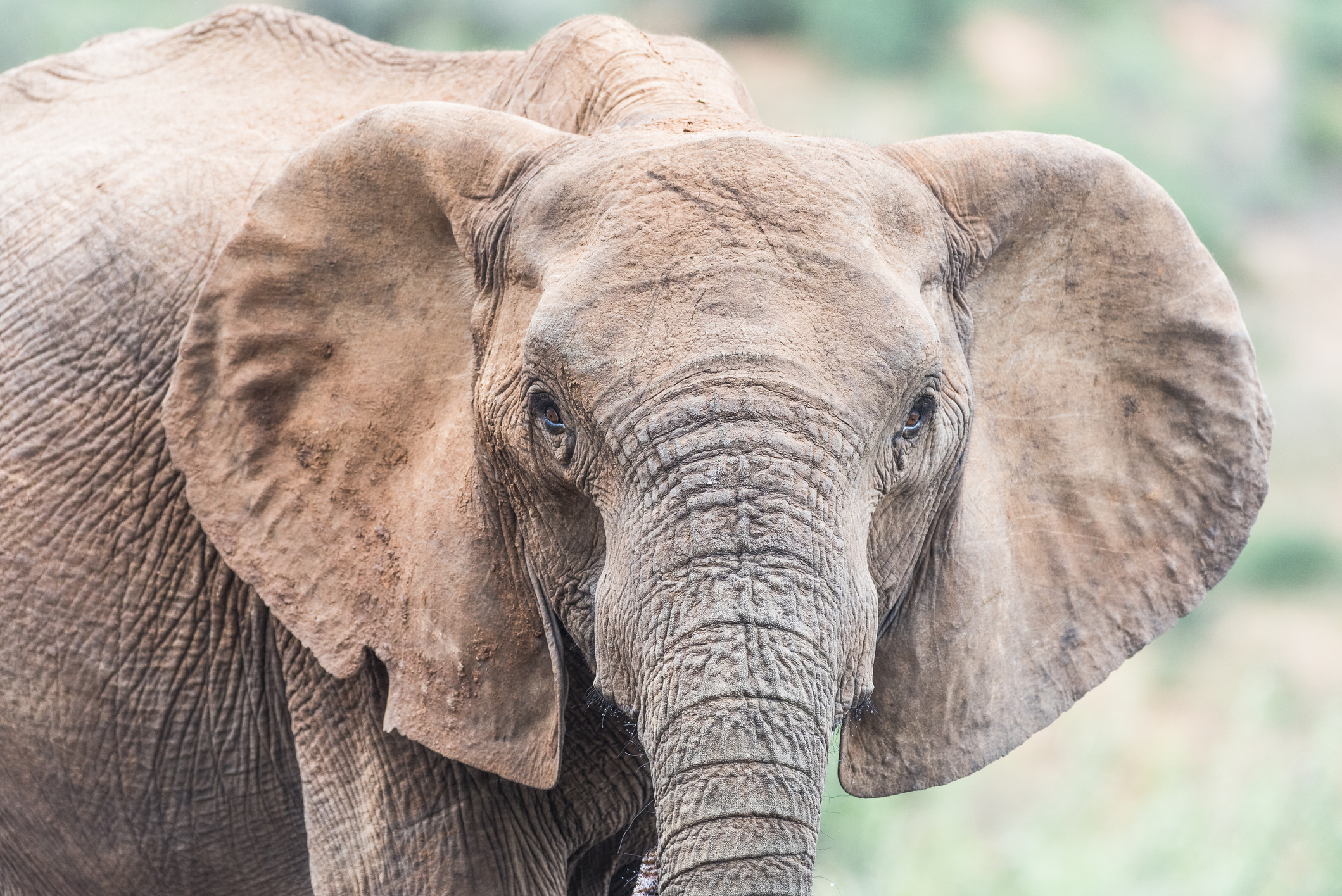
Unlike us, elephants have just two types of teeth: two upper incisors (their tusks) and 24 molars, which they use to grind up vast quantities of plants. If an adult elephant damages or loses a tusk, they can’t grow another one.
This is down to the same reason why we can’t naturally replace our adult teeth; after we lose our ‘baby teeth’, our bodies deactivate the genetic pathways and stem cells responsible for tooth formation.
While this might seem like an evolutionary limitation, especially when compared with sharks and reptiles (which grow teeth continuously throughout their lives), it’s actually an evolutionary trade off. Mammals, unlike most other animals, have specialised teeth that interlock with pinpoint accuracy to shear and grind different foods. The constant cycling of teeth would disrupt this tight mechanical alignment.
Although elephants can’t replace their tusks, they can replace their molars up to six times! Most mammals are diphyodonts, meaning they develop just two sets of teeth, but elephants are what’s known as polyphyodonts. They use a conveyor-belt-like system to replace old, worn-down molars.
- Baby elephant suck their trunks, like human babies suck their thumbs. Here's why they do it...
- This baby elephant taking its first trembling steps is the cutest thing you’ll see today
Instead of pushing up vertically from their gums, an elephant’s molars grow in the back of its mouth and slowly move forward, pushing out older teeth. On average, an elephant goes through six sets of four molars throughout its life: the first set falls out around ages 2-3, the second at ages 4-6, the third at ages 9-15, the fourth at ages 18-28, and the fifth in their early 40s. The sixth set must last for the remainder of the elephant’s life, with the longevity of this final set often determining how long an individual lives.
Interestingly, elephants are born with a pair of tiny, temporary ‘milk tusks’ known as tushes. Measuring around 5cm long, these are eventually replaced by permanent tusks, falling out when a calf is about one year old.
What do elephants use their tusks for?
An elephant’s tusks serve many of the same practical purposes as our hands, helping it interact with and manipulate its surroundings. In their search for food, elephants use their tusks to strip tough bark from trees to reach edible inner layers. They also knock down small trees and clear brush with their tusks in order to access hard-to-reach, nutrient-rich food sources.
Tusks are used as weapons too, on both offense and defense. They can be used to protect a herd from predators, and males use them to display dominance or compete for mates during breeding seasons. They also offer their sensitive trunks some much-needed protection.
- "The elephant crashed into the vehicle again, trying to roll it. I shouted to get out and the students slid out of the tilting car."
- Just how and why did the elephant get its remarkable trunk?
Just like humans are left or right handed, elephants have a dominant ‘master tusk’, that is typically more worn down than their other one due to frequent daily use. Some elephants have also been observed using their tusks as ‘armrests’ for their heavy trunks!
About the only thing tusks aren’t used for is eating, which is strange considering they’re modified teeth…
Can an elephant survive without its tusks?
Yes, elephants can live without their tusks, and in some places being ‘tuskless’ can actually be an advantage.
When an elephant loses a tusk, or both of its tusks, it's forced to change how it feeds, digs, and interacts with its surrounding environment. Instead of using its tusks to peel bark off trees or dig for deep roots, a tuskless elephant might shift to eating easier-to-reach vegetation, such as grasses and leaves.
In areas experiencing heavy ivory poaching, such as Gorongosa National Park in Mozambique, tuskless female elephants have a much higher survival rate as they’re ignored by poachers. Being born tusksless is a genetic condition, and one that’s much more common in females.
- “That's just insane.” Elephant dies in South Africa – and scientists are stunned at what happens next
- Are elephant graveyards a real thing? Is there any truth in the legend elephants go to a special place to die?
In 2021, a study published in the journal Science found that this previously rare genetic condition had become more common following the Mozambican Civil War, which was fought between 1977 to 1992 and partly financed by ivory poaching.
Before the war, about 18.5% of females were naturally tuskless. After the war, that figure rose to 33%, suggesting populations of elephants in Mozambique were evolving in response to ivory poaching.
How long are the longest tusks ever recorded?
Elephants’ tusks never stop growing, so provided they don’t damage or lose their tusks during adolescence, adults can grow tusks that are nearly long enough to reach the ground.
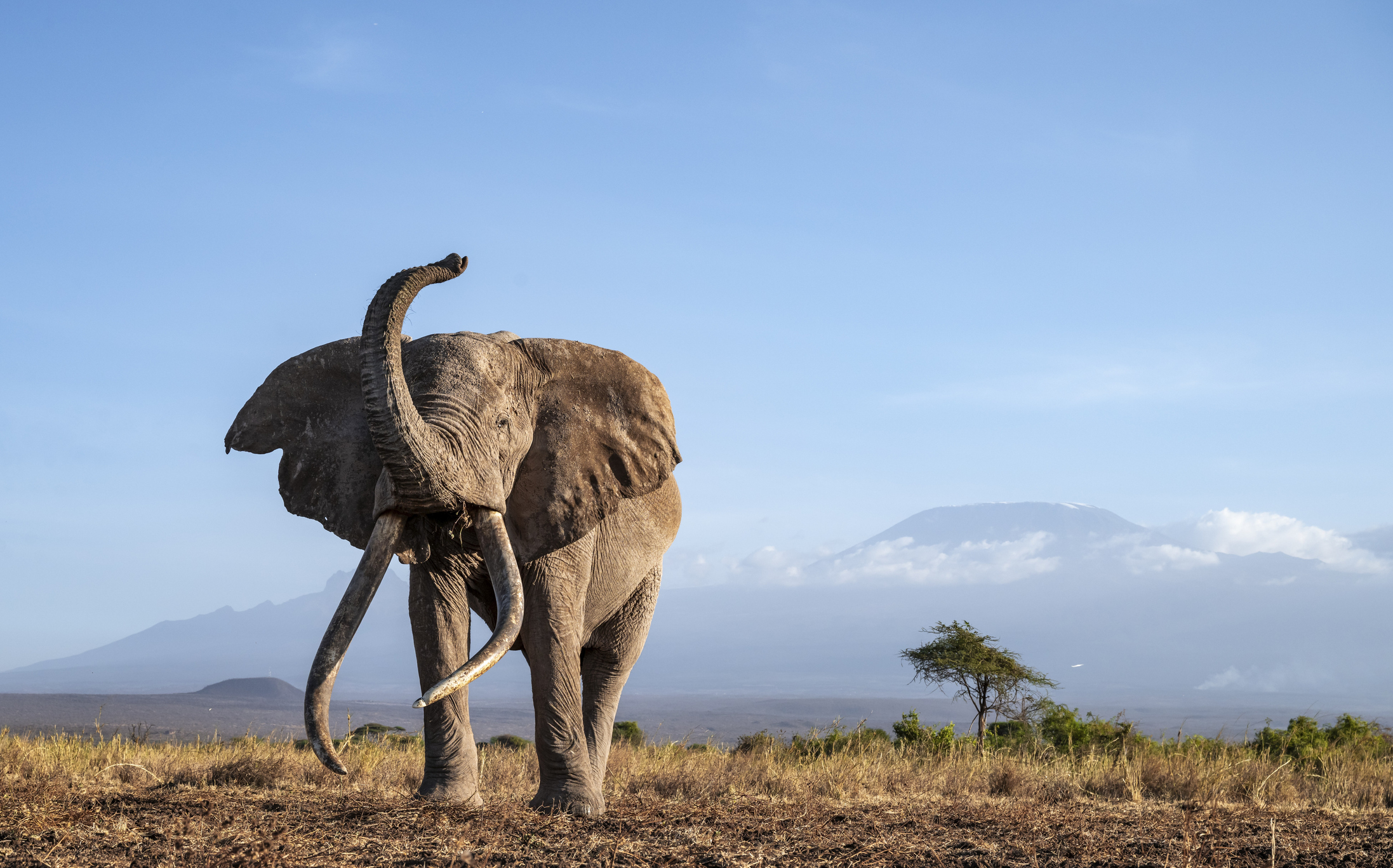
Those with the longest tusks are almost always long-lived males aged 45 to 55 years old. These rare individuals are nicknamed ‘super tuskers’ and they’re distinguished by long, curved tusks that each weigh over 45kg. There are fewer than 30 ‘super tuskers’ alive in the wild - Kenya’s Tsavo Conservation Area is home to at least 12.
The longest verified modern African elephant tusks on record measure 3.18 metres. They belonged to the famous ‘Kilimanjaro Bull’, a male African bush elephant that was shot near Mount Kilimanjaro in 1898. His tusks weigh a combined total of 209kg and are housed at the Natural History Museum in London.
While the ‘Kilimanjaro Bull’s’ tusks may have been modern record-breakers, they’re nowhere near as long as the longest tusks ever recorded. That title belongs to the ‘Mastodon of Milia’, an extinct elephant relative (Mammut borsoni) that roamed Greece more than 2.5 million years ago. The tusks of an individual discovered in July 2007 measured a staggering 4.58m and 5.02m respectively!
- The car was stuck in the mud. Then an elephant charged. I still can’t believe what happened next
- 10 animals that can kill an elephant: Which animals are able to take on this majestic giant?
What other animals have tusks?
Elephants, and their extinct relatives mastodons and mammoths, aren’t the only animals with tusks.
Hyraxes, which are actually the closest living terrestrial relatives of elephants, have tusks too. Their tusks are also modified incisors, though they only grow up to 4cm long and barely protrude past their lips. They mainly use their tusks for defense against predators, as well as in social displays between males and females.
Narwhals, pigs, hippos, walruses, and several types of deer, such as mouse deer, musk deer, water deer, and muntjac, also have tusks. However, unlike those of elephants and hyraxes, the tusks of these animals are modified canines, not incisors.
Narwhals are quite strange in that males typically have just a single tusk: an elongated left canine tooth that erupts through the lip and can grow to lengths of nearly 3m. On really rare occasions, both canines can erupt, leading to a two-tusked narwhal. This condition occurs in roughly one out of every 500 male narwhals.
top image: A Big tusker, Craig, in Amboseli, Kenya with a clouded sky in the background. Credit: Wirestock/Getty Images
Discover more fascinating wildlife stories from round the world:
- "You have to shoot the animal in the shoulder and wait five minutes for the animal to get groggy and fall over."
- ”He had a habit of causing commotion with visitors. I feel for him – I see him as a friend, I owe the guy!”
- It's the size of a Labrador dog, incredibly shy and beautiful and built for trees. It's famous for its deadly, flexible jaw that can open at a full 100 degrees


