
Dark, damp and often fairly spooky, caves can be found high above ground or low under water. Often the unique ecosystems of caves mean they are places of huge interest to scientists of all kinds. Some of the oldest caves are thought to be dated to around 340 million years ago - that's before the first dinosaurs were even around.
And many of these caves are still revealing amazing things to us now - from endemic species, to weird and wonderful rock formations. Here are ten of the world's weirdest caves.
12 of the world's weirdest caves
Waitomo caves, New Zealand
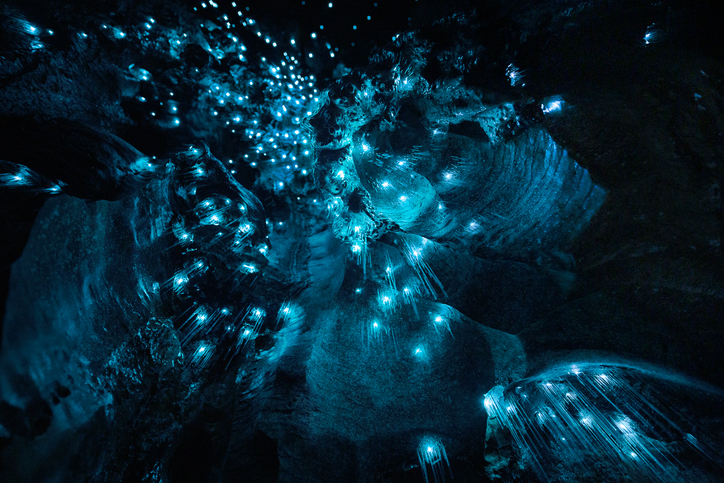
Just one of several cave tourist attractions in New Zealand, the Waitomo Caves are distinctive for a type of glow worm that makes the caves its home.
Arachnocampa luminosa is a species of fungus gnat only found in New Zealand, and its larvae give off a bioluminescent light, created through a chemical reaction between an enzyme and oxygen. The larvae produce silk which they make into a nest on cave ceilings and then hang threads covered in sticky mucus. Prey is attracted to the larvae's glow and then caught on the threads.
- This tiny carnivorous bug produces an astonishing natural spectacle in New Zealand and has an ingenious way of catching its prey
- Mesmerising timelapse video shows tiny creatures glowing deep inside New Zealand cave
Mammoth cave, USA
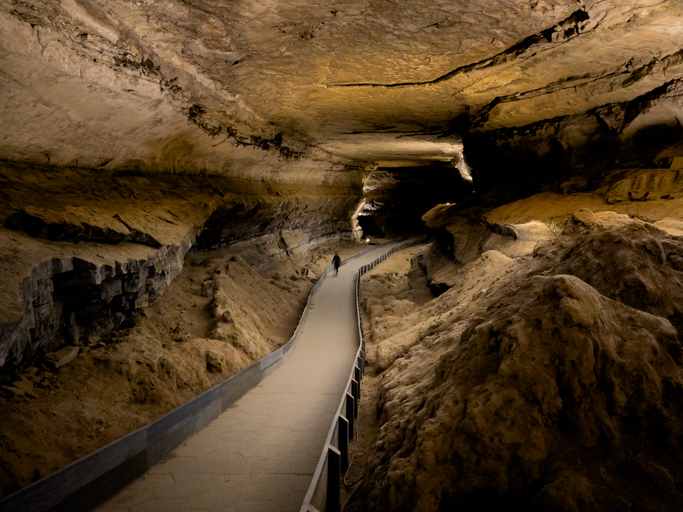
It's mammoth by name and mammoth by nature. This cave in Kentucky is thought to be 426 miles long and 118 metres deep, although many researchers believe more is left to be mapped. Situated underneath Kentucky's Mammoth Cave National Park which was designated a UNESCO World Heritage site in 2002, the cave has unique limestone cave formations. It is also thought to contain the richest variety of cave-dwelling flora and fauna - 130 species. It is also widely considered to be the largest cave system in all the world.
- Diver went into 20m-deep underwater cave in Spain and found animal colonies thriving
- 9 most terrifying caves on the planet
- There’s a cave in Kentucky that’s 426 miles long, 118 metres deep – and fish-eating spiders lurk in it
Hang Son Đoòng, Vietnam
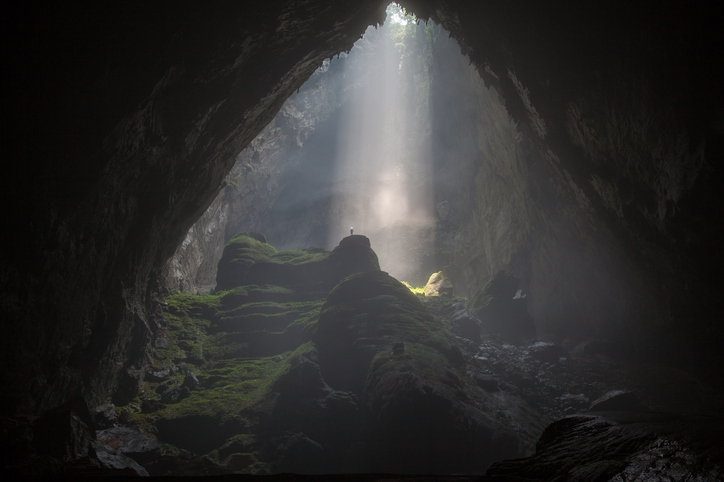
But if you are looking for the largest single cave passage, however, then that title belongs to Hang Son Đoòng in Vietnam which holds the Guinness World Record for the largest natural cave in the world. Measuring 200 metres (655 feet) high, 150 metres (490 feet) wide and its length is at least 6.5 kilometres (4 miles), the cave is tall enough for a 40-storey skyscraper and wide enough for a Boeing 747 to fly through and even has underground clouds. And intriguingly, it was only properly discovered and surveyed in 2009.
Sudwala Caves, South Africa
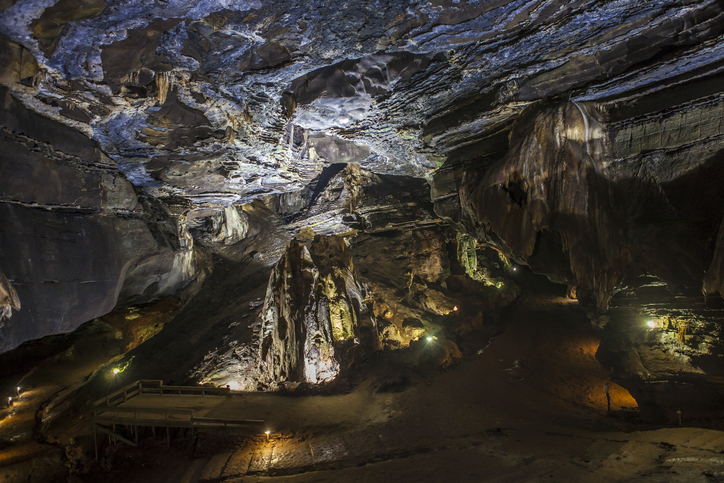
According to the Guinness Book of Records, the oldest caves in the world are the Sudwala Caves in South Africa, which were home to the earliest human ancestor Homo habilis. In fact, there are different views about which caves are the oldest, with the Jenolan Caves in Australia being a contender. The Sudwala Caves are thought to have begun forming around 240 million years ago and within it there are features including an amphitheatre, stalagmites, stalactites and flow stones, as well as the Lowveld Rocket, Somcuba's Gong and The Screaming Monster.
Vjetrenica Cave, Bosnia and Herzegovina
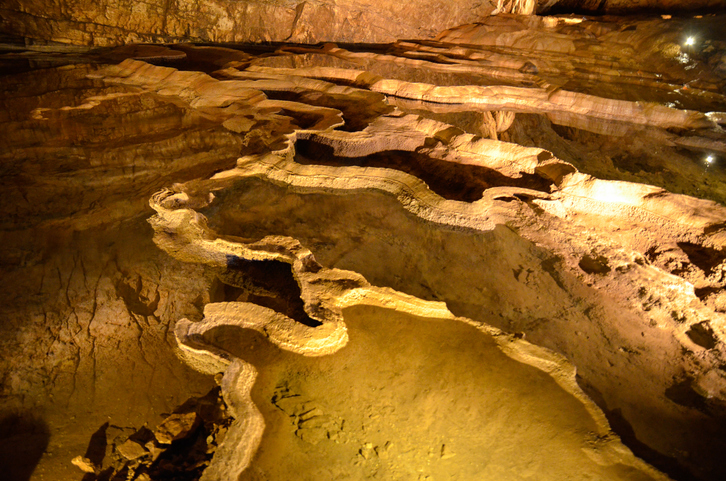
Also called Wind Cave, because of the 89kph winds that whip around its entrance, this cave is a wonder because of the level of biodiversity and endemicity which is unmatched by any other cave on the planet. The first mention of it was around 2,000 years ago and about 7 km of the cave has been explored. It is now considered to be one of the world's most important hotspots for subterranean fauna. 200 animal species, 37 of which are endemic, live in this extraordinary underground ecosystem – 92 of these are troglobites, animals that live strictly underground and are unable to survive above the surface.
Optymistychna cave, Ukraine
Holding the title of the world's eight longest cave, Ukraine's Optymistychna cave is the longest in Europe, with around 265 kilometres of passageways, and the world's longest gypsum cave. The entire cave lies under a two square kilometre area in a layer of gypsum less than 30 metres thick, which is very rare for large caves. As well as many bats, the cave is also home to the pathogen Pseudogymnoascus destructans which can be deadly for the species. However, the bats that live in the cave don't seem to be affected by it which scientists think could be because they have built up a resistance.
- Camera traps film predators descending on cave filled with 40,000 bats. What happens next is staggering
- "We found 20 pairs of wings in an hour.” Secret cameras reveal cause of Jamaica's dismembered bats
Lechuguilla Cave, New Mexico
A breathing cave? Surely not... In fact, Lechuguilla Cave, underneath New Mexico, has been dubbed the breathing cave, because air is forced in and out of the cave due to atmospheric pressure changes outside of it. Lechuguilla Cave is the ninth-longest explored cave in the world, measuring 152.11 miles (244.80 kilometres) long and 1,588.6 feet (484.2 metres) wide – although not all of it has been fully explored by humans. When the BBC's Planet Earth team when to film there, they were amazed by the cave's Chandelier Ballroom, where six-metre-long collections of hand sized crystals hung from the ceiling.
Deer cave, Borneo
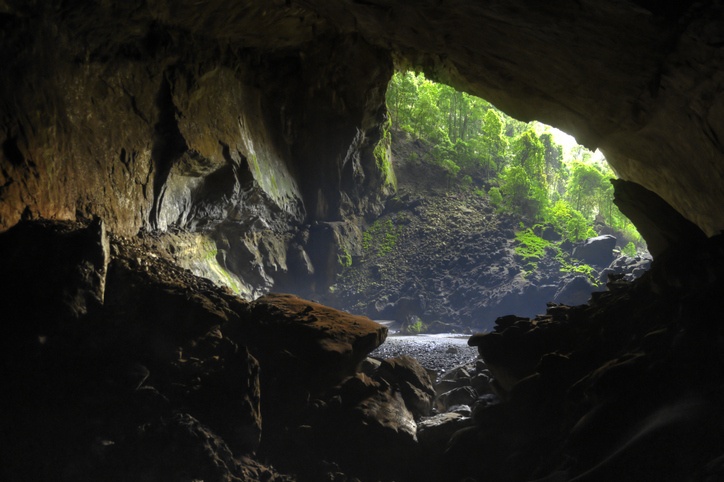
It has been said that the entrance to Deer Cave, hidden deep within the tropical rainforest of Gunung Mulu National Park in Malaysian Sarawak on the island of Borneo, is so vast you could pick up St Paul’s Cathedral and plonk it down inside. Home to an estimated 3 million wrinkle-lipped free-tailed bats, millions of swiftlets and coprophagous insects, which are preyed on by predatory centipedes and spiders. The insects are particularly happy with the levels of bat poo inside the cave, and in one episode of Planet Earth, a 100-metre high mound of bat droppings is filmed.
- An elephant like animal was discovered in this gigantic underwater cave
- This cave lion was unearthed from Siberian permafrost and scientists made an unexpected discovery from its DNA
Movile cave, Romania
In 1986 workers drilling a borehole on Romania's Black Sea Coast accidentally stumbled upon an underground cave system that had been cut off from the world for over 5 million years. Buried beneath 18 metres of clay and limestone, Movile Cave is heavy with toxic gases, with low oxygen and high in chemicals such as hydrogen sulphide, methane and ammonia. More than 50 species of invertebrate have been found in the cave, 37 of which live nowhere else. With no sunlight, the organisms have evolved very strange adaptations to life in the dark, with many having no eyes or skin pigmentation.
Rising Star Cave, South Africa
This amazing cave system has only been officially explored by 48 humans, due to its inaccessibility. In 2013, a team of cavers discovered a hoard of 1,550 bones while exploring the cave in Gauteng Province, South Africa. These bones represent at least 15 individuals of an enigmatic species known as Homo naledi. To date, this species is only known from the remains found in this cave. There is even a part of the cave called ‘Superman’s Crawl’ which is seven metres long and, in some parts less than 25 centimetres high.
Cave of Crystals, Mexico
Among the most deadly of all the caves in the world, the Cave of Crystals, in Chihuahua, Mexico, is buried around 300 metres underground and contains giant gypsum crystals up to 11 metres long. The conditions of the cave make it perfect for crystals to grow in, but the humidity is deadly for humans. It stands at 90%, which means the human body is unable to cool itself down by sweating. Without specialist equipment, any person in the cave would quickly overheat, so this is one place best viewed in a photograph.
Sistema Ox Bel Ha, Mexico
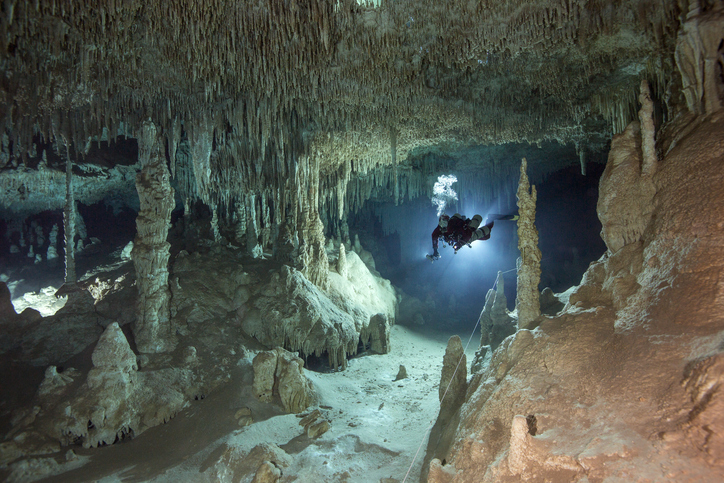
This cave near Tulum in Mexico is dubbed the world's longest explored underwater cave system. Scientists believe the caves have been submerged for 18,000 years since sea level changes caused them to flood. According to Global Underwater Explorers, the area has 550 species of birds, 103 types of mammals, 182 reptiles and amphibians, 36 crustaceans and two fish, along with various plants. It was officially measured as 336.65 miles long in August 2026.


