
The stories of Greenland are full of the lure of still seas. One tale begins an oceanic adventure with the lines, "I could not sleep, For the sea lay so smooth, Near at hand, So I rowed out."
I remembered these words during many mornings of summer 2024, as I slid my qajaq (kayak) onto calm seas. After midsummer storms, the mornings were all dazzling water and unbroken blue, perfect conditions for both wildlife encounters and the task that brought me here – paddling the longest subarctic to Arctic coastline in the world.
I’d travelled north from the capital, Nuuk, deep into the ice floes of the vast fjord systems, and then from Illulisat around Disko Bay. My Greenland journey was part of a year I spent discovering cultures built on tiny traditional boats.
The quest took me around the North Atlantic, starting in Connemara and the Aran Islands on the most rugged stretches of Ireland’s Atlantic coast, and finishing at the opposite end of the Gulf Stream with a circumnavigation of Barbados. I paddled thousands of kilometres, meeting people who have revived the small-boat-building traditions that once seemed doomed to extinction.
- Satellite images reveal hidden cause of melting glaciers in Greenland
- Fossil hunters find nervous system of ancient predator in North Greenland
- Spectacular whale 'feeding frenzies' are suddenly being seen along the coast of East Greenland – and scientists know why
Everywhere I went, small boats plunged people into extraordinary proximity to the natural world – never high on decks, always deep within the waves. People treated these boats as more than mere tools. They were members of the family with their own minds and music.
People described them as ‘proud’, responding to rough treatment by ‘sulking’, and rowers came to ruin if they failed to ‘listen to their boat’. But they were also unfailingly generous, ‘making choices’ that evaded danger. People, boats and marine species were inseparably entangled.
Paddling Greenland
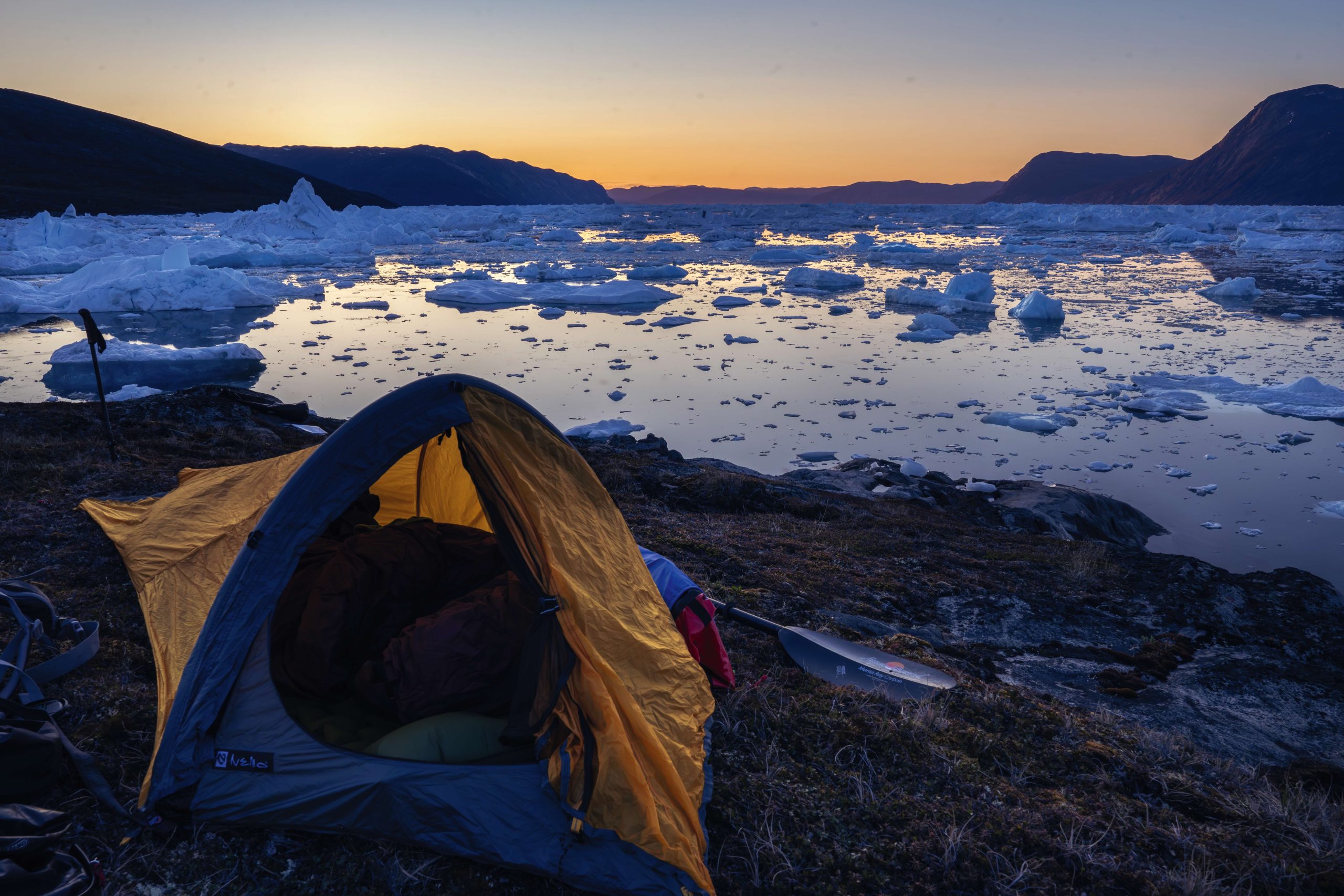
Greenland was where I found this intertwining at its most intense. It was also where I had my most spectacular encounters with nature. I spent three weeks on the water, usually alone, sleeping in a waterproof sleeping bag or small tent.
Because it never got dark and the sun could be vicious, my rhythms were never those of night and day but of the tides. I’d sleep when the water flowed against me, and paddle through the night if it promised the sea’s assistance. The landscapes ranged from jagged grey mountains to white worlds of sea-ice. I visited ancient villages where many different cultures had farmed, fished and lived alongside walruses and caribou.
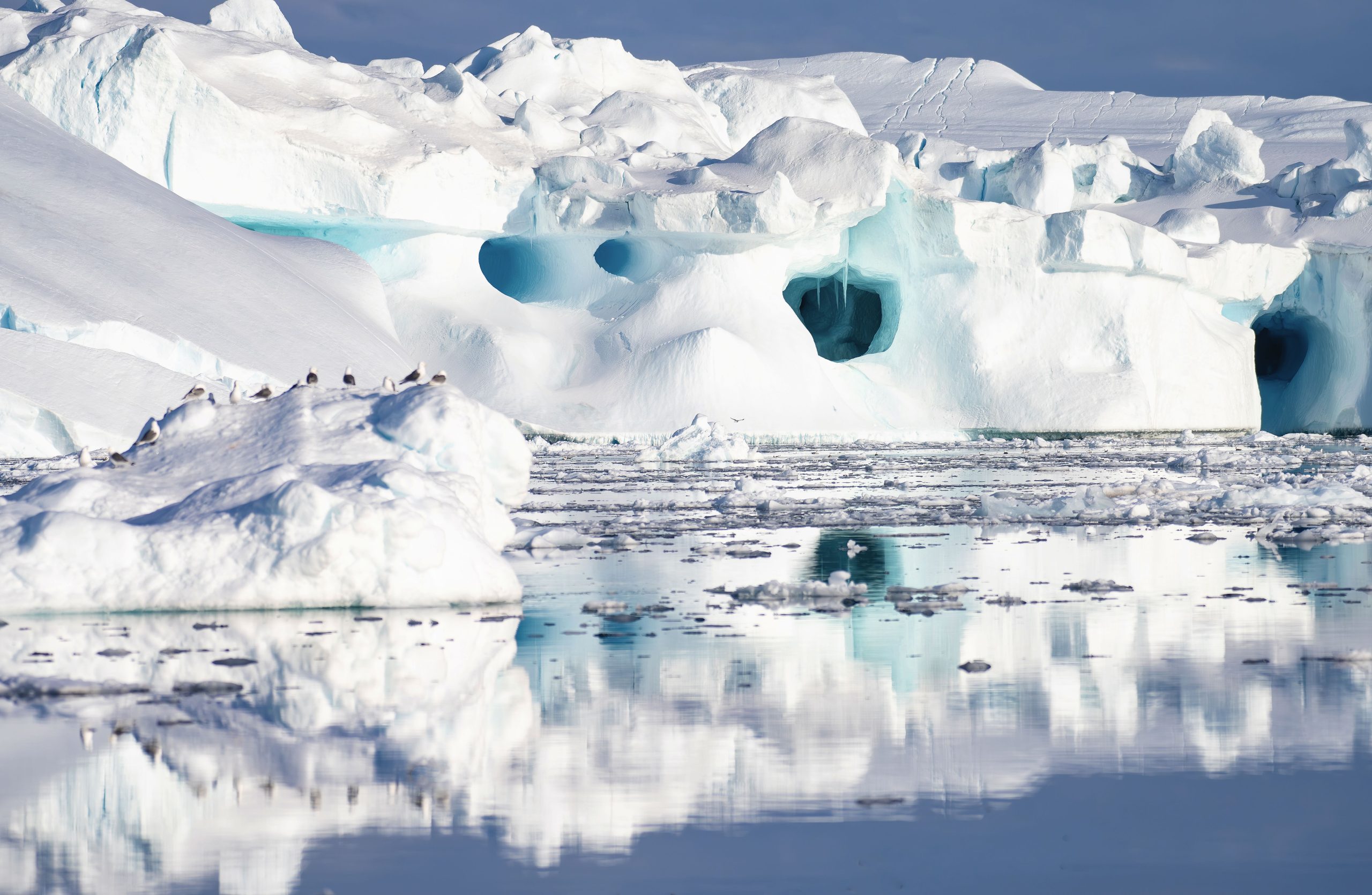
The ice floes were entirely different from anywhere I’d paddled before. This wasn’t the ordinary silky water of a windless Atlantic dawn, when residual swell laps at skerries. It was sea that’s truly still. Rows of icebergs, like sea walls, cut off all oceanic movement, and the silence felt like a heavy blanket. Any noise other than the drip of the paddle was like a world-rending cataclysm.
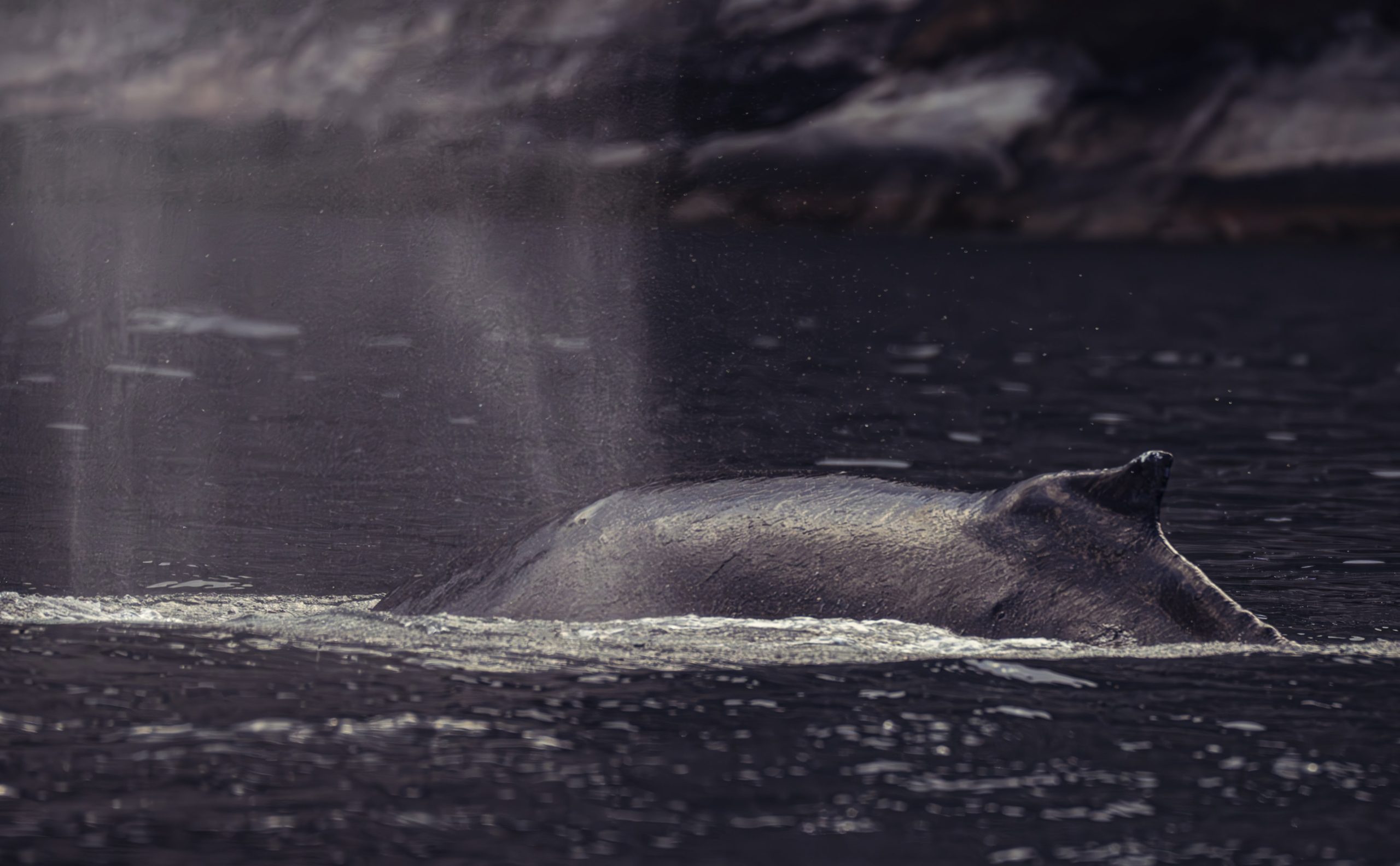
Occasionally, this was the gunshot crack of breaking sea-ice. More often, it was an eruption that sent a plume of sea spray into the air, followed by the great dark arc of a humpback whale, that rose from the sea and seemed to take an age to roll back down.
These ice floes belong to whales, walruses and narwhals. The further north you travel, the greater the proportion of life in the water, and on the west coast of Greenland, where the biggest ice floes outside Antarctica flood nutrients from land to sea, life gathers in columns of plenty wherever fresh and salt water meet.
When the sea-ice melts in early summer, a vast phytoplankton bloom explodes into being. Disko Bay’s geography – a huge bowl in the vast stretch of land-fast ice – generates a unique concentration of natural resources for which a humpback, capable of covering more than 16,000km each year, will travel halfway across the globe.
- Epic 15,000km humpback whale journey breaks world record
- Drone pilot spots humpback whale acting strangely. What happens next is breathtaking
- Humpback whales are some of the ocean’s loudest creatures – so why do they sometimes ‘whisper’?
The world of whales
It was impossible to forget I was in the humpbacks’ world. They were, after all, 30,000 times the weight of my little vessel. They would appear multiple times an hour, seemingly curious about my small craft. Once, off Disko Island, one surfaced so close I was drenched in a shock of rotten, fishy breath.
But my strongest memory is of their playfulness. Their immense flippers are what make them capable of vast journeys, yet I’ve never seen a humpback with a sense of purpose. Their flippers rise like sails, flap through the air, slap the surface and twist through the water, always giving the impression of leisure.
There were other giants. In early summer, the true Arctic specialists, the bowheads, help generate this feeding space, using their huge heads to smash through the sea-ice. The tongue alone is the weight of an elephant. For a village like Qeqertasuaq, on Disko Island, the bowheads’ appearance in April kicks off the sunny, ocean-going months.
My favourite encounters of all, however, were with the fin whales. Like the bowheads, they kept their distance. Only once did one rise within metres of my boat. A fin whale is twice the length and three times the weight of a humpback.
But facts and figures convey nothing of the impression it leaves. Almost the length of a blue whale, but less bulky, a fin whale’s vast back glides so smoothly that it seems snake-like, resembling a creature from a medieval map. After the huge, ridged blowhole, there’s little to interrupt the sense of sweeping scale, but the fin is, given the whale’s name, ironically tiny.
Greeland qajaqs
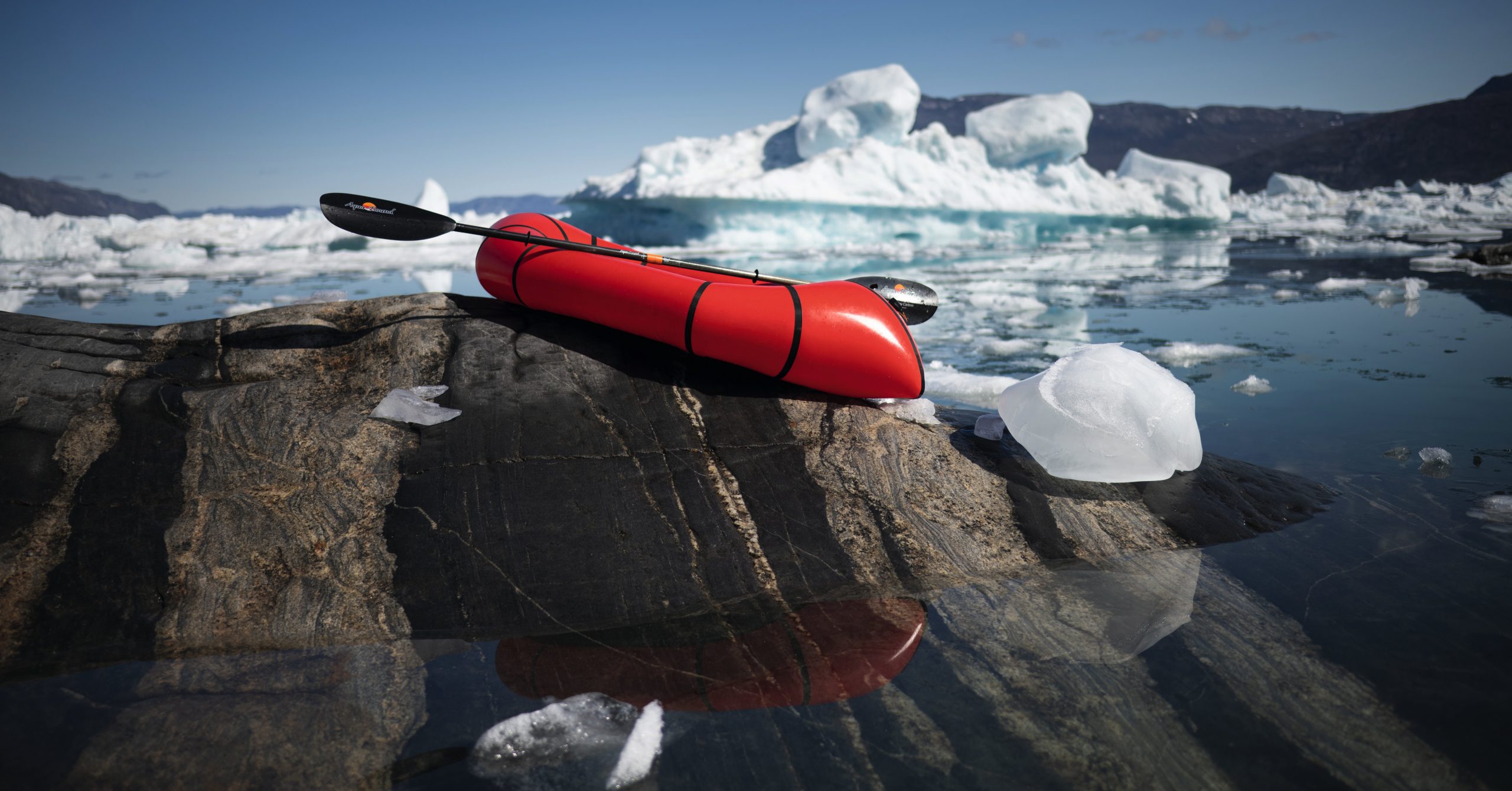
As I paddled, I thought about the qajaqs of this region. I was travelling in a version built from modern materials, rather than harp-seal skins and driftwood, but even my clumsier boat echoed the ways in which a Greenland qajaq feels more like an item of clothing than a mode of transport.
Uniquely small and light, due to the need to carry them long distances over ice, they are fitted to individual paddlers like tailored suits. Their shape, though, is always modelled on the streamlined forms of fish and seals. Helping to build your first qajaq, and gaining freedom of the sea, is a coming-of-age experience.
- Manhattan-sized iceberg breaks free in Greenland. What caused the event has never been seen before
- It’s 100 times the size of Yellowstone, almost entirely covered by ice and is home to the ‘Iceberg Graveyard’
- Drone captures Greenland ice tearing open to reveal colossal animal beneath
In Greenland, as elsewhere, the seasonal tasks required to build a boat span the year, involving not just wood but antler, whalebone and even fish vertebrae. Localised designs were adapted through centuries of negotiation with specific headlands, tidal flows and prevailing winds, as materials were deposited on beaches for the taking.
Boats were built on nature, and used in partnership with nature. Around the North Atlantic, small boats meant, for instance, fishing with semi-domesticated otters as collaborators, or using flocks of sawbills, such as mergansers, to shape the flow of a shoal and secure a catch.
Navigating the ice
In Greenland culture, the ocean looms large and has become associated with countless myths and legends. Hila, the goddess of natural order and human thought, binds nature and consciousness together, so that weather and health, sea-state and mood are always entangled. Sedna, the sea goddess, transforms the souls of humans and animals to new physical forms.
Then there’s a legendary figure famed for his skill in a towering sea. The story goes that he was caught in a storm, but saved by a seabird who taught him the songs used by gulls to glide through chaos. He became the greatest of all seafarers and spent so much time joyously paddling storms that he left human conversation behind and lost his name.
- Scientists tag 6 ‘unicorns of the sea’ and follow them 1,500m into the deep – to places humans can’t go
- It's as big as Egypt, home to 350 people and the world's deadliest bear. This is the biggest national park on the planet – and no, it's not what you think…
There are no real paths on many of the island’s vast peninsulas. Hikers are warned to leave at least an hour for every kilometre. In a leisurely morning with the tide, a paddler can cover more distance than a land traveller in two days. Before the days of steamships, it was the ‘qajaq post’ that took letters and packages between settlements, with hundreds of paddlers creeping along shores to sustain Greenland’s complex society.
Ice means the seasons have different meanings here. In Britain and Ireland, the winter makes the raging Atlantic a closed door. But in Greenland, ice makes everywhere hospitable and permits access to the deepest ocean. Ice was described as ‘freedom’ or ‘a garden,’ or ‘a good home for all things’.
When I dragged my kayak onto the sea-ice so I could sleep, there was life everywhere, including Ross’s gulls – a species so confined to the far north that ornithologists once argued it was mythical.
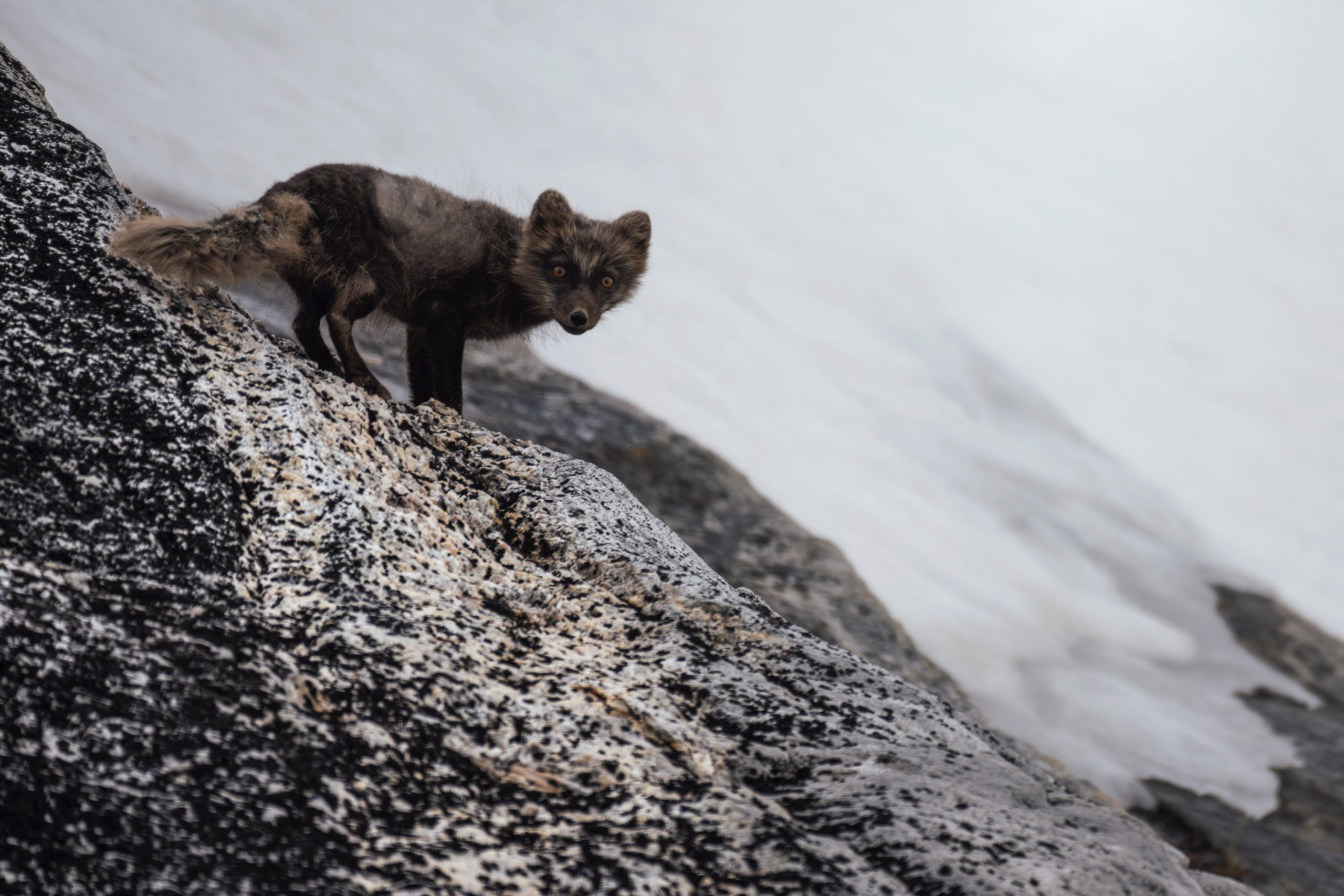
Time in my sleeping bag always seemed more filled with sound than on the water. Connection to the ice made the scrapes and scuffs of distant birds and mammals seem close by. One night I awoke to a scratching that seemed so heavy I feared a polar bear, but then I spotted an Arctic fox some 50m away.
Oceans, whether wet or frozen, are often sites of connection rather than separation. A hundred metres inshore, the birds and mammals round the Atlantic will be wildly different, but in the intertidal zone and at sea there is far more similarity. The humpbacks I watched in Greenland could have been the same individuals I watched breach in the Antilles and flow through waves off Ireland.
- "You may experience headaches, nausea, vomiting, chest pain, irregular heartbeat, and fluid on the lungs…" 10 deadliest animals in the Atlantic Ocean
- How do whales mate? For animals as big as whales, sex can be a tricky affair and lengthy affair - here's how they do it
I was also struck by the strange mix of familiarity and difference among the birds. Fulmars skirted Greenland’s ‘cliffs’ exactly as they would at Yorkshire’s Flamborough Head but, instead of rock, these were 100m precipices of turquoise berg.
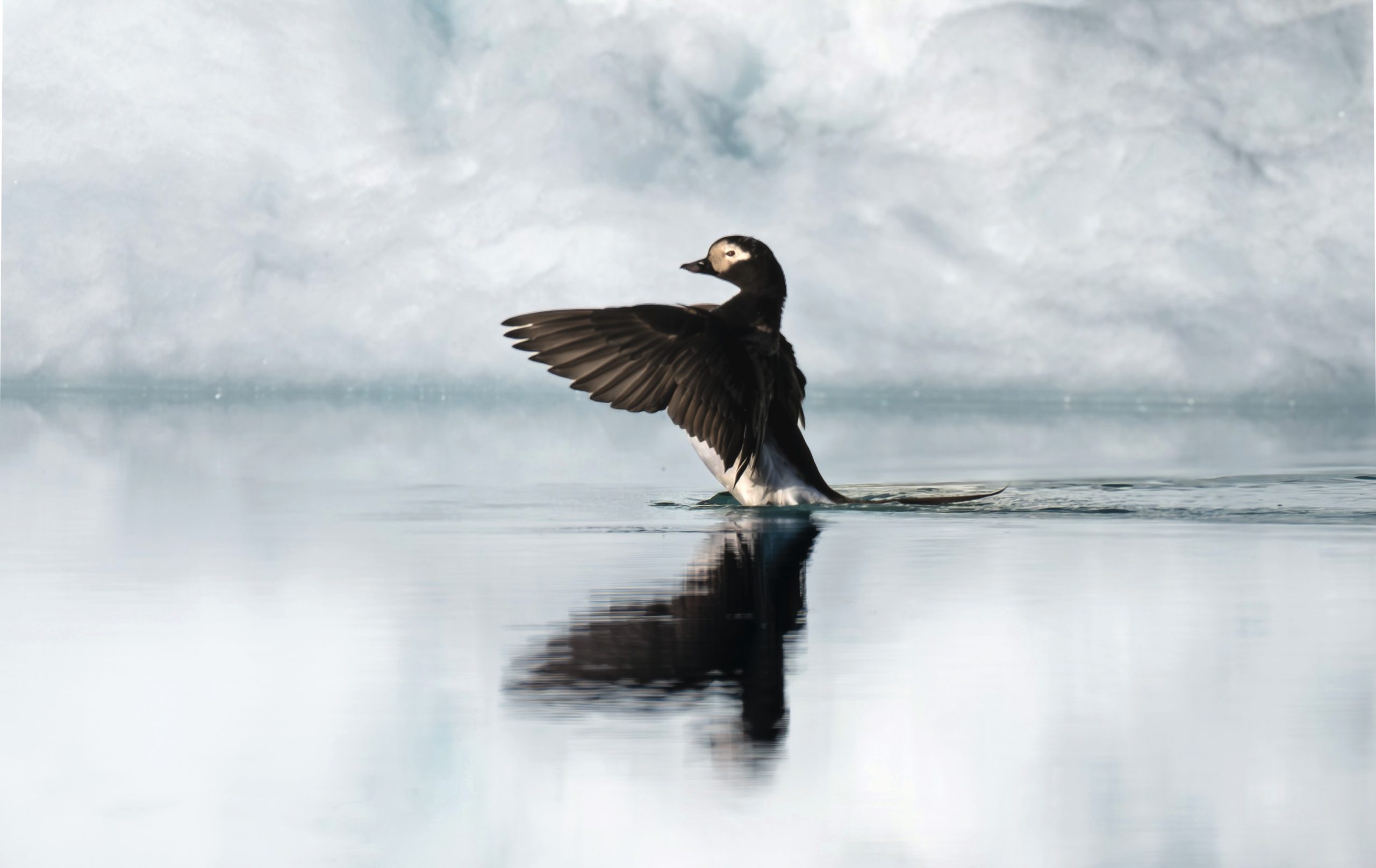
Mergansers and long-tailed ducks were everywhere, but were regal, vivid and far too proud to be afraid of a kayaker. Long-tailed ducks weren’t grey, as in Scotland, but pristine black and white. They behaved differently, too. I’d hear a strange throaty yodel behind an iceberg and they’d flow serenely into view on a tidal stream. Other times they’d be asleep, drifting past in huddles on flat chunks of ice.
This involvement in busy worlds of wild things is the greatest pleasure of being low in the water in a self-powered boat. When seas are rough, grey seals or Risso’s dolphins flash past at such dizzying speeds you can’t be certain if they are real or imagined.
On rolling swell, you rise and fall twenty feet in seconds and can pass through unexpected flocks of auks, ducks or shearwaters with barely time to register their presence. But in Greenland’s stillness, every encounter felt slowed and intimate.
The combination of travelling these scenes and talking to Greenlanders left me in awe of their connection with the ocean, and their knowledge of it – knowledge that has been marginalised for centuries.
As the poet, kayaker and former Minister for Education Katti Frederiksen, puts it: “Colonial education left Inuit ignorant of how advanced they really were”. The world needs the knowledge of coastal communities, whose sense of how to live with other species is uniquely equipped to help our planet to thrive.
Discover more wildlife stories from around the world:
- This terrifying giant ocean predator lurks in the shallows of this remote haven – with a shocking, lethal trick: It hunts on land
- "Before I had a chance to shout for help, a monkey jumped on my head and picked out the wasps in my hair one by one"
- New UK dinosaur discovered in London’s Natural History Museum


