The natural world is full of astonishing spectacles and behaviours – and while we have already unravelled many of its mysteries, there’s no doubt that there are more discoveries to be made.
- These are the best wildlife documentaries to stream on BBC iPlayer now
- Sir David Attenborough: 5 magic moments on film
One of the ways we can learn more about the animals of this world is to film them in their own, undisturbed habitats. The BBC has become renowned for this, as part of its pioneering natural history programming.
This dates to the 1940s, when its natural history content expanded from radio to TV. By 1957, the Natural History Unit was formalised as a hub for wildlife programming.
Now, the department is celebrating 20 years since its groundbreaking series Planet Earth. Its epic scale, focus on unusual species and behaviours and cinematic quality made it both a critical and commercial success. Planet Earth’s legacy can be seen in video clips that continuously surprise viewers around the world, as well as the follow-up series Planet Earth II and Planet Earth III.
- “One of the most memorable moments in British television.” David Attenborough’s most ambitious project celebrated in new TV film
- “I know it’s natural but it’s bloody hard to watch.” There’s one rule in wildlife filmmaking – but this BBC team broke it
10 animal behaviours filmed for the first time
Vampire squid glowing in the dark
In the deep sea, many creatures have developed a practical way of navigating its dark depths: they can glow in the dark. And the vampire squid is no exception. To confuse predators, and to perhaps make a quick getaway, bioluminescent bacteria shines from pockets on its arms.
- Scientists extract DNA from 'vampire squid from hell’ – and uncover 300-million-year-old secret
- Staggering footage shows 'vampire' creature drifting through deep ocean
Nautilus hunting in the dark
The nautilus is probably one of the weirdest octopuses in the world. Firstly, it creates a ‘shell’ of sorts. Secondly, its shell contains gas-filled flotation chambers that controls its depth when moving between deep and shallow waters to feed. It also moves across the sea using a jet of water squirting from a siphon.
- Weirdest octopuses: meet these strange sea creatures, including one that pretends to be a snake and one with a detachable ‘penis’
- ‘Inflatable’ feet, walking on water and making a living raft: unusual (and downright bizarre) ways animal move around
Venomous sea snakes hunt with fish
As sea snakes aren’t fast swimmers and their prey (smaller fish) is much quicker, they’ve developed an incredible hunting strategy: by teaming up with big fish. Working together, they drive smaller fish into the nooks and crannies of the seabed. There, they become easy prey for the sea snakes, with the larger fish waiting for any escapees.
This is an example of mutualism, where different species work together for the mutual benefit of both.
- Deadliest sea snakes on the planet: These beautiful sea serpents are so lethal they can kill with one bite
- “Hostage-takers, toxic manipulators and thieves”: the surprisingly sinister truth about animals that live together
Parasitic cordyceps take over
You really wouldn’t want to encounter a bullet ant in the jungle. They have the most painful sting on the planet, which can leave humans in agony for hours – but that doesn’t mean they’re indestructible.
Spores from a parasitic fungus called cordyceps take over an ant, feeding on its innards. After the ant has died, the fungus will send a fruiting body out of its body, allowing more spores to spread. The cordyceps fungus is so effective that it can wipe out an entire ant colony.
- The deadliest parasites in the world: terrifying creatures you will want to avoid
- Cordyceps and Orphiocordyceps: the zombie fungi made famous by The Last of Us
Wolves hunt caribou
In the far north of Canada, thousands of reindeer (or caribou) migrate during the winter. And while they’re almost constantly on the move, they face threats from wolves, who can keep up the chase for over 10 kilometres. The Planet Earth team managed to film an entire hunt for the first time, thanks to the long lens capability of a camera system mounted on a chopper.
- It can run faster than some passenger trains and migrates 1,200km a year – meet the real-life sleigh pullers
- Ultimate guide to wolves, a deadly apex predator: From Arctic hunters to forest stalkers, here's all you need to know about the dog's wild cousin
Snow leopard hunts markhor
Often found in the Himalayas, the snow leopard is an elusive big cat that is perfectly at home on remote and steep slopes. But while the snow leopard finds the dizzying heights reasonable, this does make it a particularly difficult creature to film. However, the Planet Earth team managed to capture the first close-up images of a snow leopard filmed in the wild.
- It may look adorable – with its fluffy coat, tail and feet – but don't be fooled as this ferocious predator can leap 15 meters and take down prey 3 times its size
- “I dared not breathe, and my heart was pounding": Photographer recalls dramatic snow leopard encounter in Chinese mountains
Surfing dolphins
On the coast of Western Australia, a pod of eight dolphins developed a particularly unusual hunting method: hydroplaning. By heading to shallower waters, they can eat more fish. But it does leave them at risk of stranding.
- “Beaching here could be lethal.” Dolphins in South Carolina have developed a genius – but deadly – hunting strategy
- Can animals surf?
Lions take down an elephant
Lions don’t usually hunt elephants, but as this footage shows, they can work in a pack to do so if they’re really desperate. They aim for the easier target of a calf – and when one finds itself cut off from its herd, the lions charge towards it.
Polar bear takes on walrus herd
Polar bears are the world’s largest land carnivore and with an excellent sense of smell and a powerful bite force, they’re a powerful apex predator. While they usually hunt seals, they sometimes scavenge on whale carcasses. And if they’re really in need of a meal, they’ll also risk the sharp tusks of a walrus.
Sailfish coordinate to hunt
Sailfish, which belong to the same group of fish as swordfish, can reach speeds of up to 68mph, making them the fastest fish in the ocean. This helps them to hunt large numbers of smaller fish. And to confuse their prey, an unusually large group of sailfish (nearly 100) attempt to raise their dorsal fins with perfect timing.
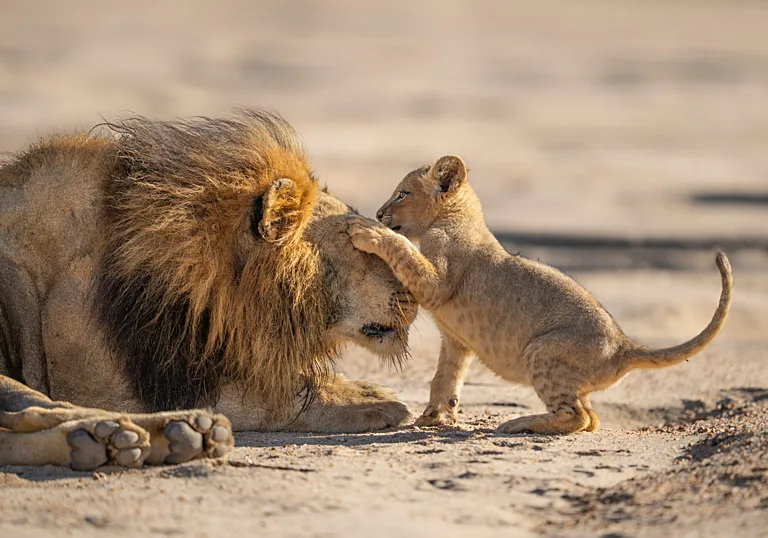
Top image: a still from a video of a lion pride chasing an elephant at night in Botswana. Credit: BBC Natural History/Getty