
As the descendants of the largest terrestrial animals that have ever lived, dinosaurs, it’s no surprise some birds have grown massive. Still, the largest members of this diverse group will shock you, not just with their size, but with their bizarre behaviours too.
10 biggest birds that have ever lived
Elephant Bird
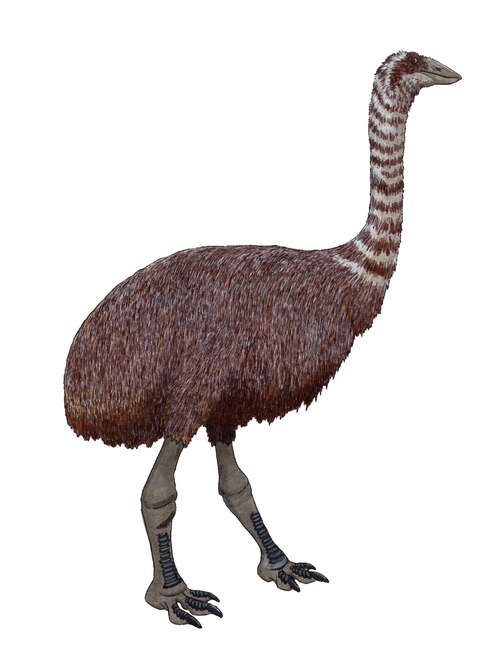
Standing 3m tall and weighing nearly a ton, the largest elephant bird - Aepyornis maximus - was larger than many of its dinosaur ancestors. At this height, it would have rubbed shoulders with an African elephant, which is partly where it got its name.
The elephant birds were a group of giant, flightless birds, rather than a single species. They were native to the island of Madagascar and are thought to have evolved from a smaller, flighted ancestor that settled on the island more than 20 million years ago.
Despite their size and superficial resemblance to meat-eating ‘terror birds’ (more on those later), elephant birds were strict vegetarians, switching between grazing on low-growing plants and browsing higher vegetation depending on the season.
Based on studies of their anatomy, it’s thought elephant birds would have been slow, heavy walkers, rather than fast runners like their distant living cousins, ostriches.
Dromornis
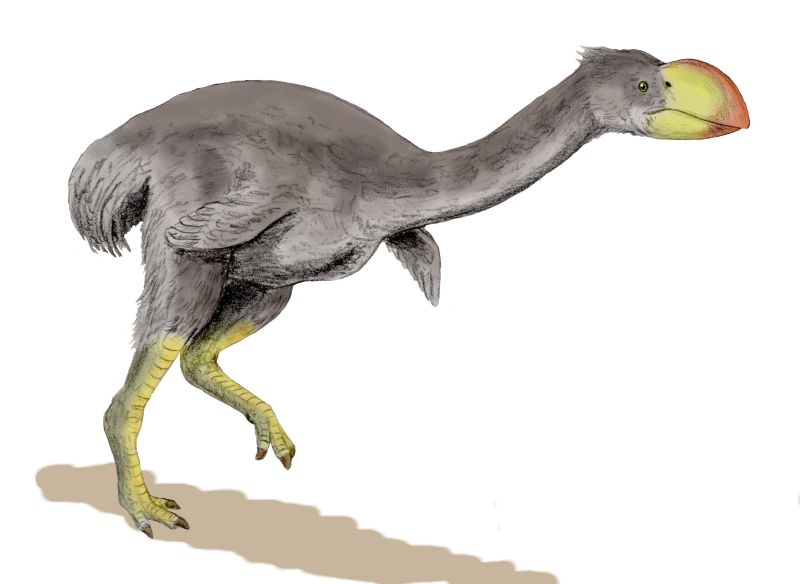
At 3m tall, Dromornis was the same height as the largest species of elephant bird, but weighing just 600kg it was 25% lighter.
Like elephant birds, Dromornis was also herbivorous and bore an uncanny resemblance to ‘terror birds’. However, in place of a hooked beak and sharp talons, it had a huge, blunt bill and hoof-like feet.
Dromornis belongs to a family of birds known as the anseriformes, or waterfowl. This means that it belongs to the same group as ducks, geese, and swans, which has led some to nickname it the ‘Demon Duck’. While it may be distantly related to these waterbirds, it’s thought Dromornis lived in open woodlands, using its massive bill to crush foraged seeds and fruits.
- Should we feed bread to ducks?
- Forest eagle finds goose eggs in nest. What happens next is staggering
- Could a swan actually break your arm?
There are four known species of Dromornis, all of which were native to Australia. They lived from the Late Oligocene (23 million years ago) up until their eventual extinction in the Early Pliocene (5 million years ago).
Pachystruthio
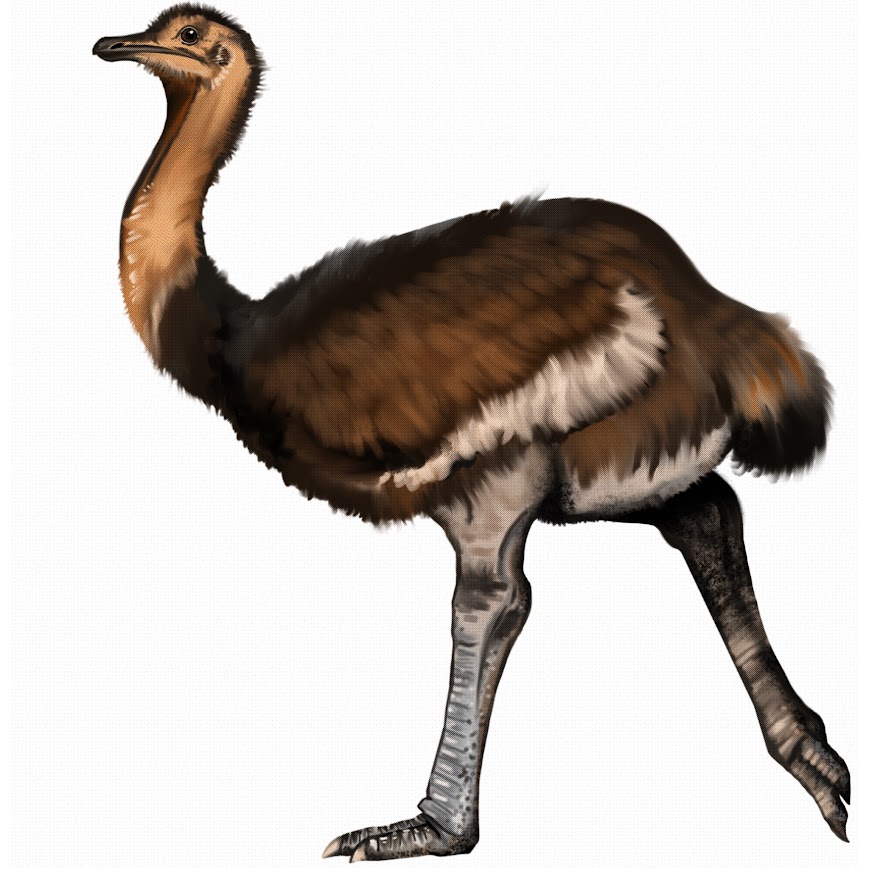
Imagine an ostrich that stood taller than a shipping container, weighed more than a grand piano, and had legs the width of dinner plates - that’s Pachystruthio.
Nicknamed the giant ostrich, Pachystruthio is closely related to living ostriches and even belongs to the same family, Struthionidae, though it’s part of its own distinct, evolutionary branch. They lived across Eurasia from the Pliocene to the Middle Pleistocene (~500,000 years ago), ranging from Hungary in the west all the way to China in the east.
Standing 3.5m tall and weighing 450kg, Pachystruthio is one of the largest birds known to science and perhaps the tallest. At this size, it would have been off the menu for all but the largest Pleistocene predators, such as sabre-toothed cats like Homotherium and Megantereon.
Like living ostriches, Pachystruthio was a grazer that fed on grasses, seeds, and shrubs. However, as a stocky bird, it wasn’t nearly as fast as its leaner cousin, which can reach speeds of up to 72km/hr (44mph).
- 10 petrifying, humongous prehistoric beasts that would have utterly terrified early man, from a 3-metre tall primate to massive deadly eagles
- It weighs as much as a piano and is nearly as tall as a basketball hoop: The 10 biggest, heaviest birds on the planet
Gastornis
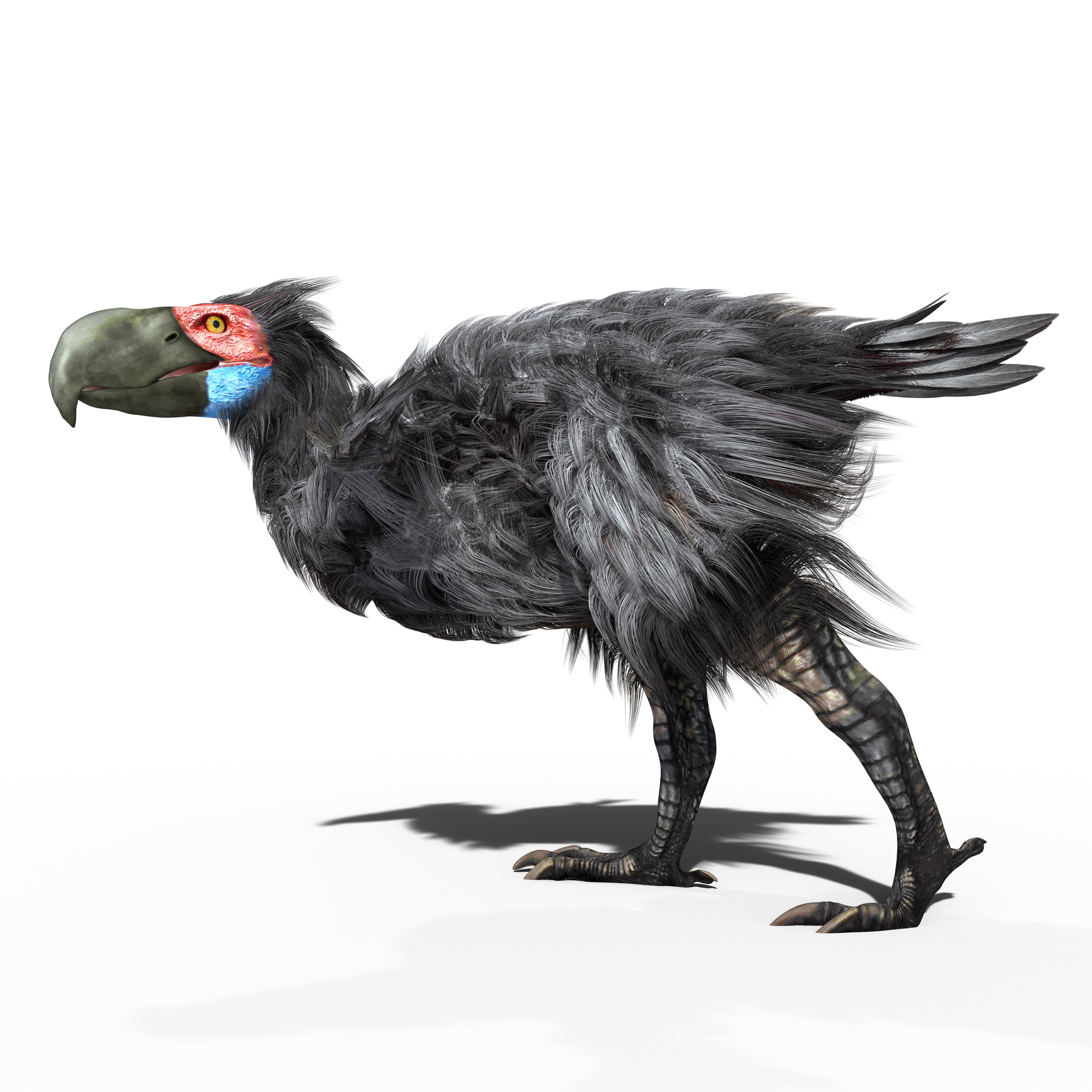
It may be distantly related to Dromornis and also be a waterfowl, but Gastornis belongs to a much deeper, early-branching sub-group that lived in Europe, Asia, and North America from the mid-Paleocene (60 million years ago) to the mid-Eocene (41 million years ago)
From its discovery in the mid-19th century to the early 21st century, many scientists believed Gastornis was an ambush predator that preyed on small mammals, famously the early horse Eohippus.
However, a 2014 study suggested it was most likely a herbivore, based on an examination of the calcium isotopes in its bones. A later study in 2024 found evidence of gastroliths (i.e. stomach stones) in a specimen of Gastornis, confirming its herbivorous diet.
The largest known species of Gastornis is appropriately named Gastornis giganteus. It’s estimated to have reached heights of 2.15m and weights of more than 200kg.
Giant Moa
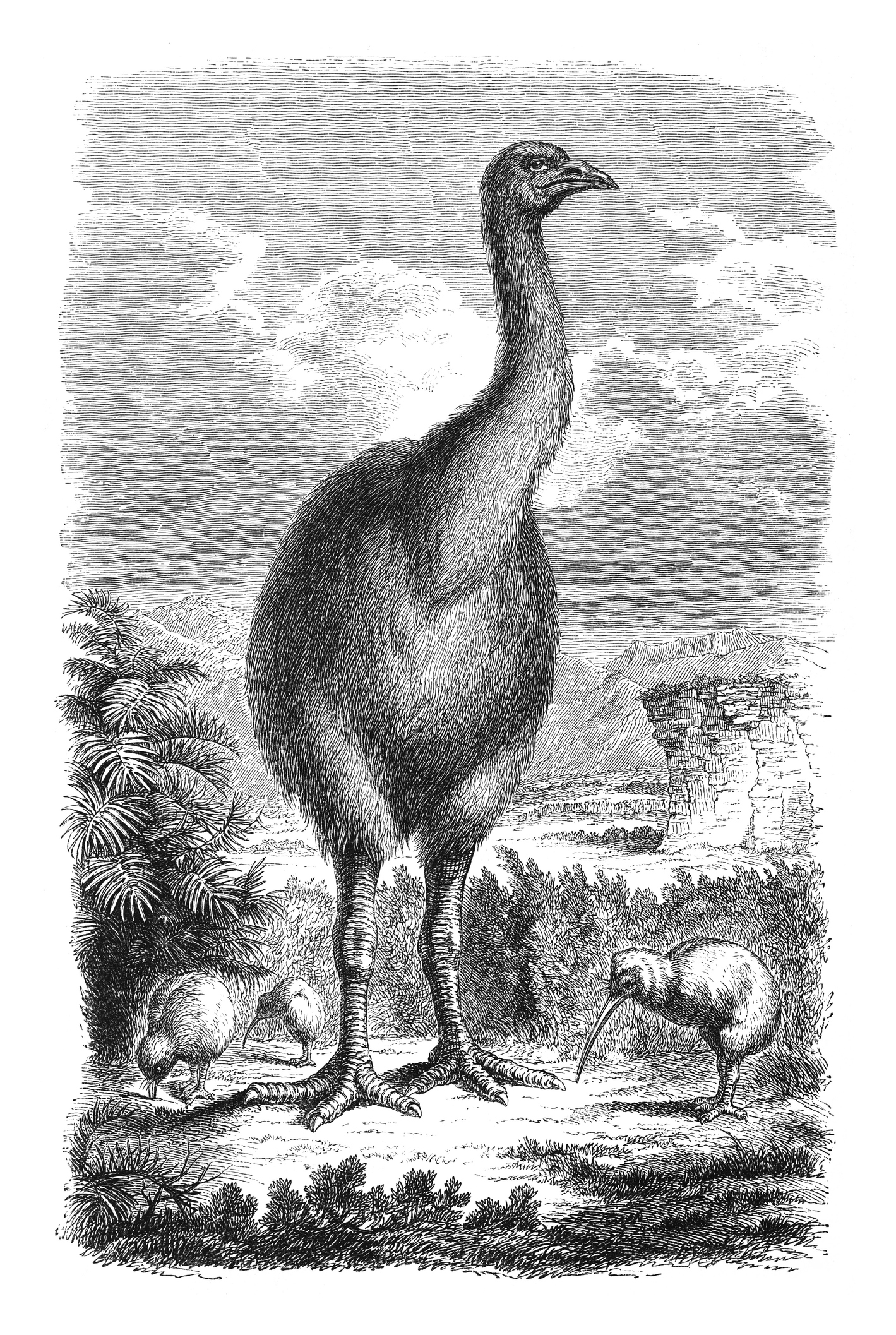
They may have gone extinct more than 500 years ago, but moas are still one of New Zealand’s most recognisable animals - up there with their distant cousins, kiwis, as an icon of the country’s prehistoric past.
This endemic group of large, flightless birds belong to the same family of birds as ostriches, emus, and rheas - the palaeognaths - but their closest living relatives are actually tinamous, the only living members of their group that can fly.
There are nine distinct species of moa. The largest, Dinornis, is known as the giant moa - it stood 3.5m tall with its neck outstretched and weighed up to 230kg. The smallest species, the bush moa (Anomalopteryx didiformis), was about the same size as a turkey.
- Meet the world's deadliest-ever eagles, including a 18kg mighty raptor that terrified New Zealanders until its extinction in the 15th century
- At 3.6 metres tall, this prehistoric giant is Earth's tallest bird ever. Now 600 years after its extinction scientists are trying to bring it back... Will they succeed?
The giant moa was a herbivore and filled a similar ecological niche to large browsing mammals in other countries. Like large browsing mammals, it was also targeted by humans as a source of meat. After humans arrived in New Zealand between 1250 CE and 1300 CE, it took just 100 years before moas were hunted to extinction.
Terror Bird
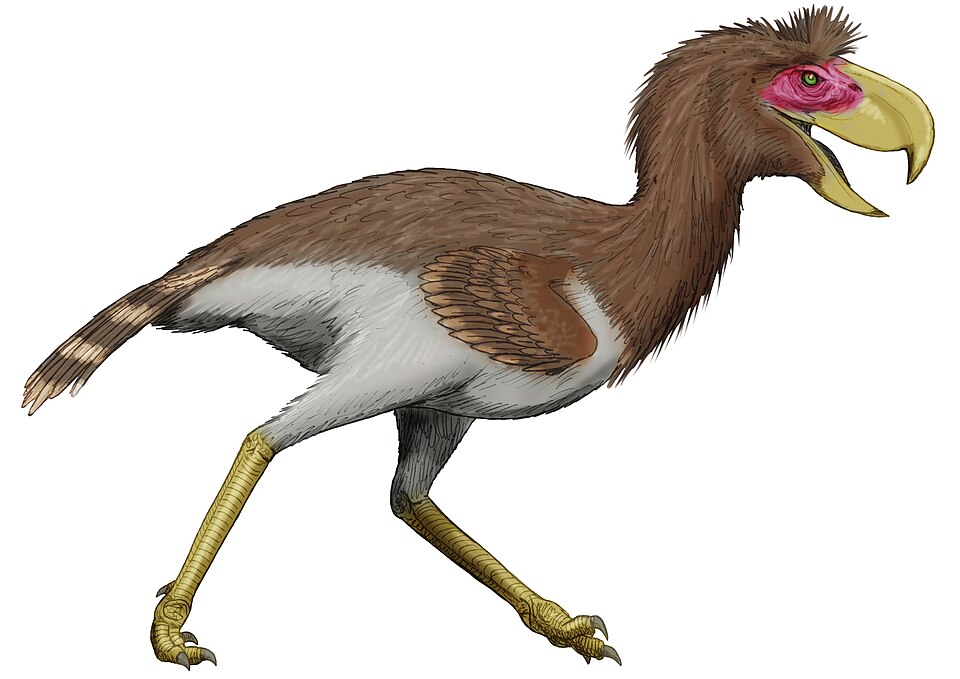
The non-avian dinosaurs went extinct 66 million years ago, but 20 million years later their spiritual successors ‘returned’, spreading across South America and southern parts of North America. These giant, meat-eating birds are known as the phorusrhacids, or ‘terror birds’.
As a group, terror birds ranged widely in size. The smallest species stood just 1m tall, while giants like Paraphysornis, Devincenzia, and Titanis possibly reached 3m tall and weighed close to 200kg.
And they weren’t just giants, terror birds were fast too, not to mention equipped with some of the deadliest weaponry of any prehistoric animal.
- Fossil of giant, 3 metre tall, flesh-eating 'terror bird' found in Columbia - and scientists think something even bigger killed it
- These prehistoric terror birds – with 'walking bolt cutters' for beaks – would have petrified early humans
They had large skulls with hooked beaks and sickle-shaped claws reminiscent of those wielded by Velociraptor. The only saving grace for their would-be prey is that they couldn’t fly - that said, neither could the deer-sized grazing mammals they hunted…
Based on studies of their anatomy, scientists think terror birds were pursuit predators capable of running at speeds up to 64km/hr (40mph). After catching up with their prey, it’s believed terror birds used their hooked beaks to physically ‘peck’ them to death.
Kumimanu
Tipping the scales at nearly 160kg, this giant penguin weighs the same as a professional sumo wrestler!
Kumimanu is known from two different species; the largest, Kumimanu fordycei, lived 60 million years ago was described as recently as 2023 based on finds of a spine, shoulder blade, knee, and an almost complete right arm on New Zealand’s South Island.
- Forget today's cute penguins – this prehistoric monster would have stood shoulder-to-shoulder with Hollywood hardman Jason Statham…
- Scientists X-rayed ancient penguin bones from remote Antarctic island. Here’s why
While heavy, Kumimanu reached heights of just 1.6m, making it one of the shorter birds on this list. Its bulk was its most important feature, however - by carrying a few extra pounds, these giant penguins were able to dive deeper than modern, lighter penguins. They were also better insulated, allowing them to spread to colder environments close to Antarctica.
Kumimanu wasn’t the only giant penguin from prehistory; Palaeeudyptes klekowskii may have been even taller at 2m. This so-called ‘mega penguin’ was nowhere near as heavy as Kumimanu though, weighing in at just over 100kg.
Argentavis

So far, every bird on this list has been flightless. At roughly 1.8m tall and weighing the same as an average adult man (~75kg), you’d expect Argentavis to be flightless too - but it wasn’t. It could soar for hours on end, only flapping its wings during takeoff.
Argentavis had a wingspan that measured approximately 7m across, making it the same size as the highly popular, aerobatic biplane known as the Pitts Model 12.
- "It resembled a biplane when airborne, with a wingspan that measured a massive 7m across. It was incredibly heavy too; tipping the scales at 72kg"
- Meet the mighty, majestic Andean condor, one of the world's most powerful and impressive birds and at 15kg the heaviest bird of prey
It lived in Argentina during the Late Miocene (~7 million years ago) and is thought to have filled a similar niche to the Andean condor, a New World vulture that is found throughout the Andes mountains and adjacent Pacific coasts of western South America.
Argentavis was so big that scientists think it would have needed to take a short run-up before taking off, using clifftops and slopes as launchpads. Having such large wings would have also made it difficult for it to move on the ground, which suggests it was more likely a scavenger than an active, nimble predator.
Rodrigues Solitaire
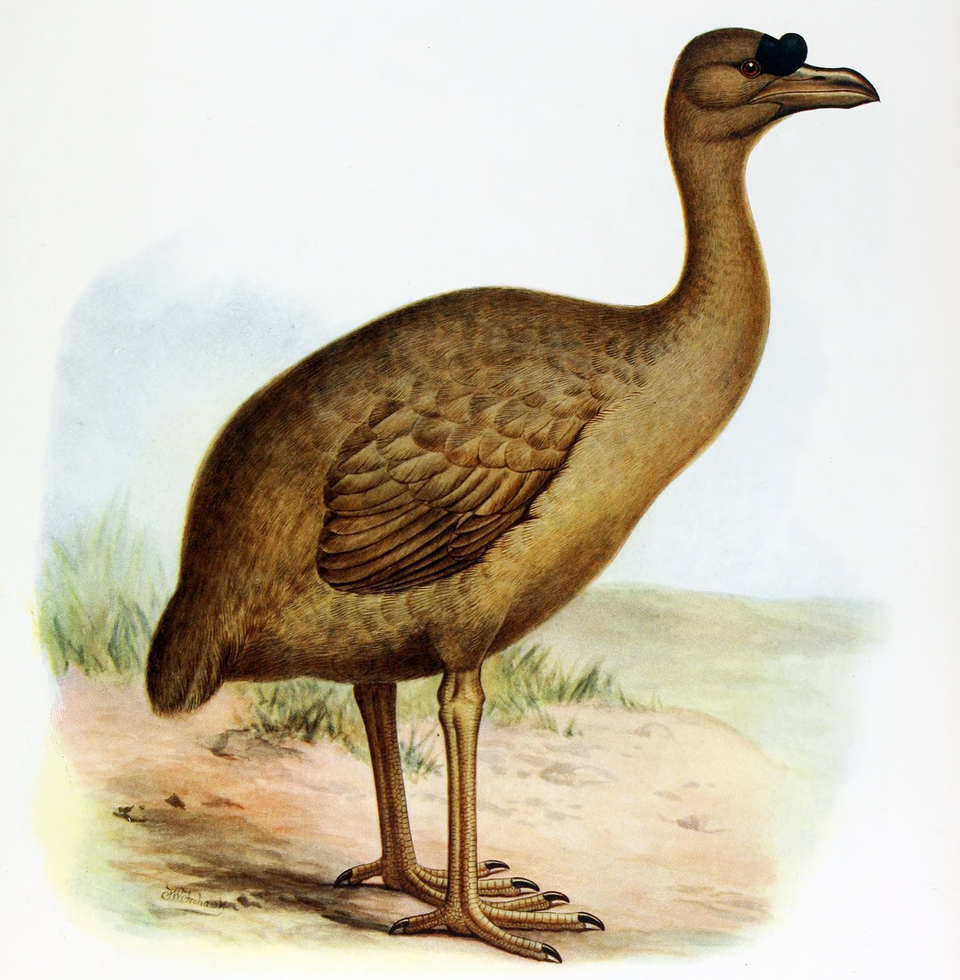
The Rodrigues solitaire (Pezophaps solitaria) isn’t nearly as well-known as its cousin the dodo, but at nearly 1m tall and weighing up to 30kg, it was almost twice the size and comparable in size to a modern emperor penguin.
Like the dodo, the solitaire is a product of an evolutionary phenomenon known as ‘island gigantism’ - where species arrive on an island and, freed from the predators and competition they’d face on the mainland, gradually grow to larger sizes over successive generations.
The solitaire was endemic to the island of Rodrigues in the Indian Ocean, roughly 600km east of Mauritius, where the dodo lived.
Both of these flightless birds faced extinction shortly after humans arrived on their islands. In the case of the dodo, it took just 64 years after they were discovered by Dutch sailors before they were hunted to extinction. The solitaire may have lasted a little longer, surviving for roughly 150 years.
Pelagornis
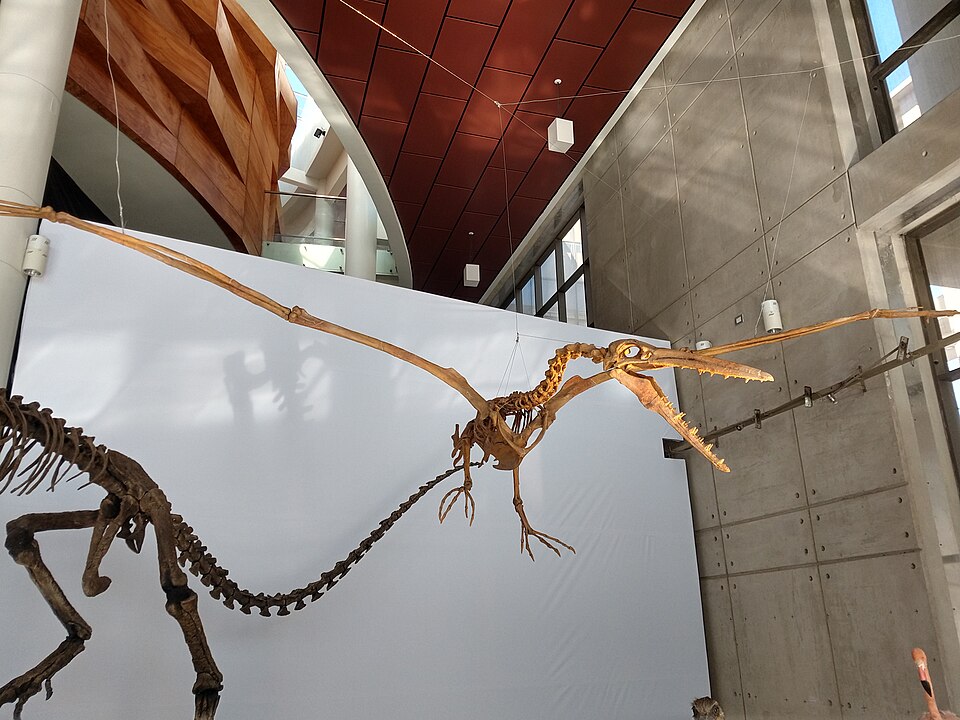
At 3.6m in length, the wandering albatross has the largest wingspan of any living bird. Pelagornis, an extinct seabird that lived during the Oligocene (28-25 million years ago), had a wingspan more than twice the size, measuring 7.4m from wingtip to wingtip.
Like albatrosses, Pelagornis spent most of its time at sea, gliding on air currents close to the water’s surface.
Some estimate it was able to fly at speeds of nearly 40mph and travel for several days without ever having to land - wandering albatrosses do something similar today and can go years without ever touching land (though they may occasionally land on water).
Pelagornis belongs to a group of strange, prehistoric birds known as the pseudotooth birds, named after the tooth-like ridges on the margins of their bills. These aren’t teeth but they’re thought to have served a similar function, helping Pelagornis catch and grasp slippery fish.
More wildlife stories from around the world:
- It clatters like a machine gun, has a deadly prehistoric-looking beak, can live for 25 years and can grow up to a whopping 1.5m tall with a wingspan of 2.6m
- Ginormous king penguin colony filmed on remote Atlantic island. The sound of it is ear-splitting
- "Females frequently take not one, but two ‘husbands’ and have been documented copulating over 250 times with both in order to start a family"


