A haunting twilight world of dark waters, flesh-eating plants and North America's largest free-roaming predators, Okefenokee Swamp has a strong claim to be one of the US's last great wildernesses.
The air here throngs with the chirrups of cricket frogs and mournful cries of sandhill cranes, while innumerable insects hum among the water-plants. Haunting tendrils of Spanish moss drape from the cypress trees that rise from the black waters. Large portions of its twisting waters and tangled thickets - known as hells - are almost inaccessible to humans except by air.
The name 'Okefenokee', taken from an original native American description, means 'land of bubbling water' or 'land of trembling earth'. Comprising 1740 sq km of waterways, prairies and swamp forest in south-eastern Georgia and tipping into Florida, the swamp has survived attempts to drain its waters and fell its forests. It has even rebounded from massive wildfires and burning actually seems to part of the natural cycle of the regeneration that maintains the swamp's circular lakes and prairies.
- It straddles two US states, contains 15,000 alligators, and is home to a snake as long as a bed
- "Hippos and crocodiles have been known to capsize boats and kill the occupants..." 10 most dangerous, deadliest swamps on the planet
- Exquisitely preserved animal pulled from ancient swamp in Illinois. Strange dimples on body reveal what killed it
The Okefenokee region was once a shallow basin on the ocean floor but a build-up of sediments over time created a huge sand bar that cut the basin from the open sea. Freshwater filled the basin and water-plants, shrubs, thorny vines and trees followed, creating the swamps, lakes, islands and prairies. The water appears black but, on closer inspection is dark brown, almost tea-like. This is 'brewed' from tannins in the peat, the swathes of dead and partially decayed vegetation that have been laid down since the swamp began forming and are up to 3m deep.
The peat often generates methane as it decomposes and this brings chunks of peat to the surface, creating small islands. These are quickly colonies by plants, though the waterlogged islands are relatively nutrient poor so early colonising plants have evolved strategies to compensate. They gain their nutrients through catching and eating insects. Sundews have tentacle-like structure covered in a sticky syrup. When a fly is drawn to the syrup, it sticks fast and the tentacle curls around the insect. Trapped the prey slowly dissolves and its nutrients are absorbed.
A similar process occurs with the pitcher plant. It emits a powerful odour of rotting flesh, which attracts carrion flies to explore its deep well. Once inside, it's hard to escape and the flies end up drowning in the liquid at the bottom of the well. The victims' bodies break down and the plant absorbs what it needs.
- It’s larger than New York State and contains more than 30 billion tonnes of carbon – equivalent to 3 years of global fossil fuel emissions
- "Within a few hours the prey has become a nutritious soup, broken down by digestive enzymes released from the inside of its prison..."
Over time, the peat islands become fertile enough to attract grasses and shrubs that outcompete the pitcher plants and sundews and they must find fresh islands to colonise. Meanwhile, below the water's surface, the free-floating bladderwort catches waterfleas and other minute aquatic creatures in tiny spring-loaded 'bladder' traps. You wouldn't know the bladderwort's dark secret from the pretty yellow flowers it sends above the water.
Bladderwort can be found in the large areas of open water that also throng with thousands of waterlilies. The pads draw air down to the roots of the plant through a hollow stem. Beyond the open lakes, trails of water twist and turn beneath cypress trees, which grow straight out of the water, broad at the base but usually tapering towards the canopy. The cypress's wood is rot resistant.
Beards of Spanish moss hang gloomily from the trees' branches. Despite the name, it isn't a moss or a parasite – or Spanish. It simply uses the tree as scaffold so that it can deploy cup-shaped scales on its fronds to capture moisture and nutrients in the dust carried on the air.
Perhaps the most impressive creature of the Okefenokee is the alligator. There may be over 20000 of these predatory reptiles here, some reaching 4.5m in length and 500kg. Studies have shown that despite having been around for over 1.5 million years, the 'gators' are sophisticated hunters.
They are highly capable of learning, have excellent eyesight and hearing, and their heads are covered in organs called integumentary nerve cells that detect vibrations and changes in temperature and pressure. All these adaptations enable the gator to ambush prey such as white-tailed deer. The gator's front teeth are for gripping, the back teeth for crushing, and the animal has massive strength to grab and roll prey off its feet before hauling it underwater to drown it.
- It has a bite force of 9,452N with jaws built for crushing and holding prey – and can swallow its prey whole
- It's bigger than London, teeming with a staggering 30,000 dangerous alligators and is one of the deadliest lakes on the planet
- Crocodile vs alligator: what's the difference between these two fearsome apex predators?
The Okefenokee Swamp is also home to a variety of snakes, including venomous cottonmouths and eastern diamondback rattlesnakes. Cottonmouths are well adapted to the swamp’s waterways, while diamondbacks are among North America’s largest venomous snakes. They add another layer of danger to this vast wilderness, where dense vegetation and tangled waterways can make wildlife difficult to spot.
- What’s the most dangerous, deadliest snake in the USA? There are quite a few contenders…
- It's one of the most deadliest and feared snakes in the Americas, able to kill a person with one lethal bite…
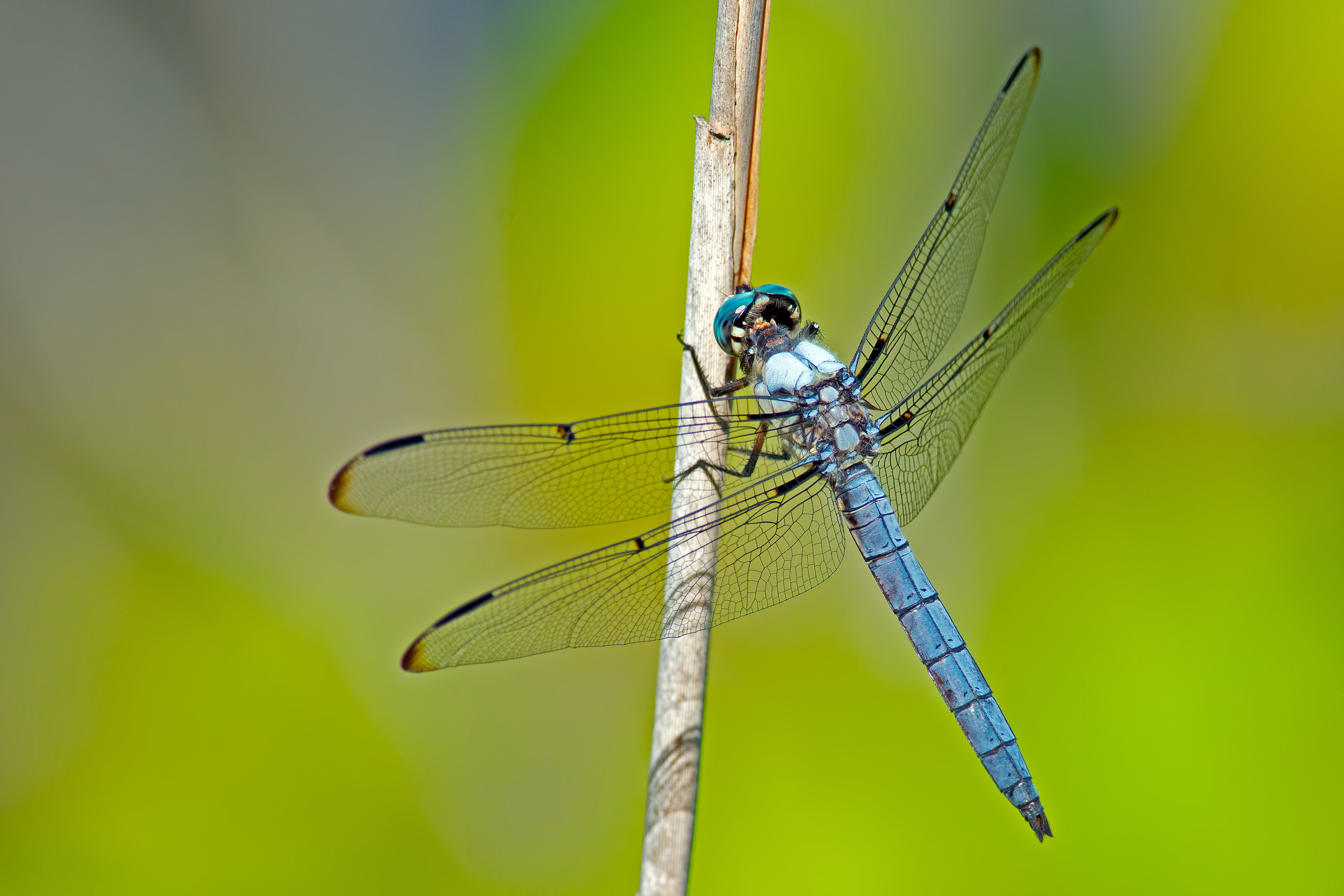
But the swamp's most effective hunter might be from a creature far older than the alligator. Dragonflies have been around for 500 million years and the pond hawk found here is an exceptional air-to-air hunter of flying insects. A single dragonfly can eat up to 100 mosquitoes a day.
Europeans first encountered the Okefenokee Swamp in the 1500s when Spanish explorers reported three nations of indigenous people living there. Later, it would be a stronghold of the Seminole Indians until they were driven out in the 1830s by General Charles Floyd who claimed the land for the state of Georgia. However, it attracted few initial settlers save some folk of Scots or Scots-Irish descent who arrived from the Carolinas and set up communities within the Okefenokee. Calling themselves 'Swampers', they lived self sufficiently and fairly freely until the late 19th century.
In 1891, the Suwannee Canal Company bought the swamp and attempted to drain it to fell the trees. It failed and went bankrupt in 1897. However, some companies had more success. The Hebard Lumber Company among others built a railroad into the swamp and, from 1910 to the 1920s, harvested up to 80 per cent of the swamp's cypress trees. It was such a major operation that a logging township of 600 people people grew up on what became known as Billy's Island.
In 1937, President Theodore Roosevelt established the Okefenokee Wildlife Reserve to protect the remaining wilderness. Since then, the major threats to the region have come from drought and subsequent fire. In 2007, a serious drought on the US East Coast sparked a fire that burned 230000 hectares of the swamp. And yet the Okefenokee has regenerated and the fire has knocked back woody vegetation that was threatening to choke the swamp. Many of its key species, such as the long-leafed pine, are even fire resistant. The major concern is whether climate change encourages too many fires and the swamp will be too severely damaged before it can recover.
top image: Aquatic vegetation and cypress trees, Okefenokee Swamp, Georgia, USA. Credit: Lynne Buchanan/ Getty Images
Discover more wildlife stories from around the world:
- “Inside lay a grisly collection of bodies, hapless creatures that crawled in but never crawled out, encrusted with jewels of halite crystals”
- Tanks, helicopters and guns are sitting 24 metres beneath the Red Sea – Here’s why…
- It’s thousands of years old, as long as a football field, taller than the Great Sphinx of Giza and no-one knows how it ended up at the bottom of the sea