
All life on Earth owes its existence to evolution, which drives diversity of all living creatures on our planet. At the core of it is change and how organisms adapt to constantly shifting environments.
The animals living today had to have originated somewhere – at some point, the first ancestor of the modern cat family was roaming the Earth, as well as the first dog, first horse and so on. But these first ancestors might not have looked or even behaved how you might have expected...
- "Standing at a whopping 3.7m and weighing 4 tonnes they were truly colossal." 10 extraordinary Ice Age, prehistoric, beasts that thrived in a frozen world
- Before they shrunk: 6 huge prehistoric ancestors of animals you know today
5 ancestors of modern animals
First cat
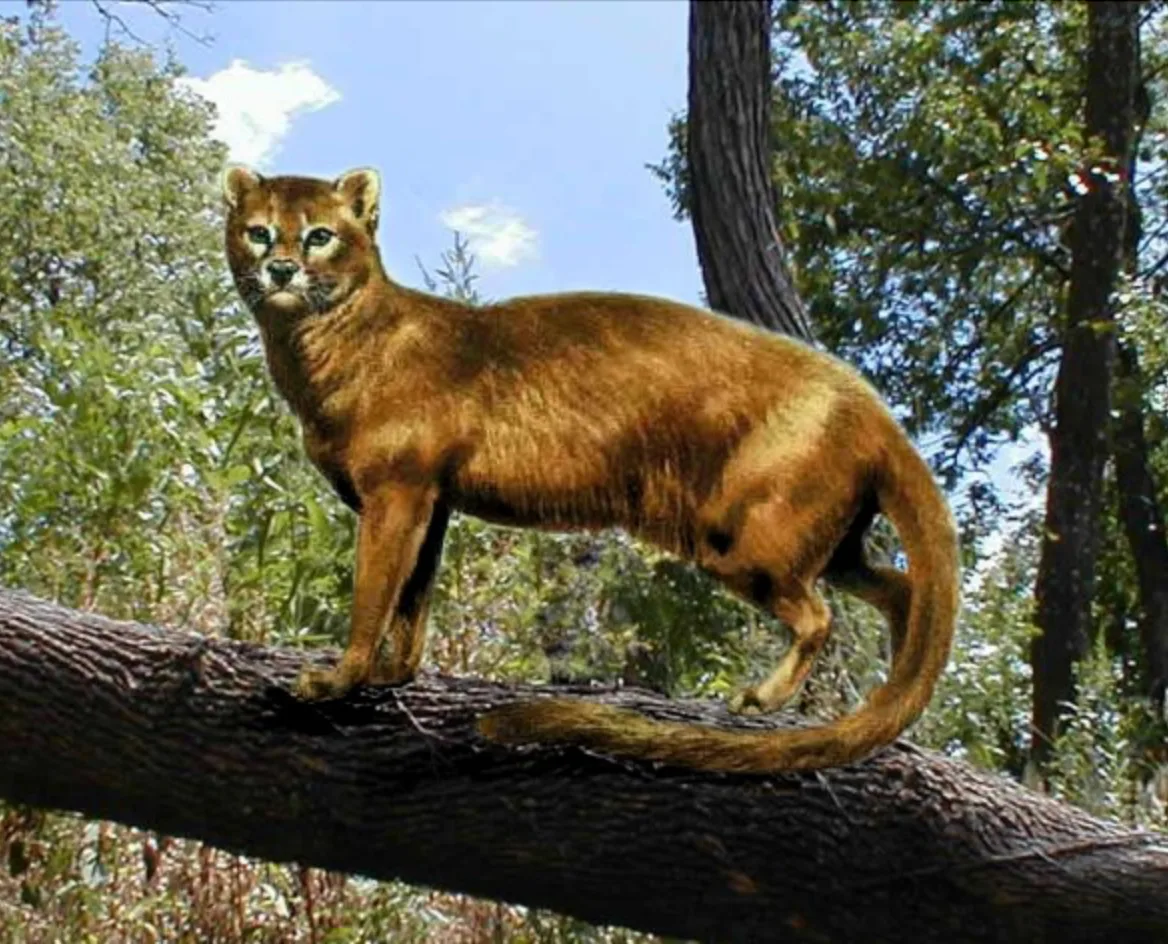
As a group, cats appeared approximately 30 million years ago, diverging from several other groups of cat-like carnivorans, like hyenas, mongooses, fossas, and civets. The first in the long list of felines was Proailurus – from the Greek pro, meaning ‘before’, and ailuros, meaning ‘cat’.
This extinct cat lived in Europe and Asia from the Late Oligocene (30 million years ago) to the Early Miocene (25 million years ago). It’s widely considered to be the first ‘true’ cat and the ancestor of the entire cat family, including everything from extinct sabre-toothed cats to living lions, tigers and leopards.
Find out more here:
First dog
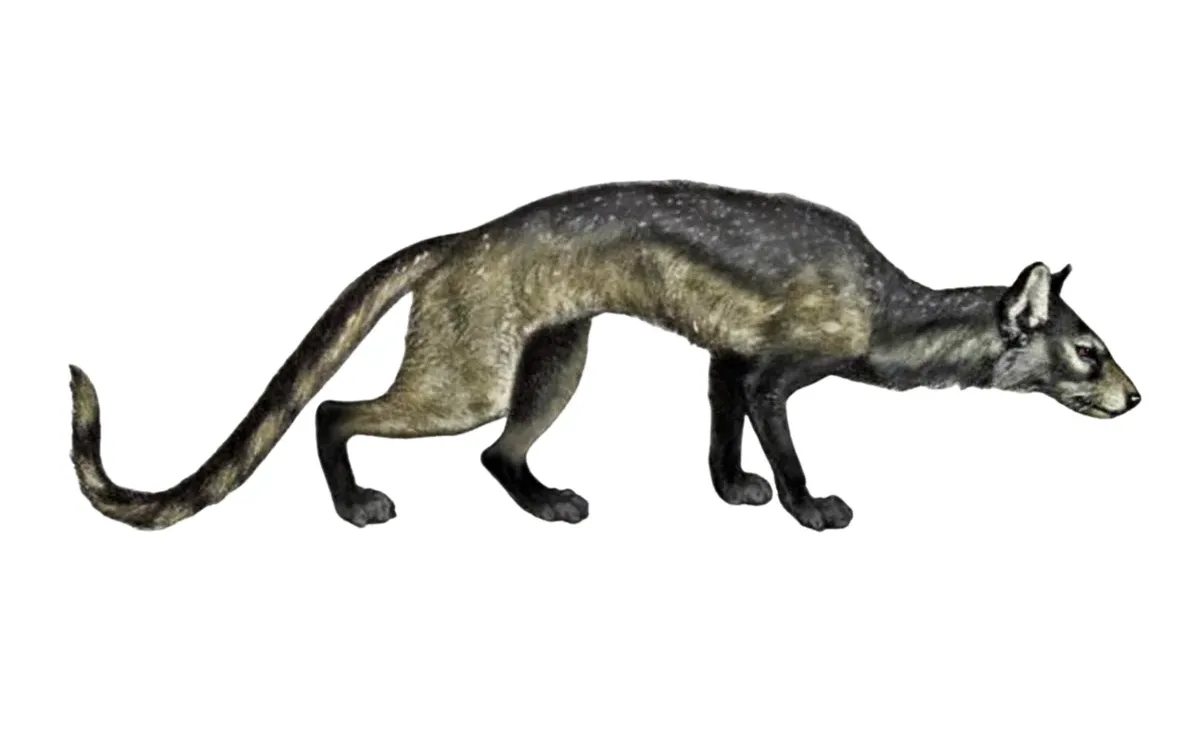
The dog group appeared more than 40 million years ago. Hesperocyon is widely considered the first ‘true’ dog and the founding member of a lineage that now includes domestic dogs, wolves, foxes and more. Its name means “dog from the west” in Greek.
This extinct canid lived in North America from the Late Eocene (42.5 million years ago) to the early Oligocene (31 million years ago).
Find out more here:
First horse
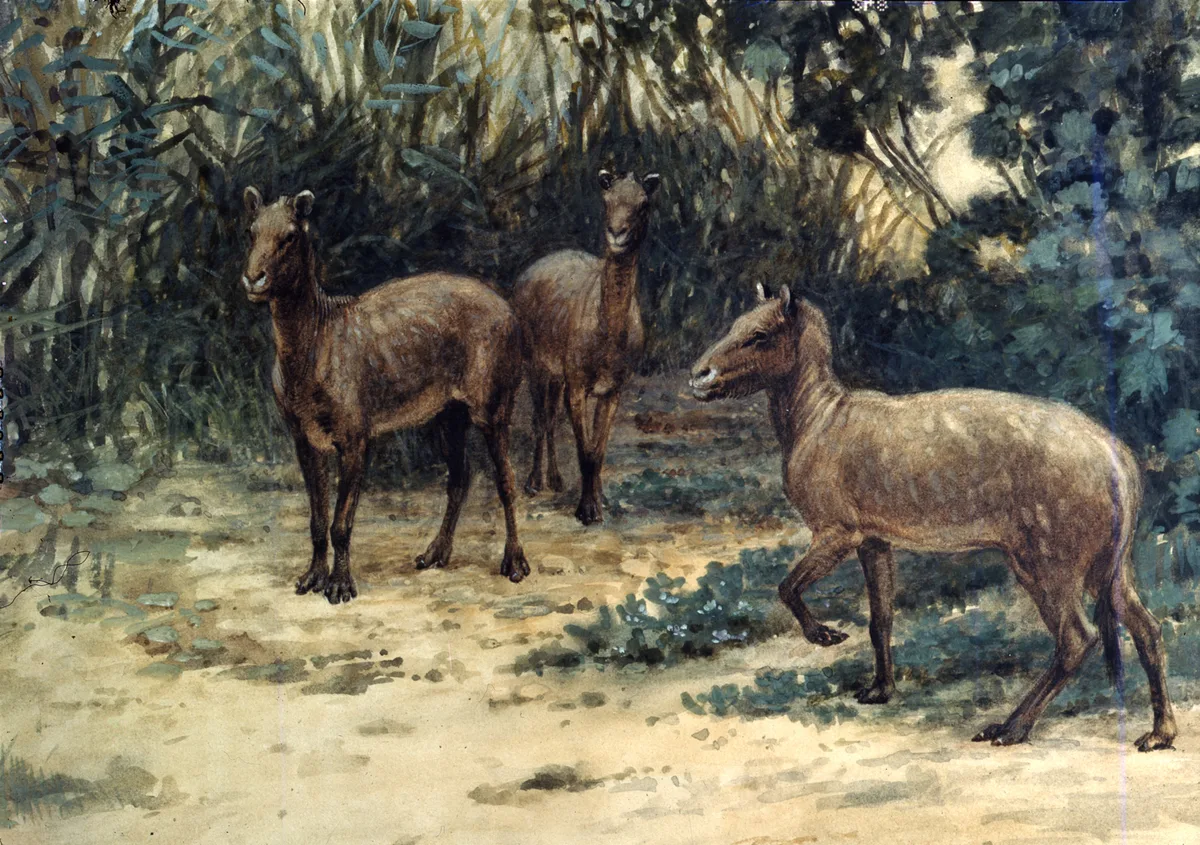
The evolution of the horse is often presented as a simple, straight-forward journey, with Eohippus at the base of the family tree. Eohippus, meaning ‘dawn horse’ in Greek, is an extinct ungulate mammal, widely considered the first ‘true’ horse and the ancestor of all horses that followed.
It lived in North America during the Early Eocene (56-48 million years ago), just 10 million years after the extinction of non-avian dinosaurs.
Find out more here:
First whale
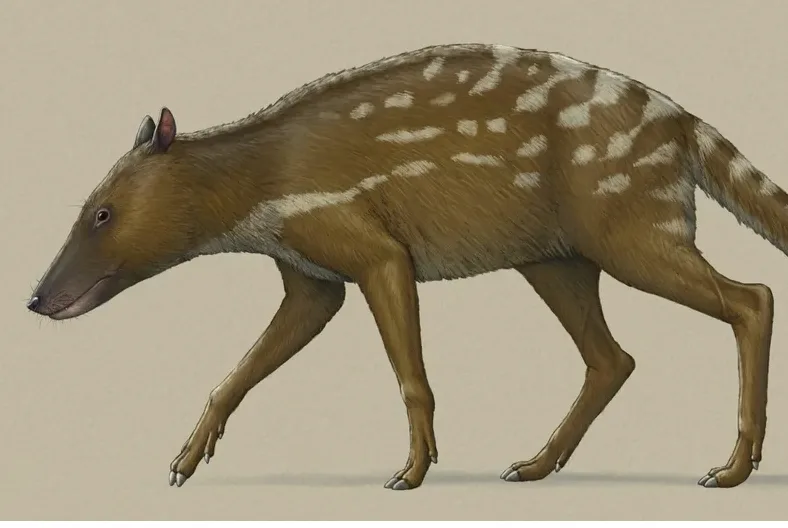
When it comes to whales, evolution truly took some winding roads. The largest animal to ever live, the blue whale, can trace its family tree back to a small, pig-like mammal.
The ancestor of the whale walked on four legs, was covered in fur, and was no longer than a fox. Indohyus (meaning ‘Indian pig’ in Greek) is an extinct, semi-aquatic mammal that lived in Asia during the Middle Eocene (49-45 million years ago).
This ancestor of the modern whale belongs to a bizarre group of mammals known as the raoellids. They’re long extinct, but they emerged from a group still widespread across our planet today: the artiodactyls, including pigs, hippos, antelopes, deer, giraffes, cattle and even whales.
Find out more here:
First shark
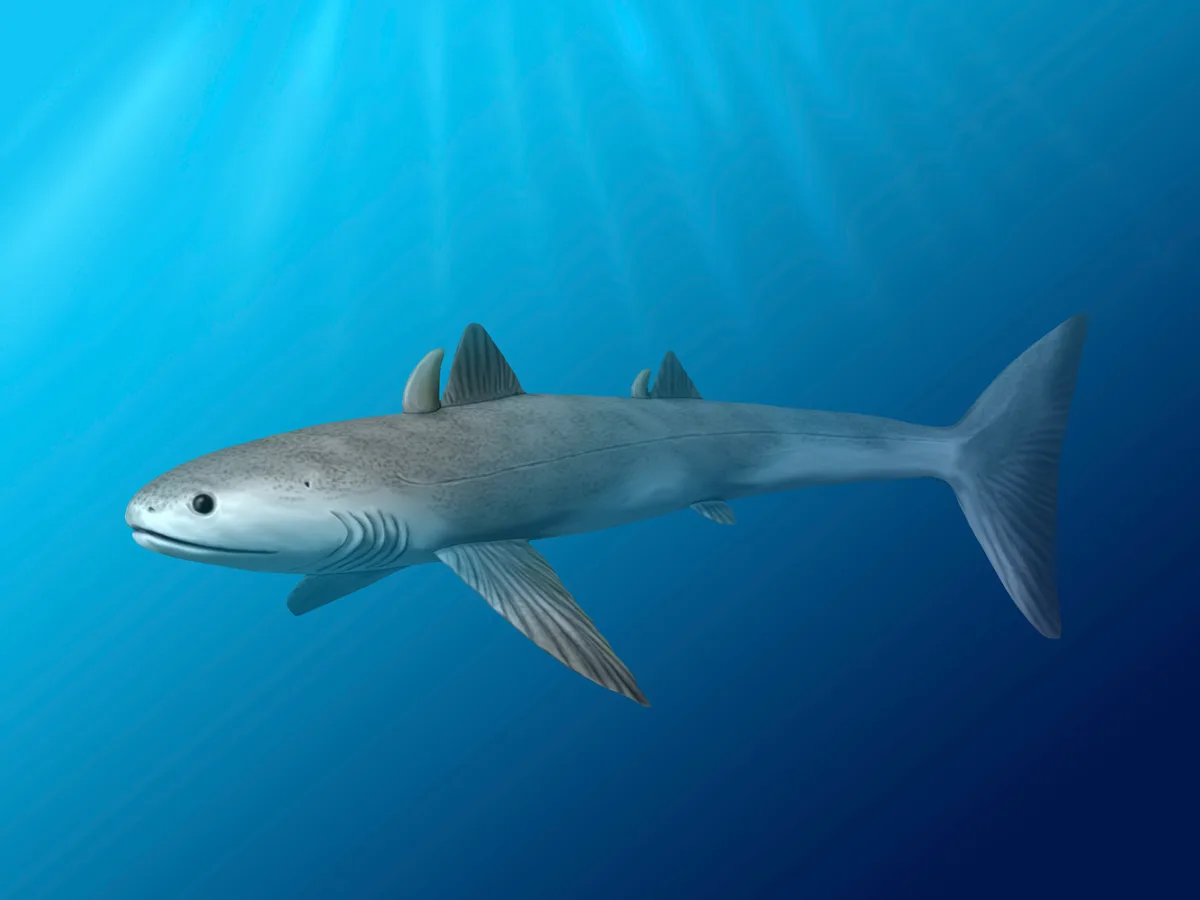
The term ‘shark’ refers to the collection of fish that belong to a wider group known as the cartilaginous fish, characterised by their strange skeletons made almost entirely of cartilage rather than bone.
This group isn’t nearly as diverse as its sister-group, the bony fish, but it does contain numerous types of fish – rays, skates, the lesser-known chimaeras, also called ‘ghost sharks’, and of course – sharks.
As a group, these underwater predators emerged in the Late Ordovician, roughly 450 million years ago. This makes them older than trees and the Atlantic Ocean, among other things – and the shark’s origins remain a mystery. The key to unlocking this mystery lies with Cladoselache.
Cladoselache lived in what is now North America during the Late Devonian (372-359 million years ago), around the same time that the first trees were beginning to establish themselves on land.
Its name means ‘branch shark’, but palaeontologists debate whether Cladoselache was actually a shark at all. It’s often called the ‘earliest shark’, though it is only distantly related to modern sharks and may actually be more closely related to chimaeras.
Find out more here:


