
There are few animals more feared than megalodon; even today, conspiracies of its continued existence in less-explored parts of the ocean make some people think twice before they dip their toes in the water.
Thankfully, for us at least, the largest sharks that ever lived faced extinction 3.5 million years ago, leaving their cousins - great white sharks - as the modern title holders.
Just how big megalodon (Otodus megalodon) was is a topic of fierce scientific debate, so much so that estimates of its size have fluctuated by tens of metres over the last few decades.
- Was Megalodon the world's most fearsome, largest apex predator ever? Meet the super-shark that could swallow killer whales whole but didn't like the cold
- 10 horrifying, prehistoric sea monsters: Discover menacing, deadly creatures that once ruled our oceans – and be glad they don't live today...
A 2025 study estimated megalodon may have reached lengths of 24.3m, which is comparable in size to most superyachts. Unlike previous reconstructions that pictured megalodon as a stocky superpredator, this study based its estimates on the hypothesis that it had a much more elongated body plan, similar to that of mako sharks.
As well as its sheer size, researchers also point to its big teeth - the inspiration behind its name - as evidence that it was a killing machine. These teeth are incredibly robust, measure 18cm in length, and have sides covered in fine serrations that, even after death, decay, and fossilisation, are still sharp enough to effortlessly slice a loaf of bread (trust me, I’ve tried it).
However, megalodon wasn’t the only superpredator that used to stalk Earth’s oceans; during the time of its reign - the Early Miocene (23 million years ago) to the Early Pliocene (3.5 million years ago) - our world’s waters were home to several other giants. These giants not only lived alongside megalodon and competed with them for prey, but may have even killed them too…
6 animals that could kill a megalodon
Other megalodon
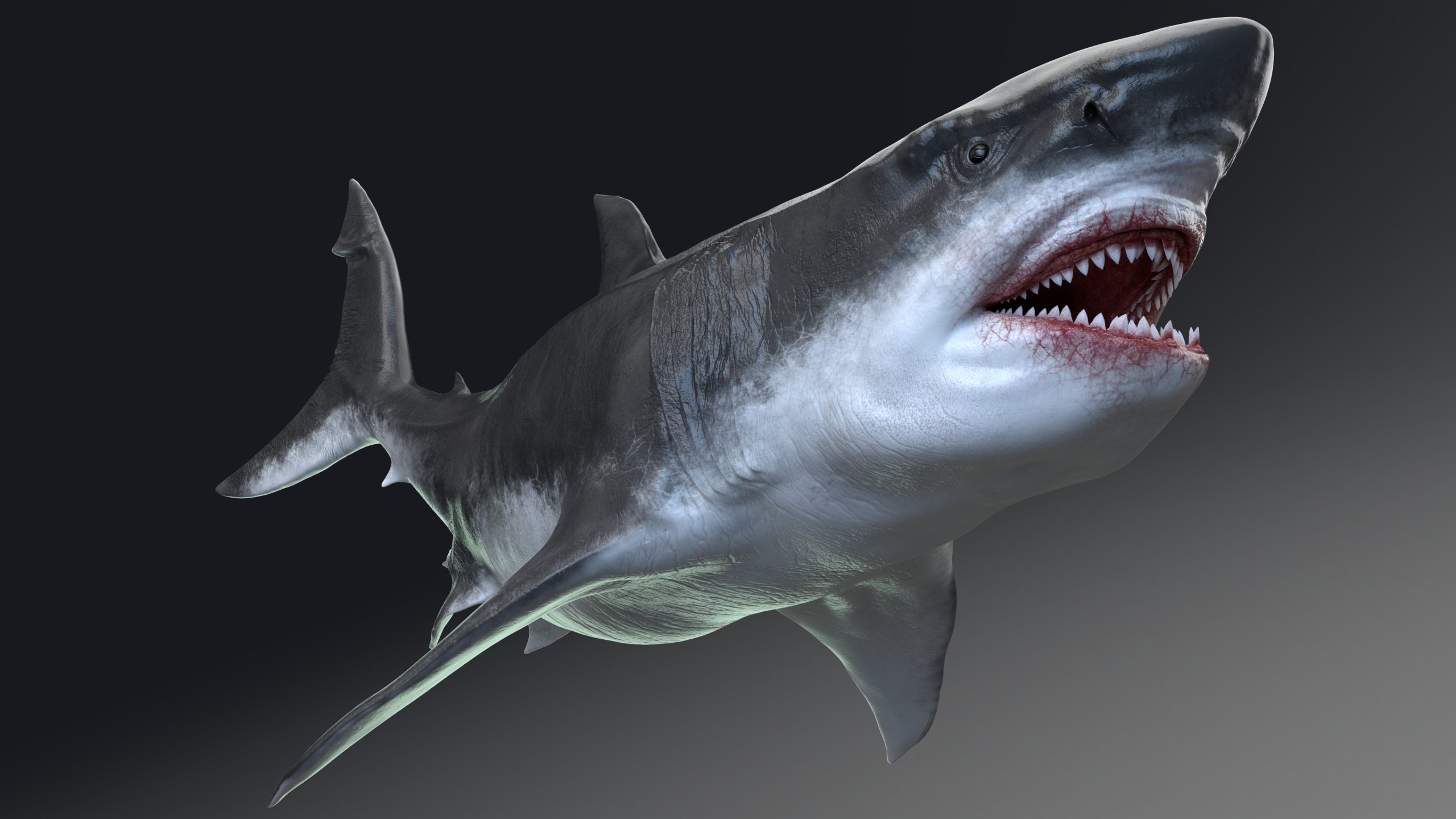
When you’re at the top of the food chain, the biggest danger is often others of your own species, and that would have no doubt also been the case for megalodon. While the largest may have grown to lengths of 24.3m, the average megalodon is only thought to have achieved lengths of 10.5m. At less than half the size, these average megalodon would have been tasty targets for their larger brothers and sisters.
In fact, a 2020 study suggested cannibalism amongst megalodon may have started as early as in the womb. The researchers theorised that megalodon’s large size may be a result of a process known as intrauterine cannibalism, where the larger fetus eats the smaller fetuses around it, resulting in progressively larger and larger fetuses that require the mother to reach even greater sizes.
- 11 gruesome cannibal animals: Discover the surprising creatures that feast on their own kind
- What was the first ever apex predator? Meet the prehistoric Anomalocaris who ruled before the dinosaurs
There’s also evidence that adult megalodon may have sparred with their jaws, based on megalodon-tooth-shaped grooves found on other megalodon teeth. These violent encounters may have often ended in death, given their sheer power. And because prey of such size was relatively scarce in the open ocean, it wouldn’t be surprising if the victor ultimately consumed the loser.
Otodus chubutensis
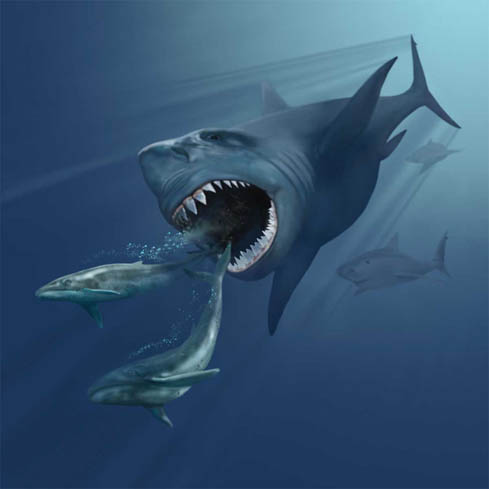
Megalodon wasn’t the only giant shark of its time. Based on finds of similarly sized but slightly differently shaped teeth in the same rocks, we know it overlapped with another beast - Otodus chubutensis. This 13.5m-long megatoothed shark belongs to the same genus as megalodon (Otodus) and is considered by some to be its ancestor; though some argue they may be a chronospecies and part of the same lineage that gradually changed over time.
Like megalodon, O.chubutensis also preyed on large fish, sea turtles, and whales. There’s evidence both sharks may have preyed on their fiercest competitors too, macroraptorial sperm whales.
A 2021 study described the discovery of a tooth belonging to one of these whales. This tooth bore marks characteristic of a bite from a megalodon or an O.chubutensis, leading researchers to conclude the whale in question had been killed in a vicious, head-on attack where the shark had bitten straight through its prey’s skull, crushing its jaws and teeth in the process.
While there’s no evidence of O.chubutensis going head-to-head with megalodon, given its size, teeth, and bone-crushing bite it’s not hard to imagine it often fought its close relative, and sometimes won.
Shark-toothed dolphins
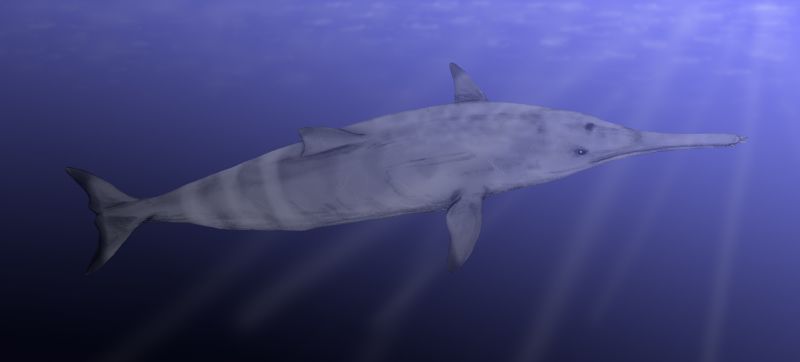
They might sound like the imaginations of a child fascinated by marine predators, but shark-toothed dolphins (Squalodontidae) were real, living from the Late Oligocene (28 million years ago) to the Middle Miocene (15 million years ago). These extinct dolphins ranged across the world and have been found on every continent except Antarctica, suggesting they were amongst the most successful cetaceans of the time.
- As long as a small car, it is one of the cutest, smiliest, most intelligent animals on the planet
- Amazon River dolphin guide: Learn all about this beautiful pink dolphin and how it differs to its ocean cousins.
Not a lot is known about shark-toothed dolphins and what we do know is based largely on partial skulls of Squalodon and Eosqualodon - two of five genera that make up this enigmatic family. Based on these skulls, and a few isolated teeth, palaeontologists think they’re very distantly related to extant dolphins. Some think they may even be more closely related to freshwater river dolphins, despite the fact they were marine.
In terms of size, researchers think shark-toothed dolphins reached lengths similar to modern beaked whales, which can grow in excess of 10m. Like other cetaceans, these extinct dolphins were likely social, swimming, living, and hunting together in large pods. While one may not have been a match for a megalodon, a pod of several, 10m-long shark-toothed dolphins may have made this giant shark think twice before going in for the kill.
Zygophyseter
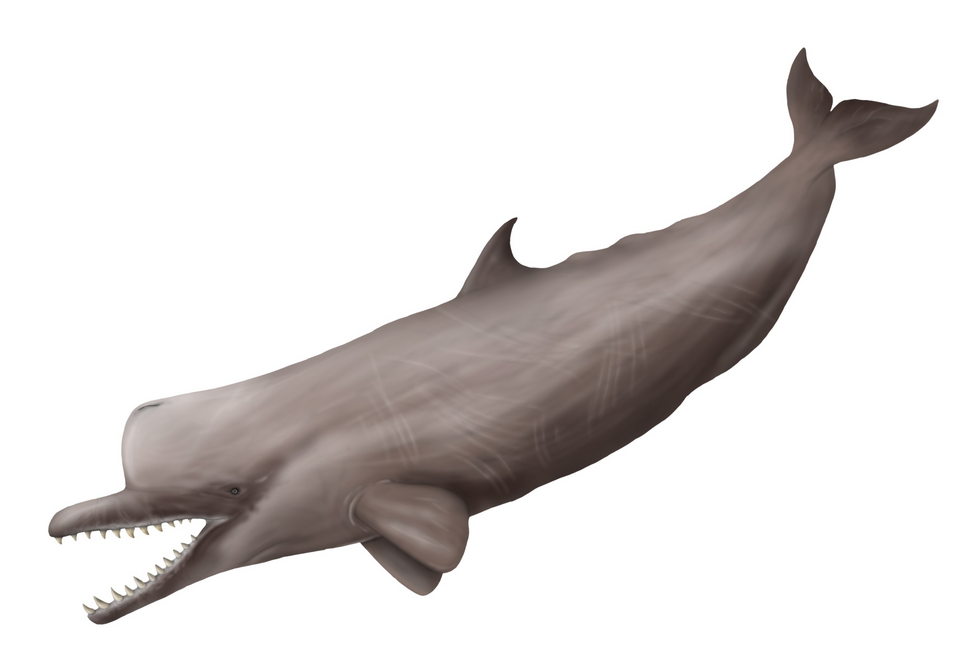
Known as the killer sperm whale, Zygophyseter is essentially what you’d get if you created an animal with a sperm whale’s size and heft and an orca’s hunting habits. This 7m-long cetacean is closely related to living sperm whales, but it’s part of an extinct group known as the macroraptorial sperm whales, all of which are thought to have been apex predators in their respective habitats.
- “No other predator is able to challenge them” – this deadly, intelligent ocean killer works in a team to stun, submerge and launch at its prey
- Killer whales are using dramatic hunting techniques to catch large marine animals in California
According to a 2022 study, Zygophyseter had a bite force comparable to that of a great white shark. This led researchers to conclude it occupied a similar ecological niche, hunting large fish and small to medium-sized marine mammals, such as seals, sea cows, and other whales. It also had teeth that were specially designed for a ‘grip-and-shear’ feeding strategy, where prey would be caught by its front teeth before being torn apart by its back teeth.
Zygophyseter and other macroraptorial sperm whales are often considered prey of megalodon, but hunting them won’t have been easy. It’s possible only the largest megalodon were capable of hunting these highly predatory whales; the smaller juveniles would have likely swam well clear in fear of becoming dinner.
Orcinus citoniensis
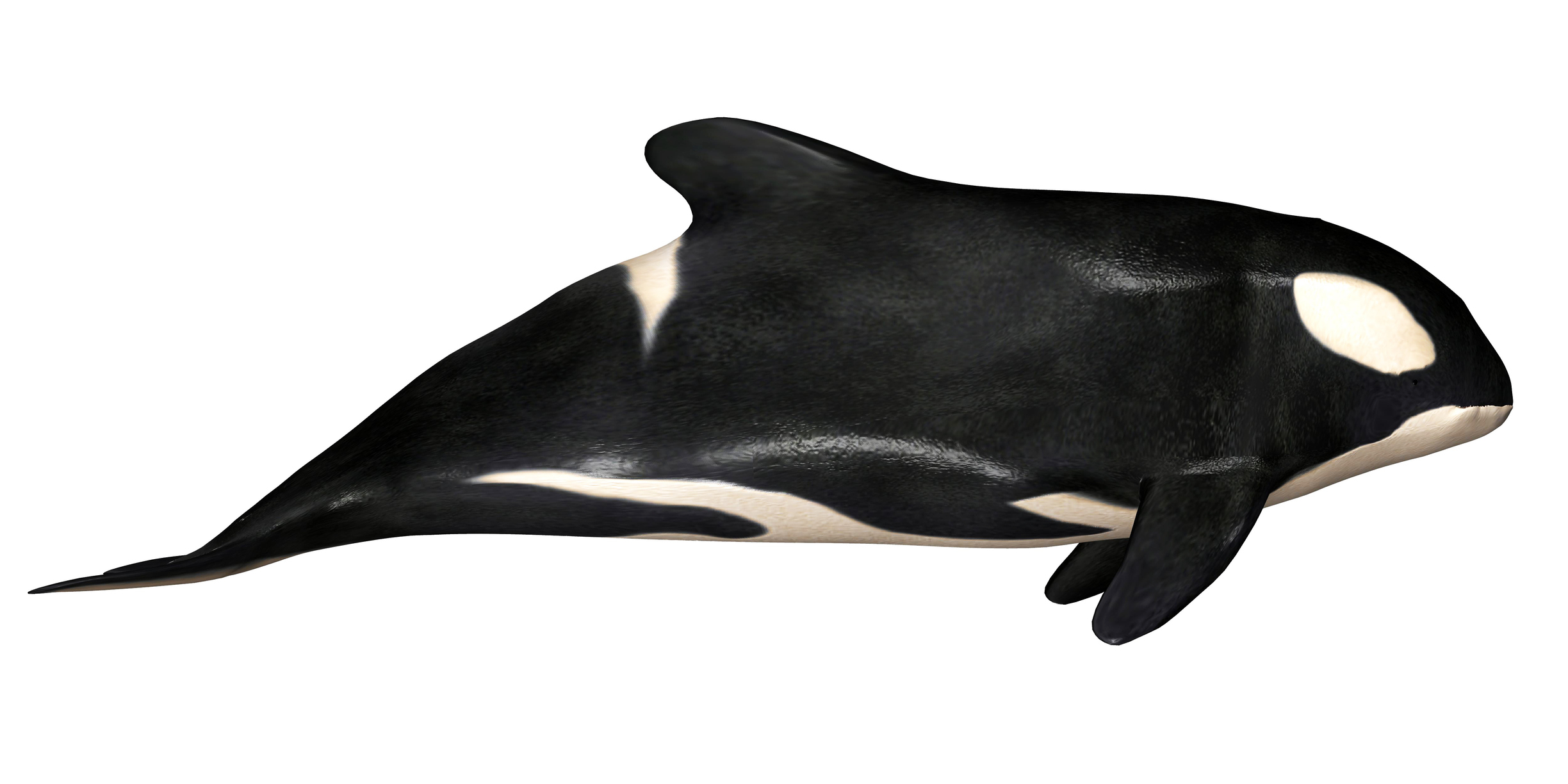
Just before megalodon faced extinction 3.5 million years ago, it may have met one of the first members of a highly social, pack-hunting group of cetaceans known as Orcinus. This pioneering species is known as O.citoniensis and like its closest living relative, the orca, it’s actually a member of the dolphin family. It lived from the Late Pliocene (3.6 million years ago) to the Early Pleistocene (2.5 million years ago).
O.citoniensis was smaller than modern orcas, measuring approximately 4m in length rather than 7m, but it likely looked just like them - it has been suggested O.citoniensis may even represent a transitional species between orcas and other dolphins. It’s thought O.citoniensis hunted like modern orcas too, working together to corral shoals of squid and large fish before engaging in feeding frenzies.
- “This does not look like normal hunting behaviour”: remarkable footage shows orcas hunting in a way never filmed before
- 11 jaw-dropping killer whale moments captured in photos and film that reveal the brutal hunting techniques of the ocean’s top predator
This extinct killer whale only overlapped with megalodon for 100,000 years and is only known from finds in Italy and England, so it’s unlikely the two ever met. That said, if they did, it’s not immediately clear who’d come out on top. Today, orcas are known to hunt young great white sharks, targeting them for their nutrient-rich livers and often leaving the rest of the carcass. O.citoniensis may have done the same to juvenile megalodon.
Livyatan
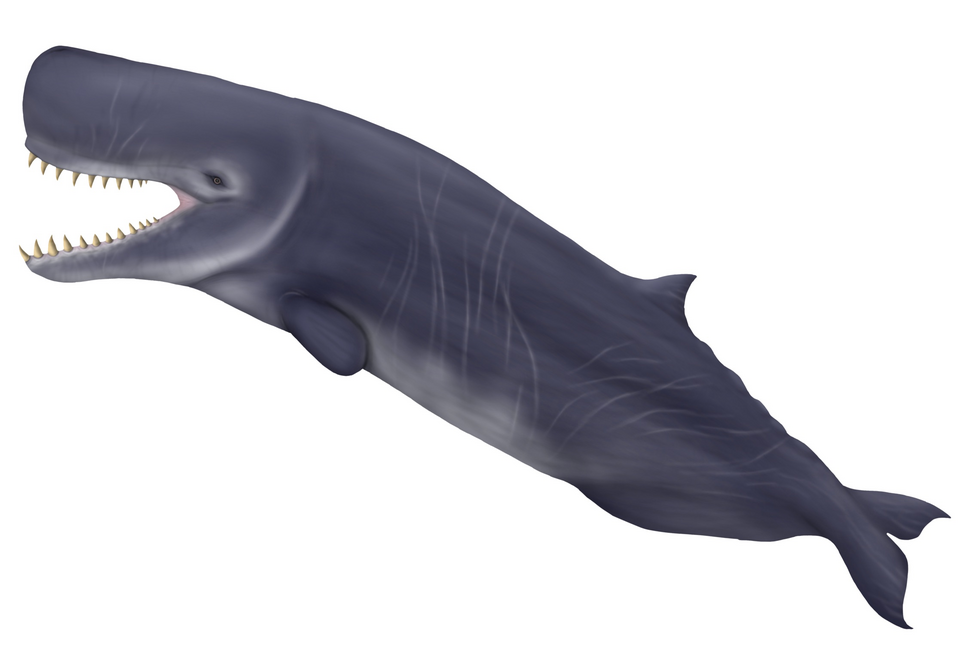
Named after the biblical sea monster Leviathan, this 17.5m-long macroraptorial sperm whale certainly lives up to its inspired title. It was just as big as megalodon, armed to the teeth, and perhaps the only other animal this giant shark feared. And living from the Late Miocene (10 million years ago) to the Early Pliocene (5 million years ago), it also overlapped with megalodon for roughly five million years - talk about a rivalry.
Livyatan is comparable in size to modern sperm whales, making it one of, if not the largest toothed whale to ever live. At 36.2cm in length, its teeth are also the largest biting teeth of any known animal and roughly twice the size of megalodon’s. A 2010 study found that Livyatan, with its 3m-long head and robust jaws, had the largest bite of any tetrapod ever. This large, powerful bite distinguishes it from modern sperm whales, which lack teeth on their upper jaw and rely on suction to catch their prey.
Not only did Livyatan and megalodon overlap in terms of time, but in terms of habitat, too. In fact, it’s thought these two giants competed for the same prey - baleen whales, dolphins, and seals - and may have even occasionally hunted one another. In such a clash, Livyatan’s higher intelligence, echolocatory abilities, and crushing teeth may have made it the more likely victor.


