There are many different types of animal, but some of the most successful, and numerous, are parasites.
It’s thought that as many as 40% of living animals fit at least one definition of what it means to be a parasite. A 2016 study suggests this type of behaviour between animals may have evolved independently at least 223 times and across 15 different phyla!
The term ‘parasitism’ has several definitions, but put simply it describes a non-mutual, symbiotic relationship where one organism - the parasite - benefits by feeding on, or living in/on, another organism - the host.
This relationship, by definition, causes the host harm and shouldn’t be confused with other forms of symbiosis, such as ‘commensalism’ and ‘mutualism’, whereby the host is unaffected (commensalism) or helped (mutualism) by its symbiotic partner.
- "It causes confusion, comas, and extreme daytime sleepiness and without treatment, it is generally fatal" 10 deadliest, most terrifying parasites on the planet
- What's the biggest parasite in the world? Don't worry, it's not as gruesome as you might think...
Not all parasites are deadly, blood-sucking beasts, most will disappear before their hosts even realise they’re there. That’s not quite the case in these following examples, though; the brutal animal hijackers that have made this list not only make their presence abundantly clear through inflicted pain, but often drive their hosts to an early death.
10 most brutal parasites
Parasitoid wasps
It’s no surprise the direct inspirations of the Xenomorphs from the Alien franchise have made this particular list. These wasps comprise a giant, gruesome group of more than 500,000 species, most of which are known for laying their eggs on or in the bodies of other invertebrates, most often caterpillars but also beetles, flies, and spiders.
- Parasitic wasps vs white butterflies: how this deadly gruesome 'zombie' wasp invades and takes over a poor caterpillar's body
- "If it reaches the nervous system it can cause meningitis – meaning headaches, nausea, vomiting, fever..." A deadly parasite that could be in your garden
After hatching, the babies of these parasitic wasps eat their caterpillar hosts from the inside out, using specialised, saw-like teeth to chew their way through the thick skin. Not all caterpillars die after such encounters, some lay wounded and watch on as the newly free wasp larvae make their own cocoons, ready to become adult wasps and begin the grisly cycle all over again.
A number of parasitoid wasps have evolved exclusively to parasitise spiders. The larvae of these wasps are able to control their host’s minds and make them spin webs that are designed specifically to support their own cocoons - talk about playing with your food!
Tongue-eating louse
These inch-long isopods are the stuff of nightmares and, for many species of fish living in the Atlantic and Pacific Oceans, a real, ever-present danger.
As juveniles, these lice will attach themselves to an unsuspecting fish, sneaking through its gills into its mouth. There, they’ll use their strong claws to clamp down on the fish’s tongue, cutting off all the blood vessels and causing it to wither and fall off. After replacing the fish’s tongue, the louse will feast on its blood for up to three years.
- Ugh there's a tongue-eating parasite? Afraid so, and it grows as big as a cockroach. Meet Cymothoa exigua
- 12 animals you never knew you shared your home with
A number of studies have examined this strange parasitic behaviour. While some report that infested fish become underweight as a result of difficulties eating, others argue the louse serves as a prosthetic organ, serving the same function as a tongue.
Cuckoo catfish
There are third wheels and then there are cuckoo catfish. These crafty parasites will intrude on breeding pairs of mouthbrooding cichlids and lay their eggs amongst those of their soon-to-be surrogates.
- There's a peculiar fish in the Venezuelan mountains that climbs boulders with its mouth – and biologists are obsessed with it
- "It doesn't come much weirder than having a see-through head!" 16 strangest, weirdest fish in the world, including one that can incredibly live out of water
After these eggs are laid, the female cichlid scoops them up with her mouth where they develop for up to three weeks. The eggs of cuckoo catfish develop faster than those of cichlids, meaning their larvae hatch first. Already equipped with sharp teeth from the moment they hatch, catfish larvae make short work of the other eggs and embryos developing inside their adoptive mothers’ mouths.
- It has an eerie transparent skull that looks like a diving helmet and is the only animal on Earth to have eyes under its skin inside its head
- "Its mouth is actually bigger than its body": Meet the biggest mouths in the animal kingdom, including one that's 5m long, 4m high and 2.4m wide
Unlike other brood parasites, like the cuckoo birds they’re named after, these catfish are able to re-infect hosts after being initially rejected, exploiting the female’s instinct to pick up abandoned offspring. Some larvae can grow so large that they actually damage the mouth of their hosts.
Male anglerfish
It’s often said that ‘behind every successful man there stands a woman’. In the world of anglerfish this idiom is slightly different, ‘behind every breeding female there’s a tiny, atrophied male whose sole purpose is to pump sperm into his life-providing mate’.
Finding love in the deep, dark depths of the ocean is a difficult task, which is why male anglerfish have developed their rather unusual courting methods. While females spend their lives hunting, males rely on enlarged nostrils to locate them and use sharp mouthparts to latch onto their bodies.
- Electric organs, venomous spines and eyes that migrate – meet the world's most peculiar fish
- Fish can do maths, walk, fly AND pee: 14 fish facts that leave you scratching your head
- Monstrous deep-sea fish filmed in daylight for first time ever
After finding a female, a male anglerfish will remain there the rest of its life, becoming a sexual parasite that feeds on the female’s blood while providing her with sperm. There are even cases where female anglerfish have been found with multiple males attached to them - as many as eight in one particular case!
Horsehair worms
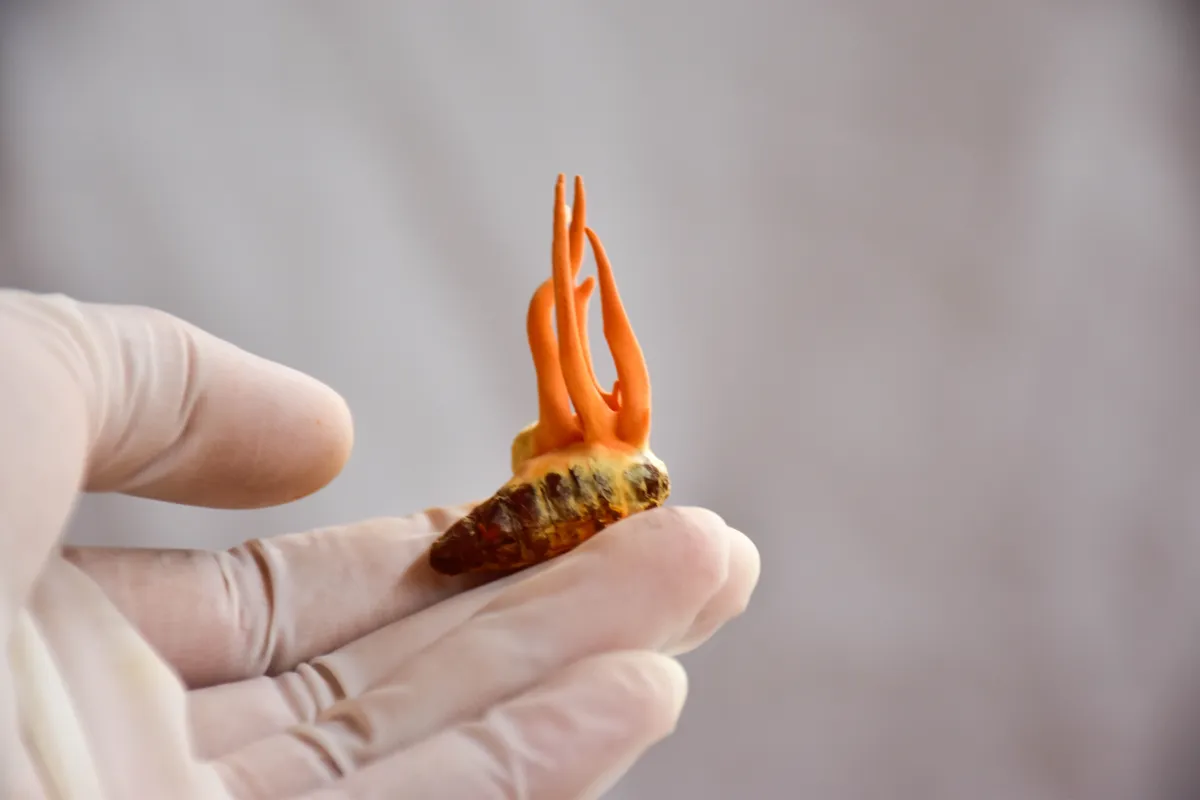
The post-apocalyptic video game The Last of Us popularised the parasitic fungus Cordyceps, which is known to infect ants and turn them into ‘zombies’.
- Cordyceps and Orphiocordyceps: the zombie fungi made famous by The Last of Us
- 10 real-life zombies: These deadly brain-hijacking parasites can create suicidal rats, pulsating snails, dancing fish – and can even infect humans
However, this isn’t the only parasite capable of altering its host's brain chemistry. The larvae of horsehair worms are known for their terrifying ability to hijack their host’s nervous system, manipulating them into committing suicide by drowning themselves. This completes the lifecycle of horsehair worms and allows the aquatic adults to lay a series of eggs that, after several weeks, hatch into more larvae.
- This marine worm has eyes 20 times heavier than the rest of its head. Why? Sex, apparently
- Wriggling 8cm-long roundworm larvae found in Australian woman’s brain
The primary hosts of horsehair worms are praying mantises, but they also infect beetles, dragonflies, grasshoppers, and crickets. A 2011 study on a Japanese riparian ecosystem found that infected grasshoppers and crickets were 20 times more likely to enter water than uninfected individuals. Those that did enter the water quickly became dinner for shoals of Kirikuchi char, a freshwater fish related to salmon.
Toadflies
No, these aren’t the fictional, mystery ingredient in a witch’s brew, they’re a type of insect belonging to a family commonly known as blowflies. While adult toadflies typically eat pollen and nectar, their larvae have far more sinister dietary requirements, feeding on the flesh of common toads.
An adult toadfly will strategically lay its eggs near the nostrils of its host. After hatching, the larvae burrow into the toad’s nasal cavities and start eating. Unfortunately for the infected toad, these larvae have insatiable appetites and will continue eating until their host’s death, devouring not only its eyes, but also its brain and other vital tissues.
Once they’ve had their fill and killed their hosts, the larvae make their way into the soil where they pupate and develop into adult toadflies. A 1980 study conducted in the Netherlands found that many infected toads were ultimately killed by these parasites, suggesting an infection is likely a death sentence.
Pearlfish
Not all pearlfish are parasites. In fact, most species are known to live commensally inside various invertebrates, neither harming nor helping their hosts. That said, there are several species that not only fit the definition of ‘parasite’, but take it to the next level.
- Exploding anuses, 9 brains and a stomach that can be pushed out of a mouth – here are nature's 7 weirdest internal organs
- Bottoms are just for pooping and peeing right? Not always... This animal can also breathe and eat through its anus - meet the world's most amazing arse
The star pearlfish is a particularly invasive parasite, known to swim up the bums of sea cucumbers and live inside them. Inside, star pearlfish slowly eat their hosts, fighting off competitors who may have also slipped in through the back door. To cope with toxic saponins inside a sea cucumber’s body, star pearlfish excrete a thick layer of mucus, which acts as both a physical barrier and a form of lubrication for their initial, unannounced entry.
Some sea cucumbers have been observed clenching their bums in a bid to stop star pearlfish slipping inside, but as these invertebrates ultimately breathe through their rear ends they can’t do this forever. As long as a star pearlfish is patient, it can settle into its new bum bunker without much difficulty.
Cookiecutter shark
The types of ‘cookies’ this shark eats aren’t the kind you’d want to dunk in a glass of milk.
Using pairs of circular jaws lined with dozens of razor sharp teeth, cookiecutter sharks vacuum seal themselves to the flanks of their prey, spin their bodies, and carve out circular pucks of tissue they then hurriedly swallow. A school of these hungry sharks can make the sides of larger fish look like crumpets in a matter of seconds.
- Meet the tiny shark that uses its saw-like teeth like a cookie cutter, ripping circular chunks of flesh from its prey
- The weirdest sharks on the planet, including one that can walk: Discover some of the ocean's strangest creatures
As weak swimmers, cookiecutters rely on stealth to hunt their prey. They move vertically in the water column, hovering on the edge of darkness and rising as the sun sets. Their bellies are also covered in bioluminescent cells called photophores, which emit a greenish glow and help the sharks attract their dinner.
Vampire ground finch
The remote Galápagos Islands are home to many bizarre birds. Perhaps the strangest species amongst this fanciful flock is the vampire ground finch, which lives way out in the sticks on Wolf and Darwin Island. These birds live so far away from the central Galápagos Islands that they were never encountered by Charles Darwin during his famous visits in the 1830s.
- Vampire finch: how this blood-thirsty bird rules the roost on a remote outpost of the Galápagos Islands
- 6 grotesque and weird vampire animals – from a creature that drinks the blood of its children to a cloaked deep-sea beast that can turn itself inside out
The vampire ground finch, like the vampire bat and several other species of birds, is what’s known as a sanguivore (or hematophage), meaning it feeds on the blood of other animals. It’s not an obligate sanguivore, as it feeds on eggs, leftover fish, and even guano from other birds during more prosperous months of the year.
However, during the dry season (July to December) when food is scarce, vampire ground finches become their namesakes and start pecking at Nazca and red-footed boobies, slurping blood from inflicted wounds. It’s thought this pecking behaviour may have been passed down by mutualistic ancestors that plucked parasites off larger animals, before they evolved into parasites themselves.
Lycaenid butterflies
While these insidious insects might not be ‘cuckoos’ by name, they’re certainly ‘cuckoos’ by nature. Like other cuckoos, lycaenid butterflies lay their eggs in the nests of other species, primarily ants.
In the case of several species, the caterpillars that hatch from these eggs produce secretions that mimic the odor of high-ranking male ants. This chemical disguise fools other ants into feeding the caterpillars, often at the expense of their own colony.
The way ants feed their hungry squatters is far from pretty. They do so via a process known as trophallaxis, where they regurgitate food straight into the mouths of awaiting caterpillars. In between their regular meals of ant vomit, these caterpillars will snack on the larvae of their oblivious guardians.