
It’s a bitingly cold day and the air tastes charged – more snow will be falling later. A small, white mound shifts almost imperceptibly in the distance. It’s a young snowy owl, distracted from roosting by a tiny vole.
- Head spinner: mind-blowing video shows snowy owl twisting its head almost full circle
- It barks like a dog and howls like a human – and is a silent, deadly hunter
The owl unfurls its wings and launches, torpedoing towards the rodent. The vole is in a small cage and is unaware of the impending danger. As the predator is about to land, its large yellow eyes glowing with the promise of a meal, a net springs over it.
All of this isn’t happening in the Arctic, as you might expect, but on the airfield at Boston’s Logan International Airport. Raptor specialist Norman Smith pins the bird to the ground.
He gently but firmly grabs the owl’s legs, pulls it out of the net and places it in a specially designed carrier in the back of his truck. He then checks on the vole and waits for the next bird to come.
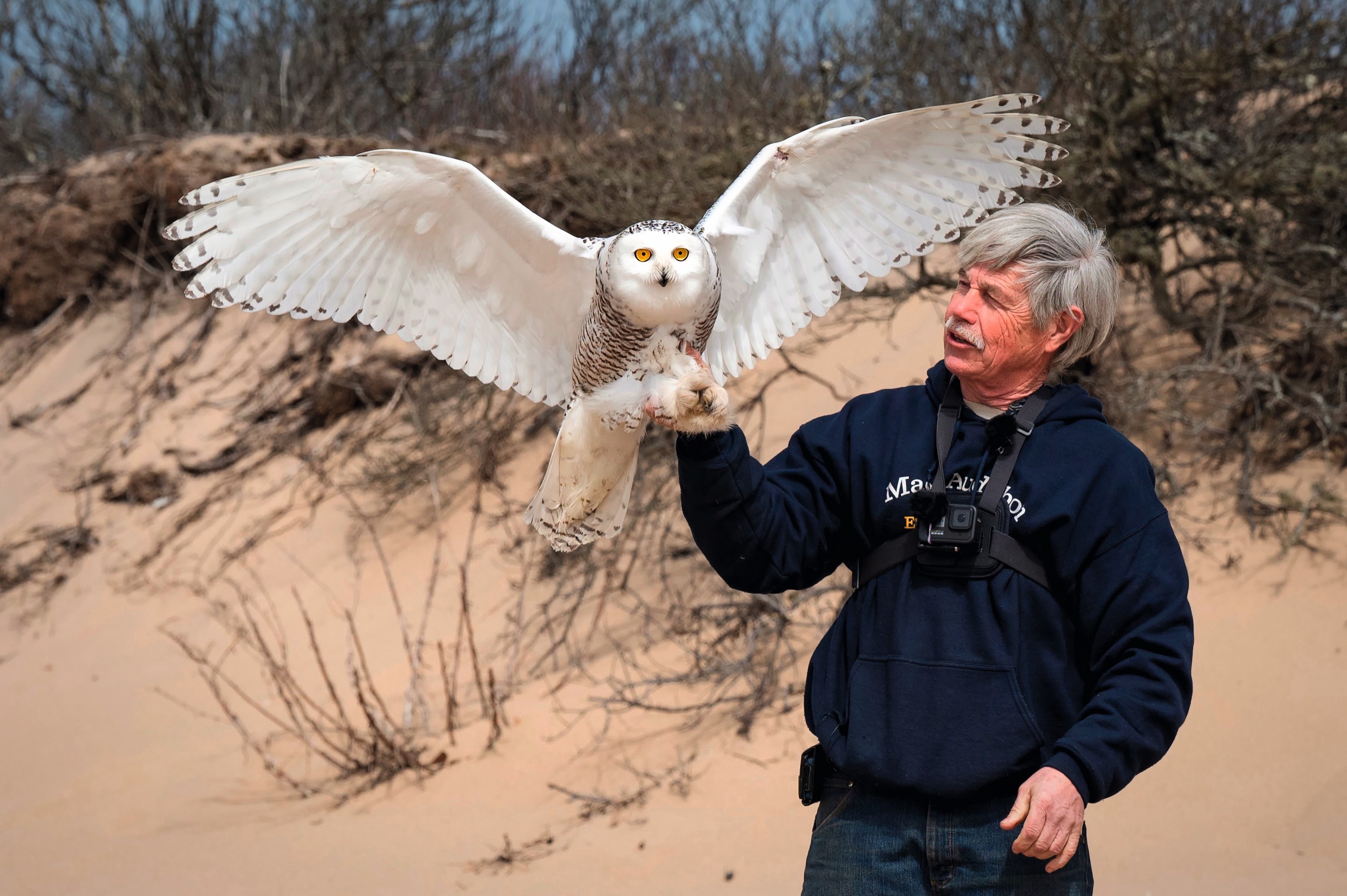
Every winter since 1981, Smith has repeated this process – trapping and relocating the snowy owls that end up on the airfield between November and April. Known as the ‘Owl man of Logan Airport’, he has helped more than 900 birds in his 45-year career.
Through fieldwork, tagging and satellite telemetry, Smith has also made groundbreaking discoveries about lifespan and migratory patterns. These ongoing efforts are known as the Snowy Owl Project.
“I’ve always been fascinated by snowy owls,” says Smith, former director of Mass Audubon’s Blue Hills Trailside Museum. He is currently the only owl-catcher at Logan Airport, though his children and grandchildren have assisted over the years.
“I’ve learned how amazing these birds are, and how important it is to educate, especially kids, about the natural world.”
- Eagle snatches owl and carries it into forest – then something wild happens
- British owl species: how to identify, diet and where to see
Owls on the move
When temperatures begin dropping in the Arctic, snowy owls, particularly those less than a year old, begin migrating south. After flying nearly 5,000km, many find themselves on the congested airfields of Logan Airport, forming the largest known concentration of snowy owls in north-east America.
While a nonstop parade of rumbling jet engines may not seem the most relaxing of surroundings, this bleak expanse is, paradoxically, the ideal wintering location.
The airport, which pokes into Boston Harbour, stretches across some 720ha and is surrounded by water on three sides, home to flocks of overwintering waterfowl. It’s flat and carpeted with short grass that supports a healthy population of scurrying rodents.
And, during those harsh New England winters, the area is blanketed in snow and ice. It looks, for all intents and purposes, just like the Arctic tundra.
Snowy owls have been descending on Massachusetts for generations. Records indicate that the species has been migrating to the saltmarshes and tidal flats of the Greater Boston area for at least 200 years. The airport is also conveniently located along the Atlantic Flyway, a major north-south migratory route that stretches from the Arctic, down the eastern coast of the USA, to the Caribbean and South America.
- "It sounds like a dog barking and howls like a human in pain." 10 of the weirdest, strangest owls on the planet, including a lookalike imposter…
- “It stood 3m tall and was armed with some of the deadliest weaponry of any prehistoric animal.” 10 biggest prehistoric birds that ever lived
“Ironically, once the airport was created, it became an even better habitat than what was there before,” says Smith. “There’s plenty of food and open space, and it’s coastal.”
Every winter, Smith heads to the airport to capture and relocate owls, protecting both birds and aeroplanes from accidents. While avian collisions are rare, Logan Airport is haunted by the 1960 Eastern Air Lines crash.
Minutes after take-off, Flight 375’s engines ingested a flock of starlings, causing the plane to nosedive into Boston harbour, killing 62 of the 72 passengers on board.
The incident resulted in the formation of a countrywide bird patrol, which mainly consisted of shooting any birds deemed to be a threat to aircraft. When Smith came on the scene, he helped to create a national protocol for relocating snowy owls, which has since been adopted by most airports across the country.
During their six months at Logan, the birds roost wherever they please, even if that means beneath a plane taking off.
“They’re on the outskirts, the inner areas – sometimes on the terminal buildings,” says Smith. “I once saw one on the tail of a JetBlue airplane.”
Snowy owls
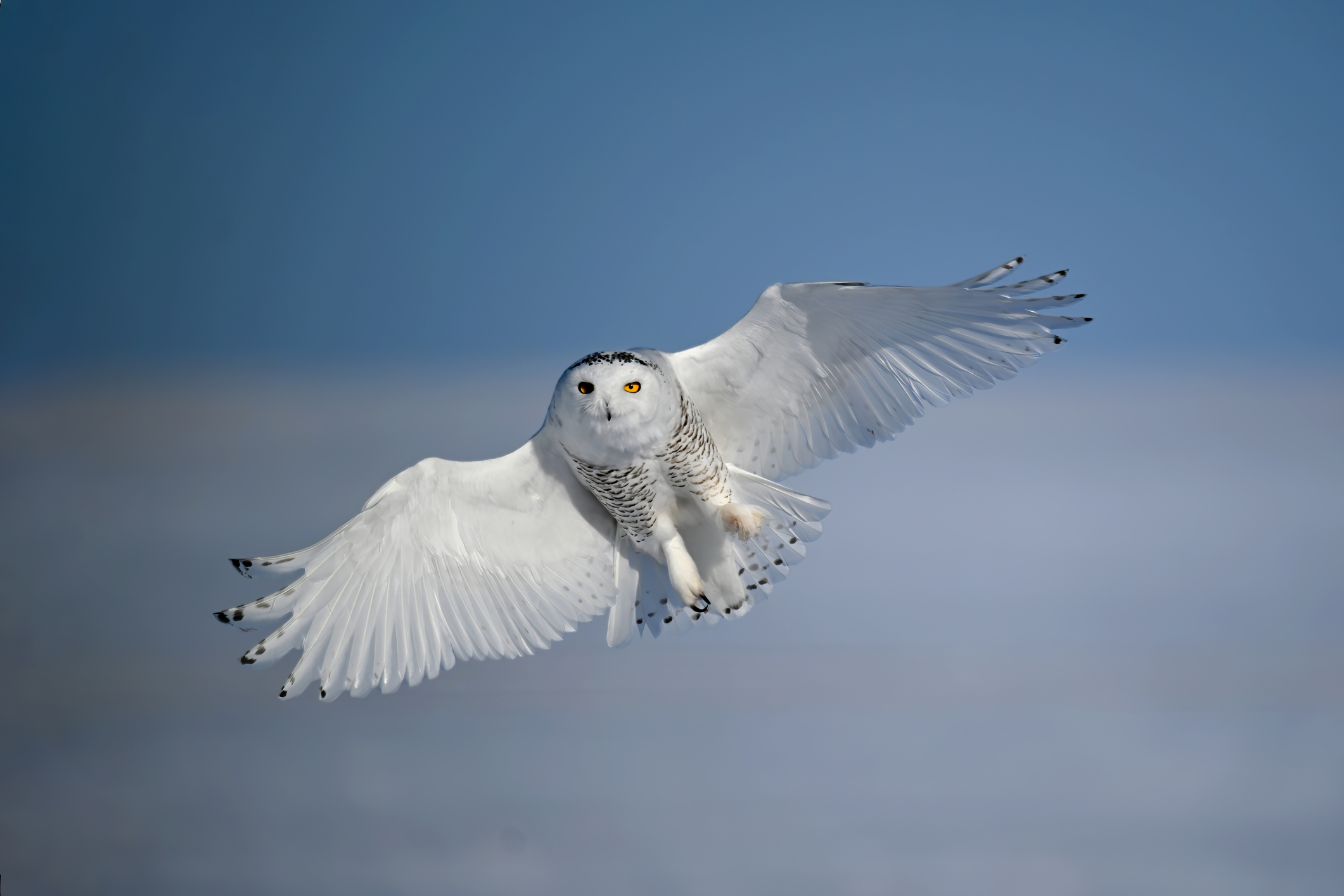
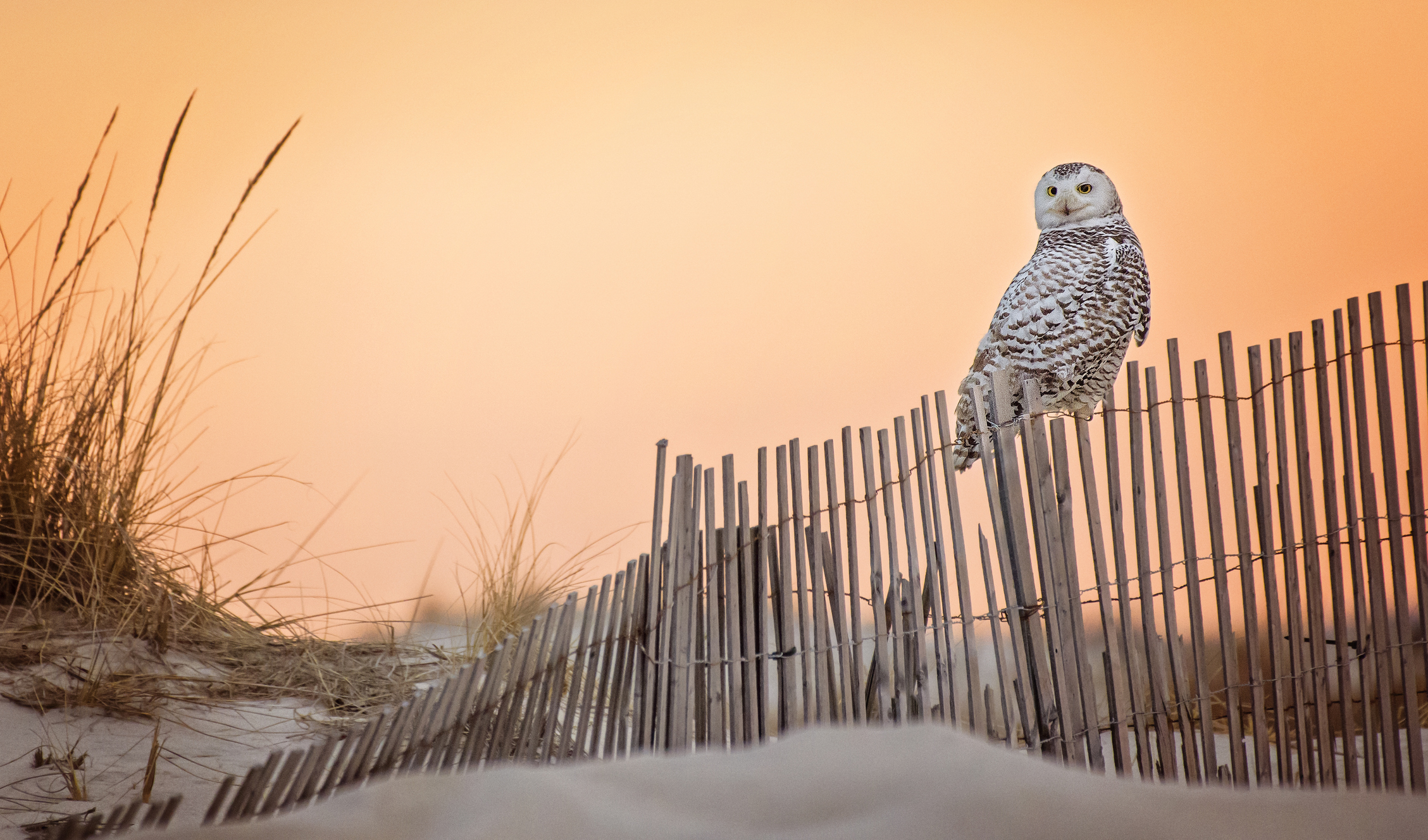
The snowy owl is an icon of the Arctic. It’s the largest North American owl by body mass, with a wingspan of up to 166cm. Males tend to be pure white, while females, which are larger, have plumage painted in chocolate striations and freckles.
- "It appears as one of the ugliest animals in the book The Ugly Five and doesn't look a million miles away from a turkey" – 12 weirdest birds of prey on the planet
- Researchers studied these mysterious penguins for the first time in over 25 years. They were shocked at the results
The species has the most northern breeding and non-breeding distribution of any owl in the world, spread across the remote tundras of Alaska, Russia, Greenland and Canada. Unlike owls elsewhere, snowies prefer to roost and nest on the ground – the Arctic, after all, is devoid of trees. During the summer breeding season, they rely almost entirely on brown lemmings as a food source.
Snowy owls’ feet and legs are enveloped in dense feathers for warmth, a bit like fluffy slippers. Yet these are exceptionally powerful birds. Each foot sports three needle-like talons capable of tremendous grip, allowing them to tackle large prey.
“I’ve seen them take on great blue herons, Canada geese and even an Arctic fox,” says Smith.
These predators have asymmetrical ears, which they use to pinpoint sound. Their facial discs then amplify the sound, helping them locate prey scuttling beneath snow and ice. Given their hearing abilities, researchers have been baffled at how snowies survive at an airport.
Smith believes the birds may manipulate the feathers on their facial discs to muffle the cacophony. “If you’re in the Arctic, the wind is as loud as a jet engine,” he says. “They tune out what’s not important.”
After weighing and measuring his captured owls, Smith takes his charges 10km south to Duxbury Beach for release. He usually averages 10–12 a year, but had a record year in 2014, capturing 121 snowy owls at Logan Airport and 179 in the Greater Boston area. “It was the best year for snowy owls in 100 years,” he recalls.
- Fierce, majestic – and built to kill – The world's biggest and mightiest birds of prey
- Seabirds can suffer jet lag that throws them off course, say experts
- Rare bird species breeds in UK for first time ever
The record-breaking irruption – when a species responds to changes at home by migrating south, usually in large waves – was in response to an incredible baby boom in the Arctic. That winter, snowy owls turned up as far south as Florida and Bermuda.
They may be charismatic, but snowy owls remain enigmatic. They breed in hard-to-reach areas of the Arctic and are nomadic outside of the breeding season. While it’s impossible to know for certain how they’re faring, research indicates numbers have been overestimated for decades.
Tracking snowies
According to a study published in Bird Conservation International in 2024, snowy owl populations have declined by more than 30 per cent over the past three generations, possibly due to factors such as climate change and decreasing lemming populations.
The study, by the International Snowy Owl Working Group (ISOWG), was the first assessment of the global status of the species and estimates that there are 14,000–28,000 adults worldwide. The findings supported the IUCN’s 2017 reclassification of the species from Near Threatened to Vulnerable.
The results are alarming, yet scientists stress that they aren’t definitive, as researchers simply cannot cover the species’ entire range.
“There are still a lot of unknowns,” explains Rebecca McCabe, who led the study. “But if nesting continues to decline, then it’s likely that the species will be hitting the Endangered or Critically Endangered listing within the next 20 or 30 years.”
For decades, it was believed that snowy owl irruptions occurred because the birds were starving in their Arctic home. It was also assumed that owls migrating this far south had little chance of making their way home again.
But that thinking started to change in 2000, when Smith attached satellite transmitters to his airport owls. The tiny gadgets lasted for three years (when the batteries died), and their data revealed that the birds not only returned to the Arctic in the spring, but did so to breed.
- Urban birds may be more afraid of women than men – and scientists are struggling to explain why
- ”It grabbed one from a stall, then wandered down the street – tentacles dangling from its beak”
In recent years, new technology has allowed researchers to track the species in granular detail. The mega irruption of 2014 led to the creation of Project SNOWstorm, a research group that now uses solar-powered GPS transmitters to monitor the species throughout its full annual cycle.
“We can follow the owls in real time, including when and where they breed,” says McCabe. It’s a vital step forward.
Every summer since 1992, field researcher Denver Holt has been travelling to the tundra of Utqiagvik (formerly Barrow), Alaska, to study breeding snowy owls. From June to September, Holt and his team hike up to 24km a day searching for nests, which are scratched-out indentations on raised sites on the tundra floor.
In tandem with the breeding season, Holt has been studying the population of brown lemmings. In the Arctic, the lemming is one of the few mammals available during the owl’s nesting season and comprises 90 per cent of the bird’s diet. Over the decades, Holt has detected fluctuations in the rodent’s populations, which in turn has affected snowy owls.
The raptors have an innate and astonishingly quick ability to assess lemming density in the Arctic. How they’re able to do this remains a secret, but it’s clear that they use this ‘knowledge’ to determine whether they’re going to breed.
“When lemming populations are high, the snowy owls are always breeding. When they’re low, there are fewer owls, if any at all,” explains Holt. “The conservation of snowy owls is really the conservation of lemmings.”
During years of lemming abundance, nests are often wreathed in the rodents’ corpses, and the owls can have as many as 10 chicks. The more chicks born, the more juveniles migrate south in the winter.
- They strike with clenched talons at 200mph, crush skulls, shred prey, and can inflict deep head wounds on humans – 10 most dangerous, deadliest birds of prey on the planet
- "It’s only 19 hectares in size but hosts a tightly packed crowd of 81,000." 10 biggest bird colonies in the world
- “They’re just waddling around in their poop.” Penguin poop is melting snow in Antarctica. Here’s how
In the past 10 years, Holt has noticed a decrease in the number of breeding pairs. Prior to 2015, he would average 20 nests a year. From 2015 to 2022, the number was down to three, shrinking to zero in the past three years.
“It’s so discouraging,” he says. Holt can’t say for certain if nesting pairs are declining globally, or simply within his study area. “Maybe they’ve shifted to unknown areas,” he says. “The Arctic is vast, as are Russia and Canada. I still hold onto hope that the birds are going to be okay.”
Researchers are trying to expand their geographic coverage of the circumpolar Arctic to gain greater access to the species, a feat that requires significant resources and time. Monitoring and collecting data from long- term nesting sites in Alaska, Greenland and Russia is ongoing, as are efforts to improve international cooperation.
“Can they adapt? I think they can,” says Smith. “These animals are resilient; it isn’t all doom and gloom.”
Either way, Smith will continue travelling to Logan Airport every winter, ready to welcome the next batch of Arctic visitors and assist them on their migratory odyssey. “I have no plans to stop,” he says with a laugh. “Every bird I catch is just as exciting as the first one. They really are my passion.”
Top image: a snowy owl on the airfield at Logan airport. Credit: Norman Smith
Discover more wildlife stories from around the world:
- Researchers hid a camera by a crocodile nest. What it captured is extraordinary
- Researchers watched these elusive cats for 13 years – and made a surprising discovery
- 10-year-old boy tags rare black stork near Chernobyl then tracks it in motorhome. This is what he discovered
- Expedition team surrounded by hundreds of flying foxes in Madagascan forest


