
Around half of the world’s known spider species, some 27,000, build webs to catch their prey, and these silken structures come in many different sizes and shapes.
Some webs are a little macabre, being decorated with the remains of prey, while others might be constructed for a purpose not yet fully understood.
Here is a selection of some of the strangest webs in the arachnid world, and the spiders that create them.
- Arachnophobes look away now as here are the weirdest spiders in the world – including one that has a taste for human blood…
- "Then there's those long, fang-tipped jaws..." 6 most cunning, devious spiders that manipulate, seduce and stalk their way to a successful kill
10 weirdest spider webs
‘Trash-line’ orb weaver (Cyclosa conica)
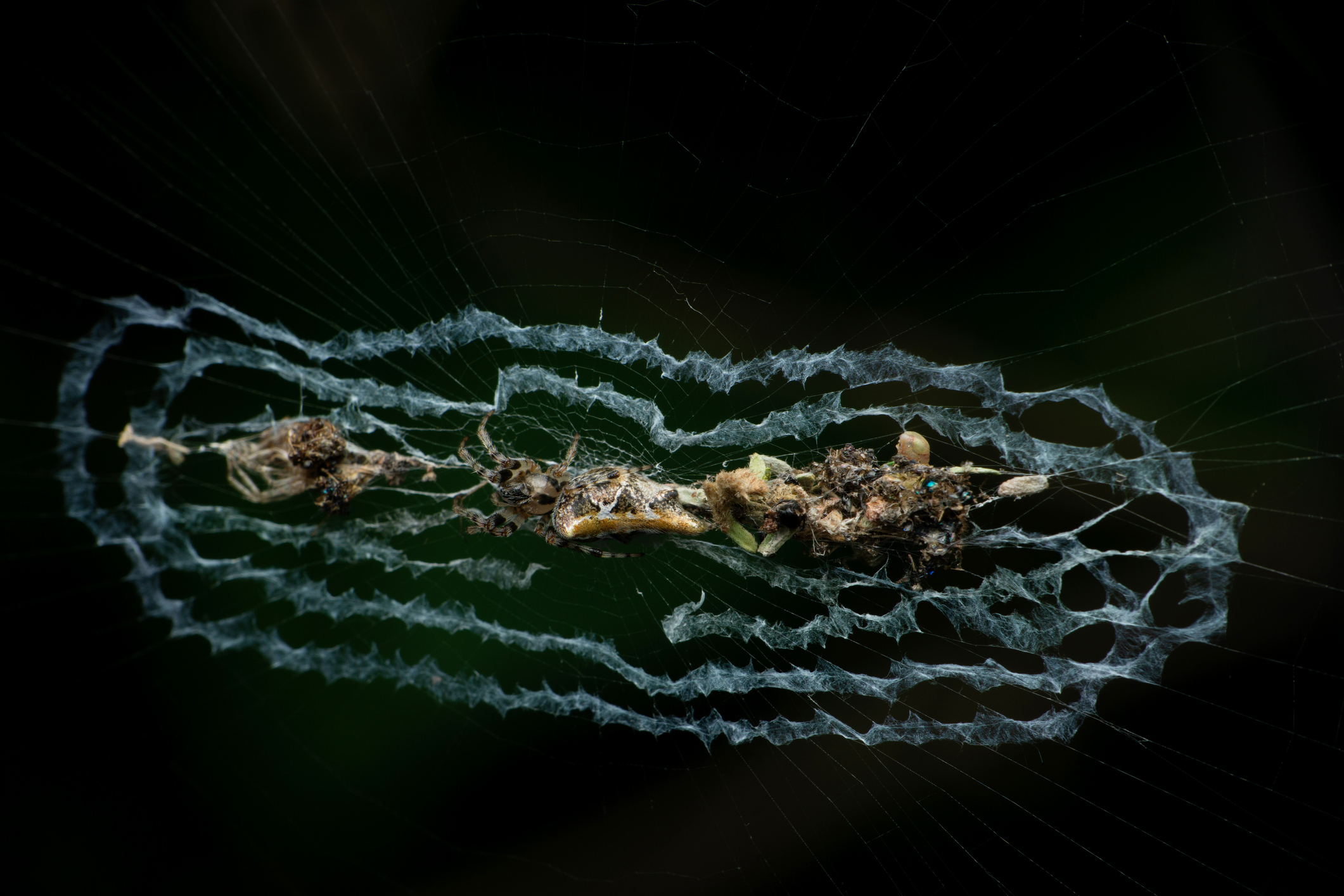
The web of this orb-weaver spider is not particularly unusual in form, being rounded and symmetrical, but what is peculiar is the line of dead insect bodies and debris that runs, usually vertically, across the centre.
The rather gruesome decoration is not there by chance - instead, the spider creates this trash line so that it may camouflage itself against it. By tucking up its legs, the mottled body of the trash-line orb weaver, which measures between 4mm and 7mm long, blends in with the other body parts in the stripe. A cunning way to avoid the eye of potential predators.
- 6 biggest spiders in the UK, including one with a humongous 7cm leg-span: look for them in canals, gardens, ditches... and under your bed
- Love spiders? 18 incredible, gob-smacking spider facts, from the biggest to the deadliest - and even how many are probably living in your house right now
Decoy spider (Cyclosa longicauda)
Another orb-weaver spider, which is found in South America, builds something rather more elaborate than a trash-line.
A neo-tropical species, it uses body parts of prey to create a ‘decoy’ spider, often considerably bigger than itself. Also formed from plant material and bound together with silk, this decoy is presumed to distract would-be predators.
- A mind-altering parasite is driving cave spiders from their lairs in the green hills of Ireland
- Darwin's bark spider: meet the spider that eats her sexual partner
Studies of Cyclosa longicauda, and a similar species discovered in the Philippines, suggest that the spider is creating a structure that is not just larger than themselves, but is also suggestive of an animal more threatening. A gruesome deterrent rather than a simple distraction.
Sulfur Cave ‘superweb’ (Tegenaria domestica and Prinerigone vagans)
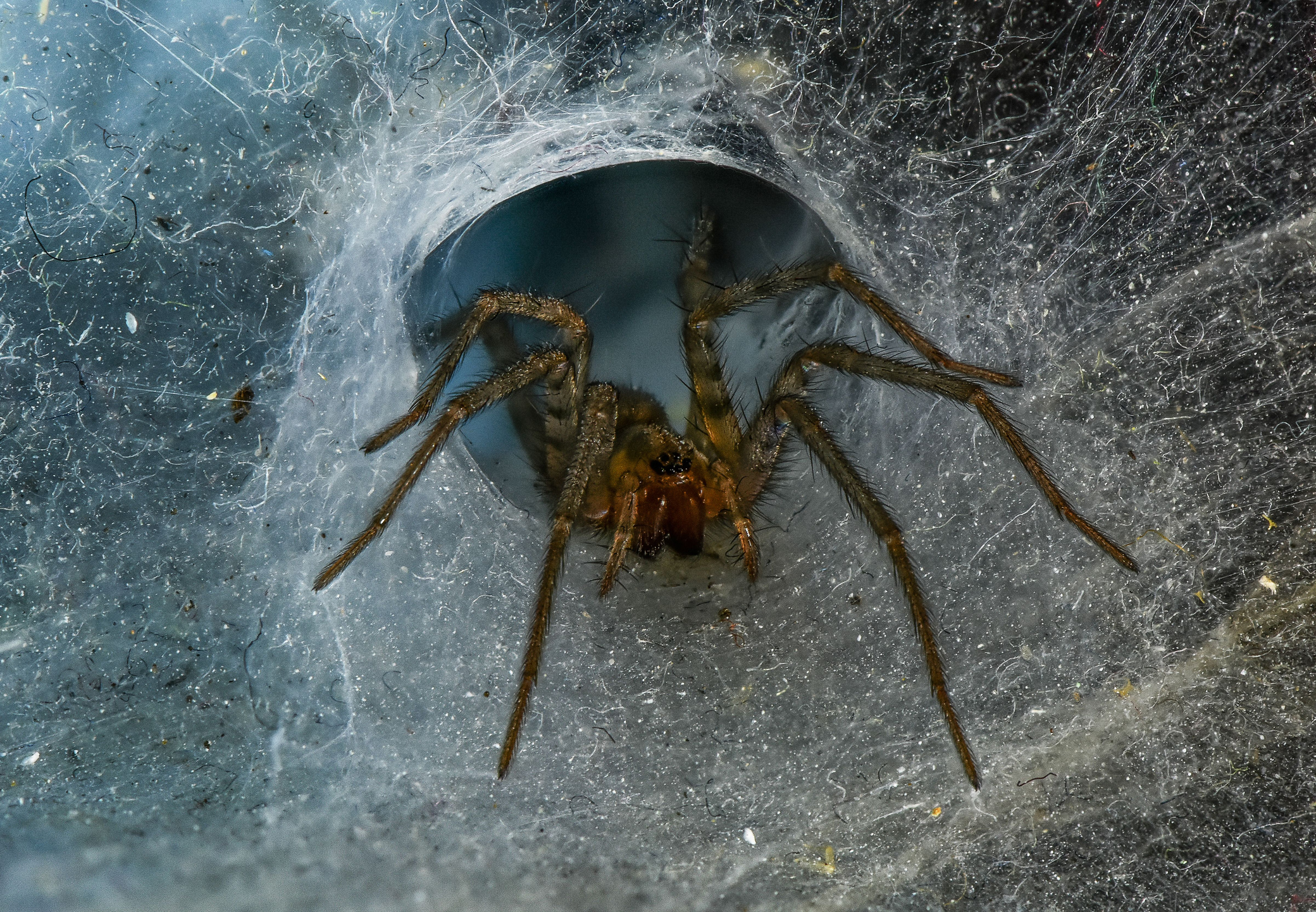
Not a singular web, but an extraordinary ‘super-web', first discovered in 2022.
The Sulfur Cave, created when the carbonate rock was dissolved by sulphuric acid found in ground water, is located on the border of Greece and Albania and is more than 500 metres long. This underground environment is full of sulphur-oxidizing microbes which provide food for invertebrate larvae. They are then eaten by two species of spider, the house spider (Tegenaria domestica) and sheet weaver (Prinerigone vagans) which have combined to create the super-web.
- Supersized animal homes: From ant megacities and termite towers to giant bird nests we take a tour of nature’s mega mansions
- It spans 6000 km of the coasts of Portugal, Spain, France and Italy – the animal that builds cities
An estimated 110,000 spiders make up a colony that is spun across almost 100m² of rock-face.
Diving bell spider (Argyroneta aquatica)
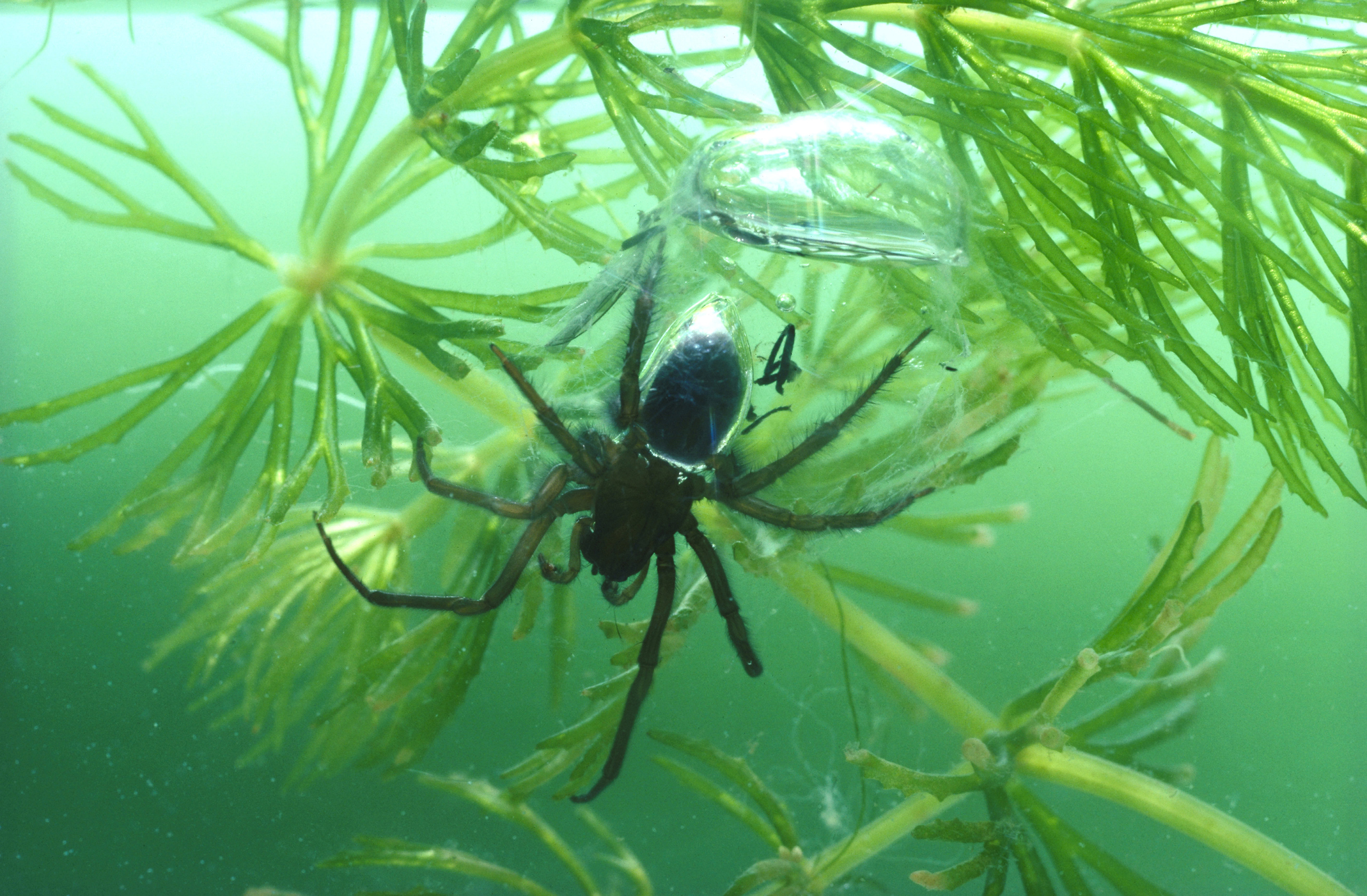
Also known as a water spider, this incredible arachnid spends most of its life beneath the water’s surface. Found across Europe and parts of Asia, the diving bell spider is so named due to its creation of an underwater oxygen bell. A small web is spun between stems of underwater plants, before the spider swims to the surface to trap air between special hydrophobic hairs on its body, which it then carries down to form a larger bubble beneath its web.
- It doesn’t have gills but spends most of its life underwater – thanks to a special oxygen tank it creates
- This bizarre ocean creature has 8 legs, looks like an alien and sucks up and spits out its prey after taking a tasty bite
Measuring up to 15mm long, the spider will spend most of the daylight tucked into its bubble, before hunting beneath the cover of darkness.
Darwin's bark spider (Caerostris darwini)
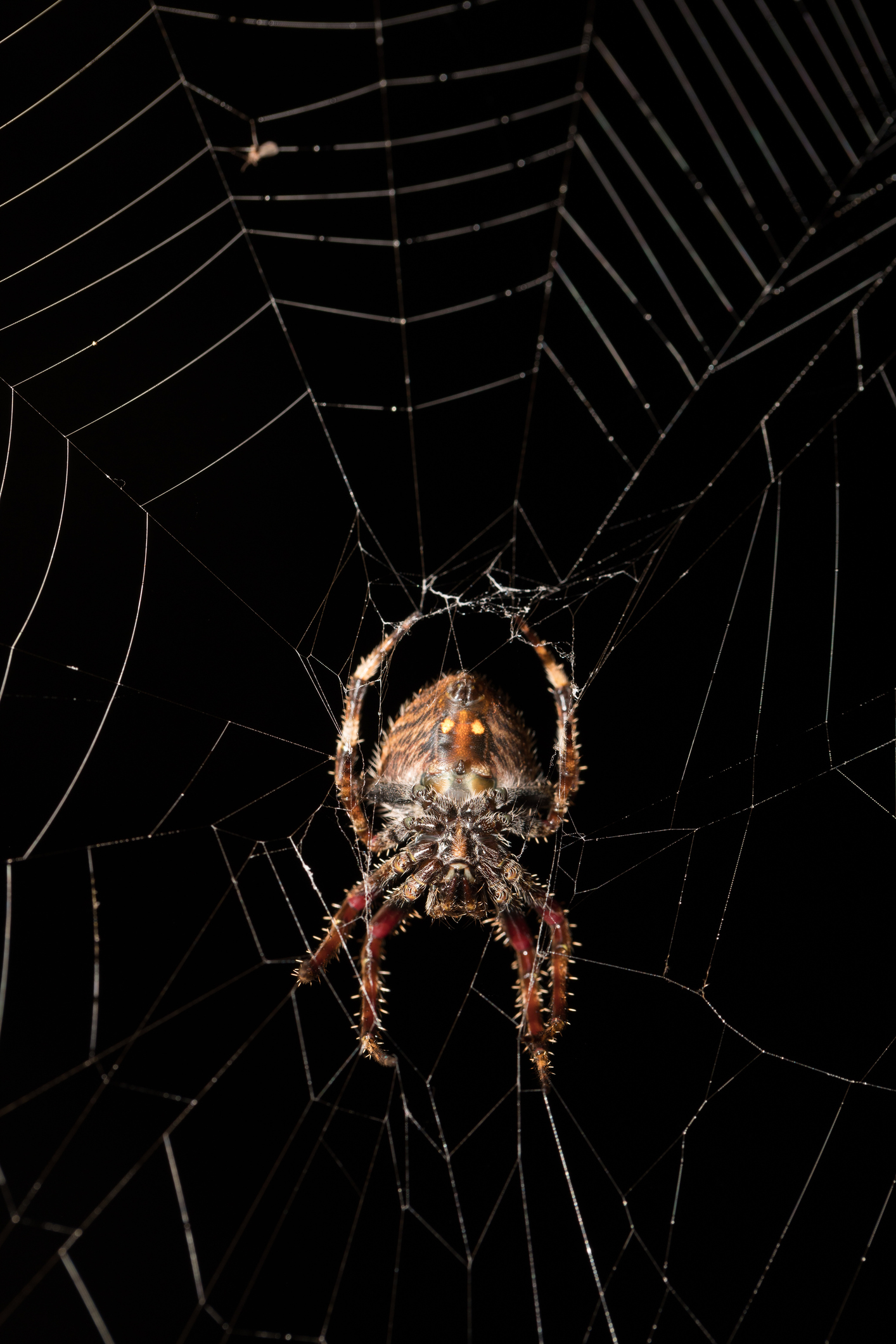
This is another orb-weaver, although the web of the Darwin’s bark spider is record-breaking.
Discovered in the Andasibe-Mantadia National Park in Madagascar in 2009, Darwin’s bark spider produces silk that is twice as strong as any other. It is the toughest biological substance known to science, and with it this small spider (females have bodies up to 22mm long) creates webs that are vast.
The anchor or bridge threads can measure up to 25 metres in length, and enable the spider to position traps over rivers or pools where winged invertebrates are often abundant. The largest web so far recorded measured nearly 3m², or 30 square feet!
St Andrew’s Cross spider (Argiope keyserlingi)
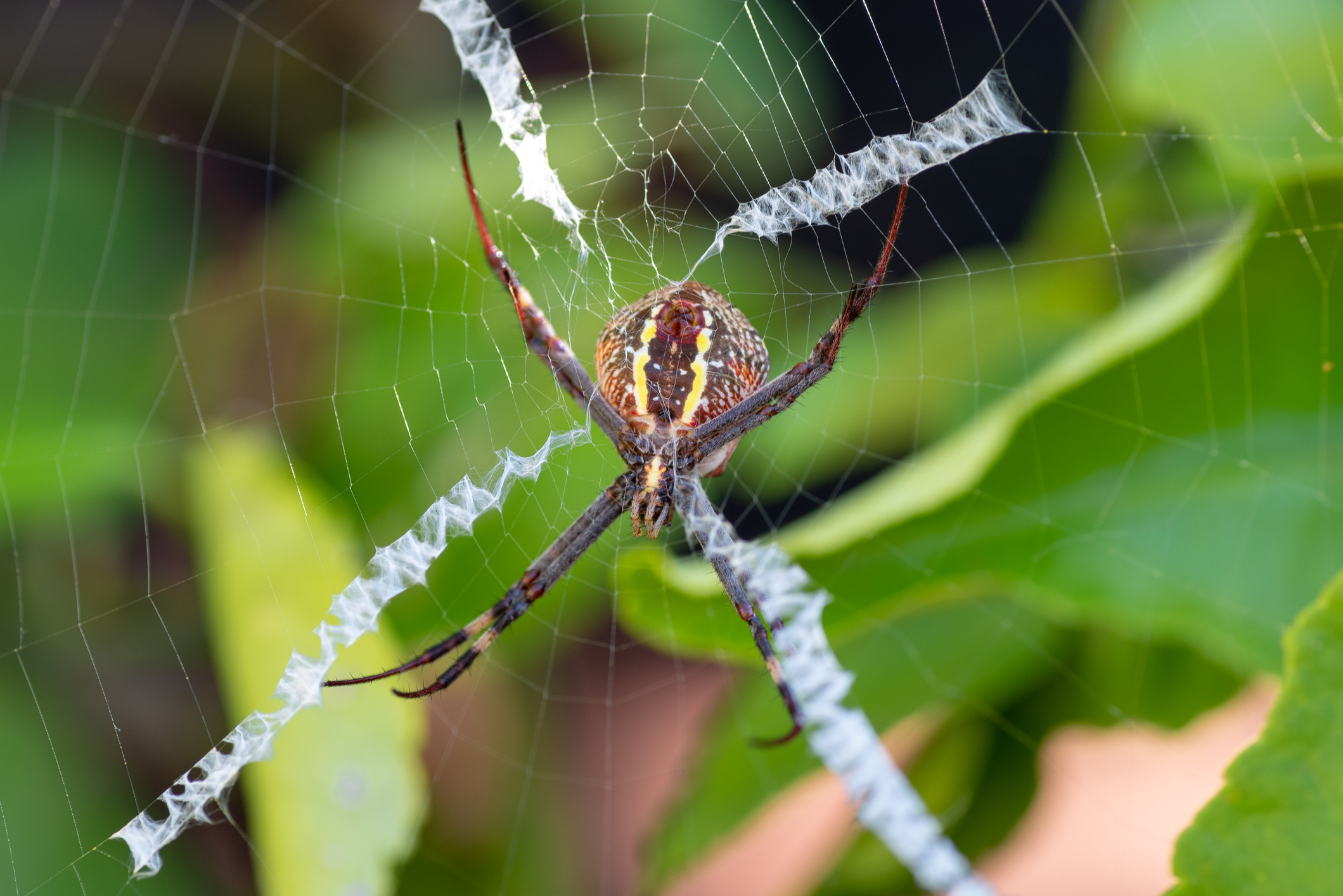
Several genera of spider decorate their webs, forming a structure that is known as a stabilimentum. But whereas the Cyclosa species use insect remains and vegetation to create their macabre masterpieces, others use intricate patterns of silk.
The St Andrew’s Cross spider of Australia is one of many orb-weavers that form a distinctive ‘x’ pattern, and the purpose of this is not proven. It may be for structural reinforcement, or a method of camouflage, particularly as the spiders rest with a pair of legs pointing along each line. Another theory is that it is a method of deterring birds from flying into the web and destroying it.
Trapdoor spiders (Mygalomorphae)
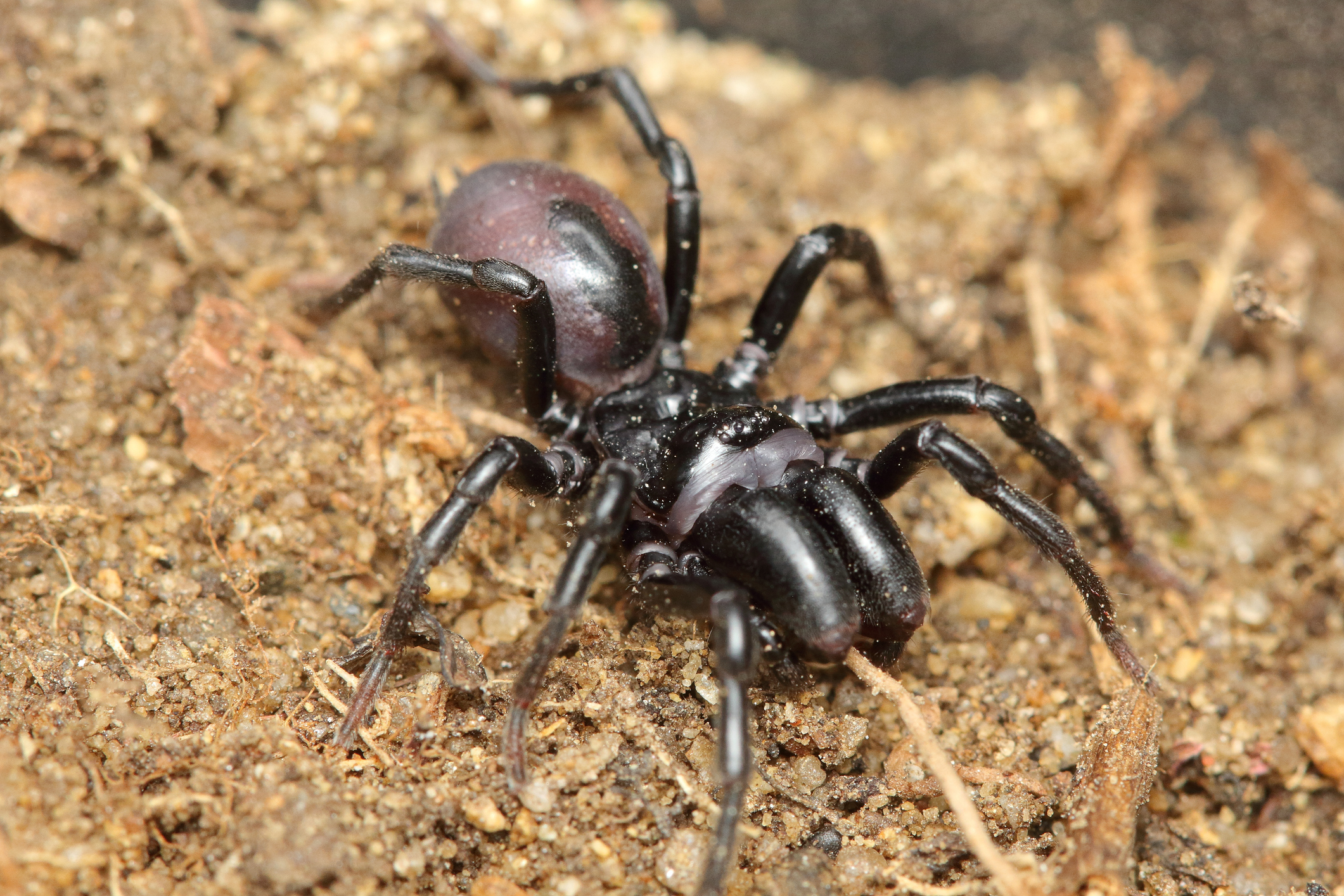
There are at least 3000 spiders within the infraorder Mygalomorphae and many fall under the common name ‘trap door spider’ - arachnids that construct cunning ambush traps.
These spiders live within a small burrow which often has a ‘trapdoor’ mechanism, hinged with silk and perfectly covering the entrance. Some species use tripwires to alert them to prey, whereas others feel the vibrations through the ground. Then, in an instant, they flip up the door and drag their dinner into the burrow.
- Weird spider with no eyes found on remote Atlantic island. Arachnologists are baffled
- Think you’re seeing a giant, humongous spider? Think again… as all is not what it seems
Trapdoor species are incredibly long-lived, with a female specimen of Gaius villosus known to have been at least 43 years old.
Purseweb spider (Atypus affinis)
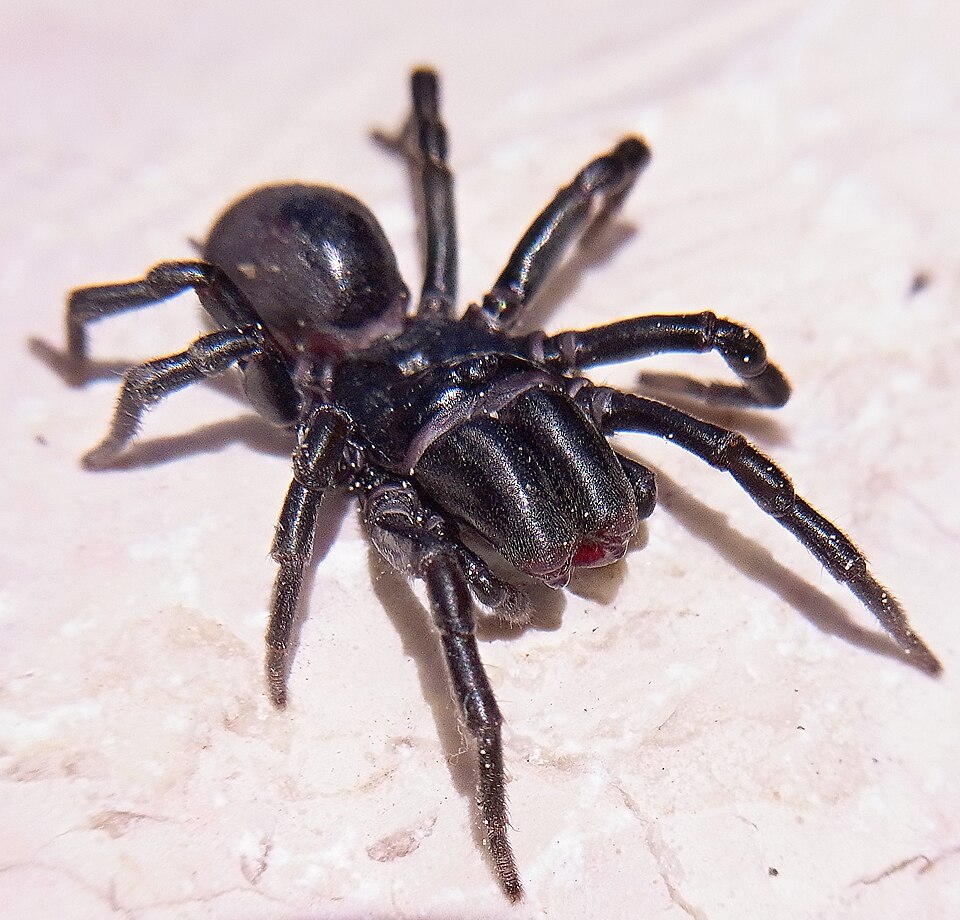
Like many other members of the Mygalomorphae infraorder, the purseweb spider constructs a shallow burrow but uses a different technique to catch its prey.
The burrow is lined with tightly woven silk, which extends above the ground into a small pocket, or purse. This is then covered in vegetation to disguise it, and the spider secludes itself inside. Should an insect land or walk across the top of this purse, the spider will use large, powerful fangs to bite through the casing and into the prey.
- This super-rare fish-hunting spider is making a comeback in the UK. Here's why it's exciting
- When spider scientists went into a Taiwanese forest at night, they discovered a deadly trap
The purseweb spider is found throughout Europe and northern Africa, favouring heathland habitat in the UK.
Green-fanged tube web spider (Segestria florentina)
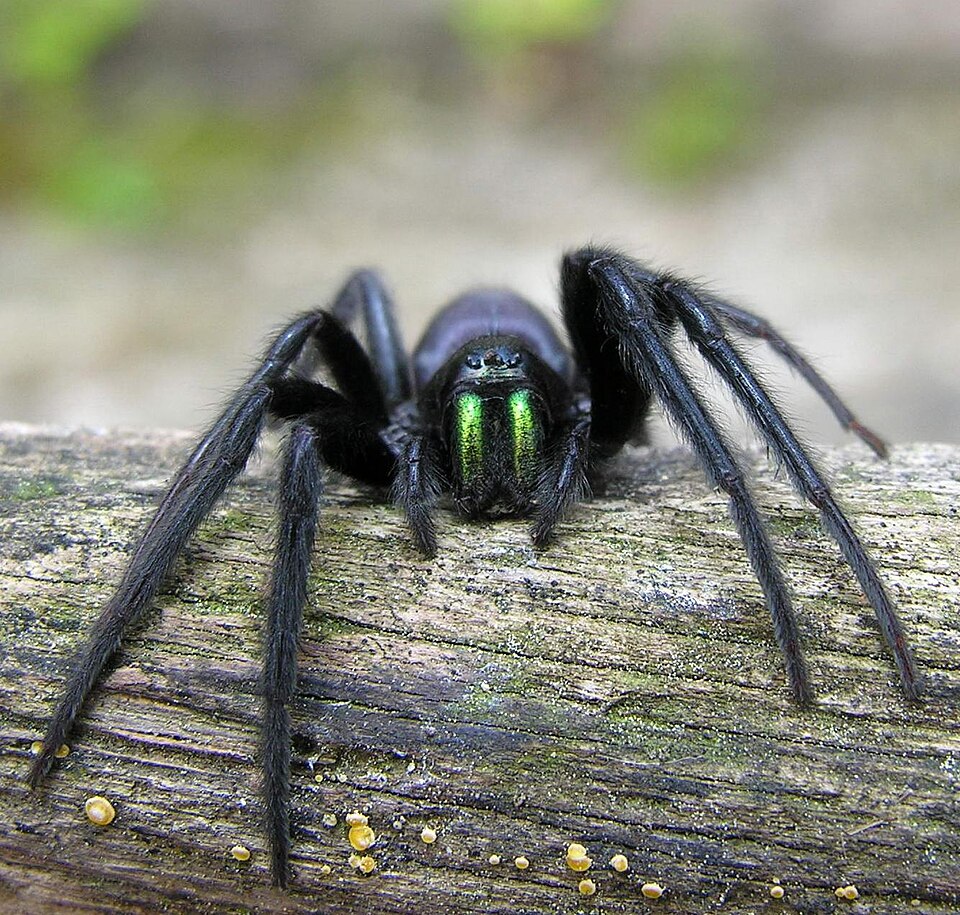
A member of the tube web building Segestriidae family, this is a formidable looking spider with mouthparts, known as chelicerae, that can glow green.
- Meet the vampire spider, an unassuming arachnid that drinks human blood and has a liking for smelly socks
- It has huge fangs, is the size of a dinner plate, and liquidises its prey – meet the biggest spider on Earth
Found across Europe, the appropriately named green-fanged tube web spider is increasingly common across the southern part of the British Isles, where it was first recorded in the mid-19th century. It constructs a tightly woven tubular web in cracks of buildings or wood, from where it ambushes its prey. A bite from Segestria florentina can be extremely painful and last for several hours, but the venom has no long-lasting effects.
Triangle Spider (Hyptiotes paradoxus)
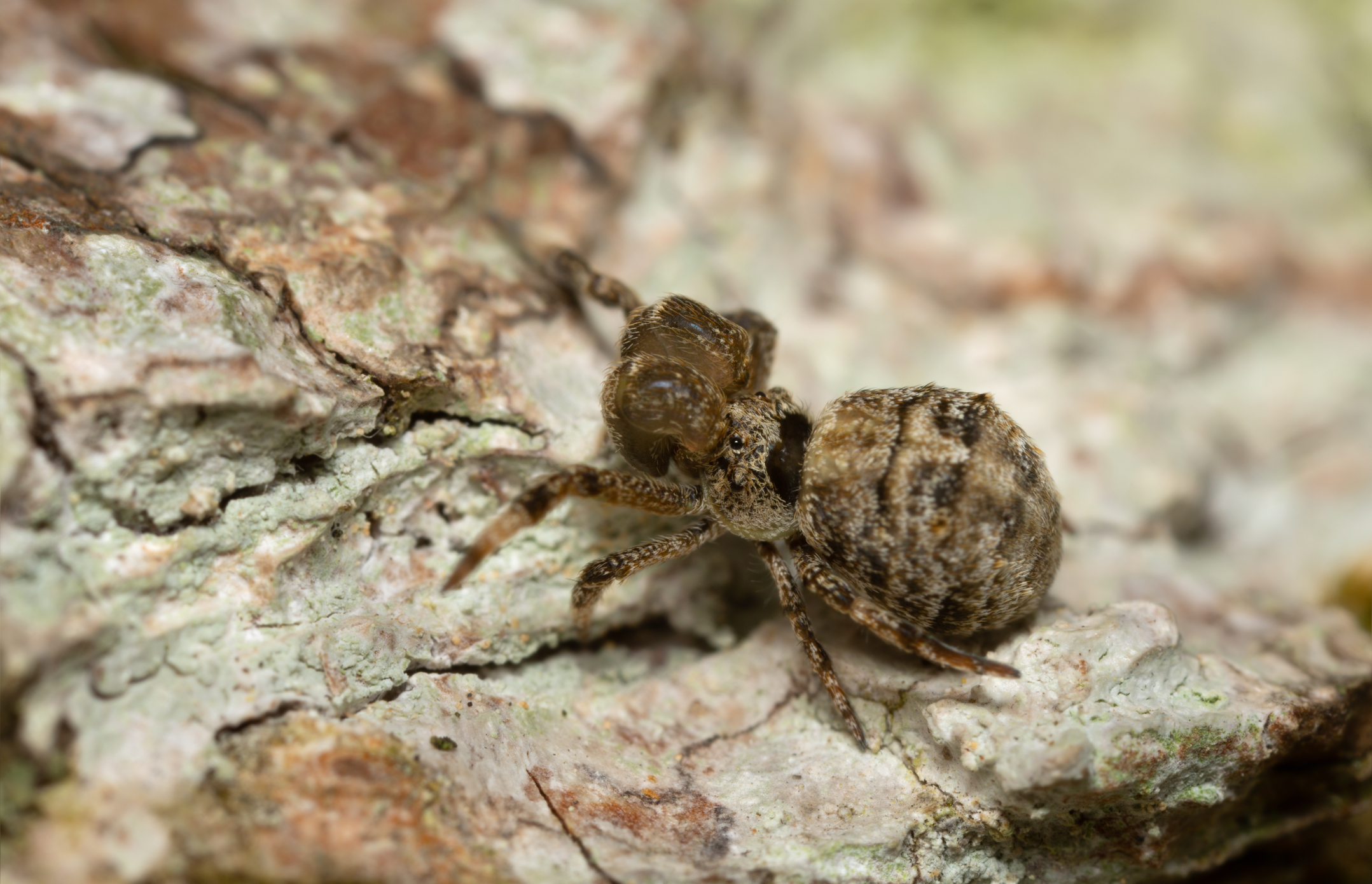
A small, round-bodied spider which uses a unique method to catch its prey. The triangle spider is found across Europe and parts of Asia and constructs a web of non-sticky, cribellate silk. There are four radial threads, to one of which the spider remains attached. If a prey item enters the web, then the spider ‘tugs’ repeatedly at that thread, until the prey is entangled.
The triangle spider has no venom glands, so the prey item faces a prolonged death. Once trapped, it is wrapped in further silk until it cannot escape and thereafter the spider will eat it, using digestive enzymes to liquify the prey as it feeds.

