
Let’s start by clearing up the obvious question: what’s the difference between a trunk and a really long nose?
What's the difference between a trunk and a nose?
A nose is a facial organ used for breathing and smelling. A trunk, by contrast, is a specialised, multi-purpose tool usually formed from the nose and upper lip.
- 6 extraordinarily weird animal noses: from tentacles to tubular snouts, here are nature’s most ingenious nasal designs
- 12 weirdest body parts, including fake penises, creepy extra-long fingers – and a moth with an extraordinary 30cm long tongue...
The key difference is structure: a typical nose is supported by bone and cartilage, while a trunk is made of muscle. What connects long noses and trunks is the term proboscis, defined as an elongated appendage from the head of an animal, which can take a myriad of different forms.
So, here are 7 animals with some form of proboscis.
7 animals that have a trunk
Elephants

Starting with the obvious: the elephant, the largest living land animal. An elephant’s trunk is one of the most impressive and extraordinary structures in the animal kingdom, capable of remarkable feats of both strength and precision. Whether it be lifting logs weighing more than 300kg or removing a peanut from its shell, the elephant trunk has astonishing dexterity.
- 10 animals that can kill an elephant: Which animals are able to take on this majestic giant?
- "A bull elephant appeared from the bush. Ambling over to the carcass, the immense creature used his tactile trunk to gently caress the bones of his fallen comrade"
The organ is made up of over 40,000 muscles and is even equipped with its equivalent of opposable thumbs. Called ‘trunk fingers’, these muscle extensions at the end of the trunk help the animal grab and pick up small items. African elephants have two fingers they can use to pinch objects, while Asian elephants have only one finger and a lower lip bulb to wrap around items.
Tapirs

Tapirs are strange-looking animals, similar in shape to a pig with a short, prehensile (adapted for grasping or holding) trunk. This trunk is highly flexible, able to move in all directions, allowing the animal to grab foliage that would otherwise be inaccessible.
The length of the trunk depends on the species. Malayan tapirs (Tapirus indicus) have the longest snout, and Brazilian tapirs (Tapirus terrestris) the shortest.
Tapirs often exhibit a behaviour called the Flehmen response, where they raise their snout and show their teeth to detect scents.
Elephant shrews
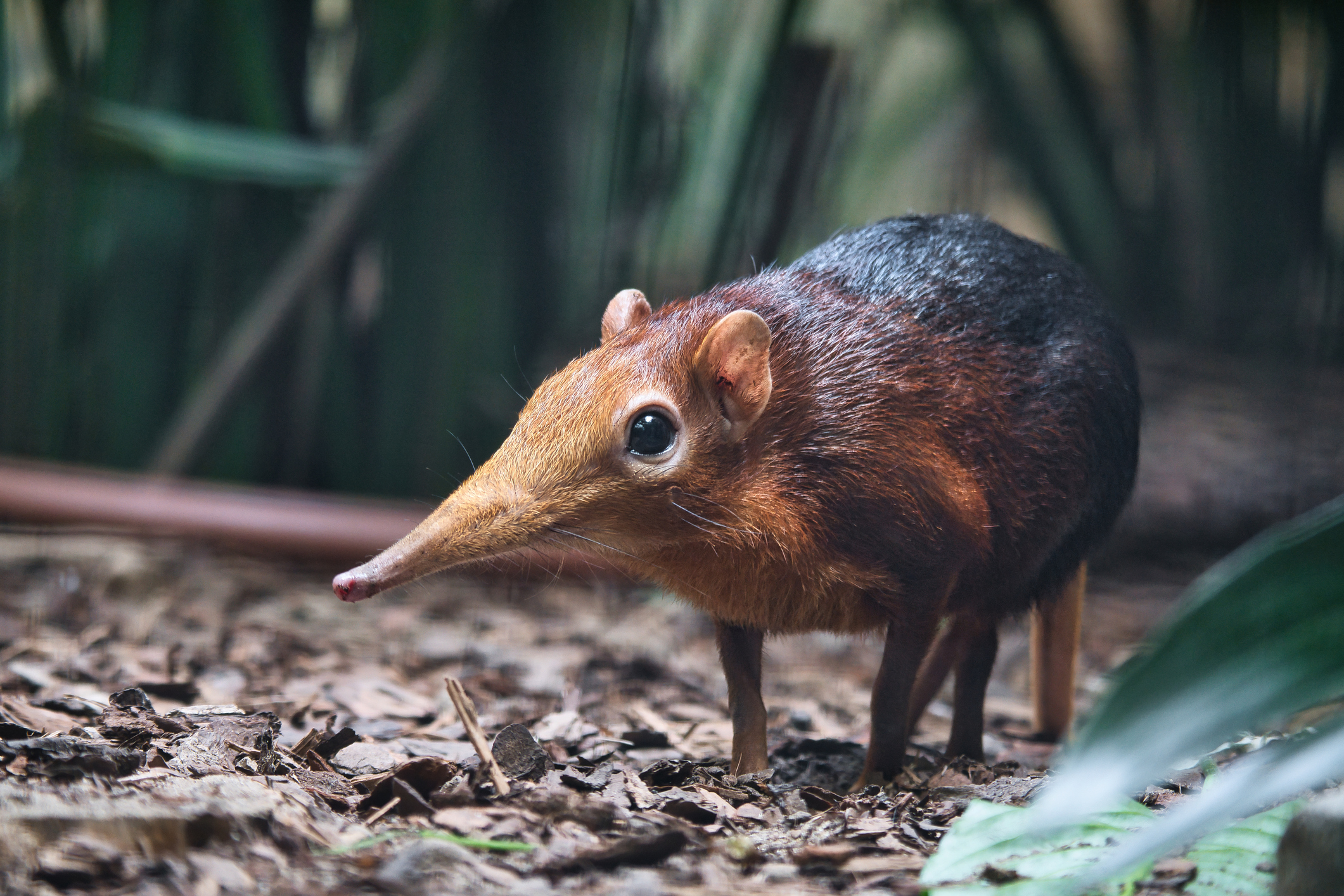
These small insectivorous mammals (also often called sengis) are native to Africa and are neither elephants nor shrews. They belong to the family Macroscelididae, and their English name comes from their resemblance to shrews, as well as their long, trunk-like noses.
These bendy noses are way less flexible than an elephant's trunk, and can’t pick things up. The length varies between species, but it’s always used to search for food.
- This creature might be tiny but it sure is mighty as it has a backbone strong enough to withstand being stood on by a 70kg human
- "It can chew through coconuts with its razor-sharp teeth." 6 weirdest rats in the world, including one deadly enough to kill an elephant...
Sengis mainly eat insects, spiders, centipedes and earthworms. To snatch prey, they fling out a skinny tongue from the mouth, located far back toward the neck. Sometimes, the nose gets in the way, and the animal has to turn its head to chew, much like a dog chewing a bone. As this can be a messy process, sengis have been described as ‘sloppy eaters’.
Giant anteaters

The long tubular snout on the giant anteater is hard to miss – and even more, inside it has a sticky tongue which can extend up to a whopping 50cm. The animal has no teeth and very limited jaw movement, so this tongue is really important.
- Giant anteater twins filmed in Argentina for first time
- Aardvark vs anteater: Just what are the differences between these 2 curious, long-nosed, termite-guzzling, oddities?
The giant anteater’s snout takes up most of its head, with its eyes, ears, and mouth relatively small. They have poor eyesight, but their sense of smell is powerful (40 times that of a human). This means they can detect insects like termites and ants from impressive distances.
Elephant seals
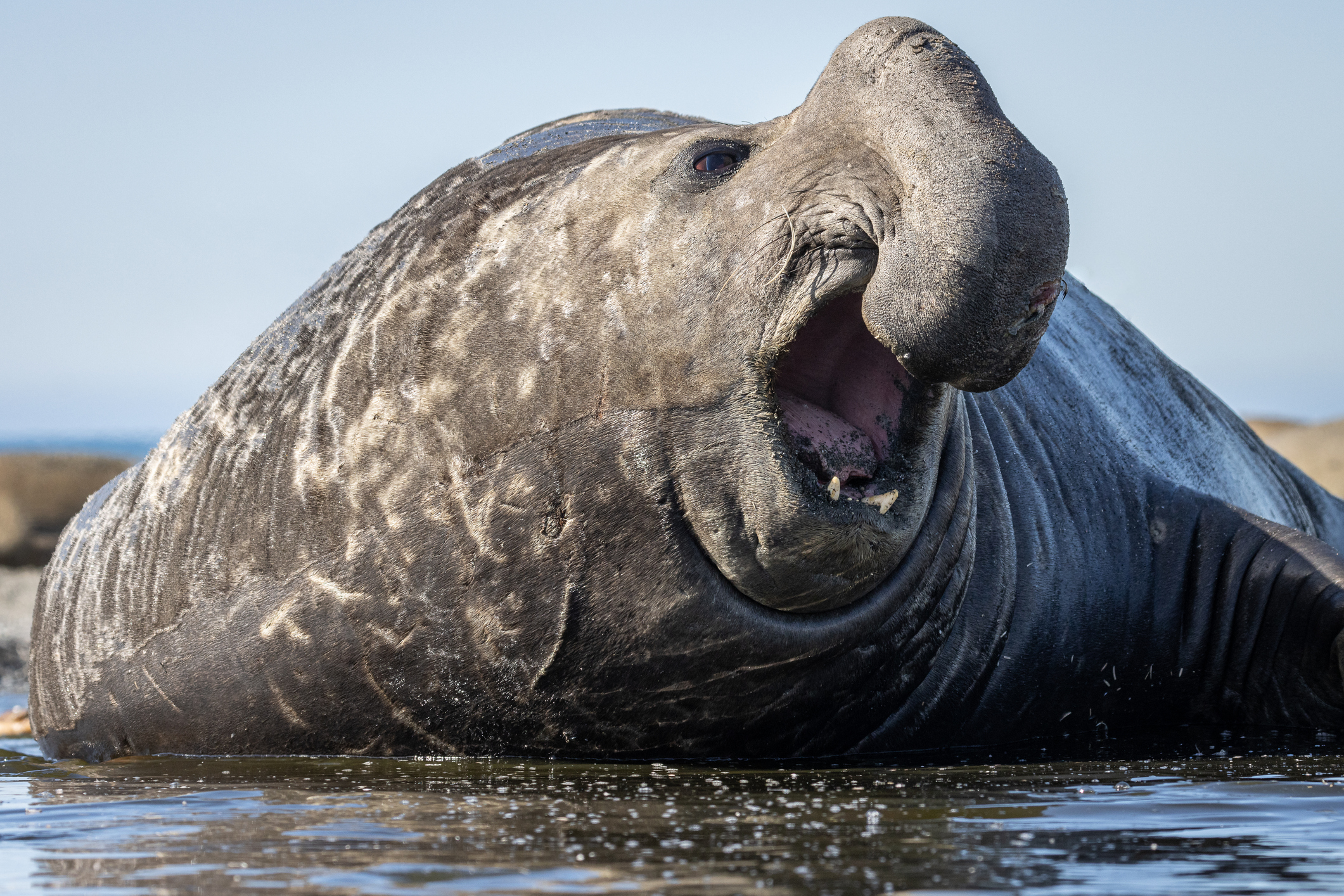
Elephant seals are the largest seal species in the world and an extreme example of sexual dimorphism. Male elephant seals can weigh up to 10 times more than females, and it’s also the males that sport the long snout resembling an elephant’s trunk, which they get their name from.
- "No way!" Gob-smacking footage of a gigantic two-tonne elephant seal taking a rest on a South African police car
- Researchers played elephant seals the calls of their nemeses. This is what happened next
This large proboscis is used in producing remarkably loud roaring noises, especially during mating season. But, perhaps more importantly, the nose acts as a kind of rebreather, as it’s filled with cavities that reabsorb moisture from when the animal exhales.
Saiga antelopes

The vast steppes of Eurasia, all the way from Hungary to northeast China, were once full of saiga antelopes. Today, you’re most likely to find them in Kazakhstan (an estimated 90 per cent of the global population).
These antelopes favour remote wilderness areas with harsh conditions and extreme seasonal temperature swings, and have adapted accordingly. The signature bulbous nose warms the cold air it breathes in during freezing winters, and filters dust and cools the blood in scorching heat.
Proboscis monkeys

Also known as the long-nosed monkey, this animal may have developed this large appendage to be more… sexually appealing. According to research published in 2018 in the journal Science Advances, there is a clear link between nose size and the number of harem females around the male.
The oversized organ creates an echo chamber that amplifies the monkey’s call – useful for intimidating rivals and impressing females. In a dense rainforest, where visibility is limited, vocalisations are much more efficient than visual cues. These calls can carry for over 100-200 metres, depending on specific conditions.
Top image credit: DaBearMedia/Getty Images


