
Forests are a whole lot more than simply a lot of trees. Almost a third of the Earth's land is covered by forests and they are the lifeblood of many animals throughout the world.
They are also the stuff of myth and legend, with dark forests the setting of many a horror story and fairytale and the home of strange beings. Some are millions of years old, having existed with very little intervention from humans since before the ice age and through the mass extinction event that wiped out the dinosaurs.
Forests are home to around 80 per cent of the world's land-based animals, insects and plant species as well as around 300 million people. The forest ecosystem is also vital for carbon sequestration, regulating climate patterns and providing the air we breathe. There are huge forests, ancient forests and tiny forests and there are also some very strange forests. Here are a selection of weird forests that hold some surprising secrets.
- Before flowers, grass or dinosaurs Earth had forests unlike anything alive today
- Which absorbs more carbon – forests or oceans?
- "It looks like an extra-terrestrial being that fell to Earth and behaves like a subterranean vampire." 10 weirdest, wackiest plants on the planet...
The world's weirdest forests
Deep sea forest
This may not be what is thought of as a forest to most, but when divers discovered this underwater 'forest' it was so strange they nicknamed it 'Forest of the Weird'. In fact, this deep-sea forest doesn't have any trees at all, but instead is filled with sponges that all face the same direction.
Discovered in 2017 with the help of a deep-sea robot, the forest is about 2,442 metres deep and scientists were confused to discover a community of sea sponges that were all orientated with the direction of the current. The researchers believed this was the best chance the sponges had of capturing the snacks that drifted by on the current.
Pando Grove, within Utah's Fishlake National Forest
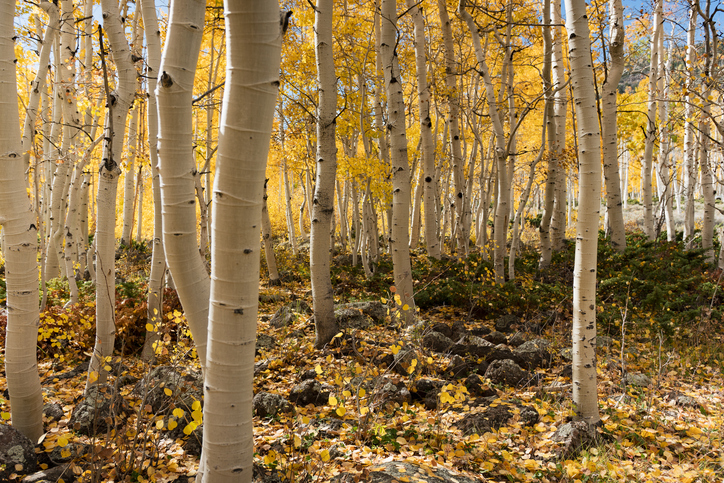
In this national forest in Utah, there's an area in which around 47,000 aspen trees stand tall. As scientists dug deeper, however, they discovered that this corner of forest was not in fact 47,000 separate trees, but a single living organism connected by one underground root system.
One single giant tree. Pando covers around 43 hectares and is widely regarded as the world's largest known tree by mass. But it could also be the oldest living organism, according to some scientists who estimate its age at around 9,000 years old.
- Experts discover ‘The Heaven Sword’ after a decade searching Taiwan’s forests – and it’s taller than a 20-story building
- 10 epic photos of the most monumental trees on Earth
Crooked Forest, Poland
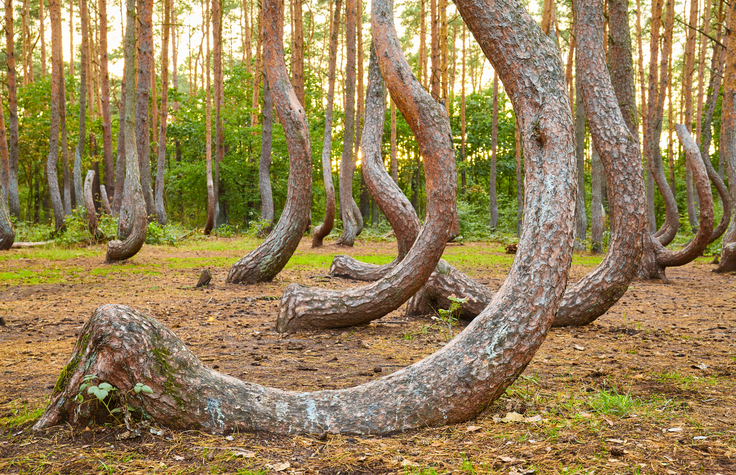
We've all seen a Scots Pine - and it grows straight up, right? Not necessarily. There are many theories as to why the trees in the Crooked Forest in Poland grow in low semi-circles, before heading straight up, but no-one really knows the answer.
One of the weirdest things about the phenomenon is that they are around 400 curved trees in among a forest of many more straight ones. Planted in 1930 the pines bend to the north and then curve back up again and some think the curves may be human intervention for use in boat building.
The Sunken Forest in Kazakhstan
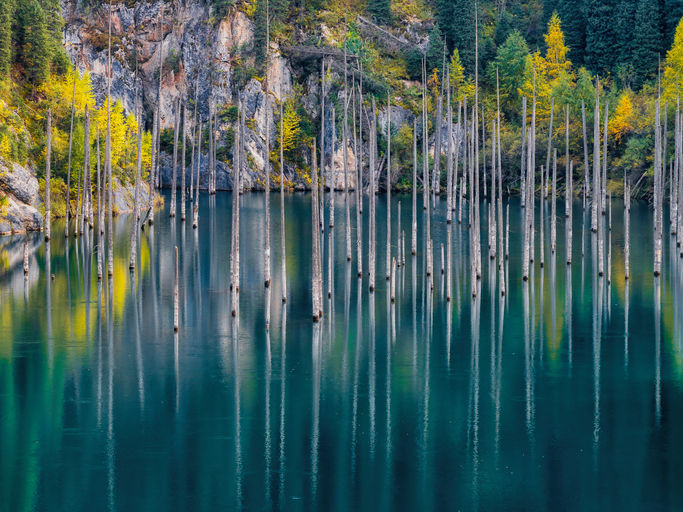
Everything about this strange natural phenomenon is eery - from the bright blue colour of the lake created by limestone to the uniform trees all sticking up straight out of it. A grove of spruce trees seem to live on from underneath a lake in the Tian Shan mountains in Kazakhstan.
The lake formed in 1911 after an earthquake led to landslides and avalanches that filled the valley with water and trapped the forest. In fact, the trees were drowned by the flooding, but their branches and green algae - which looks like foliage - can still be seen just underneath the water.
Sundarbans
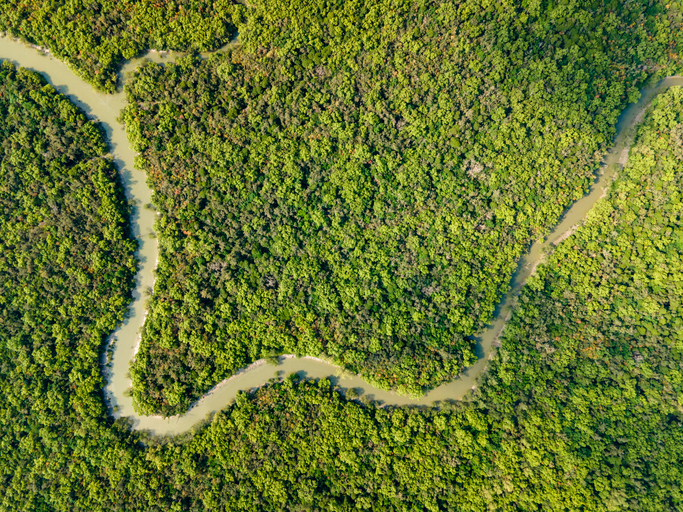
Crossing the line between land and sea mangrove forests are strange places filled with habitats above and below ground. The largest continuous mangrove in the world spans 10,000 square kilometres and is the forest on the Bay of Bengal between India and Bangladesh.
The mangroves are vital in protecting the area from the cyclones that arrive during the rainy season. But you wouldn't want to venture too far into the forest's depths - this area is home to Royal Bengal tigers, Indian pythons and saltwater crocodiles.
- It's taller than Big Ben, can live for thousands of years and even regenerates
- Weirdest trees in the world: discover nature's wackiest
Wistman's Wood
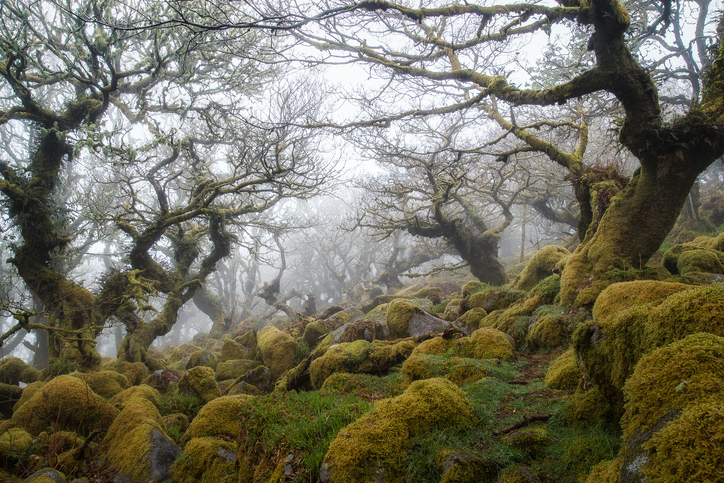
If you're looking for the spookiest of forests around, then you'd be hard pressed to find one spookier than Wistman's Wood on Dartmoor in the UK. Part of the country's ancient temperate rainforests, it is a grouping of small oaks at high altitude that are gnarled, short, and covered in hanging lichen and moss. Likely to be originally part of the ancient forest that was once all over Dartmoor, the wood has featured in many famous books and poems, and was the inspiration for The Hound of the Baskervilles by Arthur Conan Doyle.
Yellowwood State Forest
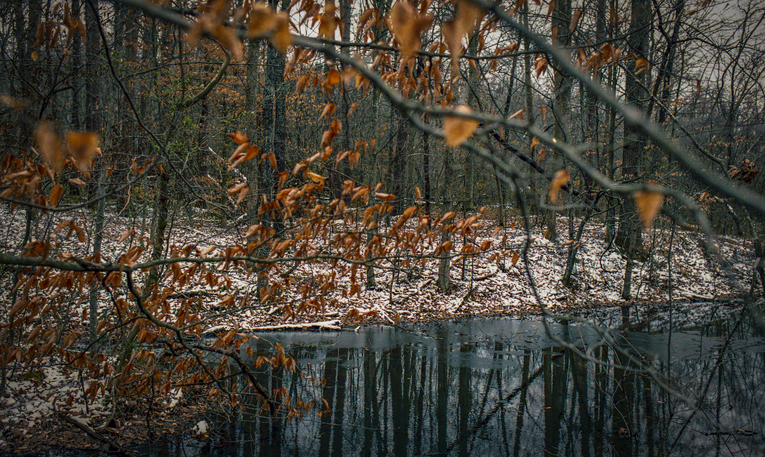
A huge forest made up of over 25,000 acres, there are two elements to this forest that make it a contender for this list. The forest is named after the yellowwood tree (Cladrastis kentukea) which is a species rarely found that far north. The yellowwood tree flowers every three to five years and the groves only make up a small portion of the trees in the forest.
But another mystery surrounds the woods - large boulders have been found in three of the trees. The sandstone rocks, estimated to weigh around 200 pounds have been found in the tops of two American sycamores and a chestnut oak. No one knows how they got there.
Daintree Forest
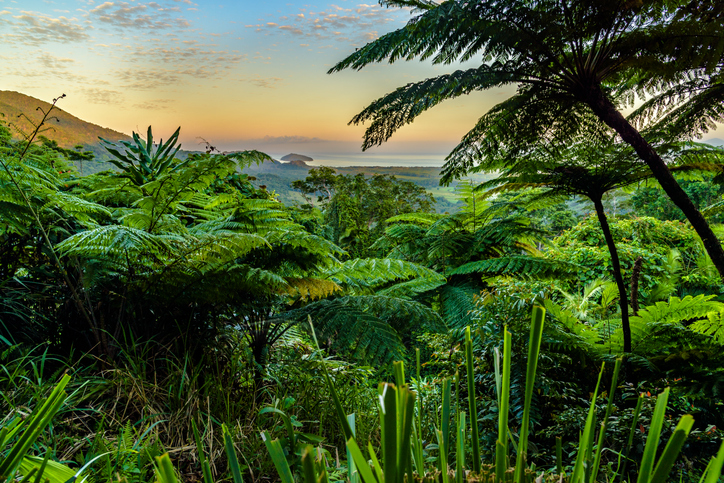
The world's oldest forest, researchers believe this space has been a forest largely uninterrupted by human intervention for 180 million years. That means it existed during the cretaceous period where the likes of the Tyrannosaurus Rex and Triceratops were hanging about until they were wiped out in a mass extinction event. This forest, in Queensland, Australia, carried on and is now home to 90 per cent of Australia's bat and butterfly species and 30 per cent of its marsupial, frogs and reptiles.
- What's the oldest tree on the planet? Clue – it's older than Stonehenge…
- "It’s filled with dangerous species. If provoked one will use its claw to rip open the soft bellies of humans to devastating effect."
The Dragon Blood Tree forest
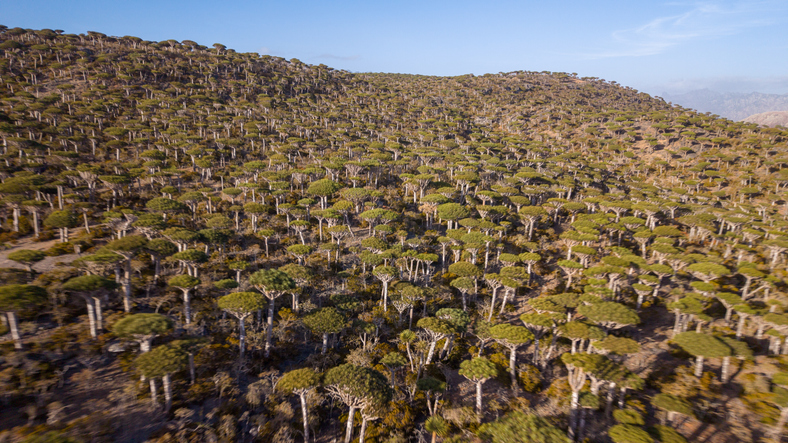
On a remote island 200 miles off the coast of Yemen there is a forest of some particularly weird and wonderful trees. Socotra is home to a vast array of plant and animal species but perhaps the most well known is the dragon blood tree. These strange looking trees look almost umbrella-like, have blood-red resin and have leaves only on the end of their youngest branches.
Yakushima forest
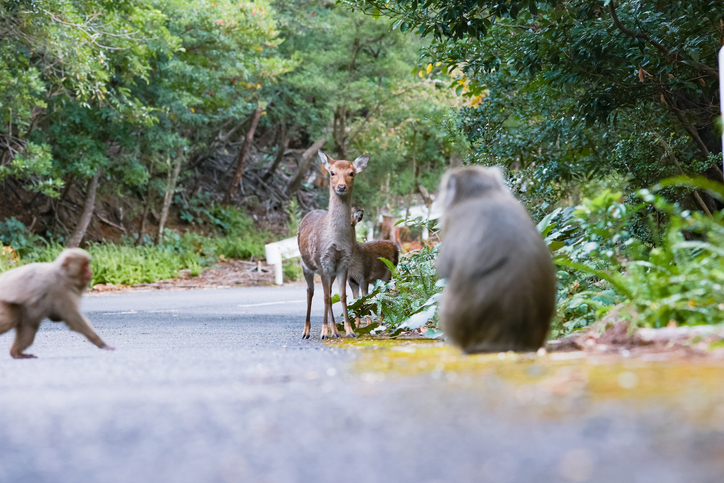
The Japanese island of Yakushima is home to a primeval temperate rainforest filled with cedar trees that are over 1,000 years old. The oldest tree in the forest is thought to be 7,000 years old and is nicknamed Jōmon Sugi. In fact, the ancient trees aren't the only remarkable thing about this forest - in 2025 new research was published that suggested that monkeys and sika deer which live in the forest have developed a symbiotic relationship. The macaque monkeys ride around on the deers' backs, grooming them as they go, while the deers eat the fruit monkeys drop.
Fossilised forest
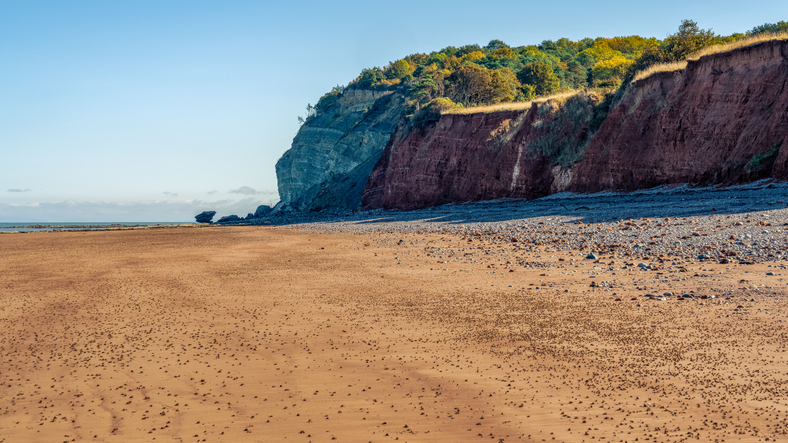
Possibly one of the most intriguing forests around but this one isn't still living. In Minehead, Somerset, scientists found one of the world's earliest known fossilised forests. Not far from Butlin's holiday camp, the discovery was an example of a kind of forest that existed in the Devonian Period between 419 and 358 million years ago. The forest would have held a kind of early version of today's trees, a bit like palm trees, and the tallest were between two and four metres tall.
- The strange island where trees bleed, deadly cucumber trees grow and nature has evolved in ways found nowhere else on Earth
- A tree that grows underground? Discover the trees that grow trunks, fruit and even flowers below the earth
- How many trees are there in China? Scientists just counted them and here's what they found


