
The Earth has been around for approximately 4.54 billion years. However, it wasn’t until 450 million years ago that the first plants began to take over our planet’s surface. It took another 50 million years before the first forests established themselves - but once they gained a foothold, life was never the same again.
Today, there’s estimated to be 3.04 trillion trees worldwide, which is roughly 366 trees for every one person. That might seem like a lot of trees, but it’s estimated that the global tree count has dropped by nearly 50% since the onset of human civilisation roughly 10,000 years ago, back when there were as many as 6 trillion trees.
Many of the trees standing today are found in forests, which cover approximately 30% of Earth’s surface. These forests play a vital role in the health of our planet and serve as habitats for countless species of plants and animals. They’ve been critical ecosystems throughout Earth’s history too, not only in the last few thousand years, but for hundreds of millions of years.
- Which absorbs more carbon – forests or oceans?
- Experts discover ‘The Heaven Sword’ after a decade searching Taiwan’s forests – and it’s taller than a 20-story building
When did plants evolve? And how long did it take for forests to appear?
The first plants appeared more than 1 billion years ago, though it took another half-a-billion years for them to leave the ocean and start colonising the land.
These early terrestrial plants evolved during the Middle Ordovician, around 470 million years ago, though some studies suggest plants may have made landfall in the Cambrian more than 500 million years ago, around the same time complex animals were evolving in the ocean.
The earliest terrestrial plants likely resembled liverworts and lacked any vascular tissues - the kind of tissues that are able to transport fluids and nutrients around a plant. The first fossils of vascular plants (a species known as Cooksonia) are dated to the Silurian (443 to 420 million years ago) and while they’re quite robust compared to earlier plants, they’re not what you’d recognise today as ‘trees’, growing to max heights of just 6cm.
- "It's famous for the mighty river that snakes through its forests, but high above the canopy, another vast river is moving…" – Discover the Amazon's 'Flying River'
- 5,000 years ago, these forests drowned. Now they're thriving reefs – home to oysters, sponges, sharks, rays and turtles
While researchers are pretty sure when vascular plants appeared, they’re less clear on when trees emerged. This is partly down to the fact that it’s difficult to define what a ‘tree’ actually is - botanists themselves have been struggling with this question for more than a century!
As a general rule of thumb, trees are plants that live for many years (perennial), have a distinct, single trunk, and a crown of leaves at the top. That said, there are instances where these definitions don’t hold up and a lot of cases where a shrub/herb looks like a tree, and a tree looks like a shrub/herb.
However, once trees - or at least tree-like plants - emerged in the Devonian, around 400 million years ago, they quickly spread and formed vast forests.
The term forest doesn’t only include the trees in a given area of land, it also includes the other plants that make up the wider undergrowth. Just as forests vary from place to place today, they have also changed dramatically through time.
- This extraordinary forest below the waves is the only one of its kind – and it’s home to one of the fastest-growing organisms on Earth
- It can grow higher than the leaning Tower of Pisa and is the tallest living structure in our oceans
Silurian (443-420 million years ago)
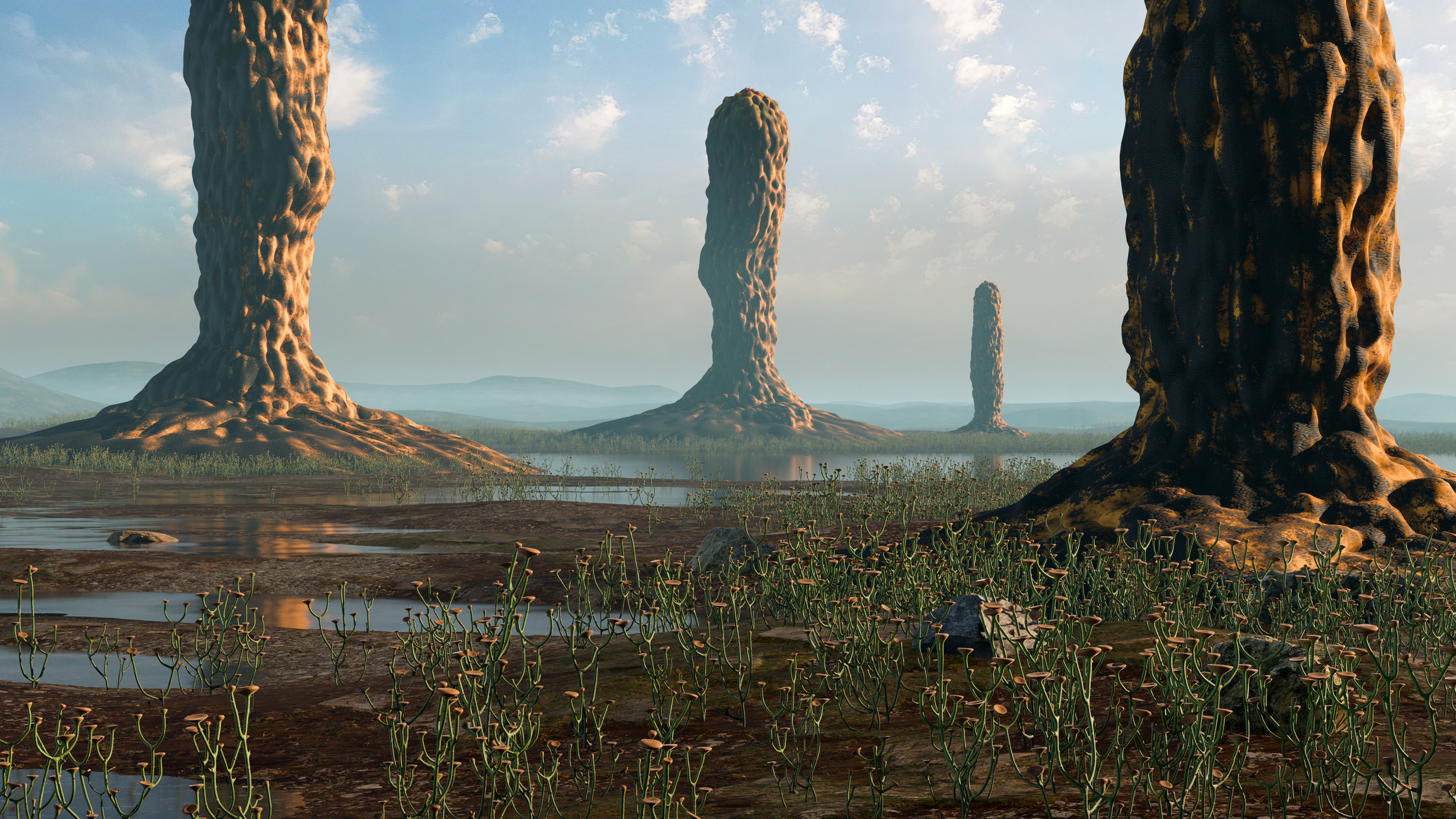
The first trees may not have appeared until the Devonian, but that doesn’t mean the land during the preceding Silurian Period wasn’t teeming with life.
Unlike those that came later, Silurian ‘forests’ weren’t made up of trees, rather massive, column-like organisms known as Prototaxites. These strange, biological bastions towered over primordial landscapes dotted with mosses, liverworts, and the ancestors of vascular plants. The largest amongst them grew to 8m tall - almost twice the height of a double-decker bus!
Prototaxites were, by far, the largest organisms that lived on land during the Silurian, but palaeontologists aren’t really sure what they were. It was long thought they were a type of fungus, but a 2026 study revealed they were something entirely unique, belonging to a long-extinct, previously undescribed kingdom of life.
- How do trees make it rain?
- “It lived in the deep sea, had two mouths, and a prehensile penis projecting from its forehead.” 10 prehistoric freaks of nature
If that wasn’t weird enough, the animals that lived in these forests were all invertebrates, with ecosystems composed almost entirely of primitive millipedes, scorpions, and other arachnids. These were the first animals to live on land.
Devonian (420-359 million years ago)
Prototaxites lived right up until the end of the Devonian, but midway through this period they made way for a new type of towering organism, trees.
The oldest known fossil forest is dated to 390 million years ago and was discovered along the coast of southwest England in 2024. This forest was made up of a plant known as Calamophyton - a species described as a ‘prototype’ to modern trees. It looked a bit like a modern-day tree fern, with a crown of leaves growing out of the top of a tall, narrow trunk.
As plants spread beyond wetlands and further inland, forests full of trees like Calamophyton sprang up in the interior of continents. These forests grew on semi-arid plains crisscrossed by small river channels transporting water and nutrients down from the mountains.
While forests started to look a lot more ‘modern’ during the Devonian, their structures were far simpler than those we recognise today. The floors of these forests didn’t support much other plant life and were instead covered by branches shed by growing Calamophyton, which provided rich habitats for invertebrates.
Carboniferous (359-299 million years ago)
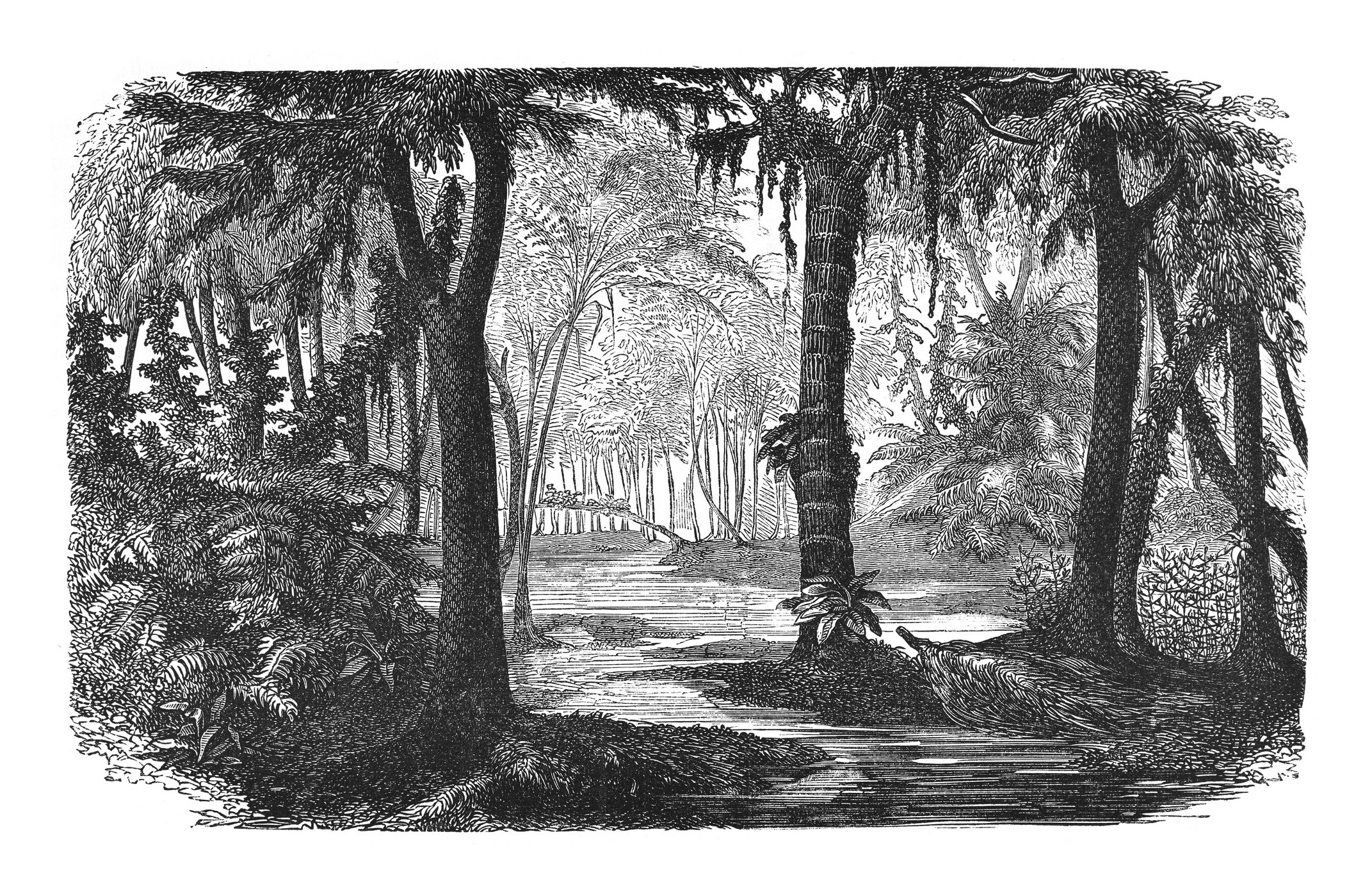
The Carboniferous is best known as the ‘Age of Insects’, but it’s also famous for its vast forests and swamps, which covered much of the Earth’s surface and eventually became the coal beds characteristic of this period.
The supercontinent Pangea started to form during the Carboniferous, making a lot of land available for the spread of tropical rainforests. These rainforests featured a multi-layered structure, like modern rainforests, but instead of being dominated by flowering plants, they were composed almost entirely of spore-bearing trees like Lepidodendron and Sigillaria.
- Prehistoric insects were absolutely massive. Here's why they needed to be so darn big
- Scientists took soil samples from a forest and tested them for microplastics. What they found was disturbing
The trees from this period had scaly trunks and bushy, palm-like canopies that could reach heights of nearly 50m! Beneath these towering trees, woody tree ferns and early seed plants formed a dense understory that was home to many different animals, including a 2.5m-long, millipede-relative known as Arthropleura.
As well as being home to a massive diversity of insects and other invertebrates, Carboniferous forests also provided shelter to some of the earliest tetrapods. From these amphibious vertebrates, reptiles and early mammals later emerged.
Permian (299-252 million years ago)
In contrast to the Carboniferous, the Permian was a lot drier. This was the period when Pangea reached its maximum size and vast deserts spread across the continental interior.
A shift to drier conditions and a collapse of the so-called ‘Carboniferous Rainforest’ resulted in the replacement of scale tree dominated forests with tree fern dominated forests. The earliest gymnosperms also flourished during this period, with conifers, cycads, and ginkgos spreading across large parts of Pangea.
Like animals did during the Permian, plants also evolved to be less reliant on water and more drought-resistant. This allowed them to move further inland and form forests across many different latitudes.
A diversification of plant life was mirrored by one amongst vertebrates. From living in the shadows of giant bugs during the Carboniferous, four-legged giants like Dimetrodon and Inostrancevia evolved during the Permian and quickly took over terrestrial ecosystems.
Triassic (252-201 million years ago)
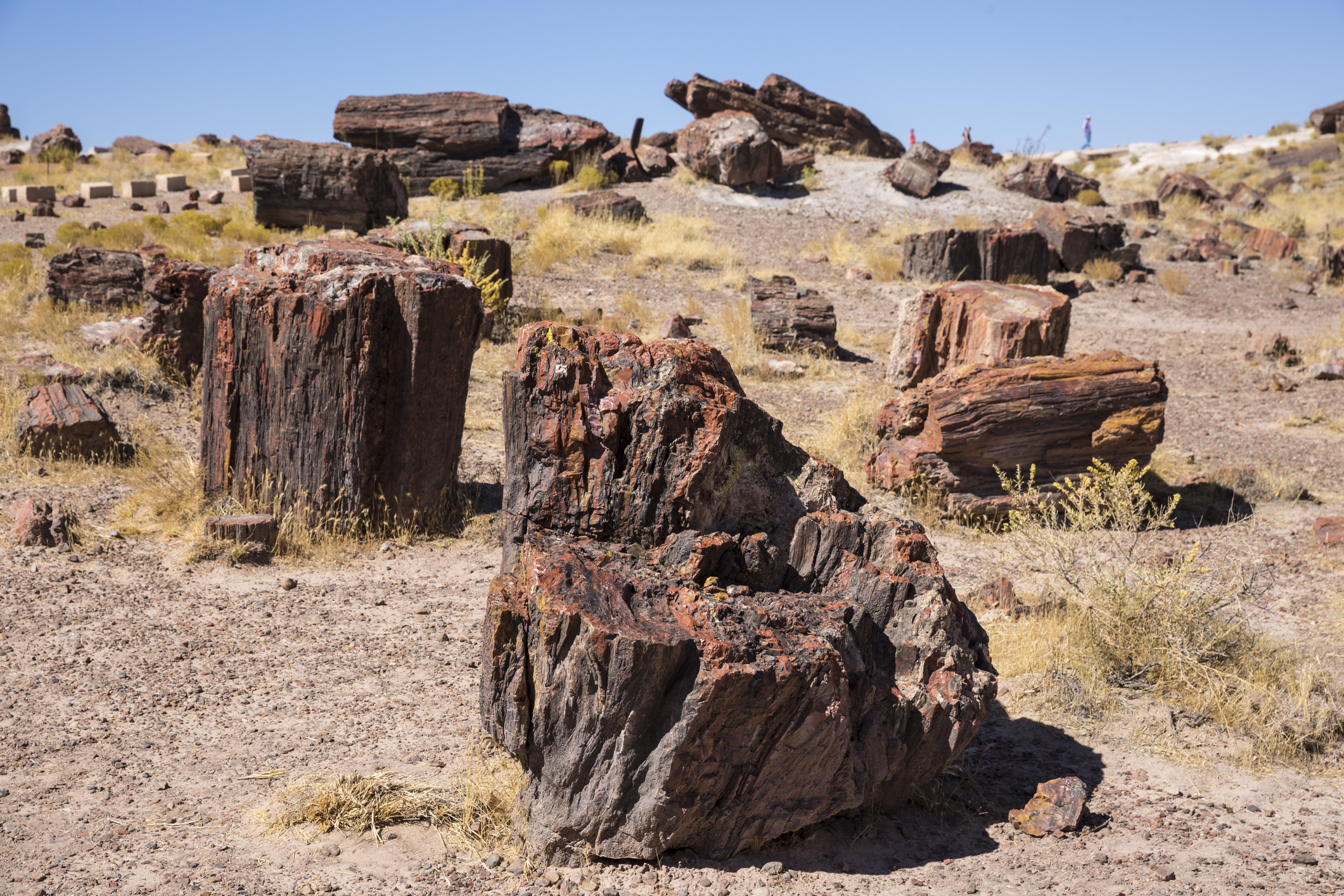
If the Permian was a sauna, then the Triassic was an oven, with temperatures reaching up to 60°C at the equator. The equatorial region became a vast ‘dead zone’ during the Triassic, devoid of most plants and animals.
However, at higher latitudes conifers and other gymnosperms continued to thrive, forming large, expansive forests. There were even moist and temperate forests growing at the poles, where temperatures rose to a balmy 20°C during the summer!
During the Late Triassic, ginkgos boomed, diversifying into many different species. Today, this once-diverse group of plants is represented by just a single species: Ginkgo biloba.
These remarkable trees are renowned for their resilience, with some living for more than 3,500 years and showing remarkable resistance to disease and even extreme events such as the Hiroshima atomic bomb.
- "Treetops appear to lock together like the pieces of a jigsaw puzzle, separated by channels of blue sky." Why do some trees refuse to touch each other?
- It’s taller than Big Ben, can live for thousands of years and even regenerates after an entire forest burns down
Jurassic (201-143 million years ago)
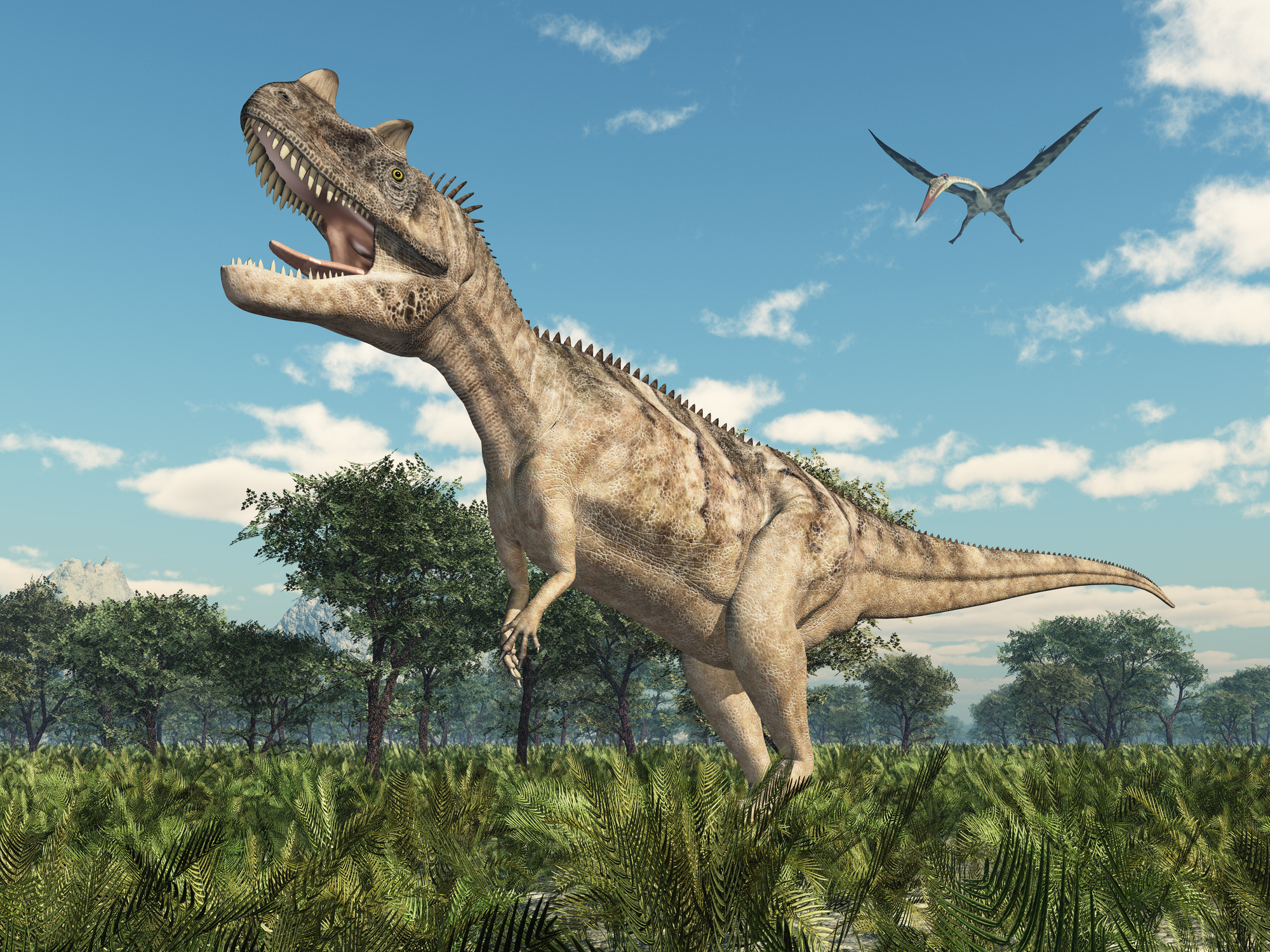
As dinosaurs diversified during the Jurassic, so did plants, particularly conifers. From a botanist’s perspective, the Jurassic was more the ‘Age of Conifers’ than the ‘Age of Dinosaurs’, with most modern groups appearing at this time.
The forests of the Jurassic didn’t look too dissimilar to those that cover our tropics today, though there was one key difference: the ground was covered in moss, ferns, and leaf litter, rather than grass. This is because flowering plants (angiosperms) didn’t evolve until the following Cretaceous Period.
Like it was during the Triassic, Earth was much warmer than it is today, allowing lush forests to grow very close to the poles. These polar forests were home to a variety of different dinosaurs, including the aptly-named species Glacialisaurus and Cryolophosaurus.
In 2026, researchers studied fossil insects found in Inner Mongolia, China, and compared them to living relatives in order to recreate what a Jurassic-aged forest may have sounded like. By examining sound-producing organs on the insects’ wings, they were able to work out that they produced low-frequency trills punctuated by clear, high-pitched whistles, similar to modern bush crickets.
Cretaceous (143-66 million years ago)
With the evolution of flowering plants in the Cretaceous came an explosion of colour. While forests in previous periods were far from colourless, they were largely a canvas of different shades of green, lacking the vibrant palette we associate with forests today.
At the beginning of the Cretaceous, forests were still dominated by conifers, such as monkey puzzle trees, alongside ginkgoes, cycads and ferns. The earliest flowering plants lived in the shadows of these trees and didn’t really gain an ecological foothold until 100 million years ago, around 30 million years after they first appeared in the fossil record.
- It’s larger than New York State and contains more than 30 billion tonnes of carbon – equivalent to 3 years of global fossil fuel emissions
- Scientists just climbed 38 of the tallest trees in Borneo. What they found was staggering
However, once flowering plants established themselves they quickly took over, expanding into the upper canopy where they increasingly replaced conifers. This transformation, known as the Angiosperm Terrestrial Revolution, saw flowering plants come to account for nearly 85% of floral diversity by the end of the Cretaceous.
The evolution of flowering plants was closely intertwined with that of pollinating insects, as well as fruit-eating mammals, birds, and reptiles. To attract pollinators, flowering plants evolved brighter and more visually enticing cues, adding new, never-before-seen colours to forests.
Paleogene (66-23 million years ago)
After the asteroid-induced destruction at the end of the Cretaceous - which wiped out the non-avian dinosaurs and restructured ecosystems worldwide - the global climate entered into a long-term cooling and drying trend. Before this, however, Earth experienced a brief but dramatic period of global warming known as the Paleocene-Eocene Thermal Maximum (PETM), which occurred around 56 million years ago.
This event lasted nearly 200,000 years and saw global average temperatures rise by up to 8°C. Such a significant rise in temperature prompted a return to Jurassic and Cretaceous-like environments, with moist, temperate forests growing at the ice-free poles. By the end of the Eocene (approximately 37 million years ago), there’s evidence of glaciation in Antarctica, suggesting these environments didn’t last particularly long.
In the Early Oligocene, around 34 million years ago, the North American and Eurasian tropical and subtropical forests were replaced by dry woodlands and widespread grasslands.
As a group, grasses evolved during the Late Cretaceous, but it wasn’t until Earth’s climate turned cooler and drier in the Paleogene that they really began to spread worldwide. This rise of grasslands prompted a rapid diversification of grass-eating mammals.
Neogene (23-2.6 million years ago)
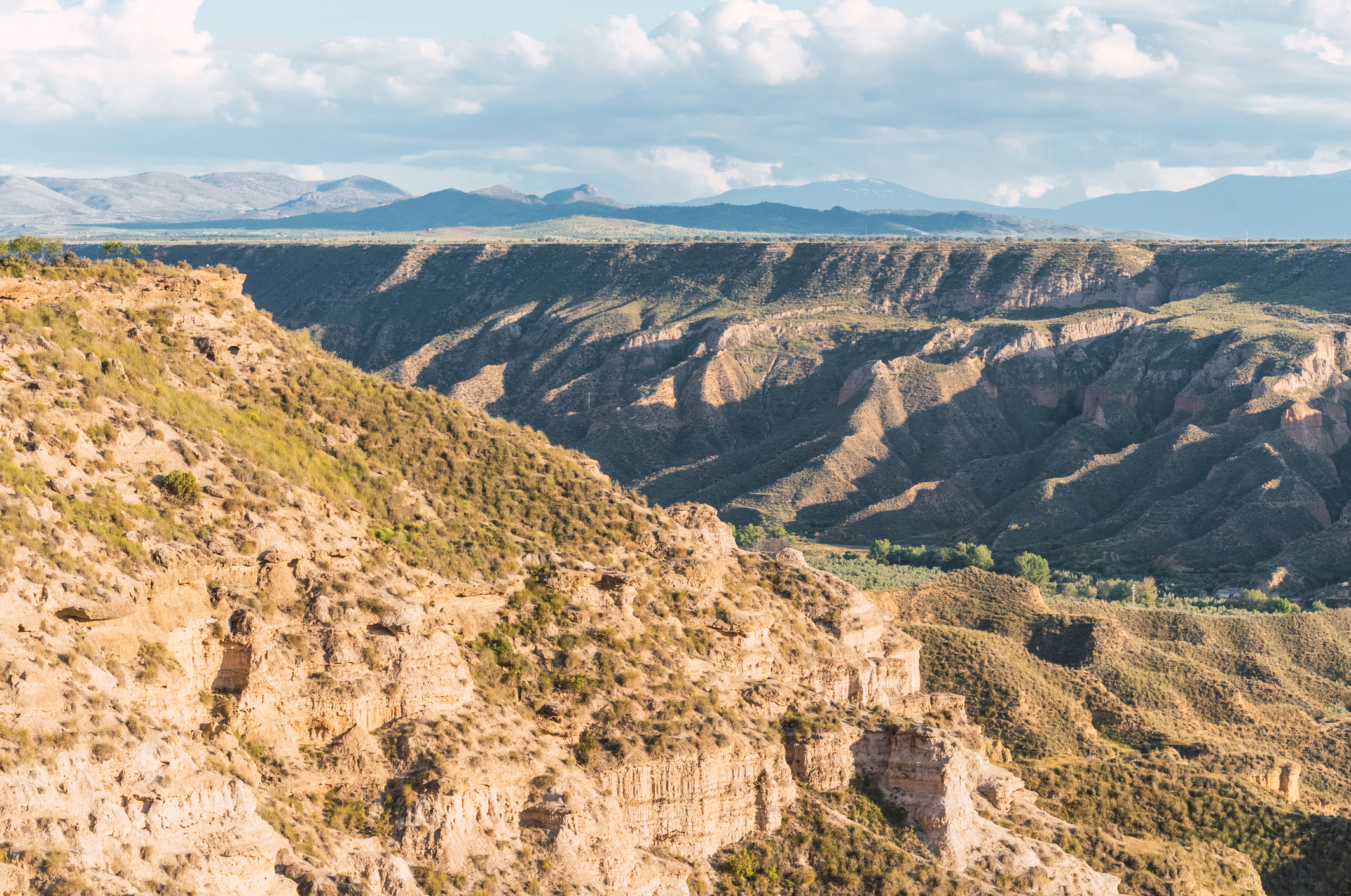
In response to a cooler, more seasonal climate, tropical plants gave way to deciduous ones, which were better adapted to changing seasons. These deciduous trees formed massive forests of oaks, maples, and beeches, replacing jungles and rainforests in high latitudes.
The spread of grasslands also continued during the Neogene and many forests were replaced by open, savannah-like environments, creating ideal grazing pastures for animals such as horses, antelope, and elephants.
- "They will use this claw to rip open the soft bellies of humans to devastating effect..." 6 deadliest, most dangerous jungles on the planet
- More than 6,600km long, it flows through 11 countries, across deserts, jungles and wetlands... And hides some of Earth's deadliest animals
Those forests that weren’t entirely replaced were instead broken up into woodland-grassland mosaics, creating seasonally dry, patchy habitats.
From Spain across central Europe to China, extensive warm forests and wetlands supported a rich diversity of forest-dwelling apes. As global cooling trends caused these forests to shrink towards the end of the Neogene, many of these apes moved south and adapted to more open environments in Africa, evolving into our upright walking ancestors.
Quaternary (2.6 million years ago to now)
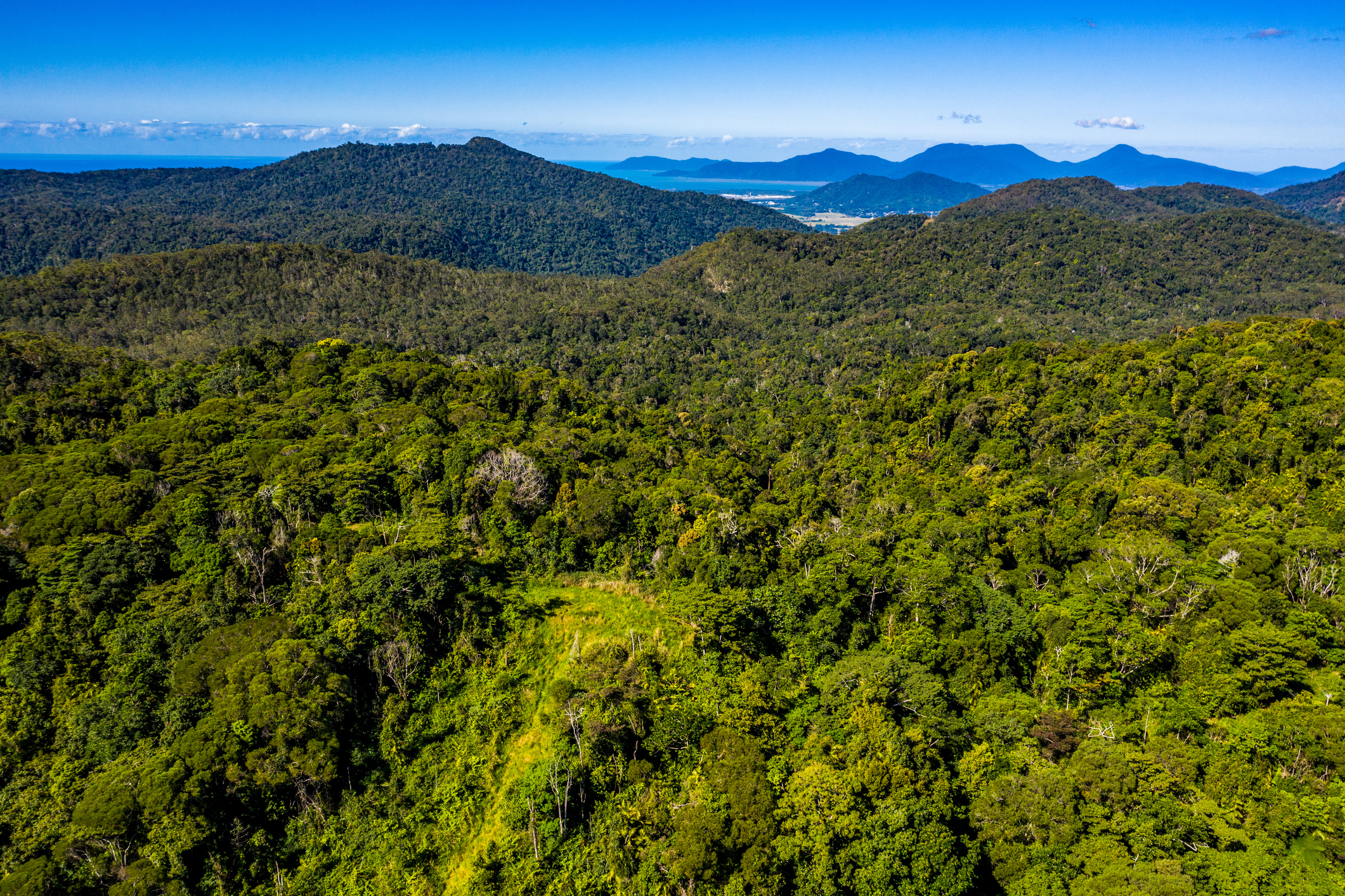
The start of the current geological period - the Quaternary - was marked by the onset of the eponymously named Quaternary glaciation, a cycle of glacial and interglacial periods that have lasted the last 2.6 million years.
During cooler periods, massive ice sheets covered much of North America, Europe, and Asia, preventing any continuous forests from growing. Instead of trees, the cold and windy plains just beyond these ice sheets were covered in hardy grasses, sedges, and low herbs, creating an environment known as the Mammoth Steppe.
Many temperate trees, such as oak, beach, and various conifers, retreated south during these cooler periods, into so-called refugia near the Mediterranean and the Caucasus. In the tropics, lower sea levels and drier climates caused rainforests to contract and break apart into smaller patches surrounded by dry woodlands and savannahs.
When the climate warmed, glaciers melted back and coniferous and deciduous forests spread rapidly northward, reclaiming the barren lands that were once covered by ice. The rainforests around the tropics also expanded, gradually reconnecting the isolated patches that had survived the colder periods.
Today, we’re living through an interglacial known as the Holocene. Forests have bounced back following the end of the last ice age 11,700 years ago, but they now face a very different threat. Rather than glaciers and shifting climates, it’s us - humans - who are now reshaping them on an unprecedented scale.
top image: Piece of petrified log from the Triassic period in the Petrified Forest National Park in Arizona United States. Credit: htrnr/ Getty Images
Discover more environmental stories from around the world:
- It’s almost as big as Manhattan, contains trees more than 1,300 years old and is visible from space. Now it hides a ticking time bomb
- An American town woke up one day and mysteriously found itself on the opposite side of the Mississippi River to where it had been. We now know why...
- “As it touches the seafloor, it kills whatever living thing it contacts by encasing it in a tomb of ice…” 10 mind-bending, terrifying ocean phenomena

