
Life on Earth can trace its roots back four billion years. It wasn’t long after this point that organisms started consuming one another, establishing themselves as the world’s first ‘predators’.
These early predators were likely microbes that engulfed others to obtain nutrients via a process known as phagocytosis - a far cry from the predatory methods employed by the monsters on this particular list, but no less deadly.
- Prehistoric prey and predator fossil discovery reveals a violent fight for survival millions of years ago, in first-ever evolutionary arms race
- What was the first ever apex predator? Meet the prehistoric Anomalocaris who ruled before the dinosaurs
While these microbes aren’t quite brutal enough to be branded one of ‘the deadliest predators of all time’, they are the organisms that ultimately sparked the evolutionary tug of war between predators and prey.
This so-called ‘predator-prey arms race’ has been raging for millennia, leading to the evolution of larger, toothier, and increasingly more deadly predators. Here are some of the deadliest, food-chain-topping predators from prehistory…
10 deadliest predators of all time
T.rex
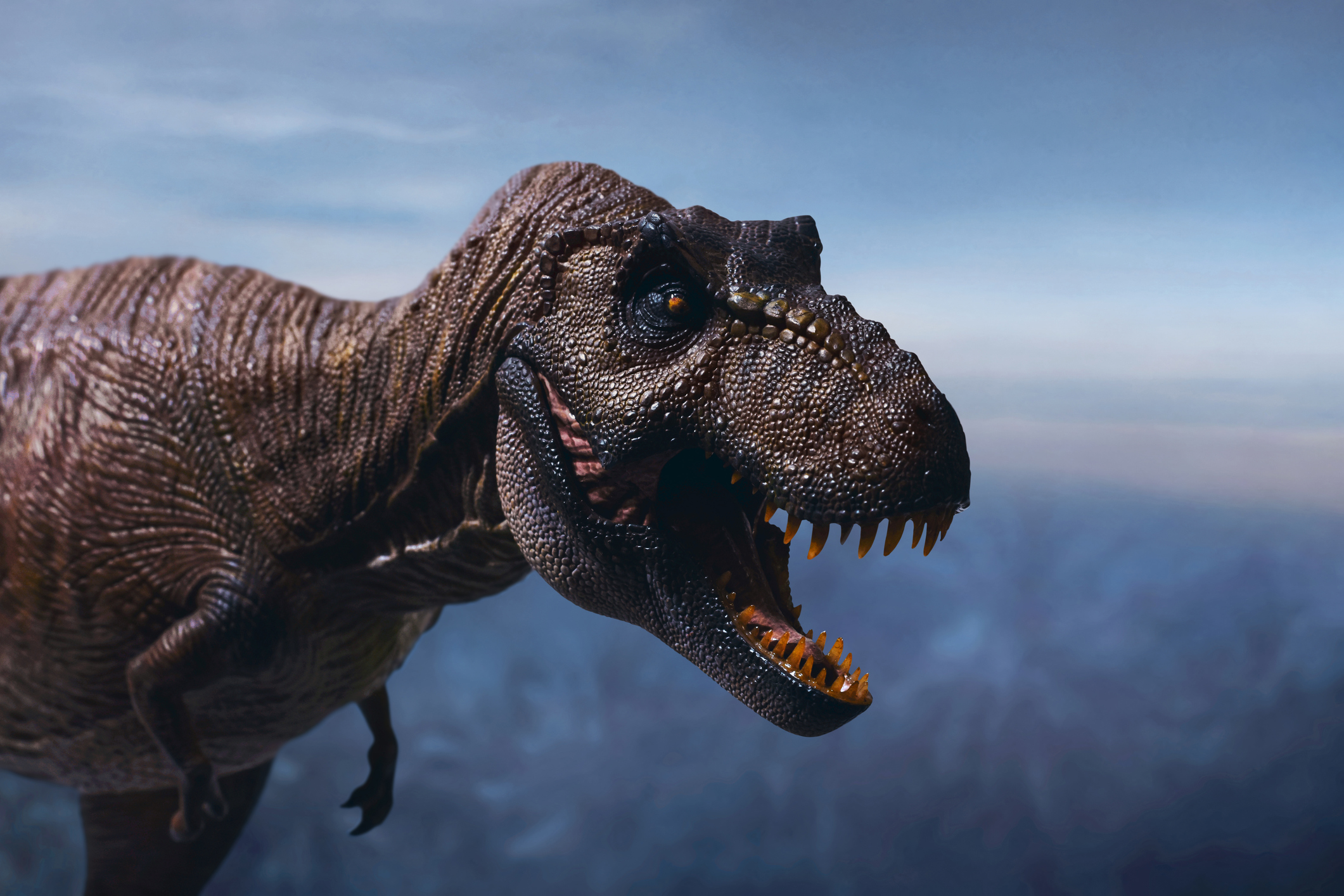
The ‘King of the Tyrant Lizards’ needs no introduction. Standing 4m tall, measuring 13m from jaws to tail, and weighing in at a scale-breaking 8.5 tons, T.rex is widely considered the largest and most ferocious terrestrial predator that has ever lived.
It also had the strongest bite of any terrestrial animal known to science, capable of exerting forces of nearly 60,000 newtons - enough to effortlessly crush bones to paste.
- The 10 deadliest dinosaurs to have ever roamed the Earth: we rate these ultimate killing machines
- It weighed less than 1kg yet remarkably could reach terrifying speeds of 65km/h: Meet 10 fastest, speediest dinosaurs on the planet
T.rex preyed on a variety of dinosaurs, primarily the giant herbivores that shared its habitat, such as Triceratops, Edmontosaurus, and Ankylosaurus, but also other T.rex. There’s lots of evidence of T.rex-shaped bite marks on the bones of other T.rex. Most of these are considered ‘love bites’ and signs of intraspecies aggression, though some suggest instances of cannibalism.
Testament to T.rex’s status as the apex predator of its time is the fact that it lacked any kind of competition. This is evidenced by the dearth of fossils from other large predators in rocks belonging to the famous Hell Creek Formation - the series of rocks found near Jordan, Montana, where most T.rex remains have been found.
Today, lions share the African Savanna with leopards, cheetahs, hyenas, and wild dogs. 66 million years ago, in western North America, T.rex reigned unchallenged at the top of its food chain.
- 10 deadliest apex predators in the wild: which ruthless mammals are the best – and most brutal – killing machines?
- Dinosaur mass extinction: what caused it, which dinosaurs went extinct, and how mammals survived
Megalodon
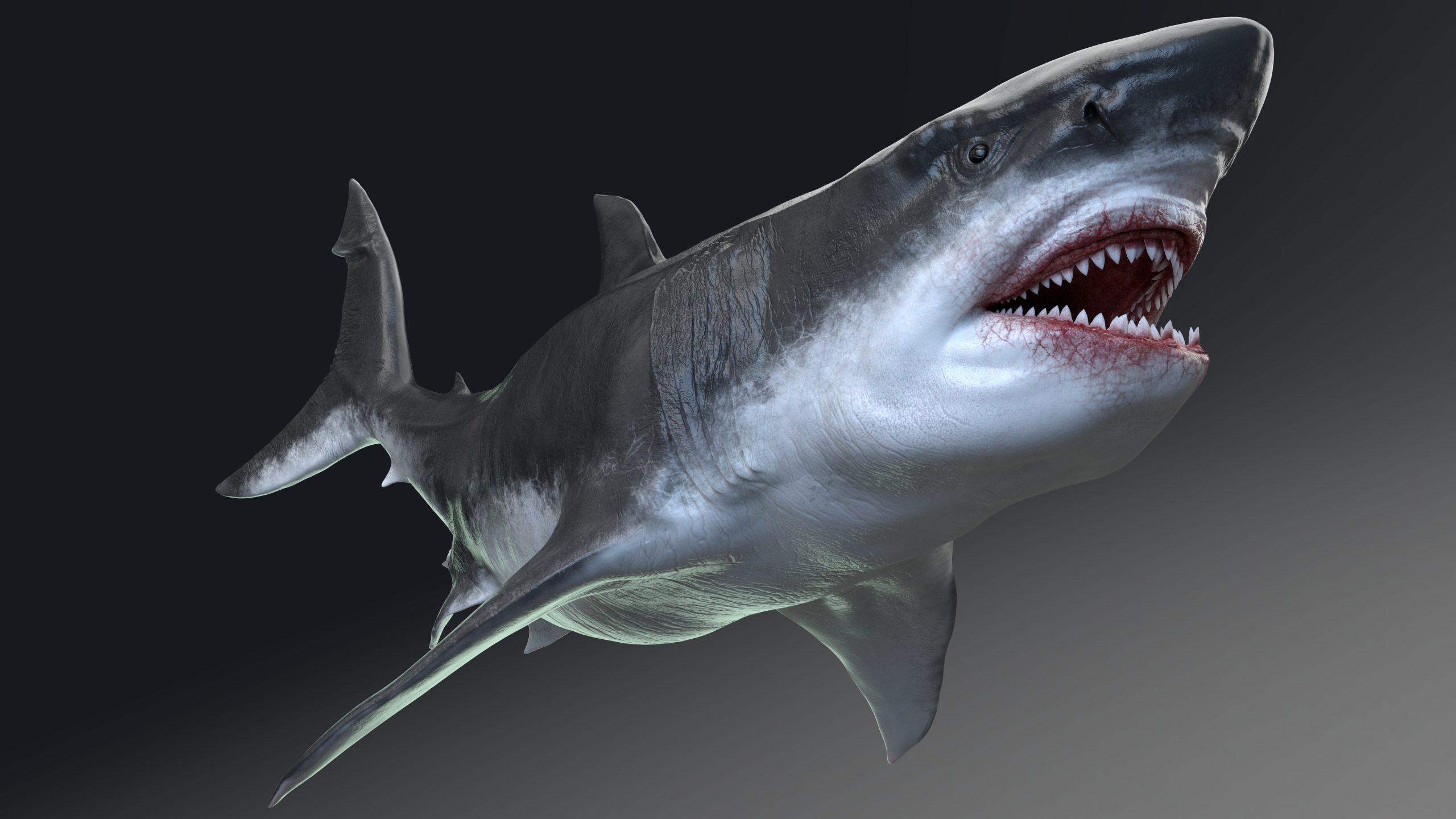
The inspiration behind the film Jaws, megalodon is one of, if not the largest predator to ever inhabit Earth’s oceans. A 2025 study re-estimated the size of this giant shark based on some new models and revealed it may have reached lengths of 24.3m, which is comparable in size to most superyachts.
As well as its sheer size, megalodon also had hundreds of robust, serrated teeth that were specially designed to tear huge chunks of meat out of its prey, leaving them to bleed out before it returned to feast.
- 10 horrifying, prehistoric sea monsters: Discover menacing, deadly creatures that once ruled our oceans – and be glad they don't live today...
- What is the largest shark of all time? Meet the ocean giant with a bite force ten times stronger than a great white
Based on bite marks observed on the bones of their prey - primarily whales, but also dolphins, seals, and sea turtles - it’s thought megalodon employed slightly different hunting strategies than great white sharks. Instead of targeting the underbelly of its prey, like its living relatives do, it probably targeted the heart and lungs, crushing its prey’s ribcage in the process. There’s also evidence to suggest it hunted ‘head-on’, chomping straight down on the skull of its prey.
While conspiracy theorists may have you believe megalodon still inhabits the less-explored parts of our oceans, it’s most certainly extinct. The current theory is that cooling temperatures 3.5 million years ago, along with competition from other, smaller sharks, ultimately consigned this seafaring superpredator to the annals of history.
Homotherium
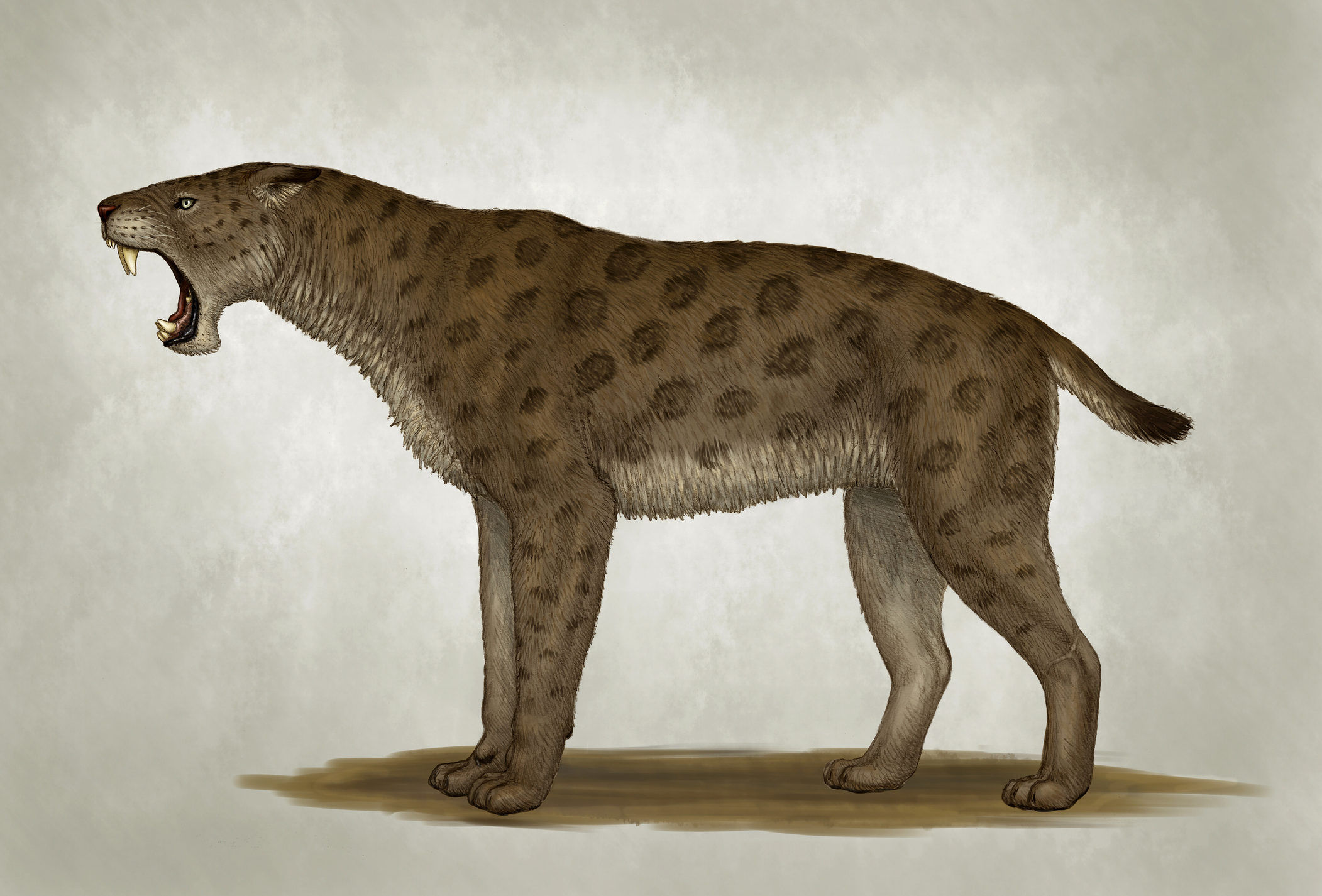
They might not be nearly as well-known as their cousins Smilodon - you can thank Diego from the 2002 film Ice Age for the iconisation of this particular sabre-tooth tiger - but Homotherium were arguably deadlier.
Known as scimitar-tooth cats, Homotherium differed from Smilodon by having smaller (though still large), serrated canines and a leaner body plan more similar to living big cats - in contrast, Smilodon was built like a bear, with long, muscly forelimbs that were designed for grappling. These adaptations made Homotherium a more efficient pursuit predator, capable of running down, and killing, large prey, from antelope, horses, and bison, to mammoths.
What made this ferocious, prehistoric cat particularly deadly was its ability to hunt in groups, similar to modern wolves. Unlike Smilodon, which was a solitary hunter that ambushed its prey, Homotherium coordinated with others, using ‘slash-and-bite’ methods to weaken large prey and separate them from the protection of their herds.
Homotherium had a particular taste for baby mammoths, a dietary preference suggested by the gruesome findings at Friesenhahn Cave in south Texas, USA. The remains of nearly 400 juvenile Columbian mammoths were found in this cave, alongside more than 30 Homotherium individuals. This kill site revealed Homotherium were specialised hunters of young mammoths and relied on them as an important part of their diet.
Livyatan
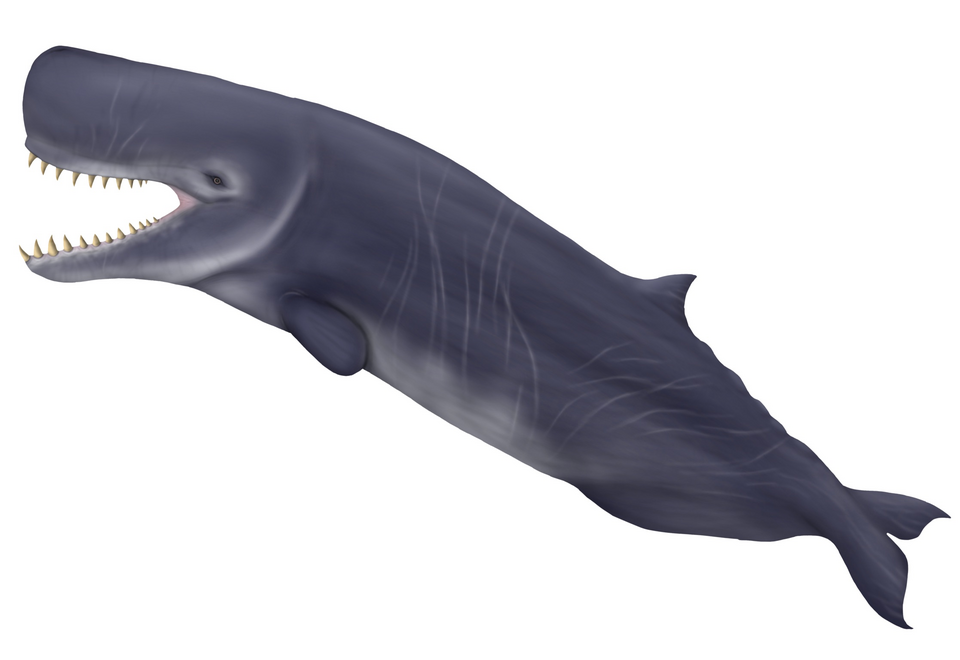
It’s no surprise the predator whose name is inspired by the biblical sea monster Leviathan has made this particular list.
Livyatan measured 17.5m in length, making it roughly the same size as the largest sperm whales alive today. This colossus is actually a close relative of sperm whales (Physeteroidea) and the largest member of a group known as macroraptorial sperm whales.
- Many prehistoric animals – especially dinosaurs – were absolutely enormous. A scientist explains why they were so darn big
- T.rex vs triceratops – who would win in a fight between these two prehistoric giants?
While not quite as large as the largest estimates for megalodon, Livyatan is believed to have often warred with this giant shark. Both had a near global distribution and overlapped with one another for more than five million years, hunting similar prey, as well as each other. The hunting tactics of Livyatan are unclear, though it’s assumed it may have employed similar methods to modern orcas, pursuing prey before drowning it.
At 36.2cm in length, Livyatan’s teeth are roughly twice the size of megalodon’s, not to mention the largest biting teeth of any known animal. A 2010 study found that these teeth were capable of biting down at forces close to those exerted by T.rex, making Livyatan one of the biggest biters known to science. It also had the largest bite of any tetrapod ever, courtesy of its 3m-long head and robust jaws.
Titanoboa
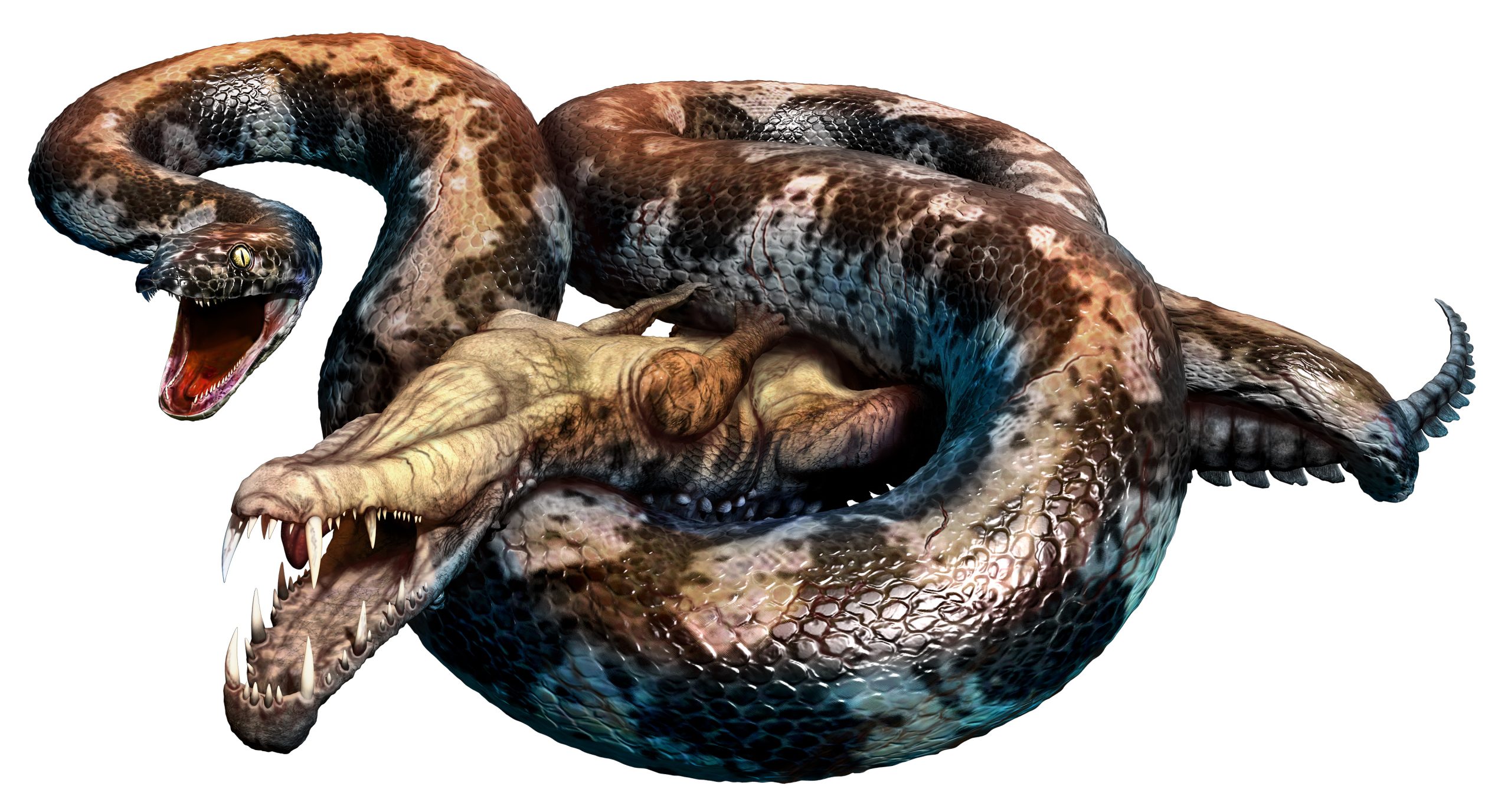
Not long after the extinction of the dinosaurs, in the sticky, sweltering depths of a tropical forest that preceded South America’s Amazon rainforest, there lived a snake that grew longer than a bus.
This supersized serpent is known as Titanoboa and it lived 60 million years ago, during a time when annual temperatures in northeastern Colombia, where it lived, averaged 33°C. It’s these balmy temperatures that are thought to have sped up Titanoboa’s metabolism and allowed it to grow to such large sizes.
- Deadly prehistoric snakes the length of a bus, 7 tonne crocodiles and supersized penguins almost 2 metres high - 11 animals that used to be bigger
- Bones of giant anacondas found in Venezuela. Here's what scientists discovered when they pieced them together
While most snakes are feared for their venomous bites, Titanoboa instead relied on its sheer size and powerful, muscular body to ‘choke out’ its prey, just like anacondas do today. However, unlike its living relatives that prey on mammals, birds, and reptiles, Titanoboa hunted fish. This is evidenced by its adaptations for a semi-aquatic lifestyle, which includes a skull and teeth specifically designed for grasping slippery prey, such as ancient arapaima.
Titanoboa was the largest terrestrial vertebrate of its time and likely filled a niche that was occupied by dinosaurs just a few million years beforehand. Despite Titanoboa currently holding the title of ‘largest snake ever’, there’s a chance we could see it lose its crown to a recently discovered species known as Vasuki. This giant is only known from a few fossil vertebrae, but preliminary estimates suggest it may have reached lengths of 15m.
Pliosaurus
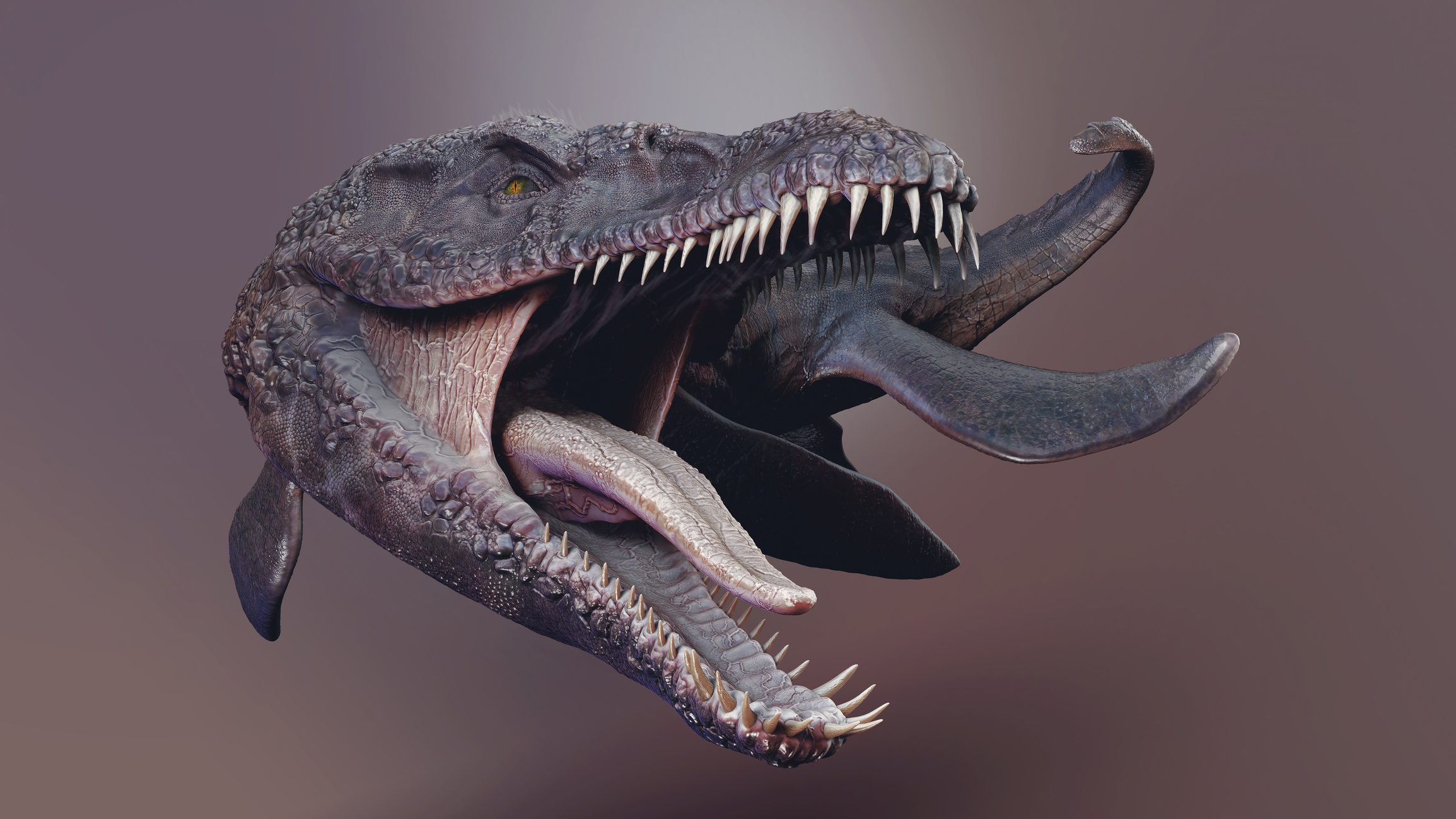
Nicknamed ‘Predator X’, Pliosaurus is a whale-cross-crocodile monster that had a skull twice the size of T.rex’s and a bite force unmatched by anything else that lived underwater at the time. This 11m-long marine reptile wasn’t quite as big as megalodon, nor Livyatan, but it was one of the largest, most ferocious predators from the Late Jurassic (approximately 150 million years ago).
Pliosaurus’ skull alone measured 2m in length, accounting for almost 20% of its total body length. This huge skull was filled with more than 130 grooved, dagger-shaped teeth that were capable of biting down at forces almost twice that of a saltwater crocodile (approximately 16,000 newtons).
Studies of Pliosaurus’ skull has also revealed that it, and other pliosaurs, may have performed ‘death rolls’ similar to modern crocodiles. This would have involved a Pliosaurus biting down on their prey before twisting their bodies in an attempt to tear off limbs and huge chunks of meat.
For almost 20 million years, Pliosaurus stalked seas that once covered what is now Europe and South America. Not much was off the menu for this hulking hunter; based on Pliosaurus-shaped bite marks observed on fossils from the period, it’s thought it feasted on everything from fish to other marine reptiles, including ichthyosaurs and its close cousins plesiosaurs.
Epicyon
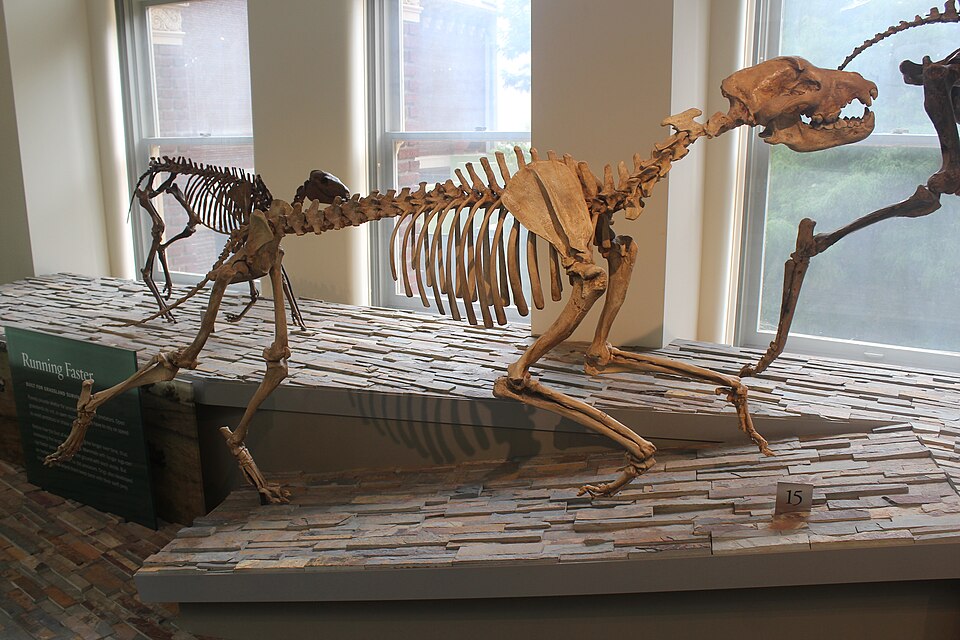
This wasn’t the kind of dog you’d want as a pet; at 2.5m in length, 1m in height, and 125kg in weight, Epicyon was more comparable in size to a brown bear than your average labrador.
Epicyon belonged to a group of now-extinct dogs native to North America known as the borophagines, or bone-crushing dogs. True to their name, these dogs had skulls and teeth designed to crush bones; in fact, it’s thought bones actually comprised large parts of their diets, based on finds of fossilised poo containing hundreds of bone fragments.
- 16 wild dog packs were just tracked through the Zambian wilderness - here's why
- This desert cutie is the smallest dog in the world - and also the dog with the biggest ears
Looking somewhat like an oversized rottweiler, Epicyon possessed several adaptations that made it a deadly predator. Like today’s dogs and wolves, it had small collarbones, a flexible back, and a digitigrade posture - adaptations that suggest it was built for running and pursuing prey. However, some researchers have theorised it may have relied more on bursts of speed than modern canids do, due to its large size.
Epicyon’s diet was made up of a variety of different herbivores, from camels, pronghorns, and horses to rhinoceroses. Based on fossils that have been found near Epicyon remains, it’s thought this giant dog competed with several big cats. Indeed, it’s these competing big cats that may have ultimately contributed to Epicyon’s extinction five million years ago - one more win for cats in the age-old cats-vs-dogs battle.
Jaekelopterus
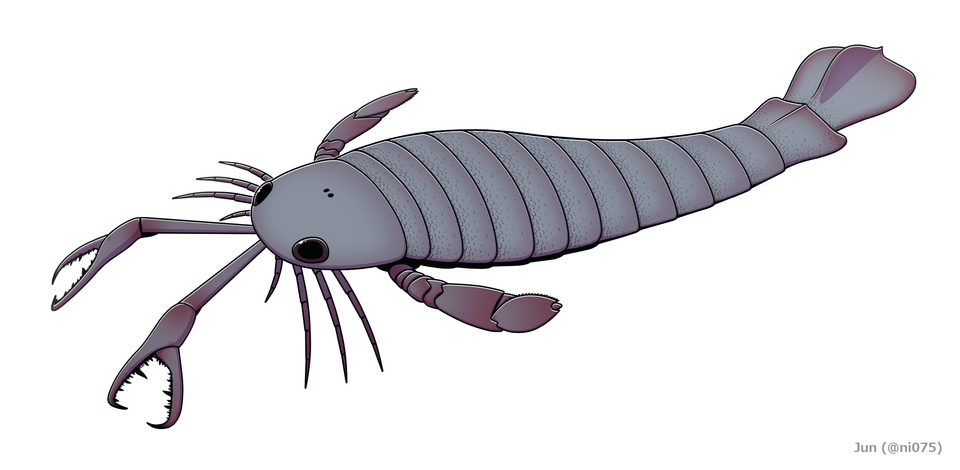
The first and only invertebrate on this list is the largest known aquatic arthropod to have ever existed. This nightmare-inducing sea scorpion is not actually a scorpion, but rather a eurypterid - a diverse group of primarily marine arthropods that lived for more than 200 million years between the Ordovician (480 million years ago) and the Permian (267 million years ago).
- This prehistoric arachnid monster was the size of a house cat with a deadly sting in its tail...
- Ghostly scorpion among 23 mind-blowing images from Close-up Photographer of the Year
Reaching lengths of up to 2.6m, Jaekelopterus was a giant of its kind - most other eurypterids were less than 20cm-long. Like other eurypterids, though, Jaekelopterus was a predator that used spiky, grasping claws - known as chelicera - to grab and rip apart its prey. The claws of Jaekelopertus alone measured 45.5cm in length and were large enough to grab most things that lived in Early Palaeozoic oceans, from fish to other eurypterids.
- From a car-sized millipede and armoured worms to the spider-scorpion ‘hybrid’ – these are the weirdest prehistoric creepy crawlies
- 6 creatures that shoot to kill: Discover nature's deadliest missile launchers
As well as sporting a pair of massive pincers, Jaekelopterus also had keen eyesight. A 2019 study found Jaekelopterus possessed unusually large photoreceptors (around 70 μm), almost 70 times larger than those of humans (1-2 μm). This would have given Jaekelopterus excellent visibility in low-light environments, such as the silty estuaries and lagoons where it lived and hunted.
Jaekelopterus was highly agile too, as is suggested by studies on the hydromechanics of its swimming paddles and telson (tail).
Dunkleosteus
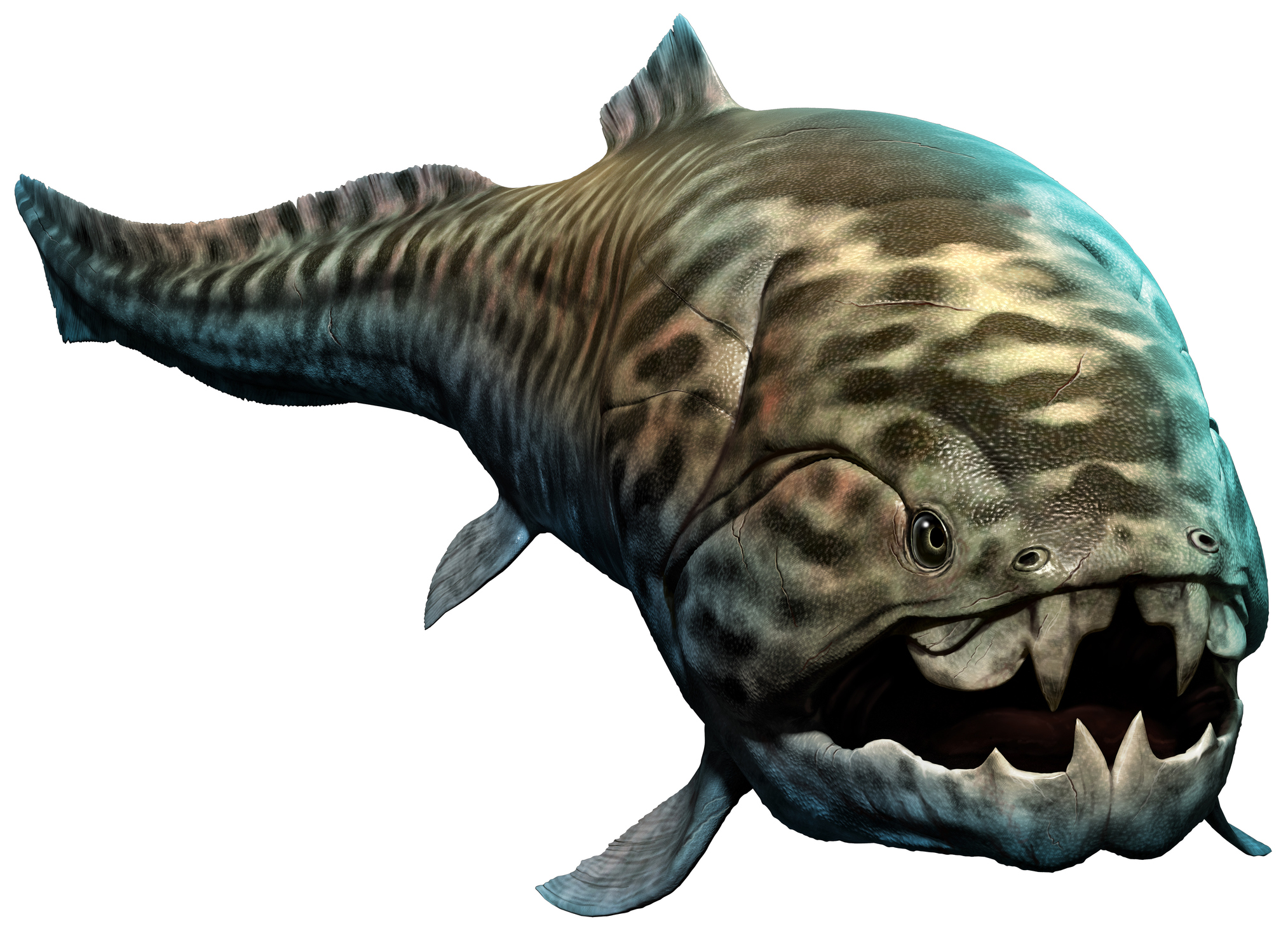
It may share a nickname with the lovable protagonist from George R.R. Martin’s A Knight of the Seven Kingdoms, but this ‘Dunk’ is far from a gentle giant.
At roughly 5m in length, Dunkleosteus was by no means a giant compared to other sea monsters on this list, but it was the largest predator of its time. It’s also considered the first open-ocean predator, a lifestyle later adopted by the likes of Pliosaurus, Livyatan, and - of course - megalodon.
Dunkleosteus lived during the Late Devonian (approximately 382 to 358 million years ago) and belonged to a group of armoured fish known as the placoderms. The heads of these fish were covered in bony plates, while the rest of their bodies were scaled. Dunkleosteus’ head was made up of many bony plates, several of which protruded from its jaws, creating pseudo-fangs.
These long, bony blades created a cutting apparatus that crudely resembled a guillotine. At their tips, they were capable of exerting a force of 80,000 psi, which is more than enough to puncture steel. Only, it wasn’t steel that Dunkleosteus’ pseudo-fangs were designed to puncture, but rather the armour of other placoderms, which it would have made short work of.
Humans
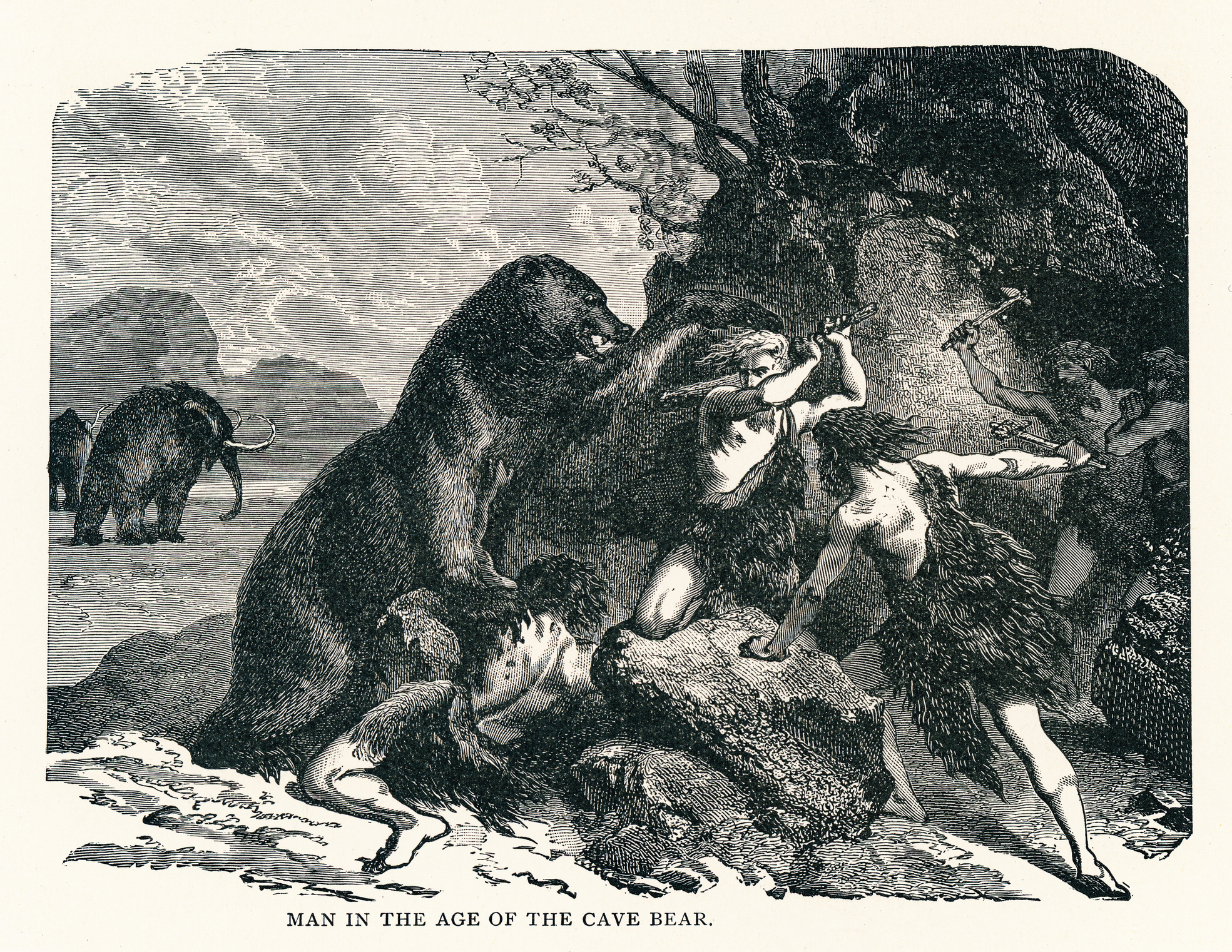
This list wouldn’t be complete without a mention of the undisputed deadliest predator of all time - humans.
While you reading this article may claim you’d never hurt a fly, collectively our species is a well-oiled killing machine, dispatching animal lives at rates never before documented. You could argue we’re even deadlier than the erupting volcanoes that sparked the infamous ‘Great Dying’ at the end of the Permian Period; after all, current extinction rates are faster now than they were back then.
There’s evidence to suggest our ancient ancestors were monsters too; they wiped out entire lineages of megafauna at the end of the last ice age, massacred rival tribes, and even cannibalised one another.
Really, there’s no end to the evidence that suggests we - humans - are the deadliest predators the world has ever known, and likely will ever know.

