
Think of the ice age and you’ll probably imagine a snow-covered landscape inhabited by so-called ‘cavemen’, sabre-toothed tigers, and - of course - woolly mammoths. These hairy giants are perhaps the most iconic megafauna from the ice age, but they’re not the only ones of their kind.
There are 10 known species of mammoth, ranging from the giant, 4.5m-tall steppe mammoth (Mammuthus trogontherii) to dwarf species like Mammuthus creticus that was confined to the island of Crete and grew no bigger than a large dog. Most of these species encountered humans, but it’s the woolly variety (Mammuthus primigenius) whose story is most closely intertwined with that of our ice age ancestors.
- "Standing at a whopping 3.7m and weighing 4 tonnes they were truly colossal." 10 extraordinary Ice Age, prehistoric, beasts that thrived in a frozen world
- Should we bring back mammoths from extinction?
As well as being the favoured prey of hunter gatherers living on the eponymously named ‘mammoth steppe’, mammoths were also preyed upon by other animals. While fully grown individuals were off the menu for most predators, old, sick, and juvenile mammoths were all potential targets and often faced grisly ends at the hands - or teeth - of these savage ice age killers…
9 animals that could kill a mammoth
Dire Wolves
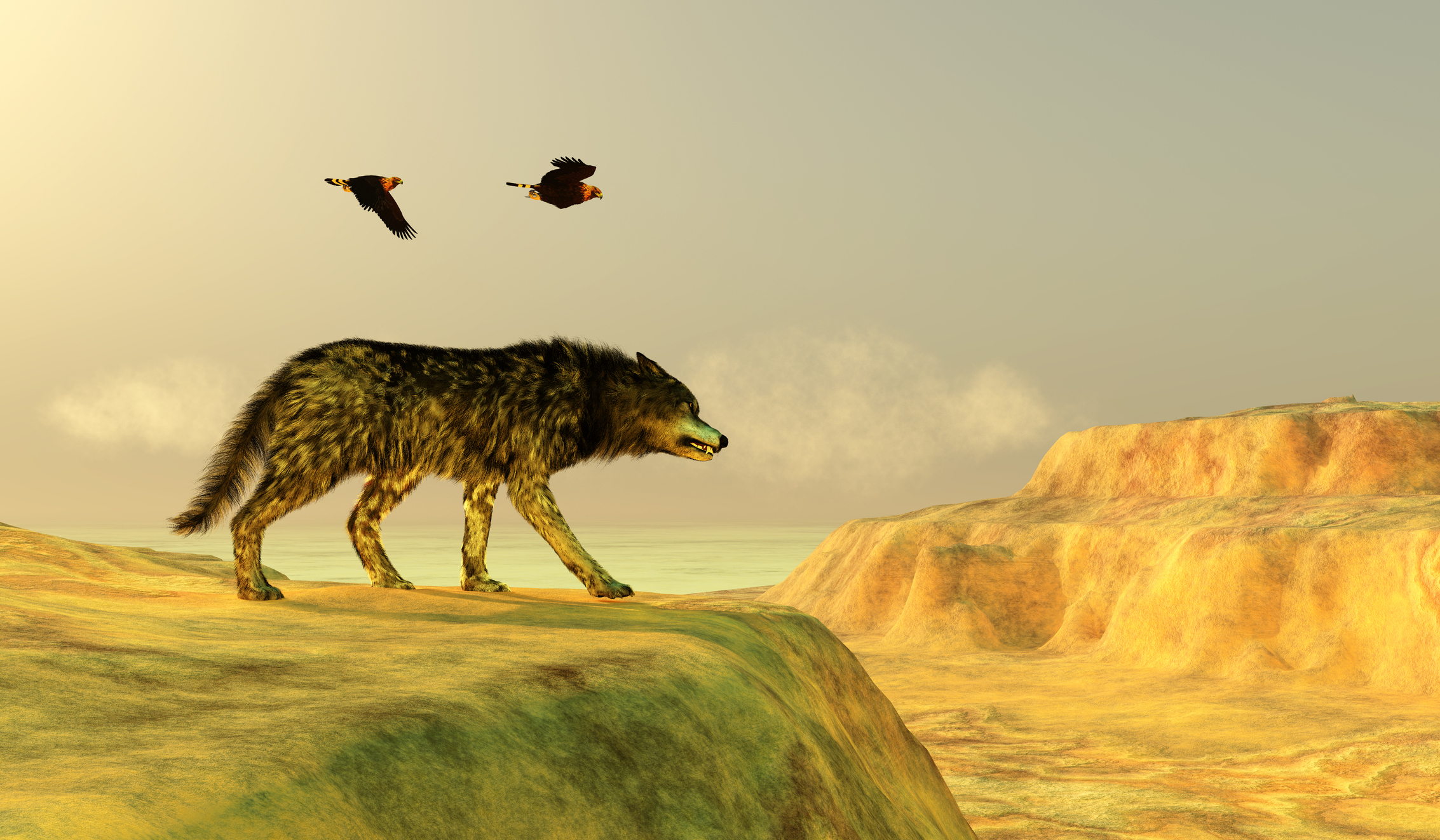
Native to the Americas, these prehistoric canids ranged from southern Canada in the north to Chile’s Atacama Desert in the south. They were some of the most successful predators of the Late Pleistocene and only faced extinction as recently as 10,000 years ago, alongside a number of other American megafauna.
- Dire wolf 'de-extinction': here's everything you need to know
- 8 extinct animals that could be brought back to life – from mammoths to dodos
Like grey wolves - which are often misinterpreted as their closest living relatives - dire wolves hunted in packs led by an alpha pair. They were slightly larger than modern wolves and also possessed larger teeth with greater shearing ability. While their prey largely consisted of camels, bison, and horses, there is some evidence they may have also eaten mammoths.
- Was this the largest, deadliest and most terrifying wolf of all time?
- The 10 deadliest dogs on Earth: Discover the world's most ferocious and savage wild canine hunters
- These 11 intimate photographs capture the stunning beauty of wild wolves
Based on isotope analyses of remains found in the famous La Brea tar pits, researchers know dire wolves competed with sabre-toothed tigers and American lions for the same prey, which included Columbian mammoths (Mammuthus columbi) and American mastodons (Mammut americanum) - close cousins of mammoths.
Cave Lions

The British Isles, and much of Eurasia and northwest North America, were once home to lions larger than those that currently prowl the savannas of sub-Saharan Africa. These lions (Panthera spelaea) looked a lot like their extant cousins, though they were nearly 50% larger and, based on depictions in cave art, it’s thought males may have lacked substantial manes.
- "Its vicious-looking, self-sharpening teeth were designed to slice effortlessly through tough meat." 10 deadliest, most ruthless prehistoric cats ever
- Before they shrunk: 6 huge prehistoric ancestors of animals you know today
As one of the main apex predators on the mammoth steppe, cave lions preyed on a variety of different animals, from reindeers to cave bear cubs. Isotopic analyses of bone collagen samples extracted from remains found in Europe also suggest they ate woolly mammoths, though whether they actively hunted them or scavenged them is unclear.
Considering they were larger than their living cousins, not to mention amongst the largest cats to have ever lived, it’s possible an individual, or perhaps a group of cave lions could take down a mammoth. Today, lions are known to hunt juvenile elephants, striking at night in large numbers in order to stand the biggest chance of success.
Giant Short-Faced Bears
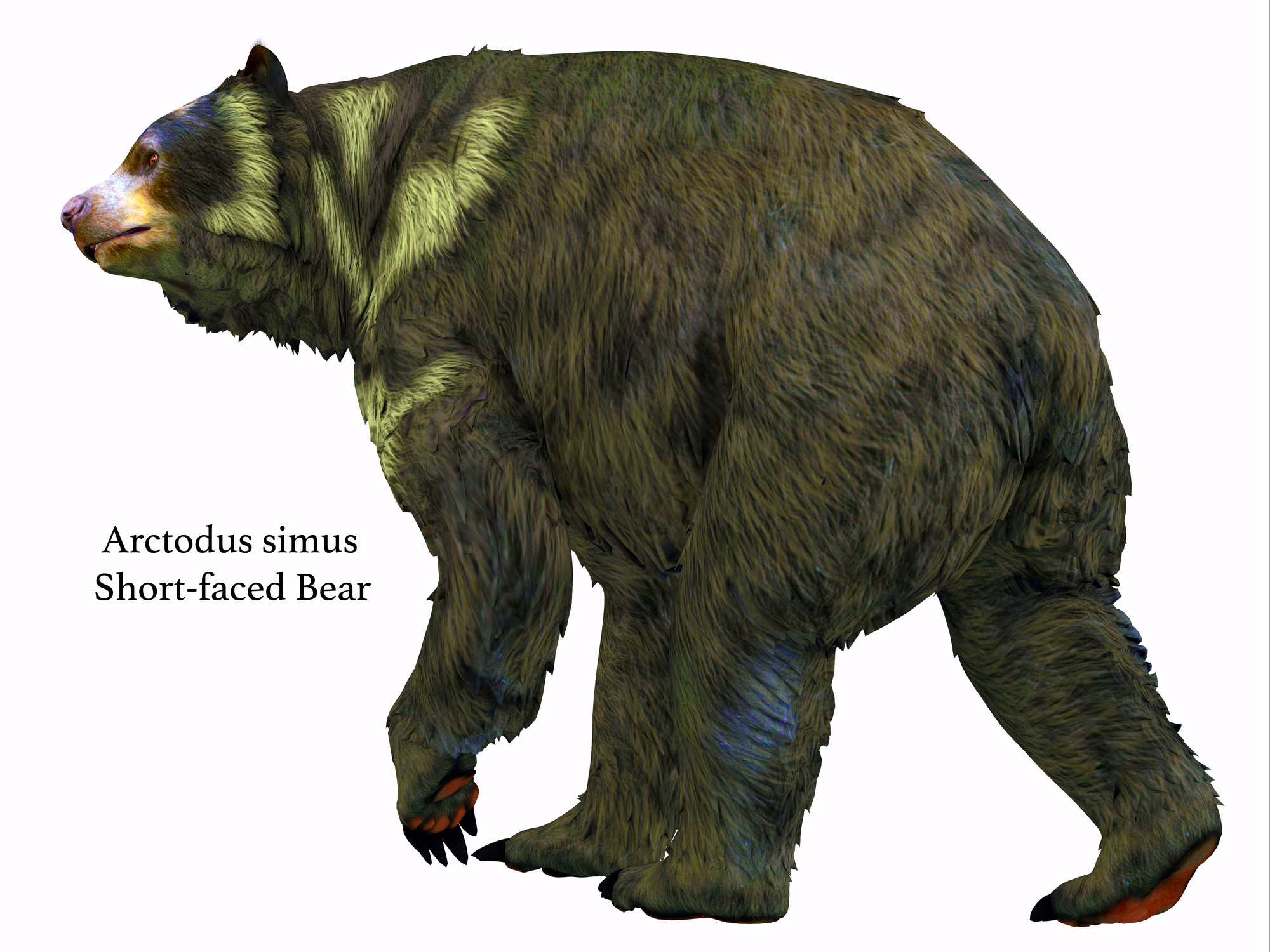
Tipping the scales at nearly a ton, the giant short-faced bear (Arctodus simus) is widely considered the largest terrestrial carnivoran to have ever lived, larger than a polar bear and almost twice the size of a grizzly bear. It lived in North America during much of the ice age and is thought to have been one of the biggest threats to humans migrating from Eurasia.
Despite its heft, the giant short-faced bear had a relatively slender build and is thought to have been an adept runner, capable of sprinting at speeds of up to 51kph; though the jury is still out on whether it was a pursuit predator or kleptoparasite - an animal that specialises in stealing kills from other predators.
The remains of giant short-faced bears have been found alongside mammoth remains at several sites across North America. At Huntington Reservoir in Utah, Western United States, researchers discovered several Columbian mammoth bones bearing suspicious, bear-like gnaw marks. Further east, at a site in South Dakota, a mammoth rib was found with a canine puncture likely caused by a giant short-faced bear.
Cave Hyenas

Thanks to their habit of dragging carcasses back to their dark and dank caves, we actually know a lot about what cave hyenas ate - the bone hoards they inadvertently assembled are essentially prehistoric time capsules chock-full of interesting information. These bone hoards have been found from Western Europe to Southeast Asia, including in the British Isles.
- "My first reaction was disbelief": spotted hyena seen in Egypt for first time in 5,000 years
- Hyena pseudopenis: Just why do female spotted hyenas have a fake penis? Discover the strange benefits it gives them
The diets of cave hyenas, like their living spotted cousins, were incredibly diverse, consisting of horse, aurochs, steppe bison, giant deer, wild boar, and even woolly rhinos and woolly mammoths. It has been suggested larger herbivores like mammoths were probably scavenged after death, though some think groups may have actively hunted young or weakened individuals.
It’s a common misconception that spotted hyenas are obligate scavengers; in fact, these extant hyenas actively hunt more often than they scavenge. Some think cave hyenas may have behaved similarly, living and hunting in large groups called ‘clans’. However, based on studies that show the front part of their brains was smaller than that of their modern relatives, others believe they may have been less social.
Sabre-Toothed Cats

There are several different types of sabre-toothed cats, but the largest, fiercest, and most infamous member of this group is Smilodon. This 400kg killing machine was heavier and more robustly built than any living cat, and had long, muscly forelimbs designed for grappling with its prey. It also had giant upper canines longer than an average adult human’s forearm.
- How deadly, prehistoric sabre-tooth cats developed their lethal, bone piercing fangs
- Mummified sabre-toothed cat cub found in Siberian permafrost stuns scientists
A 2024 study found evidence to suggest juvenile Smilodon kept their baby canines for extended periods, probably to help reinforce their adult canines as they grew in. This meant that for the first few years of their lives, Smilodon were ‘double-fanged’. However, as they aged the risk of damaging their primary weapons increased.
It’s for this reason why many doubt Smilodon would have actively hunted large herbivores such as mammoths - the risks of losing a sabre after sinking it into a mammoth’s tough skin would have been too high. Their remains might be found alongside those of mammoths at sites like La Brea, but this may suggest they scavenged them, rather than preyed on them.
Scimitar-Toothed Cats
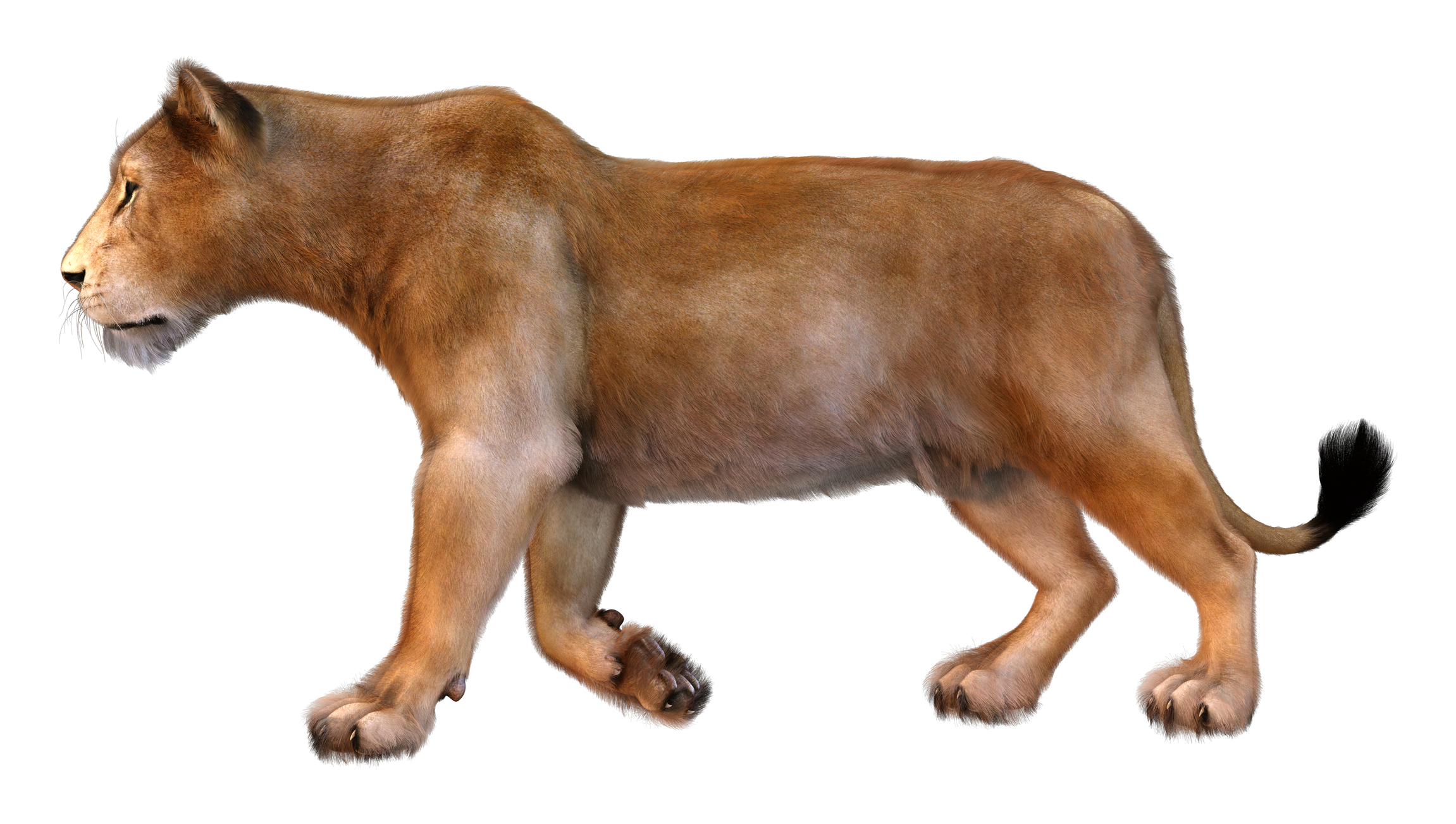
While Smilodon may not have been regular predators of mammoths, their close cousins Homotherium certainly were. These so-called ‘scimitar-toothed cats’ are part of the same extinct family as Smilodon (Machairodontinae), though they were roughly half the size and built more like modern lions, with shorter, leaner forelimbs designed for running rather than grappling.
- 10 animals that can kill a lion: Which animals are brave enough to take on the King of the Beasts?
- Back from the dead: meet 10 incredible animals once thought extinct
Homotherium’s canines were also a lot shorter than Smilodon’s, but still longer than those of living cats. This, along with other morphological differences, has led researchers to suggest Homotherium occupied a very different ecological niche, working together to run down large, fast prey such as antelope, horses, and bison in open habitats across North America, Eurasia, and Africa.
This ferocious cat also had a particular taste for baby mammoths. At Friesenhahn Cave in south Texas, Southern United States, researchers found the remains of nearly 400 juvenile Columbian mammoths alongside several Homotherium skeletons. Based on the marks observed on these bones, it’s thought Homotherium killed juveniles and dismembered them before dragging the meatiest parts back to their den.
Humans

You only need to have seen the film Ice Age to know that our ancestors hunted mammoths. And we didn’t just hunt these giants for their meat, there’s evidence humans used their fat for fuel, hide for clothes, and bones and tusks for tools - not to mention weapons to kill even more mammoths with.
Just how humans hunted mammoths is debated. It was long thought stone-tipped spears were simply hurled at a mammoth until it succumbed to its wounds. However, an experimental 2024 study suggested mammoth hunters may have actually planted spears into the ground before encouraging their prey to charge at them, impaling them using their own momentum.
In 2019, researchers working in Mexico found evidence of pitfall traps containing more than 800 bones from at least 14 mammoths, suggesting our ancestors came up with many creative ways to kill these giants. Other potential hunting methods include driving them into soft mud before overwhelming them and separating weakened individuals from their herds with fire and loud noises.
It’s clear mammoths were incredibly important to ice age humans - they were essentially walking supermarkets, stocking everything from food and fuel to clothing and hardware. The best example of humans making the most out of mammoths is seen at a site in Mezhyrich, Ukraine, where excavations have revealed four huts made almost entirely out of mammoth bones.
Neanderthals
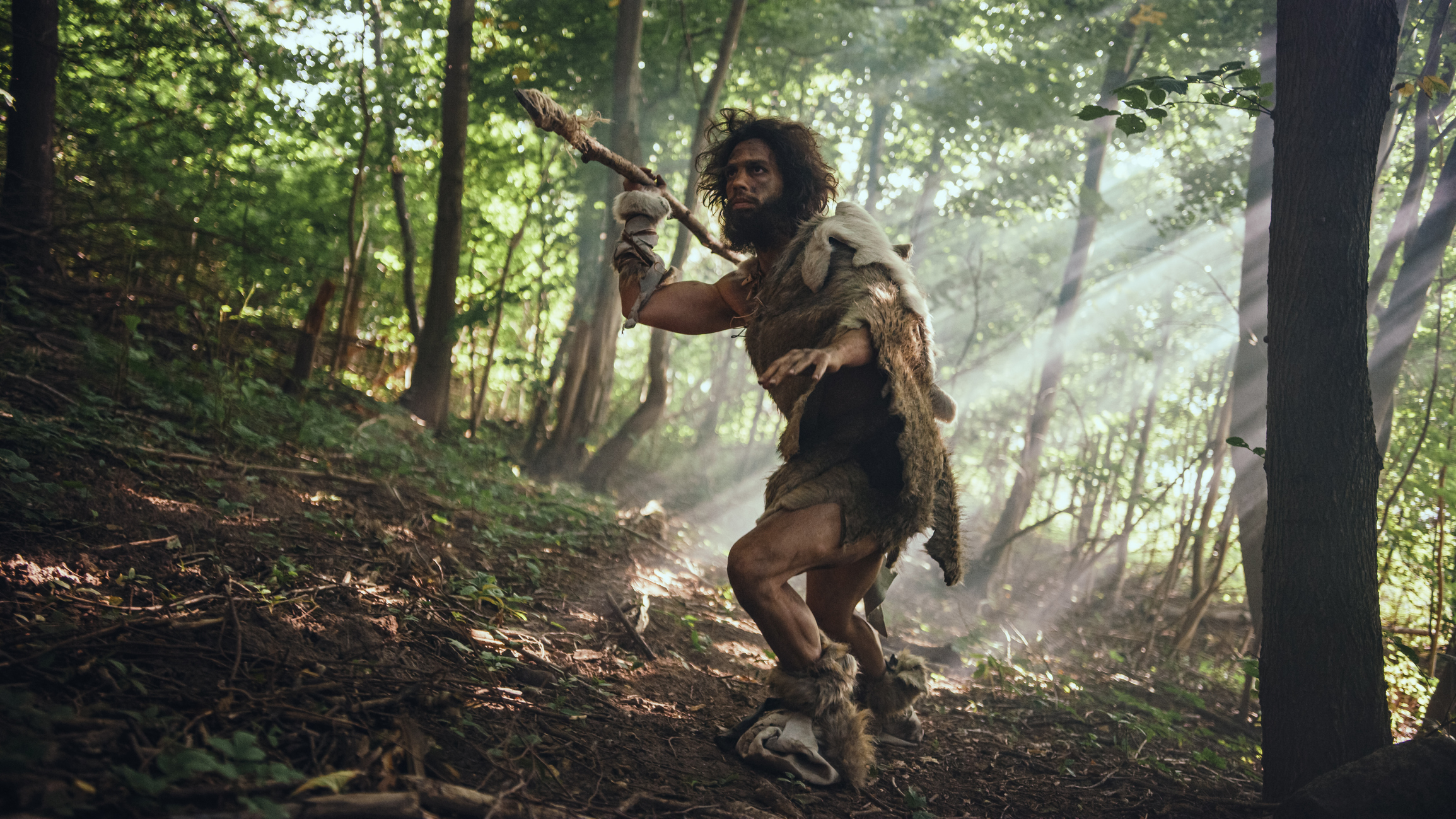
We (Homo sapiens) weren’t the only humans to hunt mammoths - so did Neanderthals (Homo neanderthalensis). Like our ancestors, Neanderthals didn’t just kill mammoths for meat, they found uses for every single scrap, and made huts out of their bones. They may have hunted them in similar ways too, potentially even inspiring later groups of humans.
- 5 ancient human species that lived BEFORE us: Meet the prehistoric pioneers who changed history forever
- It turns out we aren't as unique as we think we are: Here are 5 ancient human species that once lived alongside us
In the 70s and 80s, some researchers suggested Neanderthals living on the channel island of Jersey drove herds of woolly mammoths off a cliff before climbing down to butcher their broken bodies. While this theory had some merit, given evidence of Native Americans practicing similar methods on bison, it has since been debunked by later research that pointed out the cliff was way too rocky and uneven for mammoths to have clambered up.
- Is the human race truly one species or the lovechild of various prehistoric hook-ups? Just how interbred are we?
- Which animals were the first to lock lips and kiss? Scientists astounded by evidence of kissing long before humans
Instead, it’s thought Neanderthals may have lived at the base of the cliff and brought the bones back to their homes after successful hunts. The remains of hundreds of stone tools, charcoal, and burnt bones at this site suggests that after butchering their kills, Neanderthals feasted.
This site, known as La Cotte de St Brelade, preserves evidence of over 200,000 years of occupation, from 250,000 years ago to 40,000 years ago, right up to the point Neanderthals faced extinction.
Other mammoths
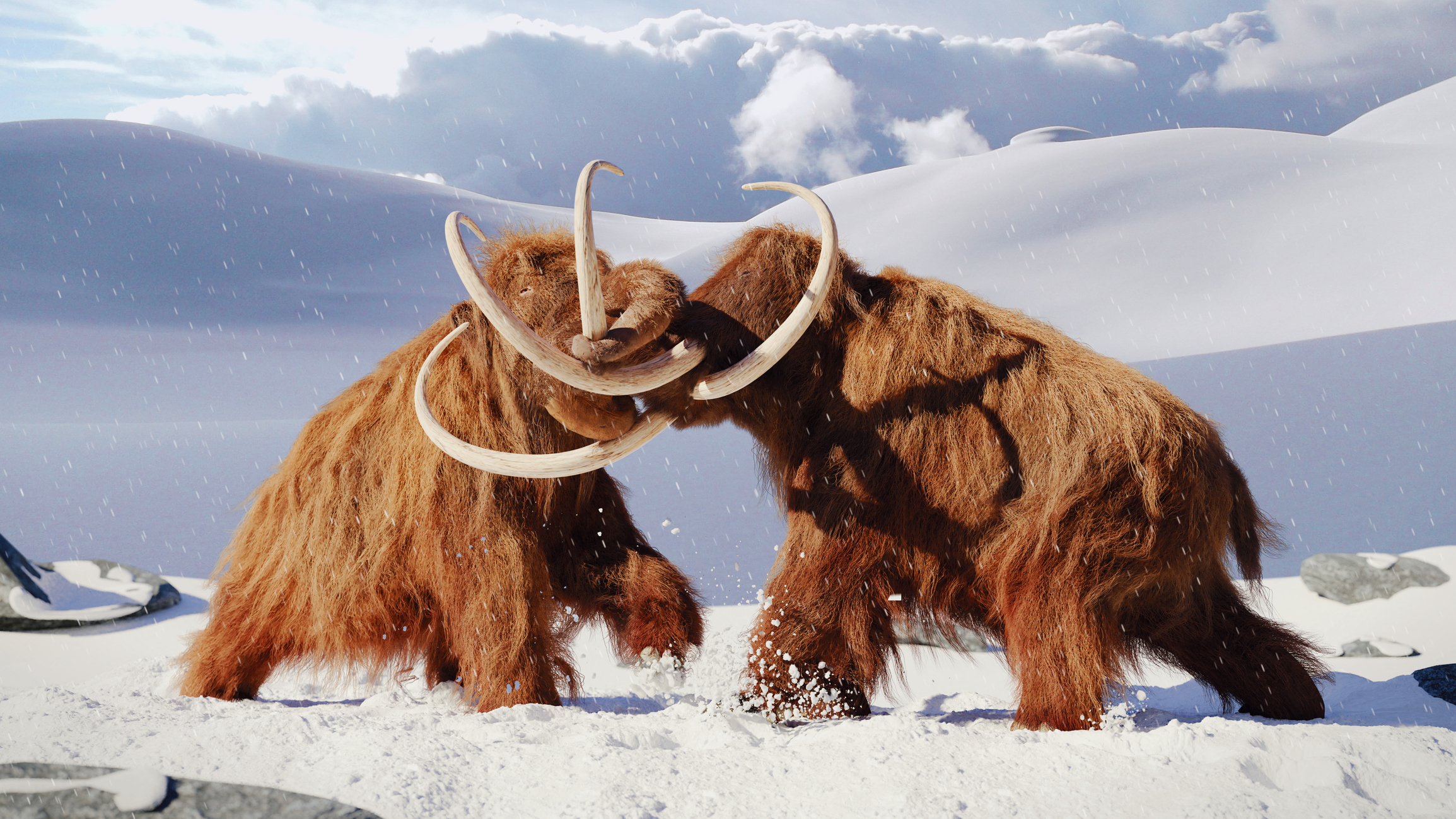
Like their living relatives, elephants, mammoths are often portrayed as ‘gentle giants’; but this couldn’t be further from the truth. Standing taller than most modern elephants and weighing the equivalent of 10 Ford Fiestas, these behemoths were some of the most dangerous animals to have ever lived and despite their vegetarian diets, could have easily made mincemeat out of any animal foolish enough to cross their path.
This includes members of their own species. Just like elephants do today, mammoths also fought over territory and/or mates, butting heads and locking tusks in duels that would have sometimes ended in death. There’s even evidence from mummified mammoths found frozen in Siberia of specialised temporal glands, suggesting males entered a state of ‘musth’ - a hormonal condition in bull elephants associated with extreme intraspecies aggression.
- 6 savage, brutal brawlers: The animals that will fight to the death for territory, power, or survival
- The little-known story of war elephants: How ancient civilisations turned gentle giants into deadly weapons
While most clashes wouldn’t have ended in death, there’s evidence at least some did. In 1962, at a site in Nebraska’s Badlands National Park, a pair of construction workers found the remains of two Columbian mammoths locked in a ‘duel to the death’.
These mammoths got so close to one another during their duel that the tusk of one pierced the eye of the other. This close quarters combat ultimately resulted in a tusk entanglement that was impossible to reverse - after lots of toing and froing, it’s thought one mammoth ultimately collapsed due to exhaustion, dragging the other down with it.


